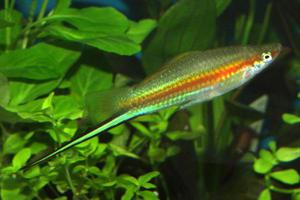
 For aquarium fish lovers, it's very useful to learn how to properly care for and keep their pets. This article is about swordtails. The swordtail—from the Latin Xiphophorus hellerii—is one of the most common, revered, and undemanding fish for pets. This aquarium fish is very active, playful, and delights the eye with a wide variety of colors.
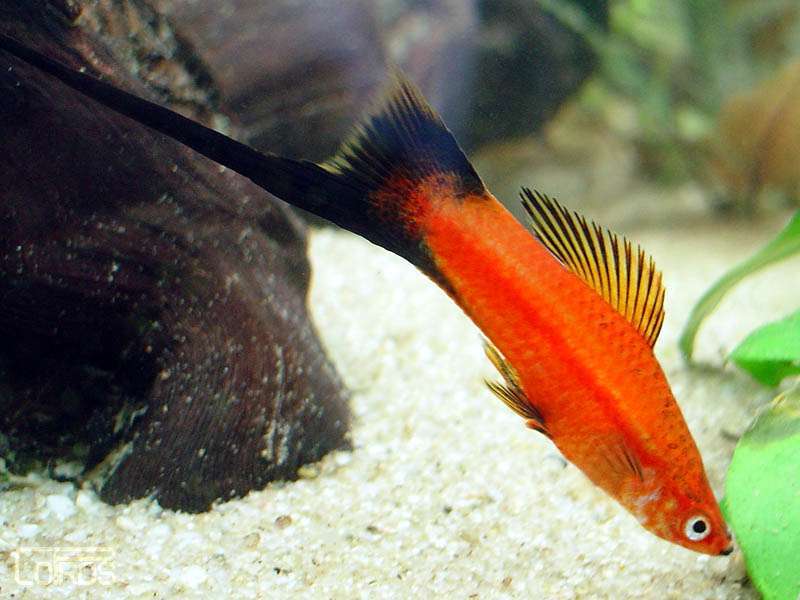
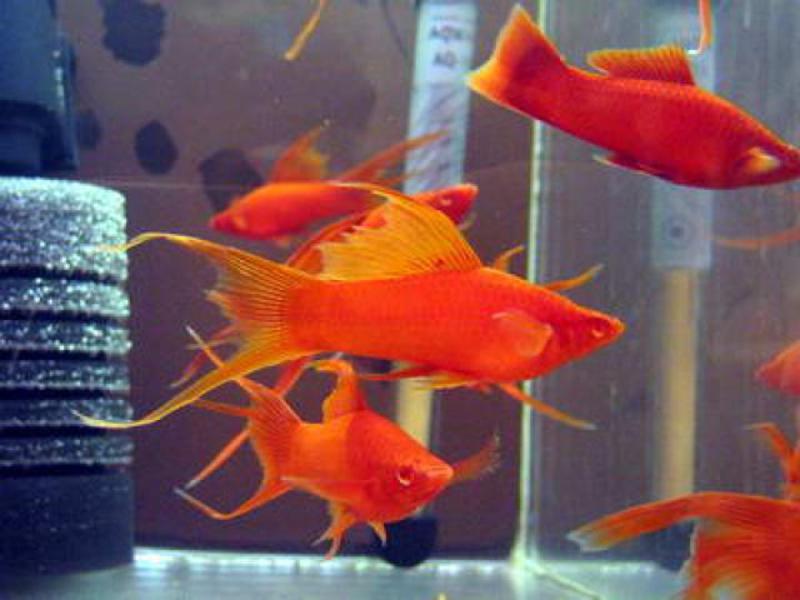
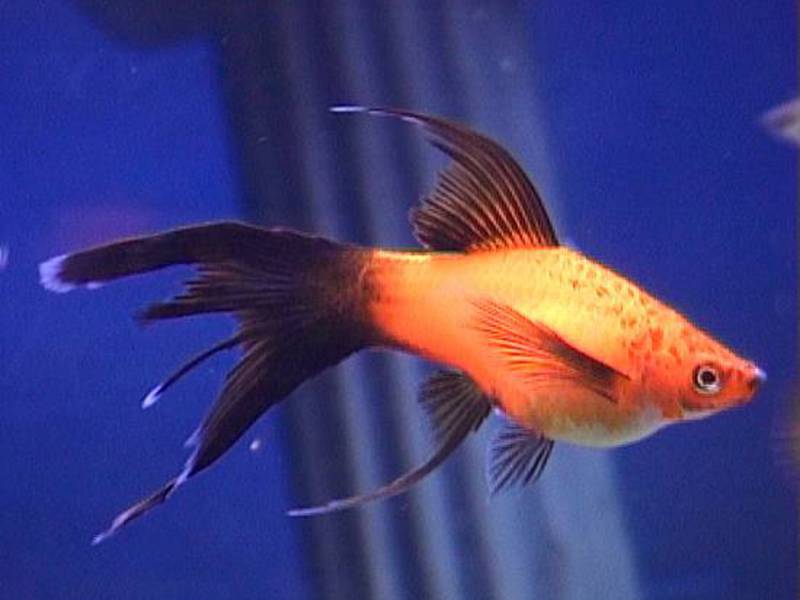
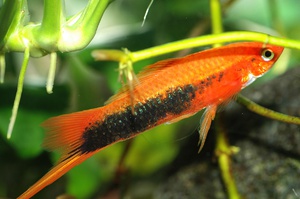
This is largely due to the male. His unusual appearance is significantly elongated caudal fin (in its lower branch) resembles a sword in shape, which is why this fish is called a swordtail. To ensure that these fish bring joy to their owners, it's important to have answers to the following questions:
- General information about aquarium fish of the species in question.
- Keeping and caring for swordtails at home.
- Breeding in home aquariums.
- Caring for fry.
Content
General information about swordtail aquarium fish
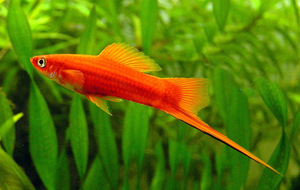 In the wild, it is found in the waters of Central America and Mexico. This fish, along with the immolina, guppies, and pilicia, is the most common and revered by aquarists. Swordtails are native to natural bodies of water, and they feel comfortable in these environments. with both standing and running waterThese fish prefer shallow, densely vegetated areas. It is there, and in large numbers, that the swordtails' favorite "food" is found.
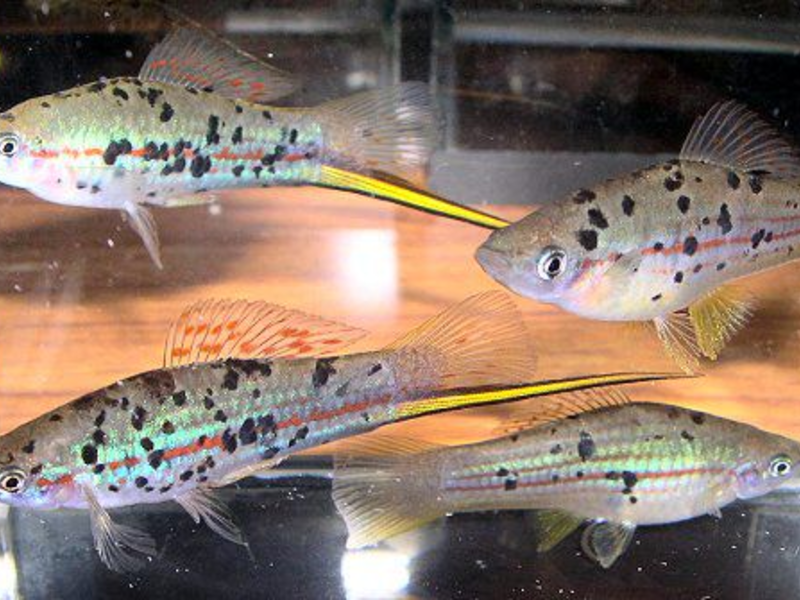
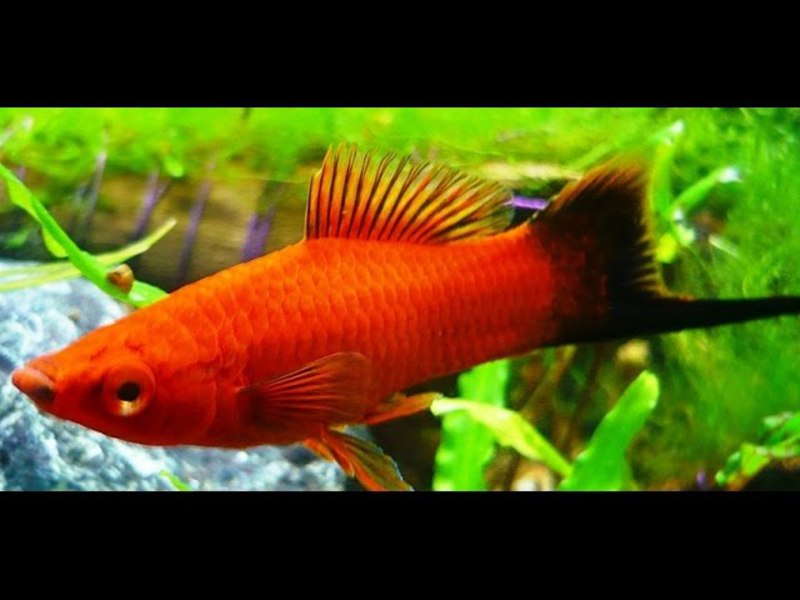
Aquarium swordtails and those living in the wild differ significantly in coloration. In the wild, male swordtails are olive-brown, light brown, with a greenish tint on their backs. Females are paler, with a silvery body and noticeable dark stripes. Despite the color difference, wild swordtails easily mate with aquarium fish and produce healthy offspring. Swordtails belong to the ray-finned genus, the family Poeciliidae, and the order Cyprinodontiformes. The bodies of these fish are elongated and laterally flattened. Hybrid forms of these fish can have a wide variety of shapes. a varied palette of colors:
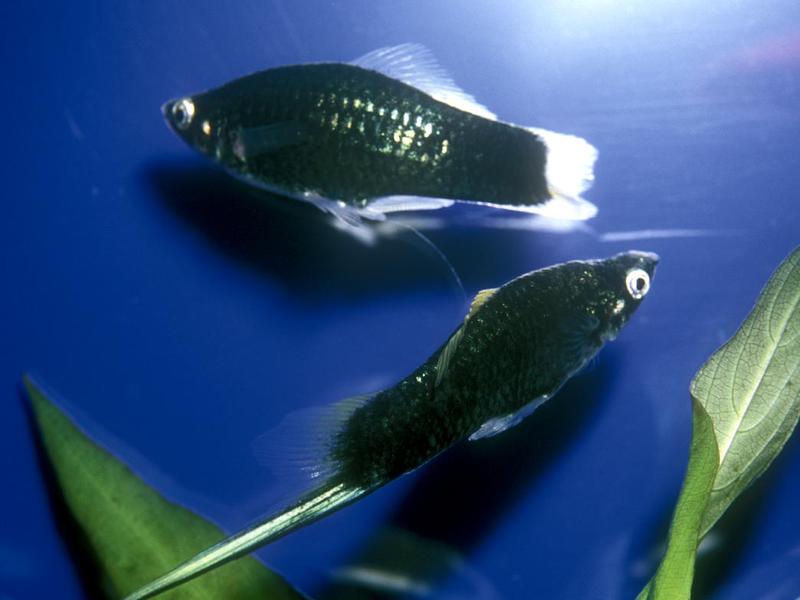
- dark to black;
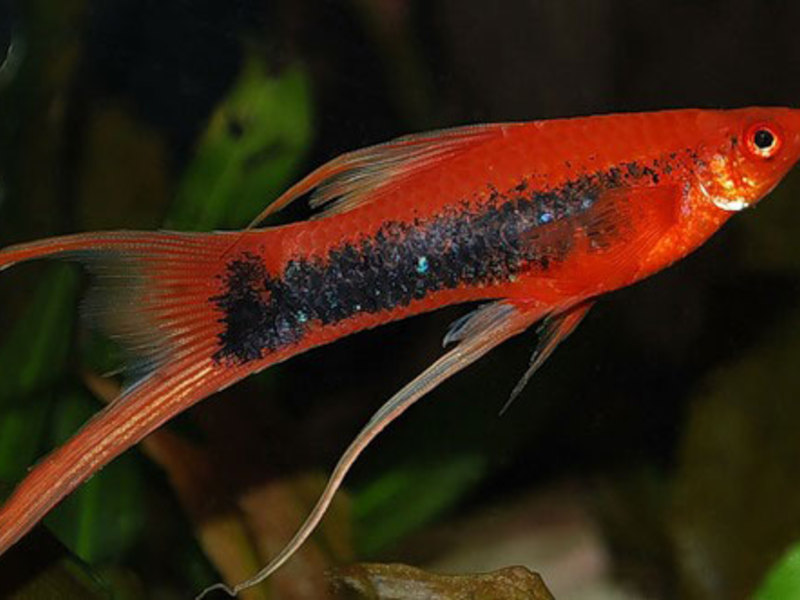
- shades of red;
- spotted;
- olive;
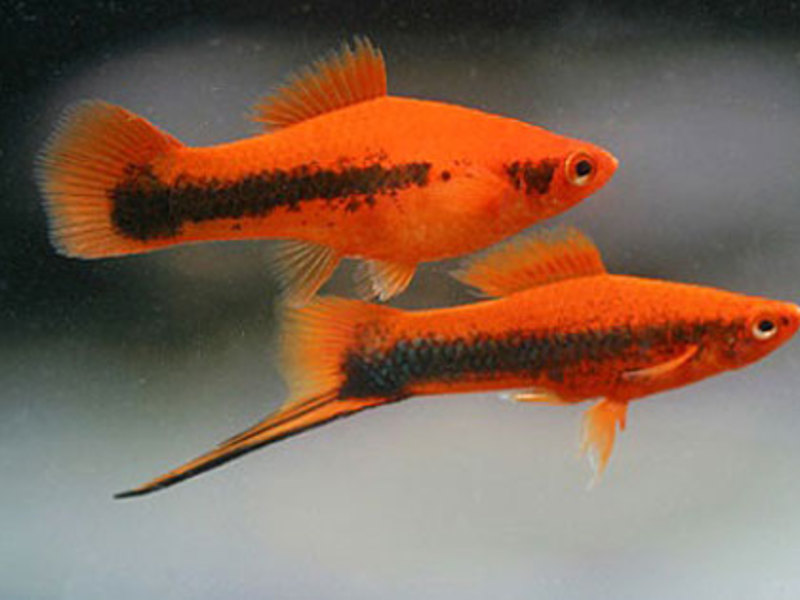
- orange;
- yellow;
- various combinations of these colors.
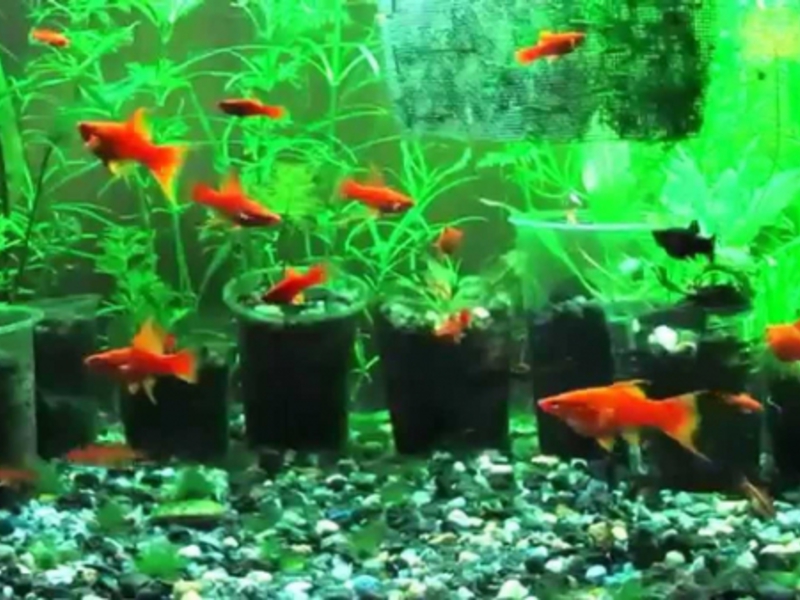
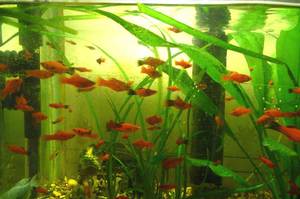
The swordtail fish, a photo of which is presented, amaze the eye with their unusually beautiful and graceful coloring.
Keeping swordtails and caring for them at home
The swordtail is a fairly peaceful, placid aquarium fish. However, it's not advisable to house it with significantly smaller fish. Smaller aquarium inhabitants will be discriminated against by this species. If tankmates are of similar size and temperament, the fish will not conflict. Fish with a melancholic nature and a sedentary lifestyle... swordtails can eat fins.
Males are intolerant of each other if there are only two of them in the aquarium. To calm them down, you need to buy at least one more male. However, it's important to remember that in this case, you should also increase the number of females. This way, the male swordtails won't be focused on a single rival, which will significantly reduce their aggression.
It's advisable to have areas of the aquarium overgrown with vegetation. The fish will use these areas for shelter. Aquarium swordtails are unpretentious, so keeping them in home aquariums doesn't present any difficulties or problems. However, a number of conditions must be met:
 For a pair of fish kept in an aquarium, you need at least 6 liters of water, but, of course, the more spacious the aquarium, the more comfortable the fish will be;
- It is better to buy an elongated aquarium and it is recommended to cover it with a lid (males love to frolic, often jump out of the aquarium and can die);
- 22–24 °C is a quite comfortable temperature;
- the hardness factor is not so important and it is recommended to maintain it within the range of 7.0 to 8.0 pH;
- Water filtration is essential and intensive aeration is very important;
- It is recommended to change the water at least once a week (one third of the aquarium volume);
- It is advisable to add sea salt or regular table salt to the aquarium (at the rate of 1 tbsp. / 10 liters of water);
- Recommended plants: cabomba, serrated elodea, vallisneria;
- We must not forget about free space – the inhabitants of the aquarium are very active.
 For a pair of fish kept in an aquarium, you need at least 6 liters of water, but, of course, the more spacious the aquarium, the more comfortable the fish will be;
Feeding pets
In the case where swordtails are the sole owners of the aquarium, immediately after feeding it is necessary remove all remaining food from the aquariumThis is a necessary step, otherwise the aquarium water will become excessively polluted. Swordtails' diets should be varied. Fiber, found in plant-based foods, is especially important for these aquarium fish, as algae is one of their primary food sources in the wild.
Growing so much algae in small aquariums isn't practical, so consider purchasing flake food with plant-based ingredients instead. These can easily become the mainstay of your swordtail's diet, with live food (any variety) being used as a supplement.
The fish we're considering are completely unfussy in this regard. Experts recommend a combination of plant and animal sources in their diet. The diet of swordtails may include:
- tubifex ferns;
- bloodworms;
- Artemia;
- Cyclopes;
- daphnia;
- mosquito larvae;
- spinach;
- crushed oatmeal;
- seaweed;
- peas;
- salads of various types;
- nettle leaves.
 tubifex ferns;
Thus, the issue of nutrition does not become a problem at all, because the swordtails’ “menu” is varied and unpretentious.
Breeding swordtails in home aquariums
Breeding and keeping swordtails in home aquariums is easy. These fish reproduce without any problems. However, raising the aquarium temperature to 25–27°C (77–80°F) will significantly intensify the breeding process. First, the owner needs to learn how. distinguish between males and females by appearanceIt's not difficult at all. It's the male's lower tail that has a sword-like outline. It's important to know that for proper breeding, there should be two to three females per male in the aquarium. A swordtail can kill a single female. The male is constantly active, ready to breed, and persistently pursues the female.
A fertilized female carries the eggs in her abdomen until spawning. Typically, the gestation period lasts about 40 days. All you need to do is carefully monitor the process and remove her promptly at the right time. If you notice the female has gained a lot of weight, keep an eye out for a dark spot near her anus. Its darkening indicates the approach of "birth." In fact, this is not a spot, but the fry's eyes, visible through the swollen skin of the female's abdomen. If the female is left in the aquarium during spawning, only a few fry will survive—they will be eaten by other fish or the swordtails themselves. However, if the aquarium has sufficiently dense vegetation, a significant number of fry will be able to find shelter and survive.
After spawning, the female must be return to the main aquariumThere are several interesting aspects to swordtail reproduction. First, when the temperature rises to 30°C, ten times more females are born than males. When the water temperature drops to 20°C, the opposite occurs. Second, swordtails have the ability to change sex. Third, a female can become fertilized and carry her offspring even in the absence of a male for several months.
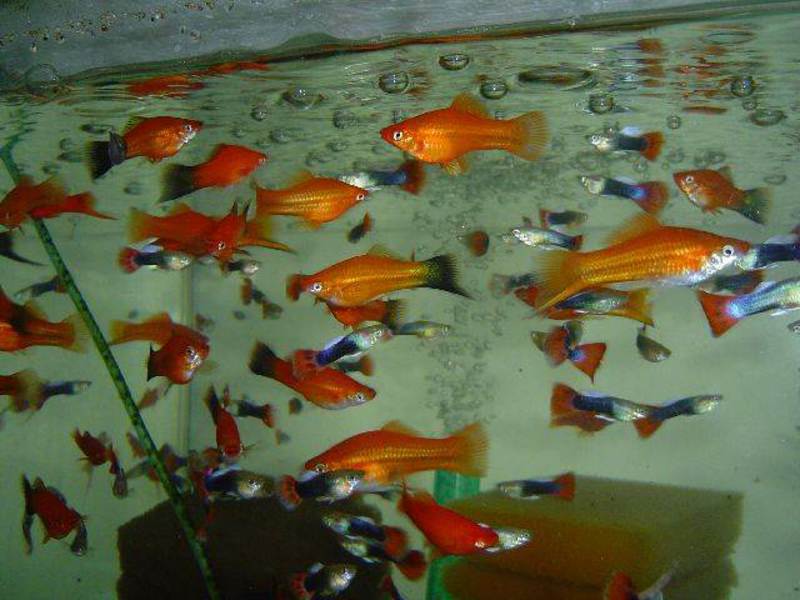
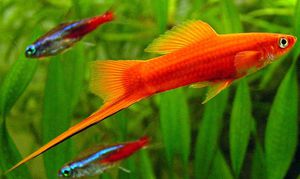
When fish of different breeds interbreed, they produce mixed-species offspring. Sometimes, fish are produced that are completely distinct from each other in color and fin shape. The photo beautifully demonstrates how swordtail aquarium fish can differ significantly in appearance from their "relatives."
Caring for fry
Both adult swordtails and juveniles require little care and maintenance. The juveniles' diet be sure to include more proteinFrom this point of view, the following are the most suitable:
- naupilia;
- Cyclopes;
- Artemia;
- microworms;
- rotifers;
- cut tubifex.
 naupilia;
The fry need to be fed frequently. Swordtail fry are usually large, energetic, and always ready to eat. Egg yolk, crushed flake food, nauplii, and brine shrimp are all suitable supplementary feeding options. If you feed the fry occasionally, a mixture of spriulin and live food, the fry will grow intensively, the color will become bright, the movements will be energetic.
By the end of this article, you've likely seen that keeping, caring for, and raising swordtails isn't particularly difficult and is within the reach of even a novice aquarist. Even with this minimal effort, you'll enjoy watching these unique, colorful fish.