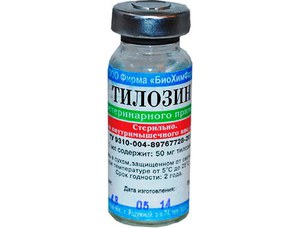
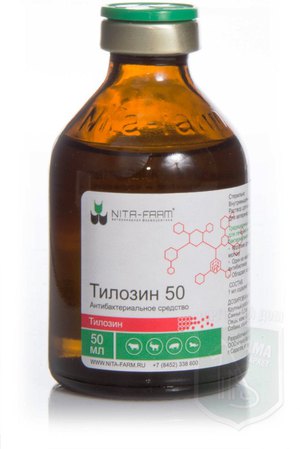
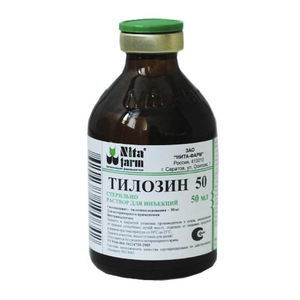
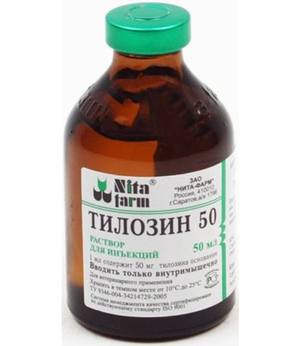
 Tylosin 50, 200 is an antibiotic used in veterinary medicine to treat animal lung infections and other infectious diseases of various organs. It was added to the Veterinary Handbook in 2013 and has since been widely used to treat cattle, pigs, poultry, and pets. This medication contains 50 mg of tylosin and is available as a solution for intramuscular injection. It has a viscous consistency and a yellow tint.
The other ingredients in Tylosin 50 are benzyl alcohol, water, and propanediol. The glass vials are stoppered and sealed with aluminum caps.
Biological properties and action
Among the pharmacological properties of the veterinary drug, the following can be highlighted:
 antibacterial action – Tylosin belongs to macrolide antibiotics and has a pronounced antibacterial action that extends to several species of animals;
- acts on gram-positive and gram-negative bacteria, including streptococci and staphylococci, which cause pneumonia in animals;
- inhibits the synthesis of proteins of pathogenic microorganisms;
- Intramuscular administration ensures rapid penetration of the drug into the body, its maximum concentration in tissues is observed one hour after injection;
- the therapeutic effect lasts for 24 hours and is excreted from the animal’s body with milk (in cows and goats), but mainly with urine and bile;
- This is a low-toxic substance, which is why Tylosin 50 has become popular in veterinary medicine.
 antibacterial action – Tylosin belongs to macrolide antibiotics and has a pronounced antibacterial action that extends to several species of animals;
The drug Tylosin 50 can be equally effectively deal with infections in cattle, birds, cats, dogs and other animalsAny bacterial pathology may be an indication for the use of this drug. The instructions contain information on treatment methods for specific animal species.
Tylosin 50 – instructions
The antibiotic Tylosin in veterinary medicine administered exclusively intramuscularlyIt should be administered once daily. The dosage varies depending on the animal's weight and species. Each injection should be performed at a different site to avoid hematoma and infection.
Animal species and dosage of Tylosin 50 per 1 kg of body weight:
- pigs – 0.2–0.05;
- cattle – 0.1–0.2;
- cats and dogs – 0.005–0.2;
- sheep and goats – 0.05–0.2.
When using the drug on your own without a veterinarian The minimum recommended dose should be administered. If the body reacts negatively to the drug, discontinue use and call a veterinarian. Most possible side effects resolve spontaneously without outside assistance.
Indications in veterinary medicine
The use of the drug for cattle, cats and dogs is indicated in the following cases:
- respiratory tract infections, bacterial pneumonia;
- arthritis and other inflammatory processes of joints and bone tissue;
- secondary infection of the animal;
- mastitis in cattle;
- atrophic rhinitis in pigs;
- dysentery, intestinal disorders;
- enzootic pneumonia.
 respiratory tract infections, bacterial pneumonia;
Tylosin 50 is suitable for the treatment of any pathologies of viral origin in cases where pathogenic microorganisms are sensitive to the main component of the drug – tylosin.
Benefits of use
This the antibiotic is very popular in veterinary medicine for the treatment of cats, dogs, cattle, pigs, and birds. This is due to its broad spectrum of action, ease of use, and low cost. It has proven effective in the treatment of pneumonia.
The use of Tylosin 50 has the following advantages:
- the drug is stable and equally effective in treating animals of different species;
- It is one of the few antibiotics that are safe in veterinary medicine;
- favorable price of the drug;
- rapid elimination from the body, animals can be slaughtered within 8 days.
The medicine is administered for a week, one injection daily, it is not advisable to interrupt the courseIf you miss one day of administration, do not increase the dosage the next day; instead, continue following the regimen specified in the instructions.
Contraindications and side effects
 Among the contraindications for use Tylosin 50 can cause an allergic reaction, intolerance to individual components of the drug, rash. In pigs, skin irritation and swelling may occur, and in rare cases, rectal prolapse may occur. Respiratory adverse reactions and dermatological lesions resolve without a trace after discontinuation of the drug.
Signs of overdose have not been established. It is not recommended to administer Tylosin 50 Along with other antibiotics, chloramphenicol, and penicillin. Cattle and pigs may be slaughtered for meat eight days after the last antibiotic administration. Animals slaughtered forcibly before the required period has passed are unfit for human consumption; their meat may be used to feed other animals.
Precautionary measures
When working with any veterinary drug you need to worry about your personal safetyTo prevent the drug from accidentally entering the bloodstream. Working with animals requires skill, as it requires restraining them and choosing the correct injection site. Given their resistance and strength, the risk of accidentally puncturing their own skin with the needle increases. By the time the needle punctures, it may no longer be sterile, which can lead to serious infection.
When working with Tylosin 50 gloves should be wornIf the medication comes into contact with mucous membranes or skin, wash immediately. Hands should be free during the injection; smoking, drinking alcohol, and eating are prohibited. After the procedure, hands should be washed with soap, disinfected, and dried thoroughly.
Special instructions
The drug Tylosin should be stored in a closed bottleStore in a dry place away from direct sunlight. The optimal temperature is 10–25°C. The antibiotic has a shelf life of 2 years; after opening, the medication should be used within 30 days, after which it becomes unsuitable for use.
Animal milk can be consumed 4 days after the last injection.Milk collected previously can be given to other animals; however, it is prohibited for human consumption. Used containers of the drug should not be stored at home or used for household purposes. All bottles must be disposed of, as must any unused product after the expiration date.