 Fosprenil is an innovative, natural medication for treating viral infections in cats and dogs. It has shown excellent results when used prophylactically against epidemics in breeding centers and kennels. It is administered to animals before long trips, shows, mating, and after contact with sick animals. Oral administration, injections, or nasal drops are sufficient to protect animals from the disease.
If the animal is in constant contact with other sick individuals or in an infected environment, then the medicine is given twice a day for two daysThe drug combines well with interferon, making it suitable for use in cats against viral infections. Instructions for use are included in each package, allowing owners to properly treat their pet.
The effectiveness of Fosprenil for cats
The medication cures feline rhinotracheitis caused by herpes and restores the health of pets suffering from calicivirus and feline influenza. High results have been achieved in the prevention and treatment of panleukopenia, with 90% of cats overcoming the disease. Post-treatment tests show no traces of the virus.
Previously considered incurable, infectious peritonitis resolves in half of cases in cats. If treatment with Fosprenil is started at the first symptoms of distemper, the cure rate is 98% for both intestinal and pulmonary forms. 90 and 85% curable, respectively. The nervous form shows positive treatment results in more than half of cases.
Composition of the drug
Fosprenil is available as a colorless or yellowish transparent solution without sediment or impurities. The medication is produced by phosphorylation of coniferous polyprenols. The drug contains:
- the active ingredient is disodium salt of polyprenol phosphate in the amount of 400 mg per 100 cm3, which is 0.4%;
- The auxiliary components are ethanol (2.9%), glycerin (3.0%), tween-80 (0.25%), water for injections (100%).
Pharmacological action on the animal body
 This antiviral medication effectively combats parvovirus, coronavirus, adenovirus, canine distemper, and other infections. It reduces inflammation, has a hepatoprotective effect, and reduces toxic effects in animals. Fosprenil activates the system's resistance within natural physiological limits, boosting immunity by increasing blood antibodies and phagocytes.
The drug is successfully used as part of a comprehensive treatment plan. Fosprenil improves metabolism In cats, it is considered a low-hazard substance (class 4 according to GOST 12.1.007–1976). If taken according to the instructions, the drug is unlikely to cause allergic, toxic, or irritating effects on the stomach and intestinal walls.
How to use Fosprenil
The veterinarian prescribes treatment based on the severity of the infection and the pet's individual tolerance to the medication's components. If deemed necessary, the specialist will prescribe a second course of therapy. Severe clinical infections require the combined use of antihistamines and antibiotics. Symptomatic treatment is also actively used, aimed at normalizing the pet's salt, water, acid, and alkaline balance, removing toxins, and supporting vital internal organs.
To increase the effectiveness of treatment with phosprenil, the simultaneous use of inducers and direct interferon preparations, and no additional immune-boosting agents are required. The drug is discontinued on the 2nd or 3rd day after the condition returns to normal. The main form of treatment is intramuscular administration:
- In case of viral infection, dogs are given a single injection at a rate of 0.1 ml per kilogram of body weight;
- Feline infections require a dose of 0.2 ml per kilogram of body weight;
- severe degrees of clinical diseases require an increase in the single dose - for dogs up to 0.2 mg, and for cats up to 0.4 mg per kilogram of weight;
- If, instead of intramuscular injections, Fosprenil is used orally, the single dose is doubled compared to the intramuscular dose, based on kilogram of body weight;
- when treating canine distemper in dogs, only 40 injections are used, reducing the number of injections from 4 times a day to 1 dose on the third, tenth, and fourteenth days;
- The same therapy is used to treat infectious peritonitis in cats;
- Treatment of adenovitaminosis in dogs and viral rhinotracheitis in cats remains the same, but the duration of therapy is reduced to 4-7 days; it takes about 14 days to get rid of plague.
Use of Fosprenil for other animals
The medicine is used to reduce the incidence rateFosprenil increases weight gain while reducing feeding costs in young horses, pigs, and chickens, as well as livestock mortality from opportunistic pathogenic infections. For prophylaxis, the drug is administered intramuscularly at a dose of 0.05 ml per kilogram of live weight or added to drinking water.
The same dose is established to enhance the immune response to various vaccines. If revaccination is being performed, the drug is not used. After prophylactic use of Fosprenil, animal and poultry meat may be consumed without restrictions.
Fosprenil for dogs
 To treat canine diseases, Fosprenyl is administered orally, intravenously, or intramuscularly. For eye and nasal diseases wash the mucous membrane organs, the effectiveness of treatment is ensured by using the drug immediately after the first signs of the animal’s illness.
Advanced and severe cases require additional symptomatic medications; in extreme cases, the dosage is doubled. If multiple injections are required throughout the day, they are administered at different points on the patient's body. The daily dose of Fosprenil should not exceed 0.4 ml per kilogram of body weight. In chronic cases with frequent relapses, a single dose is administered once daily. Prophylactic use involves administering the medication every three days for nine days. The medication is diluted in saline solution before administration.
Medicine price
Sold in veterinary pharmacies in the form of bottles:
- a 10 ml container costs 178 rubles;
- A 50 ml bottle costs 780 rubles.
Release form
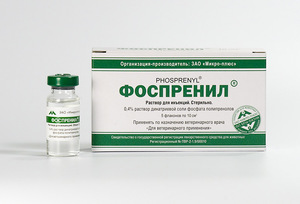
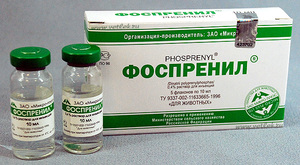
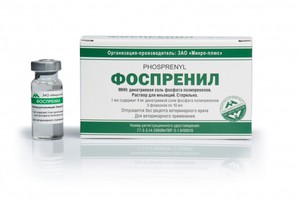 The sterile solution is packaged in glass containers of 100, 50, 10.5, and 2 ml. For professional use in large nurseries, the product is sold in 0.45 and 2 liter bottles. The containers are sealed with rubber stoppers on top. pressed down by metal caps. From 1 to 5 pieces are packaged in cardboard boxes.
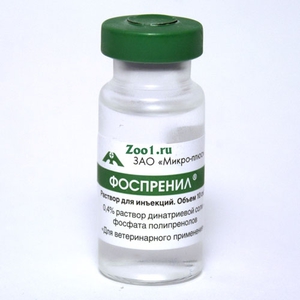
Each glass container is marked with the manufacturer, address, and trademark. The label contains the name of the medication and its intended use, ingredients, and volume, as well as a statement that the medication is intended for use in animals. The manufacturer's information on the batch number, expiration date, and production date are also included, along with storage conditions. The medication is sold with its state registration number and supporting information.
The medicine is stored and transported in the manufacturer's packaging, in a place protected from sunlight, in dry conditions at the temperature readings in the storage area from 4 to 26ºСThe expiration date is two years from the date of manufacture, provided all storage requirements are met. If the expiration date has expired, the medication should not be used for treating dogs and cats.