Apoquel is necessary for dogs when antihistamines and hormonal medications fail to relieve allergic itching. This medication is recommended for extremely severe cases and when previously prescribed combination therapy has failed to provide a positive effect over a long period of time. Before use, it is important to read the instructions and consult a veterinarian. There are contraindications for use.
Composition and release form
The drug is produced by a Belgian pharmaceutical company in tablet form. Dosages vary: 3.6 mg, 5.4 mg, and 16 mg. The tablets are securely packaged in plastic packaging with a lid.
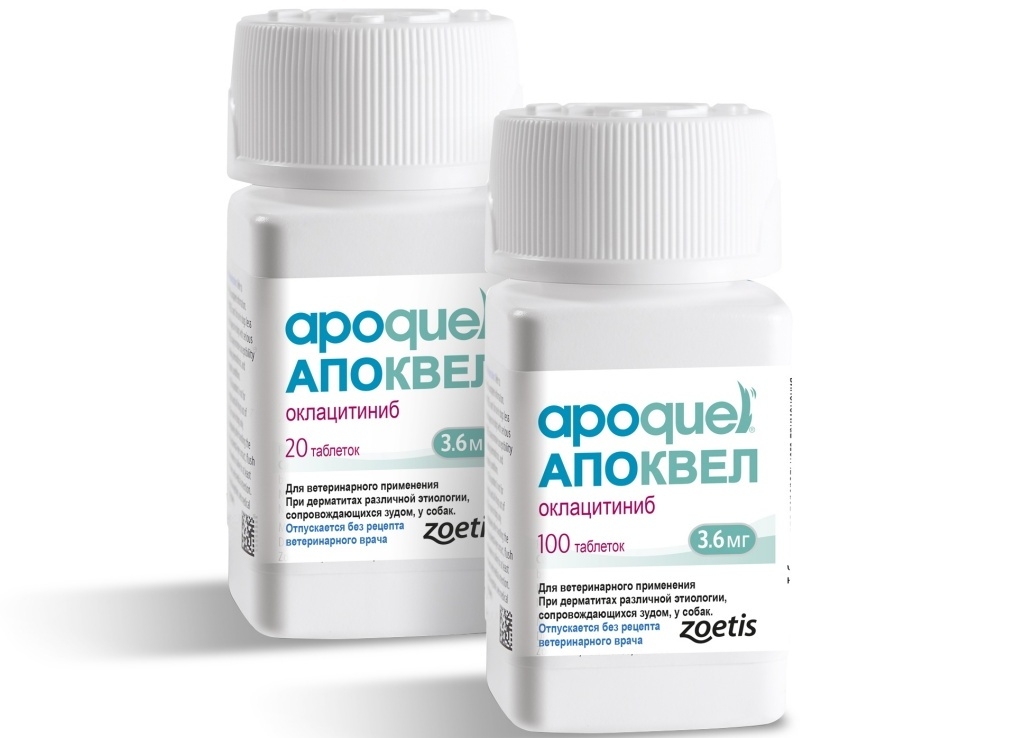
The active ingredient is oclacitinib maleate. The composition also includes excipients such as microcrystalline cellulose, lactose monohydrate, sodium carboxymethyl starch, magnesium stearate, Opadry II White film-forming agent, and water.
Available in 20 and 100 tablets in different dosages, marked S, M, L, for small, medium and large breeds, respectively.
This medication should be stored at a temperature of 0–25°C (32–77°F), away from direct sunlight and out of the reach of children. The shelf life is 24 months if stored according to the instructions. This medication is available from pharmacies without a prescription.
Indications for use

During an allergic reaction, a dog's body produces special biological substances that accumulate in large quantities, causing itching and redness of the skin. Apokvil works by blocking the production of these substances and quickly eliminating the unpleasant symptoms of allergy.
Indications for use:
- contact and atopic dermatitis;
- food allergy;
- allergic reaction to worm infestation.
The drug is absorbed into the blood and affects all body systems, with maximum concentration occurring an hour after administration.
The manufacturer assures that the drug is completely safe, does not affect vaccinations or tests, acts quickly, and is suitable for long-term use.
Contraindications and side effects

Despite its high efficacy compared to other medications, Apoquel should be administered to animals with caution. Common side effects include bowel upset, cystitis, and nausea.
If your dog has a medical condition such as cancer or demodicosis, you should only administer the medication after consulting a doctor, as it can exacerbate the condition and worsen your pet's condition.
It is strictly forbidden to give the medication in the following cases:
- pregnancy;
- feeding puppies with breast milk;
- under 12 months of age;
- body weight less than 3 kg;
- planning mating;
- reduced immunity;
- acute cancer;
- individual intolerance to the components of the drug.
Following your doctor's instructions, dosage, and treatment regimen will help minimize the risk of side effects from the medication.
Instructions for use
Before administering medication to your dog, it's important not only to calculate the dosage to avoid any negative effects, but also to remember that self-medication is strictly prohibited. Incorrect treatment can cause serious harm to the animal's health.
The drug's effectiveness depends on the correct dosage regimen. Recommended doses based on the animal's weight:
| Dog weight in kg | Dosage in mg | Number of tablets per dose, pcs |
| 3–4.5 | 3.6 | 1/2 |
| 4.5–6 | 5.4 | 1/2 |
| 6–9 | 3.6 | 1 |
| 9–13.5 | 5.4 | 1 |
| 13.5–20 | 16 | 1/2 |
| 20–27 | 5.4 | 2 |
| 27–40 | 16 | 1 |
| 40–55 | 16 | 1.5 |
| 55–80 | 16 | 2 |
Food does not affect the absorption of the drug, so it can be mixed into food, given as a tablet by hand, or crushed and mixed with water. Your doctor will help you adjust your treatment plan; all information in the instructions is for advisory purposes only.
During the acute phase of allergy treatment, tablets are taken twice daily at the prescribed dosage for no more than two weeks. The dosage is then reduced, and dogs are given the medication once daily. Preventive and maintenance treatment is administered for no more than 14 weeks. If the tablet is administered whole, it is important to inspect the animal's mouth after administration to ensure the medication has been swallowed.
Throughout the course of treatment, it is necessary to ensure that the dog does not become infected with worms, as the active ingredient has an immunosuppressant effect. Concomitant use with anticonvulsants, immunosuppressants, and cancer medications is prohibited.
What can replace the original drug?
A doctor may prescribe an alternative medication when the original is unavailable. Self-administration of Apoquel is prohibited, as this will render the treatment ineffective. The drug is replaced if there are contraindications, severe side effects, or individual intolerance to the components. The veterinarian may replace the medication with another one with the same or a different active ingredient.
Take the generic version only according to the instructions provided with it. The dosages used for the original medication may not be suitable.
Apoquel has no direct analogues (with the same active ingredient). Doctors prescribe other antihistamines and hormonal medications, which are not as effective.
If it is not possible to take the original medicine, the veterinarian will advise:
- Prednisolone (has a large number of side effects);
- Cyclosporine (strongly suppresses the immune system).
For mild allergy symptoms, you can take Suprastin or Claritin, which are less effective but have a gentler effect on dogs.
Apoquel acts at the cellular level, making it unique. It's a modern, completely safe medication that relieves severe allergy symptoms within four hours of administration. After a full course of treatment, dogs' allergies disappear completely. Sleep improves and behavior returns to normal within the first 24 hours. The sooner treatment is started, the more effective it will be.