Anandin for cats is a highly effective, next-generation medication with a broad therapeutic spectrum, widely used in veterinary medicine. It is available in several forms: ointment, drops, and injection solution. This medication has proven effective in treating numerous infectious diseases of varying severity in pets. It is also indicated for preventative purposes. It has virtually no contraindications.
Content
Composition and release form
Anandin is a domestically produced medicinal product with therapeutic and prophylactic purposes. It is used in veterinary practice as a remedy against various infectious diseases in animals. It is known for its extensive pharmacological effects, which is due to its main active ingredient, glucaminopropylcarbacridone. It is a powerful biological immunostimulant capable of enhancing the body's defenses under any adverse circumstances.
Additional components of Anandin vary depending on the form of release:
- eye and intranasal drops - glycerol, distilled water;
- ear drops - grimadicin, permethrin, isopropanol, castor oil;
- ointment for external use - petroleum jelly, castor oil, potassium salicylate;
- aqueous solution - methylene blue.
The available forms of Anandin for cats are presented in the table:
| View | Description | Illustrative photo |
| Eye and nose drops | Light emerald-colored liquid in 5 ml bottles | 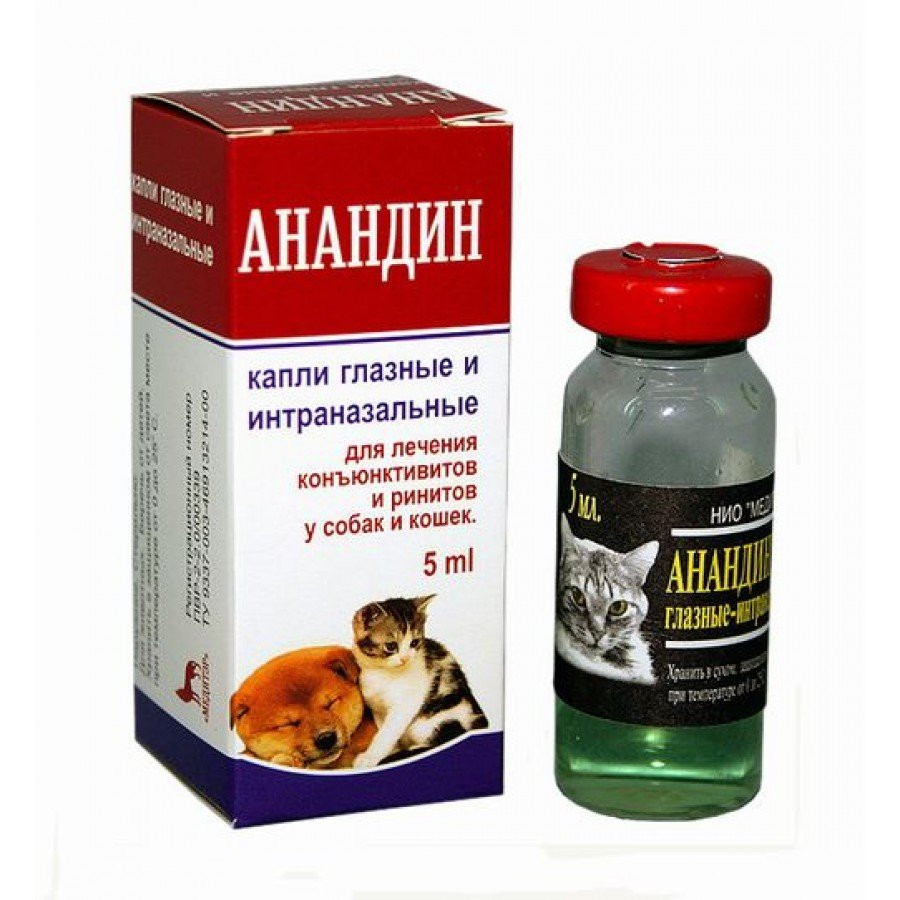 |
| Ear drops | A yellowish liquid substance. Available in 5 ml bottles with a dropper dispenser. | 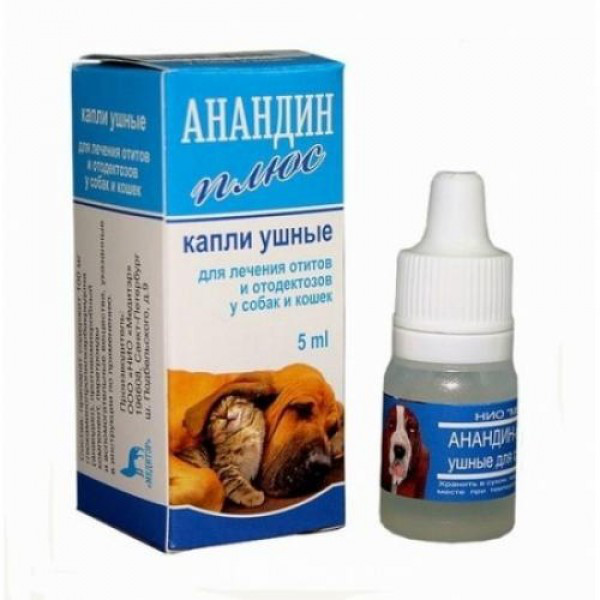 |
| Ointment | A light-yellow gelatinous consistency for external application to the skin. Available in 10 g tubes. | 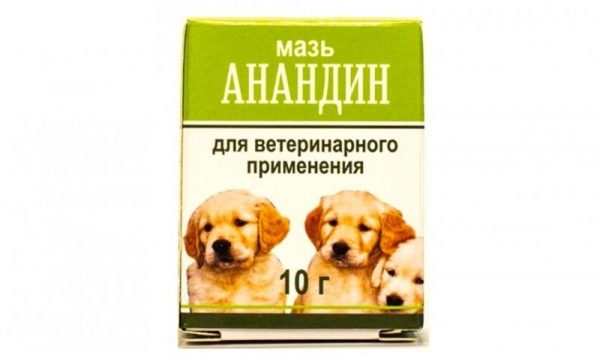 |
| Injection solution | A clear, greenish liquid with a faint, characteristic odor. Available in ampoules of 3 per blister pack of 1, 2, and 5 ml, or in bottles of 5, 10, and 100 ml. | 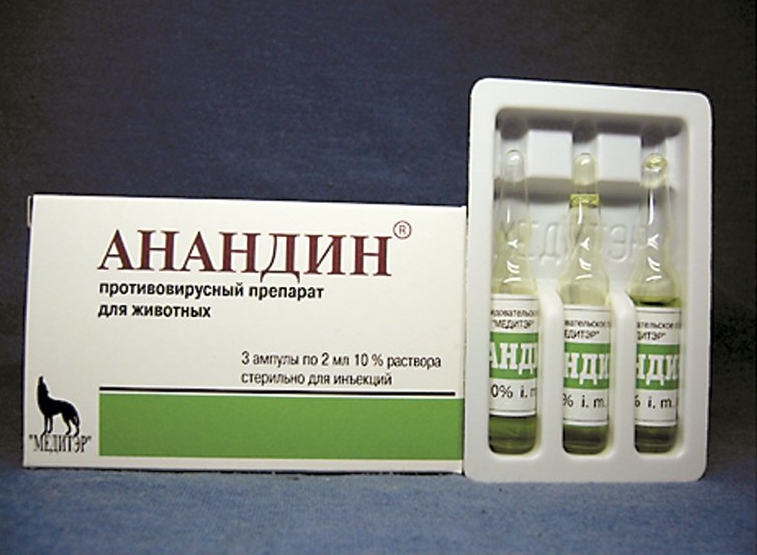 |
Despite the similar biochemical composition of the various forms of the medication, it is unacceptable to use the same medication for both eyes and ears. However, Anandin intranasal drops for cats will not harm the sensitive eye membrane.
Anandin can be used multiple times from an opened bottle, but be sure to close it tightly after each use. Store away from direct sunlight and high humidity. The optimal temperature range is 0 to 25°C. The shelf life of packaged medicine is limited to two years..
Therapeutic effect
Anandin differs from similar medicinal compounds in its high efficiency:
- effectively copes with pathogenic microflora at any stage of development and viruses of various etiologies;
- thanks to its regenerative properties it accelerates the healing process of the skin;
- promotes rapid restoration of hair;
- improves immunity;
- prevents the development of concomitant diseases;
- relieves inflammation;
- reduces intoxication.
The ability to use Anandin as a single treatment agent helps reduce stress in animals associated with taking multiple medications.
Purpose
Prescribed for any inflammatory processes on the mucous membranes in cats, which occur mainly due to a decrease in the body's immune functions. Similar diseases include:
- otitis;
- conjunctivitis;
- rhinitis;
- otodectosis;
- slow regeneration of damaged skin;
- complex stage of immunodeficiency.
They are manifested by the following symptoms:
- difficulty breathing;
- eye and nasal discharge;
- lacrimation;
- swelling of the eyelids and soreness of the ears;
- intolerance to bright light;
- sneezing.
In such a situation, it is recommended to urgently contact a veterinary clinic. Ignoring these symptoms can lead to serious complications, including the condition becoming chronic. After establishing an accurate diagnosis, the veterinarian will prescribe appropriate treatment.
Anandin is often prescribed as a preventative measure, boosting immunity and stopping the proliferation of pathogens at their earliest stages. This is especially important for unvaccinated pets with free access to the outdoors. Even at the slightest suspicion of infection, a prophylactic dose (2 drops in each nasal or ear canal) should be administered immediately before consulting a veterinarian. This will alleviate the animal's condition.
Instructions for use
Veterinarians typically prescribe Anandin for various types of infections. Instructions for use vary depending on the type of medication and its intended use. After examining your pet, your veterinarian will prescribe the appropriate medication and provide detailed recommendations.
Regardless of the doctor's instructions, you should independently study the annotation included with the medication and any contraindications.
Ear drops
These drops are prescribed for ear mites that occur as a result of bacterial and fungal otitis. The medication's antimicrobial and immunomodulatory properties suppress the mites that cause the infection. After completing the treatment course, itching and inflammation subside, and ear pain subsides.
The drug is used according to the following scheme:
- Clean the cat's ears of discharge using a cotton swab soaked in Anandin.
- The bottle is first warmed in the palm of your hand.
- Place 4 drops into each ear canal, supporting the animal's head if it twitches. Regardless of the location of the inflammation, both ears are treated.
- After the procedure, the ears are massaged briefly.
These procedures are repeated once a day for a week. If the desired result is not observed, the drops are continued.
Eye and nose drops
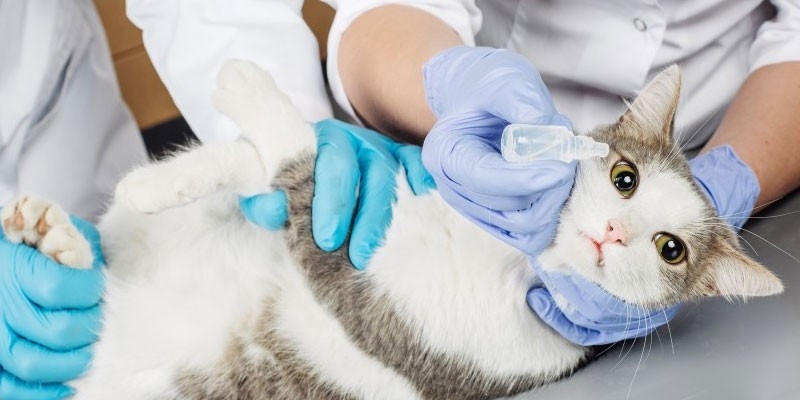
Intranasal and eye drops should be administered immediately upon the first symptoms appearing:
- irritation of the eye membrane - 3 drops on the inside of the lower eyelid twice a day;
- inflammation in the nose - 2-4 drops up to 3 times a day.
Treatment continues until there is a visible improvement in the pet’s well-being, but not longer than 2 weeks.
Please note that these drops are packaged in bottles without a dosing nozzle. Therefore, a pipette is required, which significantly complicates the administration procedure. The medicinal solution should be drawn up in advance and only then the animal should be immobilized. Dim lighting is recommended to prevent the cat from squinting.
Ointment
The ointment is used to speed up the healing of skin cuts, burns, dermatitis and other problems.Spread the homogeneous mixture in a thin, even layer over the affected area and rub in gently. Frequency of application varies depending on the severity of the lesion. Before reapplying the ointment, rinse the skin with saline and treat with an antiseptic. Follow the standard 5-7 day course of treatment.
There are no obvious contraindications for use, except for individual intolerance to certain components in the composition.
Injection solution
The medication has immunostimulating, antiviral, and anti-inflammatory effects. Anandin injections can be combined with antibiotics, hormonal medications, and other medications aimed at relieving acute clinical symptoms.
The dose is calculated in the following ratio: 5 mg for each kilogram of the animal’s total weight.
Directions for use: Administer intramuscularly once daily for three days. The course may be extended to six days if the disease is severe. The active ingredient, once absorbed into the bloodstream, produces a therapeutic effect within half an hour. Injections are not given in the presence of renal failure.
Contraindications and side effects
Anandin is in demand in veterinary medicine due to its minimal contraindications. These include:
- allergic reaction to individual components in the composition;
- damage to the eardrum.
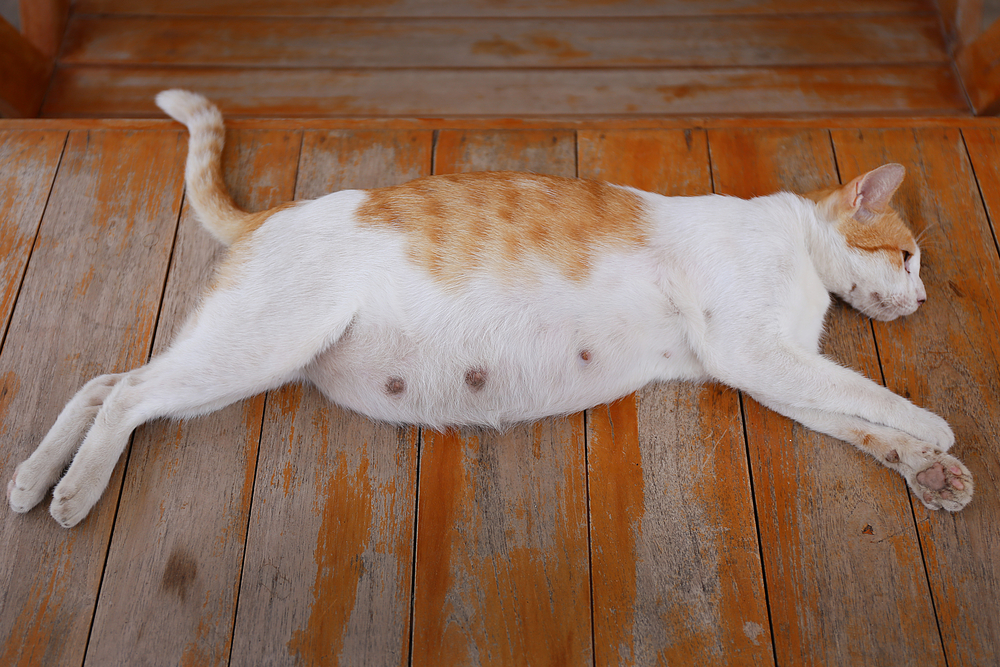
There are no restrictions on the use of Anandin for pregnant cats and kittens. No side effects have been reported so far. If your cat experiences any unusual symptoms after using the drug (excessive salivation, lethargy, vomiting, or skin redness), discontinue use and consult your veterinarian for further treatment.
Advantages and disadvantages of the drug
Compared to other immunomodulatory agents, Anandin has a number of advantages:
- multifaceted complex action;
- easily accepted by pets;
- approved for treatment of kittens, pregnant and lactating cats;
- non-toxic;
- prevalence and affordability;
- compatibility with many other drugs;
- no medical restrictions on use or negative consequences.
The disadvantages include the impossibility of long-term use, but usually one course is enough for a complete cure.
There are currently no pharmaceutical analogues of Anandin for cats, as the drug is so unique in its composition and range of effects.
Price indicator
The average cost of Anandin, according to statistics from several pharmacies in different regions, is:
- intramuscular solution - 165 rubles per package;
- ear drops - 70-75 rubles per 5 ml bottle;
- eye drops - within 80 rubles per 5 ml bottle;
- External ointment - 50 rubles per tube.
Anandin is recommended for every cat owner's first aid kit, as it's a versatile remedy for a variety of ailments. It's particularly effective in treating rhinitis, otitis, and conjunctivitis, regardless of its cause.