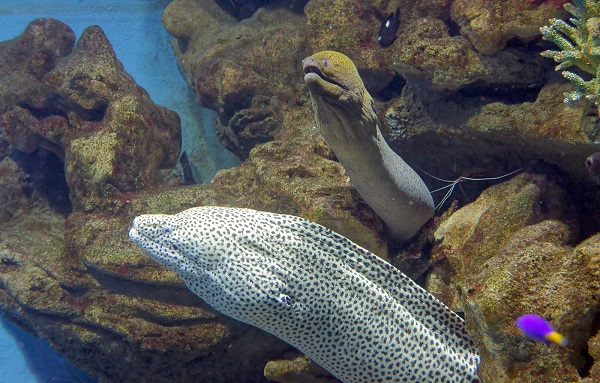
Everyone is familiar with the moray eel, at least from photographs and scientific films about marine life. But it turns out there are about 200 species of these fish, and among them are some very interesting ones. The Javan gymnothorox, or giant moray eel, deserves special attention.
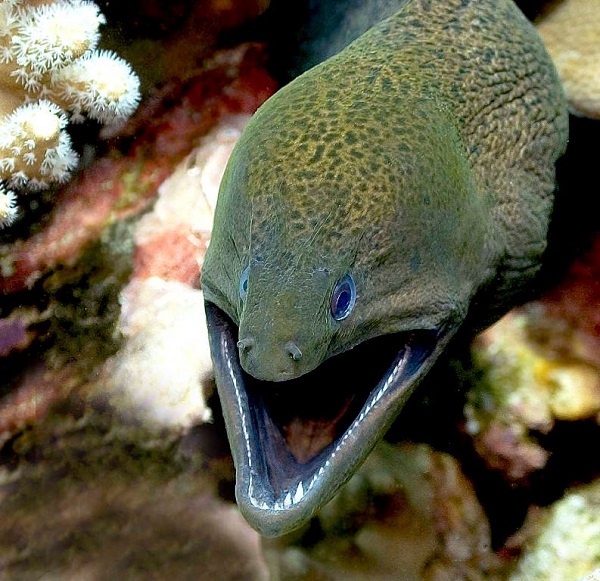
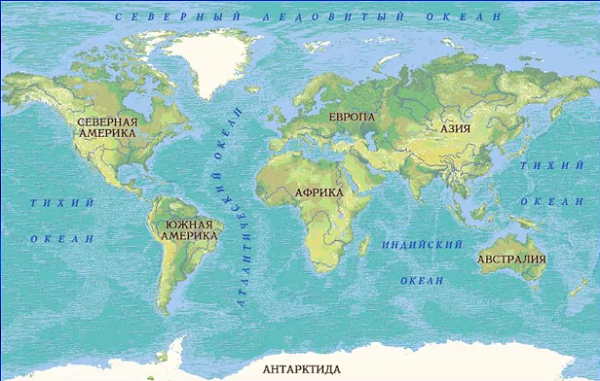
The giant moray eel is the largest of its relatives. It inhabits the waters of the Pacific and Indian Oceans and grows up to three meters in length. The largest specimens can weigh up to 35 kg.
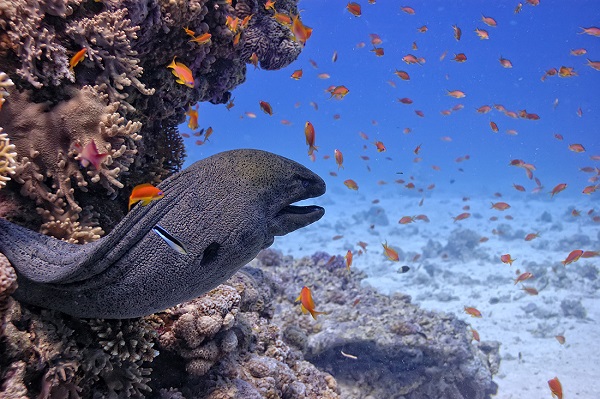
It has a snake-like body without scales or fins, compressed from the sides and covered with a layer of mucus.
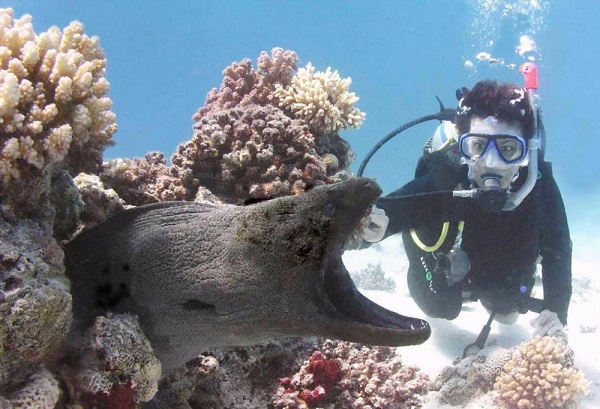
Its coloring is somewhat similar to that of a leopard - almost the entire body is yellow-brown and covered with dark spots, and the abdominal part is uniform in color.
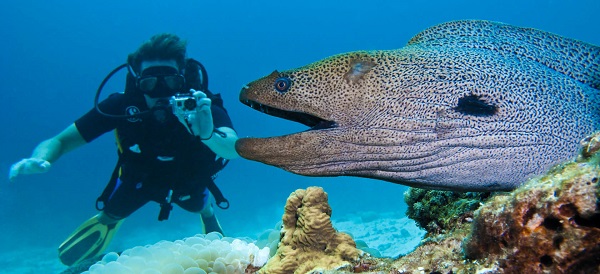
It hunts primarily at night, feeding on fish and crustaceans. It swallows small prey whole, while larger prey is driven into narrow spaces and torn off piece by piece as it attacks.
The moray eel has no tongue, and its teeth are hook-shaped, very long, and sharp. They are curved inward to prevent prey from escaping.
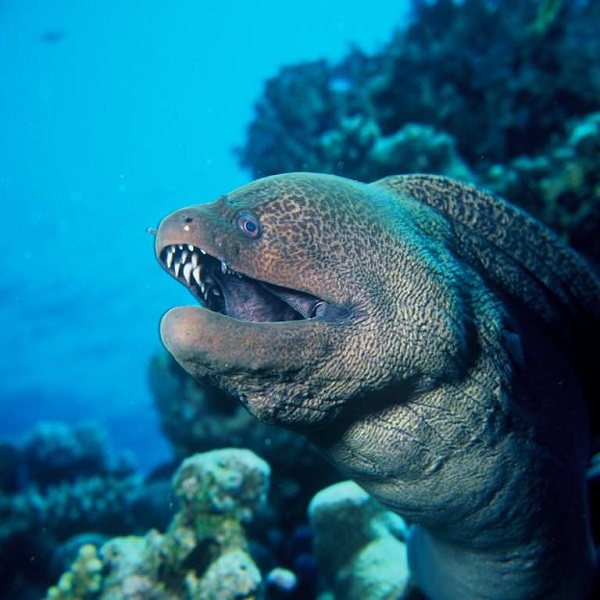
The wounds inflicted by its teeth are so painful and dangerous that even if the victim escapes its tenacious jaws, it still dies.
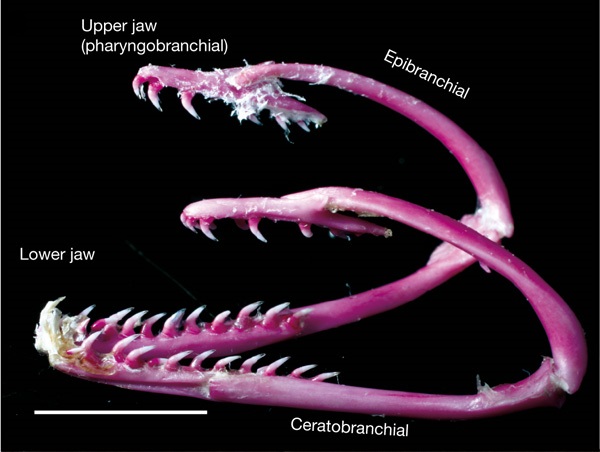
It turns out that moray eels live in symbiosis with a huge number of pathogenic bacteria on their teeth. When they bite, these bacteria enter the victim's wound, causing the victim to die from blood poisoning.
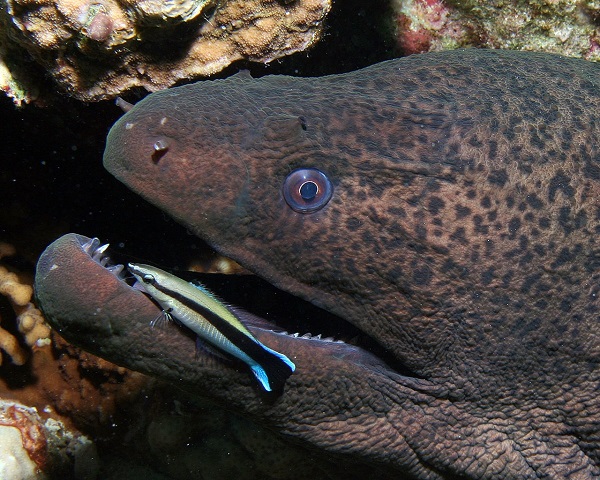
This fish is the prototype for the xenomorph from the film "Alien" by British director Ridley Scott.

The image of a bloodthirsty alien creature was once conceived by H.R. Giger. But recently, biologists Peter Wainwright and Rita Mehta from the University of California, Davis, made a discovery: it turns out that such an "alien-like" creature has long been living on our planet.
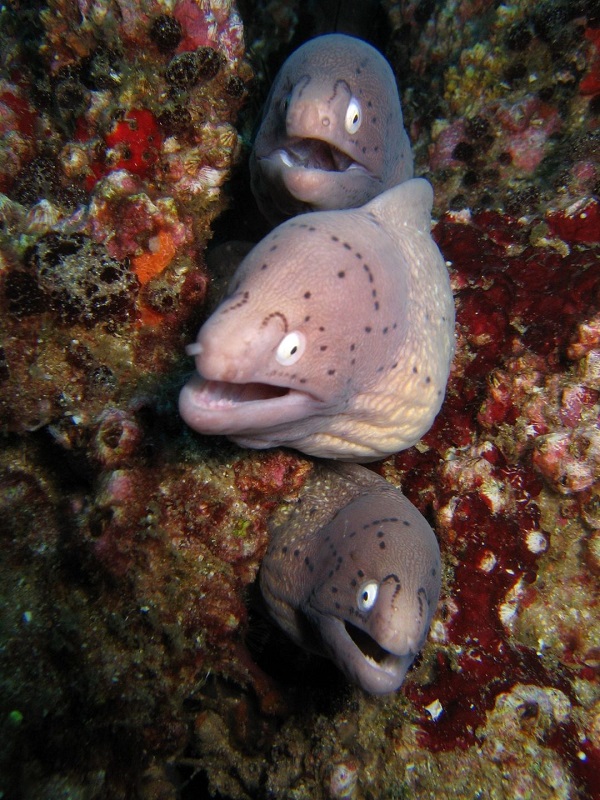
Moray eels hunt by ambush, and due to the confined space they have developed their own alternative hunting method.
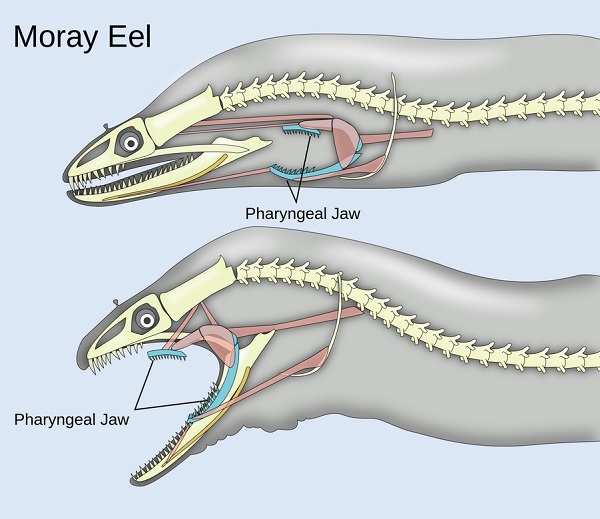
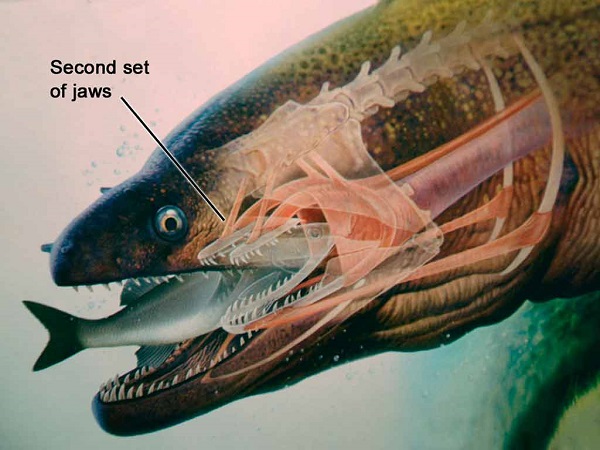
The giant moray eel has second jaws that form a double trap system: when the fish grabs its prey with its main mouth, a second jaw mechanism emerges from deep within its throat and grips the prey even more tightly, crippling and trapping it.
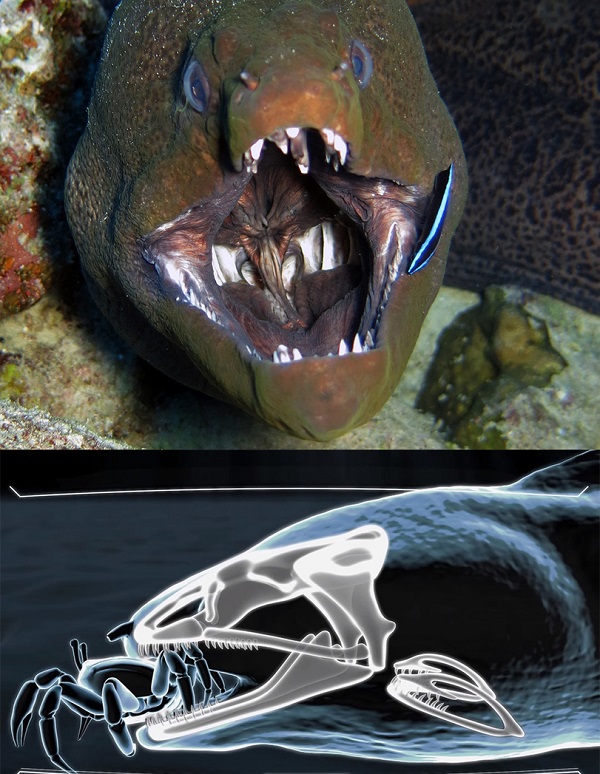
Next, the additional jaw pair helps push food into the esophagus, grinding it along the way.
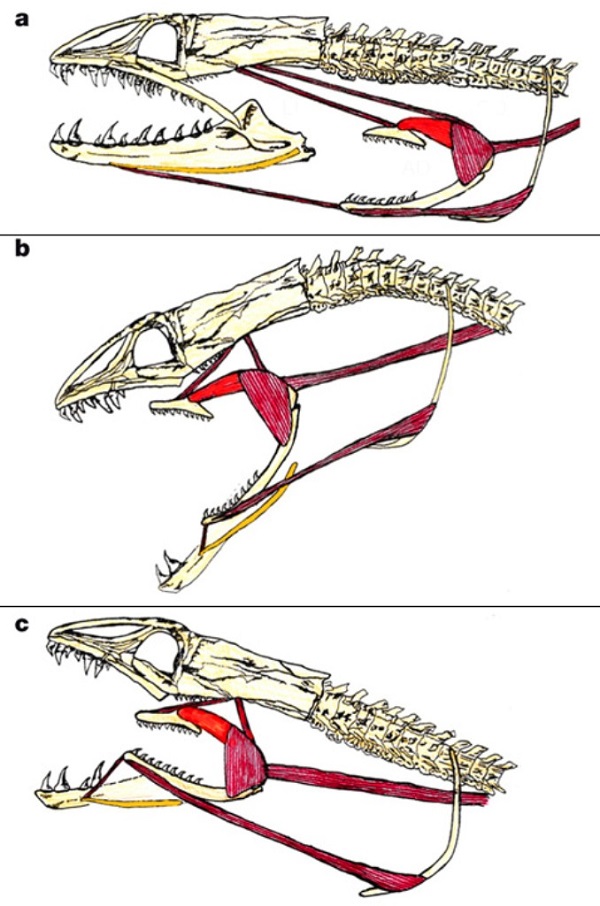
Biologists have carefully studied this feature and found that the muscles in the pharynx push the second jaw almost to the level of the first.
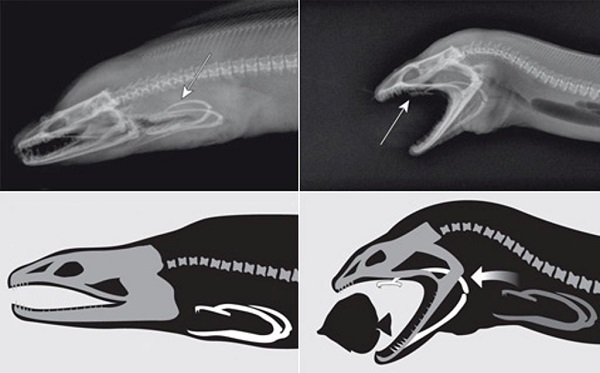
Moreover, the inner upper jaw, in order to be able to swallow large prey, consists of separate bones, and the capture and swallowing of food occurs almost instantly.
Another interesting feature is the symbiosis of the giant moray eel with the sea bass.
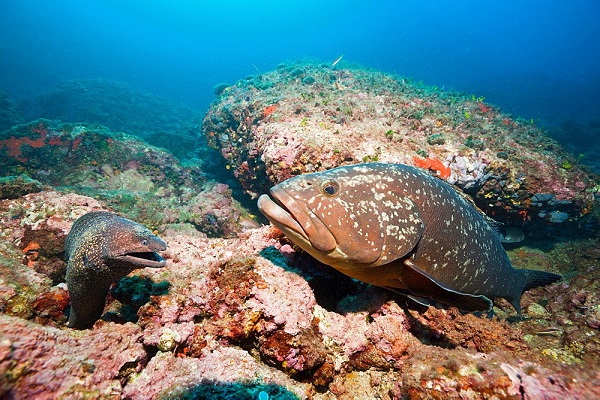
They often hunt cooperatively: if the grouper's prey has eluded it through a narrow crevice, coral, or burrow, and it can't reach it, it "calls" to the moray eel, showing it where the prey is hiding by shaking its head and flicking its tail. The predator catches the fish, pulls it out of the crevice, and shares the catch with the "spotter."
While relaxing at the seaside, don't try to stick your hands into unknown underwater holes—they could be moray eels. However, if you don't provoke them, they won't bother you. Moray eels are sometimes eaten, but their flesh can contain a poison that can cause stomach cramps, so it's best to thoroughly research the matter before attempting such an experiment. Moray eels, like all marine life, are an important link in the ecological chain.