 A vast diversity of living creatures inhabits the land and oceans. Biologists divide them into orders, species, and subspecies. This is entirely justified, as it can be very difficult to classify an animal into a specific species.
However, if living creatures and organisms found on land have been more or less studied, then those that live and swim in the seas are a treasure trove of scientific discoveries in biology for ecologists.
When discussing the currently studied animals of the world's oceans, "cetaceans" occupy a special place. The more commonly used term is "whales." Although whales live in the ocean, they are by no means fish. They, along with dolphins, belugas, and killer whales, belong to the order of mammals.
The structure of the tail fins of fish and whales
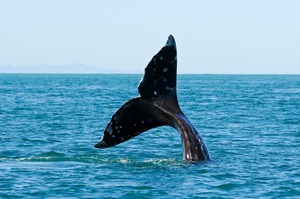
Whales and fish have fundamentally different structures and breathing methods. Fish need fins to move through the water. Whales move through the water in a fundamentally different way. Due to their unique structure, they swim using their tail. This part of the whale's body is arguably the strongest.
When talking about the differences between the tail fins of fish and whales, we can highlight The main characteristics for both species:
- Whales, whose tail fin is horizontal, allow them to easily move in waves through the water;
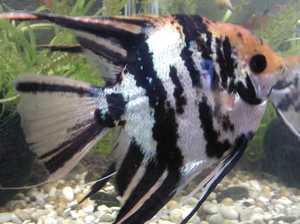
- The fish has a tail fin that is located vertically.
This difference is no coincidence. Despite constantly being in water, both species have completely different skeletons, oxygenation methods, reproduction, feeding methods, and skin structures.
Fish
Speaking of fish and breathing method, the following characteristics of these cold-blooded animals are distinguished:
- Fish breathe using a filter organ. With this organ, they filter oxygen from the water. As a result, they do not need to directly obtain oxygen from the atmosphere.
- Fish reproduction occurs through the development of an embryo from an egg.
- The skin is protected by scales.
Whales
Whales, on the other hand, need to surface from time to time to breathe, then hold their breath for a long time. Underwater, these mammals can spend up to an hour and a halfThe horizontally positioned fin allows it to quickly surface when necessary. The fin also allows it to easily keep its blowhole above water, as the respiratory organ is located at the top of its head.
Based on all of the above, it can be concluded that whales breathe pulmonarily and are warm-blooded. Their skin is often smooth and scaleless, although remnants of fur are also observed. Whales develop in utero, and their offspring are breast-fed.
How whales appeared
 Scientists tend to classify whales as members of the "cetio-ungulates" group. This group is not a systematic group of animals studied. The fact is that there is a theory about the origin of whales from ancient animals that resembled modern wolves in appearance, but had hooves like cows and other even-toed ungulates. Their modern scientific the name "mesonychia"This is a species of ancient mammal that lived approximately 50 million years ago. It is believed that mesonychids lived on land but hunted in the water, along the shores of an ancient sea.
After a certain period of time, this species of even-toed ungulate, while continuing to lead a semi-aquatic lifestyle, began to evolve. Their bodies became more streamlined. A powerful tail appeared, replacing the hind limbs. The forelimbs, or hooves, gradually took on the appearance of flippers, thus the development of fins.
Gradually it was deposited under the skin thick layer of fatThe fur disappeared from the body. The skin became smooth. Speaking of the nostrils, they also underwent some changes. Being almost constantly in the water, it became necessary to adapt to breathing in it. The nostrils moved to the top of the head. Thus, blowholes soon appeared.
Whales in the modern world
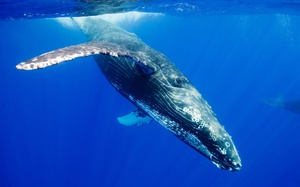 Modern whales and cetaceans have a torpedo-shaped body. This body structure facilitates rapid movement through the water. The disappearance of skin hair also means reduced friction. The skin itself is very elastic and resilient. An undeniable advantage of whale skin is that it is virtually impervious to moisture. All these factors are undoubtedly beneficial for achieving good speed in the water.
Skeletal structure
The whale skeleton has all departments inherent to mammalsHowever, these sections are slightly modified and adapted for life in water. The massive head with its beak flows almost seamlessly into the body. However, the whale skeleton does have a small neck section. The body gradually tapers to the tail.
Whale head
The whale's head—the skull—is fully adapted to its unique breathing system. The nostrils, as mentioned earlier, are displaced toward the crown, and the crown bones are shifted so that they touch the upper occipital bone. The jaw bones are elongated, which is associated with the development of the filtering apparatus.
These mammals have no teeth, it would be better to say that they atrophied and located in the jawboneThe teeth in the oral cavity were replaced by a huge number of horny plates. These are called baleen.
Tail and fins
 The tail of a cetacean is perhaps the strongest and most dense part of the skeleton. Paired lobes, arranged horizontally, are often found at the end of the tail. On the back of almost all cetacean species is a dorsal fin, a depth stabilizer. It is unpaired.
The caudal and dorsal fins are just skin growthsInside them there is only connective cartilaginous tissue.
Whale fins also serve a thermoregulatory function. To prevent the whale's body from overheating, the fins dissipate excess heat.
In cetacean mammals, only the forelimbs have been retained. Having evolved, these have become strong pectoral fins, the carpals of which are often fused. They primarily serve as depth regulators and "turners."
Whales do not have hind limbs.Despite this, scientists sometimes observe and find remnants of pelvic bones, or rudiments in scientific terms, in some skeletons.
In conclusion, we can conclude that the fins of fish and whales differ due to the evolution of whales from amphibians to ocean dwellers. The horizontal position of the fins is determined by a specific breathing method, allowing whales to surface more easily and quickly and inhale.