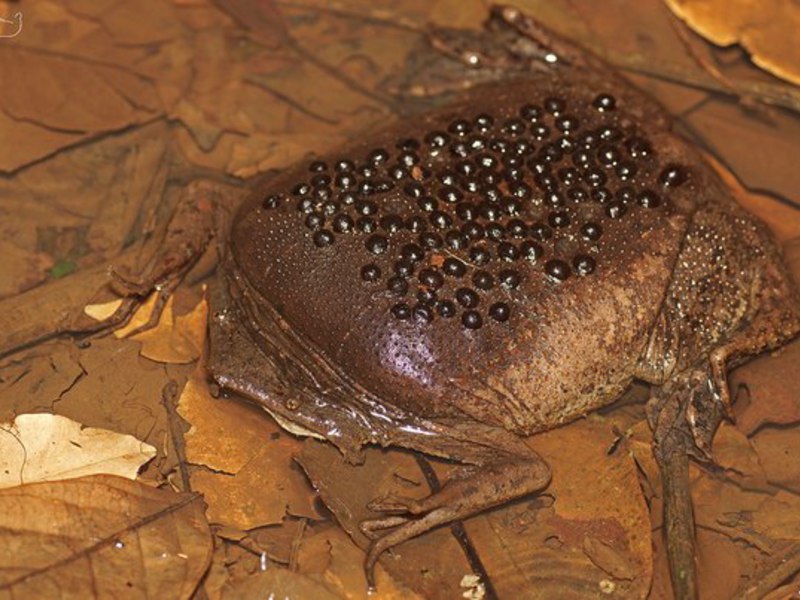
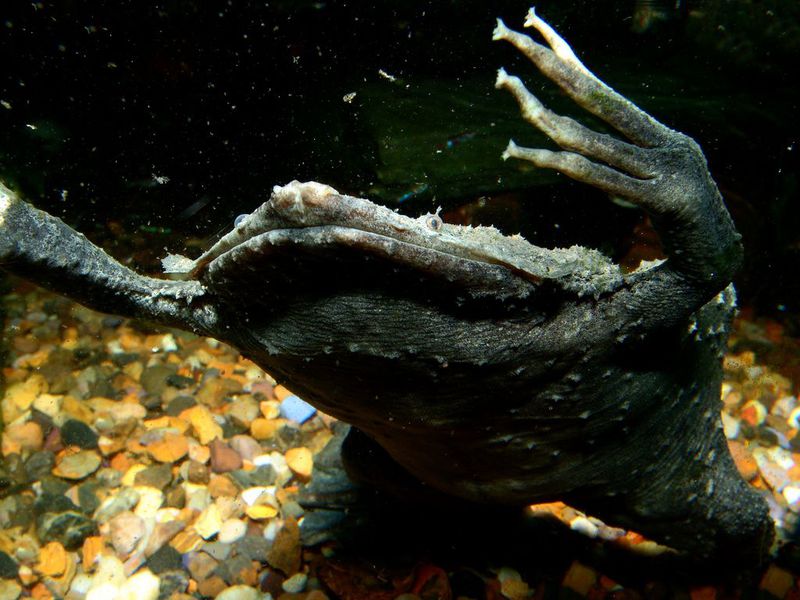
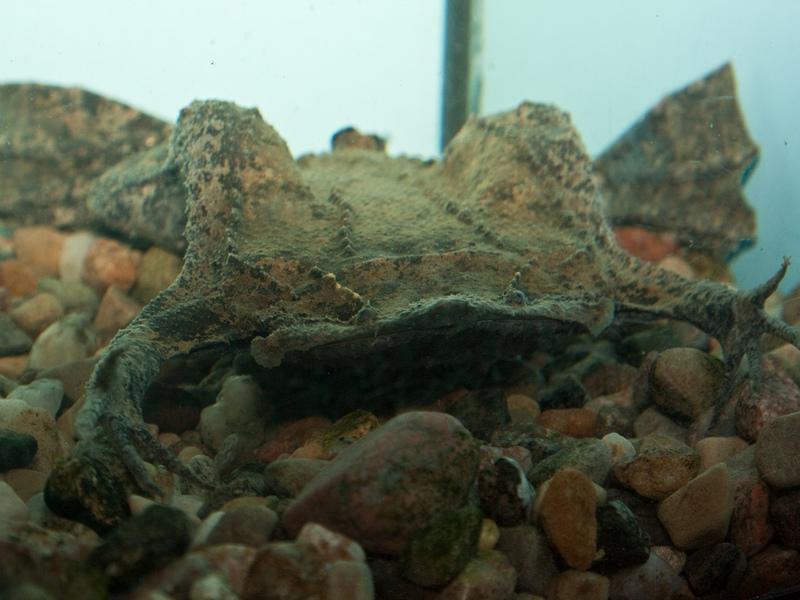
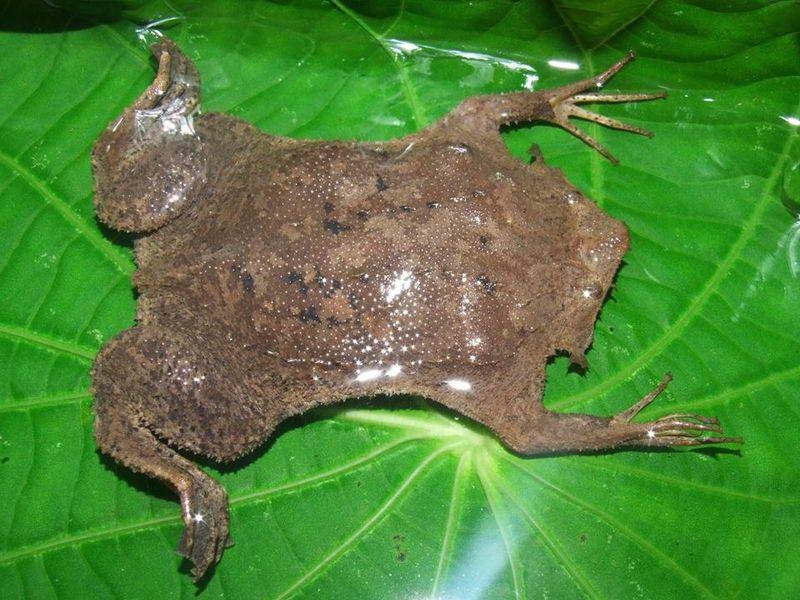
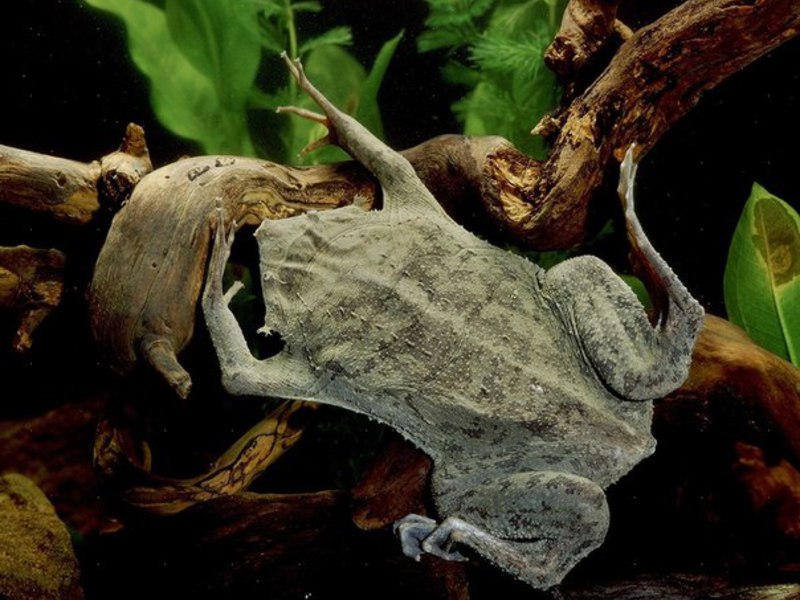
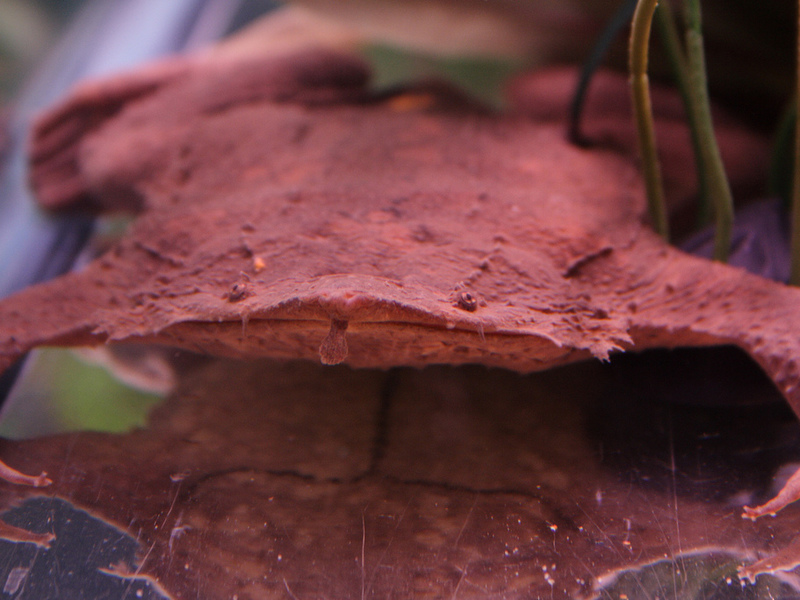
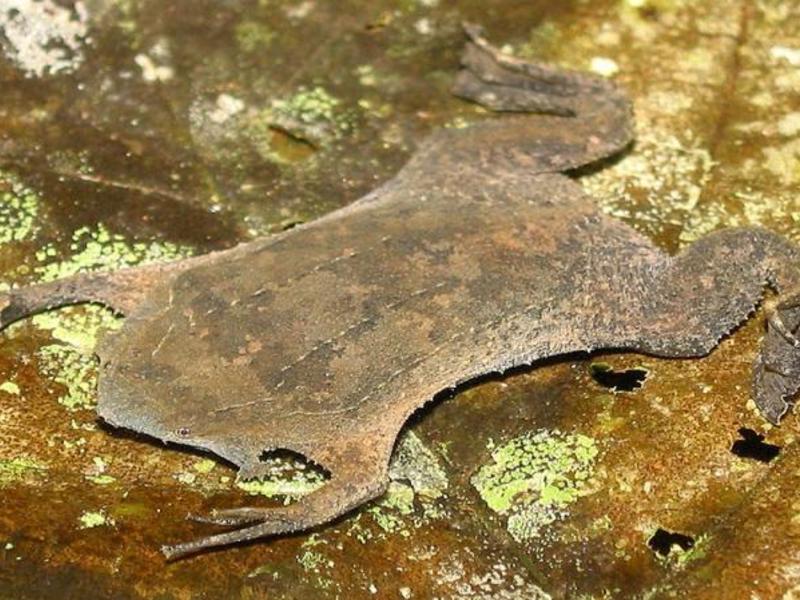
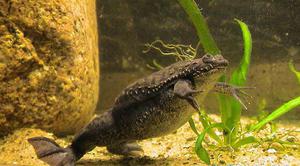
 On earth, we often encounter creatures with which nature seems to have played a cruel joke. Their appearance is often impressive, but more often it evokes unpleasant associations and misunderstandings. One such unusual species is the pipa frog, also known as the Surinam frog. At first glance, the Surinam pipa resembles a lizard that has been run over by a steamroller.
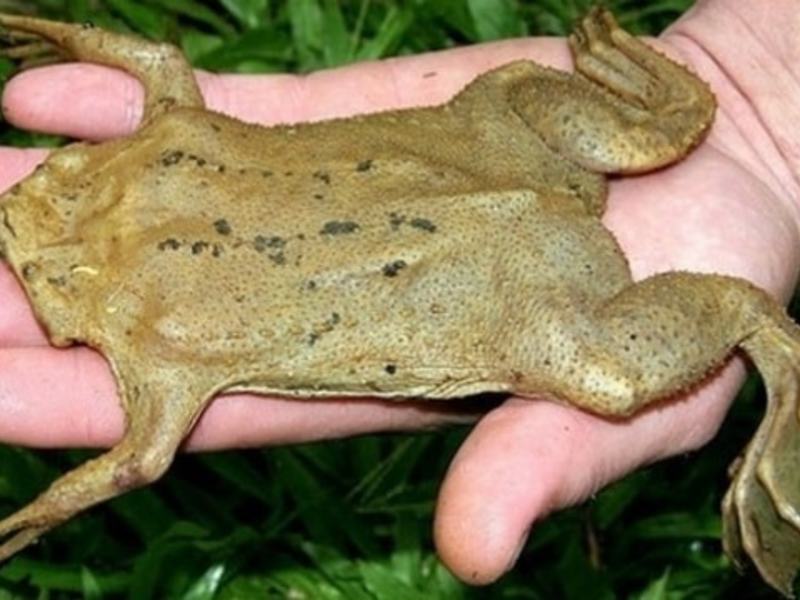
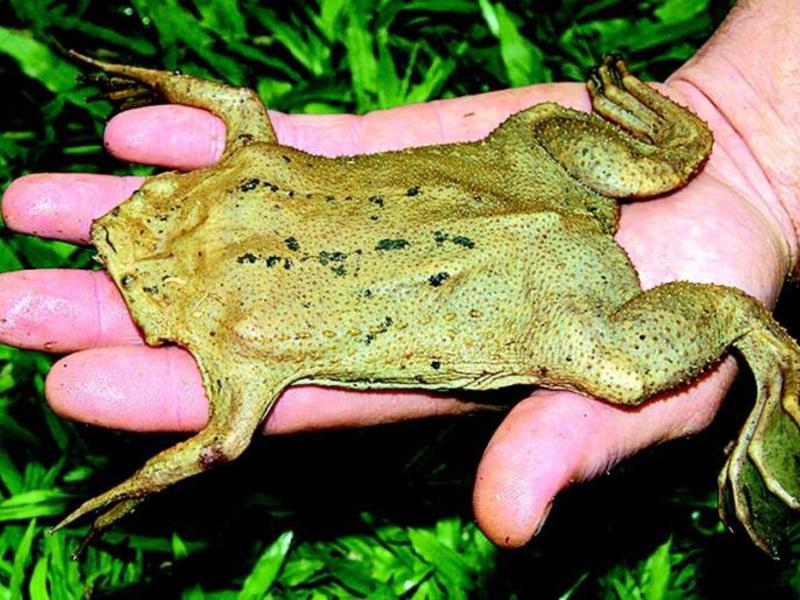
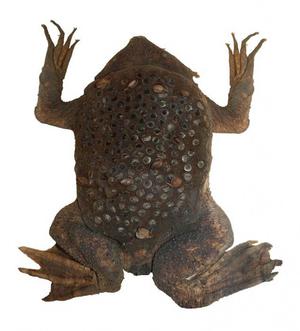
The frog has a large, flat body that smoothly transitions into a triangular head. It has four limbs: the front ones are relatively short, with thin toes, and the hind ones are significantly thicker and have webbed feet. The toes on the front limbs of the pipa are equipped with growths in the form of stars, for which it is sometimes called the star-toed toad. The hind limbs are not much different from those of common toads and are used for propulsion in water. There is a set of tentacles in the jaw area, but no tongue. You can see its appearance in the photo.
Toads can reach up to 20 centimeters in length, but more often they do not exceed 12 centimeters.
Habitat
Surinam frogs live in the Amazon rivers, as well as are distributed in the following countries:
- South America;
- Peru;
- Brazil;
- Bolivia.
The pipa spends its entire life in water. These frogs typically live in small bodies of water and never leave them. There are seven species of Surinamese toads. Travelers report that the pipa leads a calm, clumsy lifestyle, languidly crawling along the bottom of forest swamps. Some individuals of this species also live in irrigation canals and plantations.
Nutrition, behavior
The pipa feeds on whatever it can find on the bottom. Using its forelimbs, the frog loosens the bottom, trying to catch nutritious particles. The main species, the Surinamese toad, is active at night and never leaves the water.
Despite their special love for water, frogs of this species have pulmonary and cutaneous respiration, typical for terrestrial species.
During the mating season, males make interesting sounds, clicks with a metallic sound.
Reproduction
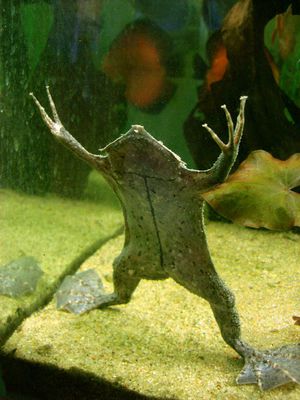 The Surinam pipa is impressive not only for its distinctive appearance but also for its unique reproductive process. Newborns of this species, fully formed young frogs, emerge directly from their mother's back.
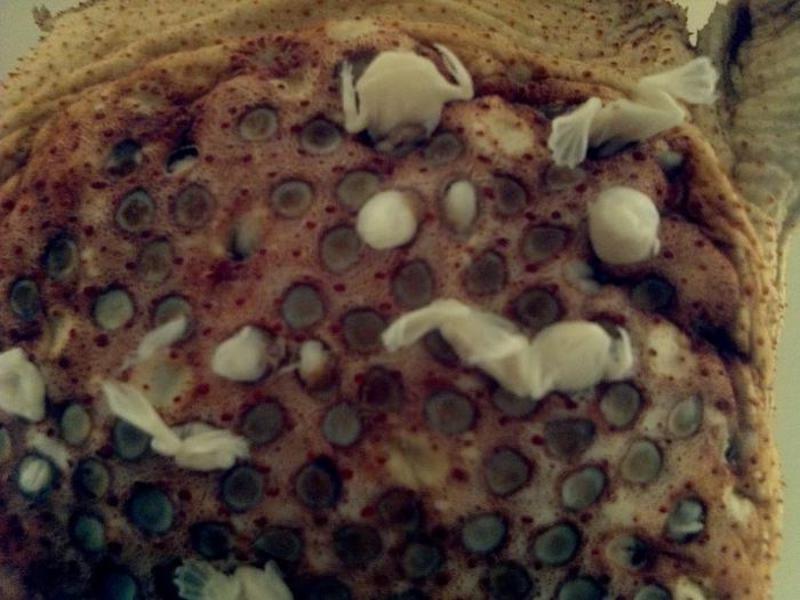
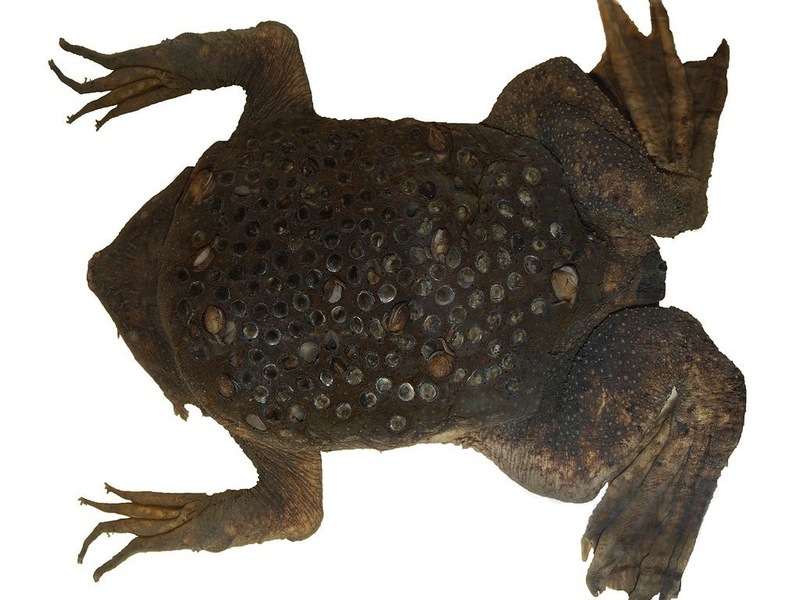
Once Surinam pipas reach sexual maturity (around 6 years), a rather fascinating process begins. It all begins with the male attempting to mount the female, with the goal of impregnating her. If the female is receptive, she the body goes numb, the frogs begin their mating dance. This process begins at night and continues until morning, when the female pipa lays a certain number of eggs. Afterward, the female dives to the bottom, trying to catch them. The male helps the female collect the eggs and "glues" them onto her back. Females of this species of toad have special cells on their backs where the future offspring are laid.
After the future pips are placed in the cells, the female Surinam toad begins to shed the "excess." On her back, in the birthing compartments a gray liquid appears, absorbing fertilized pipa eggs, separating them from debris and unfertilized eggs. This process ends with the frog molting.
The eggs develop like other frogs, only in a very specific location. The young pipas receive nourishment from their mother's body. After a while, the young suriman frogs break through the veil that conceals them from the outside world and emerge from their mother's back.
Toads typically mature within two weeks. A couple of days before they "fly the nest," the capsule housing the pipa tadpole grows in size and cracks. Young pipas make a forced march to the surface of the pond to breathe. Some frogs only succeed on their third or fourth attempt.
At first, tadpoles feed on bacteria and ciliates. Upon reaching a length of 34-40 millimeters, the tadpoles begin to develop limbs and lose their tail. During this period, they live off the protein accumulated in their bodies and nothing else. Once the tail is lost, a fully developed mouth forms, and the froglet begins to feed on live food and breathes through its lungs.
Surinam Pipa as a Pet
 If desired, these unusual creatures can be kept as pets (not everyone likes dogs and cats). However, it is important to provide them with suitable conditions. First and foremost, I need a large and deep aquarium (more than a hundred or two liters). Pipa is nocturnal, so it's important to provide it (them) with as many small "shelters" as possible and dim lighting.
Frogs feed on all sorts of small things, you can use:
- Bloodworm;
- Earthworms;
- Water fleas;
- Even small fish.
The feeding process takes, on average, ten minutes. Once she's full, any waste needs to be removedso that the new aquarium inhabitant does not catch any infection.
There are no restrictions on decorating a Surinamese Pipa's aquarium with artificial or real plants. The bottom can be covered with gravel, although the toad won't care.