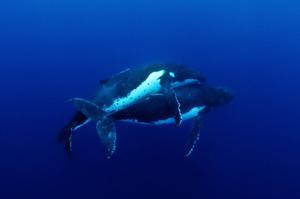
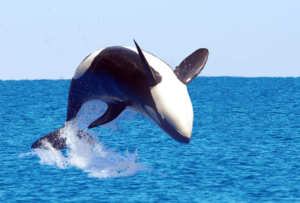
The tongue is an important organ in the life of every animal. Not only does it help chew and swallow food, but it also often functions as a sort of hand, a tube for sucking nectar, a sponge, and much more. Depending on the animal's activity, the tongue can have different shapes and sizes. Which animals in the world have the longest tongues? We'll find out in our article.
Whale
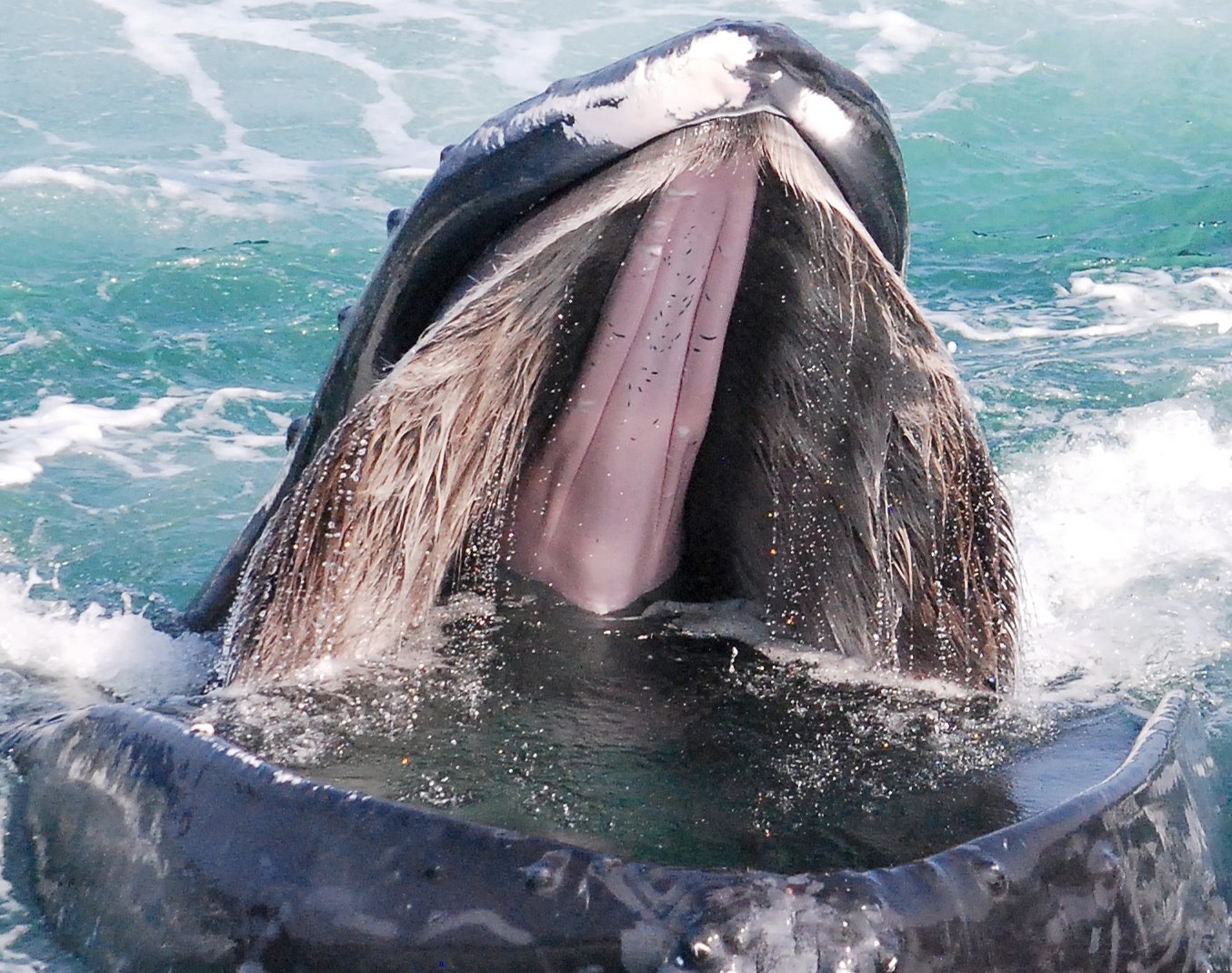
Cetaceans are in many ways the largest marine mammals in size and weight. However, the largest, even among whales, is the blue whale—the largest living animal. Its tongue is also exceptionally large—depending on the size of the animal itself, this muscular organ can reach up to 3 meters in length. This size is no coincidence—blue whales feed on plankton and small crustaceans. To fully nourish their massive body, the animal must filter a huge amount of water through its mouth—its mouth can hold up to 33 cubic meters. The tongue acts as a piston, forcing water out of the mouth through the baleen.
Komodo dragon
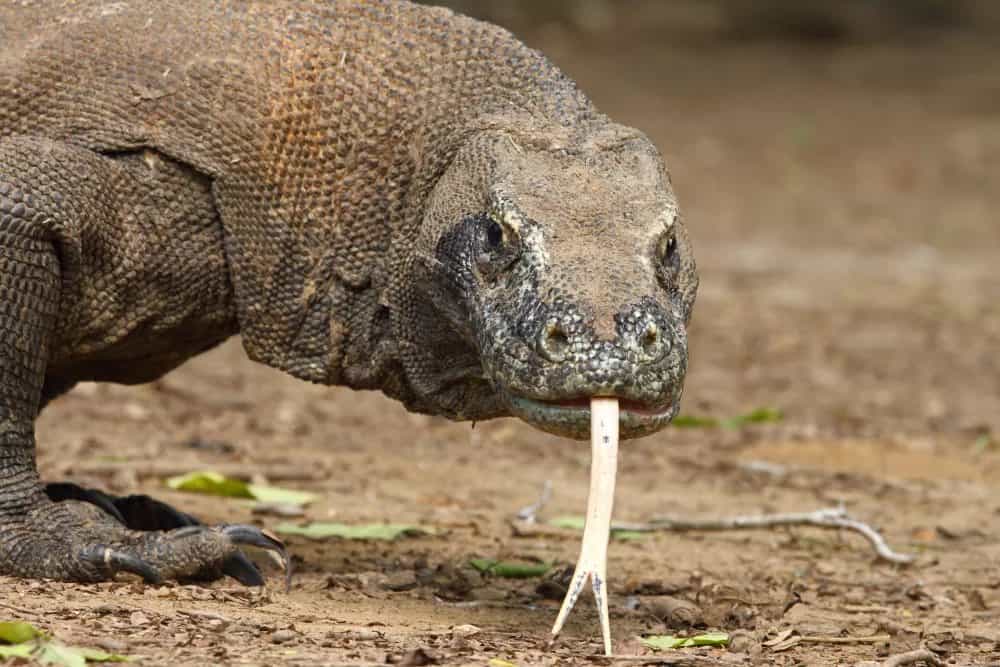
Komodo dragons are the largest reptiles, reaching up to 3 meters in length and weighing up to 95 kg. Their tongue, forked at the end, can reach a length of 70 cm. It not only captures and swallows food but also serves as a venomous stinger. The reptile's mandibular gland contains cells that secrete toxins. When biting, the tongue transfers saliva containing these toxins into the animal's wound. Even if the prey escapes, blood poisoning inevitably awaits. As an olfactory organ, the Komodo dragon's tongue is extremely sensitive – it can detect food from up to 10 km away.
Giraffe
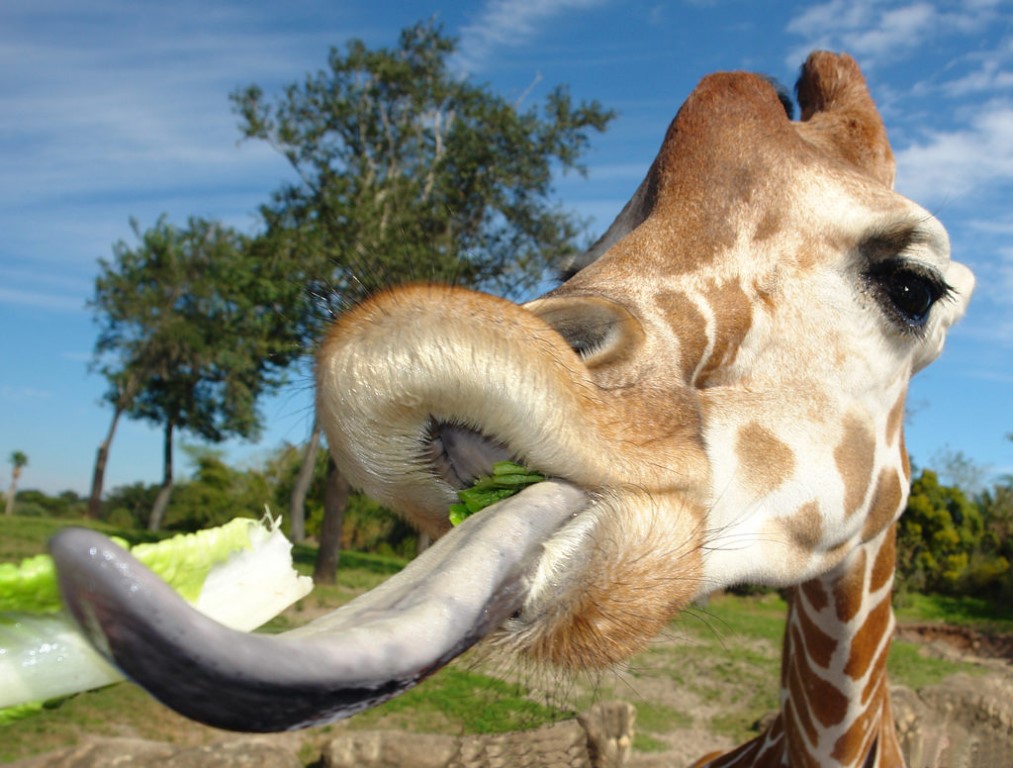
The tallest land animals, giraffes, also have rather large tongues. This dark, long, and muscular organ can protrude almost half a meter. This is due to their diet—giraffes primarily feed on succulent leaves from the treetops. Their favorite tree is the acacia, whose branches are often much taller than even the tallest animals. To browse, giraffes grasp the branches with their tongues and pull them toward their mouths. Interestingly, their feeding behavior can also be used to determine the sex of an animal from afar: males always reach for the highest branches, while females browse at body level.
Chameleon
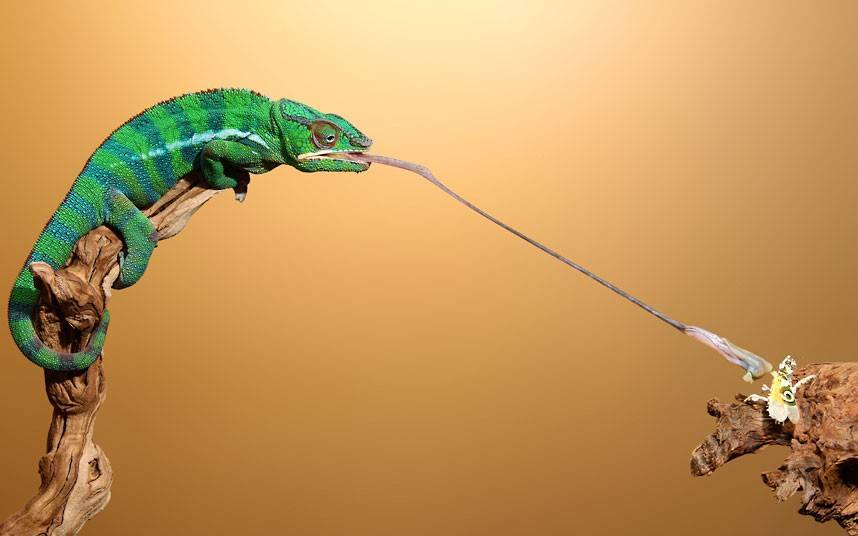
Chameleons are known not only for their ability to change body color but also for their distinctive tongue. It's not so much an organ for swallowing food as it is a weapon for the arboreal lizard. A chameleon's tongue can be about 50 cm long. Its structure is intriguing, as is the way it fits within the reptile's relatively small mouth. When at rest, the hollow tongue envelops the hyoid bone. At the tip, the organ thickens and takes the shape of a cylinder with a notch. When the tongue strikes, a vacuum forms between the base and the edges of this cylinder, acting as a suction cup.
Cow
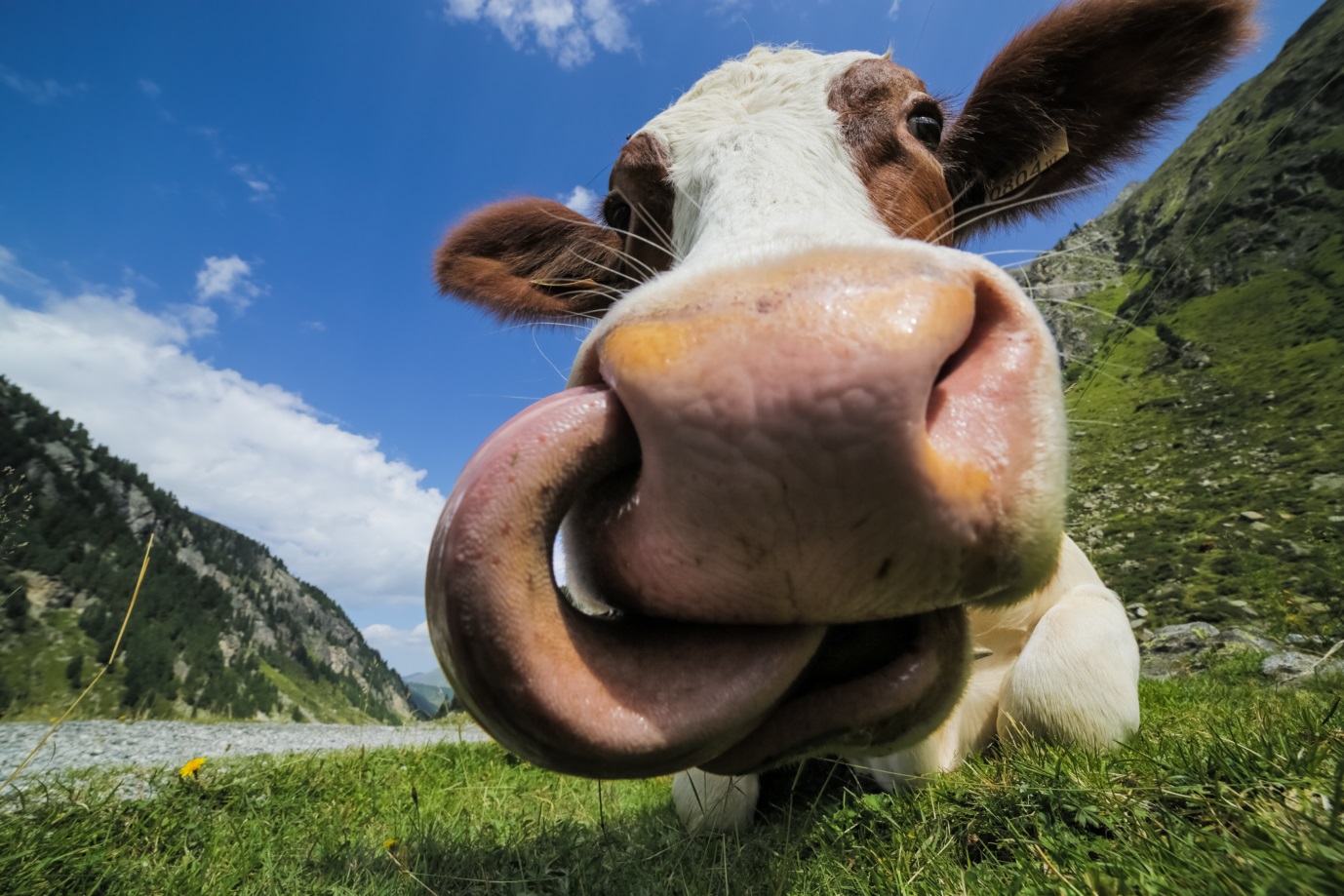
Everyone knows the expression "like a cow licked it with its tongue," meaning "vanished without a trace." It's no coincidence that a cow's tongue has its own saying, as this organ can reach up to 45 cm in length, depending on the age and breed of the animal. With their long, rough tongues, cows can even reach their backs. This length is no accident—cows are large animals that require a large amount of food, and with their tongues, they easily grasp and tear even short grass in the meadow in bunches, rather than one blade at a time. Furthermore, the roughness of the tongue prevents even wet grass from slipping off.
Animal tongues can be anything—a piston, a suction cup, a tool for grasping branches and grass. Unusual shapes, colors, structures, and sizes are striking. The animal kingdom is diverse not only in general, but even in such small (and sometimes large) details.