Preventing the development of severe forms of tick-borne encephalitis involves vaccination, but this method is not widely used in our country. In recent years, doctors have been using interferon inducers for this purpose. One of the best domestic developments is Iodantipyrine tablets.
Content
Iodantipyrine - properties, composition, indications
Encephalitis is a disease associated with damage to the central nervous system, which can result in paralysis and death. Therefore, it is important not to panic when bitten by a tick, but to take emergency measures: remove the parasite, preserve it for research, properly treat the wound, and take Iodantipyrine. This is an antiviral drug that belongs to the group of interferon inducers and has the following properties:
- immunostimulating - increases the production of α- and β-interferon, stimulating the immune system, and also stabilizes cell membranes, preventing viruses from passing through;
- anti-inflammatory;
- preventing infection with tick-borne encephalitis (active against the virus).
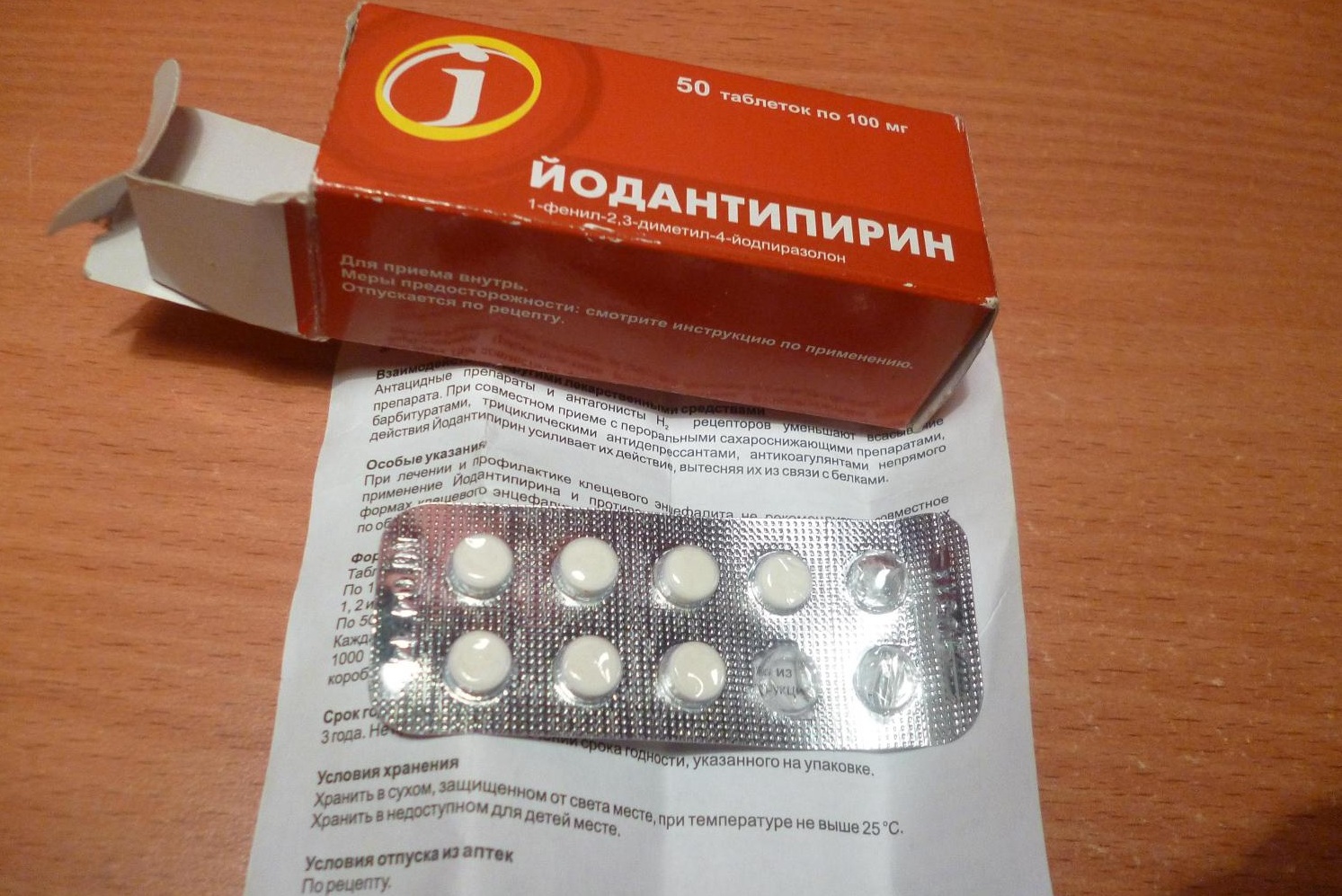
Iodantipyrine - tablets for the prevention of tick-borne encephalitis before and after a bite
Interferon inducers are viruses, bacteria, and other substances of various natures that, when interacting with human tissues, cause the formation of interferon—proteins produced by cells in response to viral invasion.
The tablets are prescribed for the prevention of encephalitis or for emergency treatment after a bite. They are effective in the following cases:
- if 3-4 days have passed since the parasite has attached itself, when it is no longer advisable to administer specific immunoglobulin, a drug against tick-borne encephalitis, which is indicated in the first days after the parasite bite;
- persons for whom, for any reason, the use of immunoglobulin and prophylactic vaccination are contraindicated;
- when administering additional therapy to vaccinated individuals;
- when it is not possible to use laboratory methods to examine a tick or the victim's blood in order to detect the viral antigen (for example, if the person is far from specialized medical institutions).
Table: Composition of Iodantipyrine
| Component | Content in one tablet, mg |
| Iodophenazone | 100 |
| Potato starch | 26 |
| Dextrose monohydrate | 29 |
| Low molecular weight povidone | 5 |
| Magnesium stearate | 1 |
How to use the drug
Depending on whether a bite has occurred or not, different tablet-taking regimens have been developed. They cannot be used simultaneously with anti-tick immunoglobulin.
Standard prevention (before the bite)
If you plan to stay in places where there is a high risk of tick bites, take preventative measures:
- 2 tablets (200 mg) once a day during the entire period of stay in the forest, on a hike, or on a business trip;
- 2 tablets three times a day for two days before traveling to dangerous places.

Before traveling to areas where there is a high risk of tick bites, take Iodapyritin according to the standard prophylaxis regimen.
Instructions for use after a bite
If a tick has attached itself to the skin, the following doses of the drug are recommended:
- on the first and second days after the parasite has attached itself - 3 tablets (300 mg) 3 times a day;
- on the third and fourth days - 2 tablets 3 times a day;
- on the fifth to ninth days - one tablet three times a day.
Benefits of emergency prophylaxis tablets
Preventing the development of severe forms of tick-borne encephalitis involves vaccination. A common practice for emergency prophylaxis after a bite is the administration of specific human immunoglobulin. This has its drawbacks:
- the drug is not always easy to find;
- high price;
- Due to its immunosuppressive effect, this drug can be administered no more than three times in a lifetime.
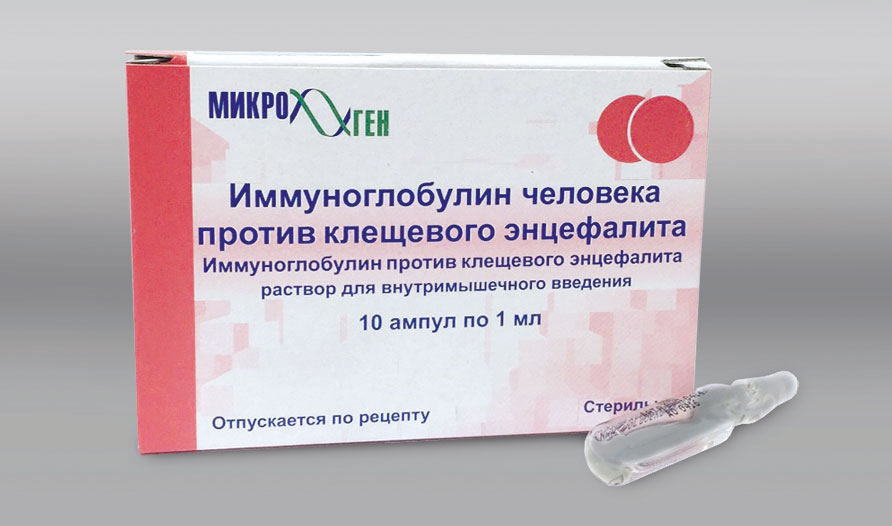
Human immunoglobulin can be administered only three times in a lifetime, unlike Iodinetipyrine, which is used in the dosages according to the instructions throughout the epidemiological period for an unlimited number of years.
Interferon inducers, the most effective of which is Iodantipyrine, do not have these limitations. It also demonstrates superior results in emergency prophylaxis compared to similar drugs. Its advantages include:
- comparable efficacy to immunoglobulin;
- the possibility of multiple doses throughout the epidemiological period throughout life, when necessary (and not just three times);
- availability of the drug (it is relatively inexpensive and is sold in many pharmacies without a prescription);
- non-toxic, has no serious consequences.
Side effects and contraindications
The drug is generally well tolerated when taken as directed. In rare cases, the following may occur:
- angioedema (has an acute, sudden onset, expressed in an increase in mucous membranes and subcutaneous tissue);
- rash and itching;
- other allergic reactions that disappear after discontinuation of treatment.
If you notice any side effects not listed in the instructions, or if they persist even after stopping taking the pills, consult your doctor.
Contraindications are:
- individual intolerance to iodine and preparations containing it;
- severe disturbances in the functioning of the liver, kidneys and hyperthyroidism;
- age up to 12 years;
- breastfeeding period;
- pregnancy.
The tablets are highly biologically active and are metabolized in the liver, which poses a risk to the fetus and children. For this reason, the drug is not recommended for use by pregnant or breastfeeding women or children.
The effectiveness of the drug for the prevention of tick-borne diseases
The drug's immunomodulatory properties explain its effectiveness in the prevention and treatment of tick-borne encephalitis. It exerts a protective effect both when administered early and when taken 3 or more days after tick bite. As a result of emergency or routine prophylaxis, immunological parameters are normalized and pathological symptoms in the febrile form of the disease are reduced. Its effectiveness is comparable to the use of specific immunoglobulin.
The drug's action is based on boosting the body's defenses against dangerous viruses, so it can also be used for Lyme disease, a disease also transmitted by ticks. However, for effective treatment, it is important to test the blood in order to prescribe the correct treatment strategy, since Iodantipyrine alone will not cope with borreliosis. The tablets are also effective against influenza and acute respiratory viral infections, hepatitis, and the herpes virus. Similar medications include acyclovir, rimantadine, and other antiviral drugs.
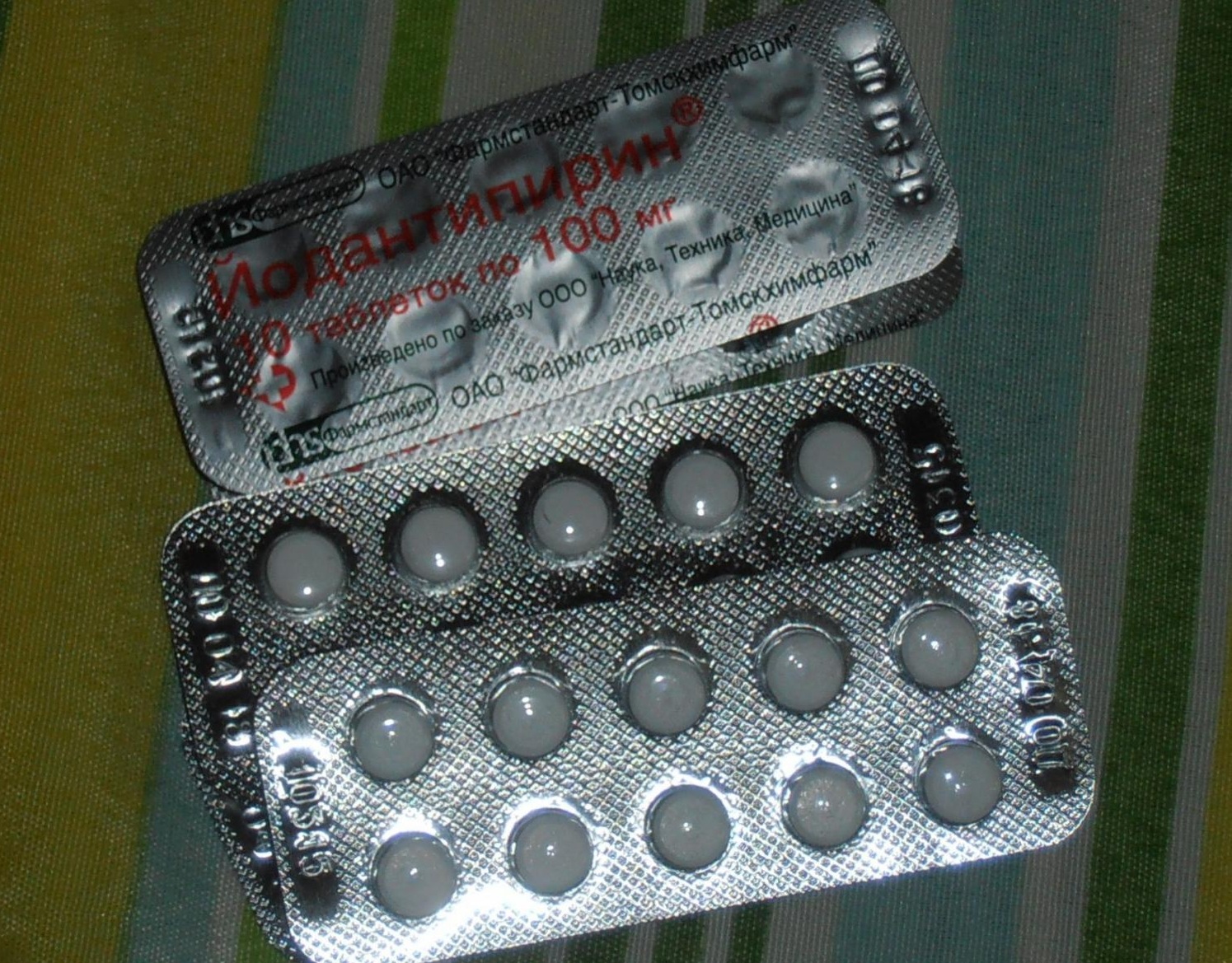
Iodantipyrine is not used to treat borreliosis: in this disease, tablets can be an auxiliary means to increase the body's defenses and speed up recovery or reduce symptoms.
Patient reviews
Of course, it's best to see a doctor right away, but you'll agree, that's not always possible. For example, in our case, when we were vacationing in a remote village and my husband got a tick, and there were no hospitals within a few dozen kilometers. For such emergencies, I recommend always keeping Iodantipyrine on hand. It was a real lifesaver! I now take it myself as a preventative measure, because it's always better to prevent than to treat!
I'd like to give credit where credit is due and write a review of the antiviral drug Iodantipyrine. Developed in Tomsk. I learned about it in early spring and was surprised that it could be taken prophylactically, and that ticks weren't a threat. I became especially interested in it when I learned I'd be living in the Far East starting in May, where ticks are the most aggressive and dangerous. I bought it at a pharmacy in my city without a prescription for 255 rubles and took it prophylactically according to the instructions. I moved, and lo and behold! I was bitten by a tick literally on the second day of my stay. I immediately went to the doctor, they removed the tick, took it for testing, and the results showed the tick had encephalitis. By the time the results came back, a week had already passed, and I should have at least had a fever by now, but I felt fine. I saw the doctor and had tests done—everything was fine, which was surprising. I now recommend it to all my friends and acquaintances who regularly spend time outdoors.
I believe that Iodantiperine tablets did play a positive role in my treatment; perhaps they contributed to the mild encephalitis. It so happened that I was able to get vaccinated the following spring, but that's a different story. These tablets should never be recommended as a panacea. But they're worth having on hand just in case, especially for those who haven't been vaccinated against tick-borne encephalitis. I also hasten to warn you. If you're vaccinated or taking Iodantiperine, remember that it doesn't work against Lyme disease, which ticks carry twice as often and is no less difficult to treat than encephalitis. It's also easy to neglect (the disease manifests itself and then disappears, dormant within). I'm not a doctor, and I strongly advise against self-medication, especially for such serious illnesses.
When a tick was found on my husband's body, we were very scared. It was a day off, so we went to the emergency room. They carefully removed the tick and sent it for examination. But we were advised to buy Iodantipyrine at the pharmacy and begin treatment immediately, without waiting for the test results. That's what my husband did. The tick's test results were negative for encephalitis. But he didn't regret taking the pills. Better to be safe than sorry. The package contains five 10-pill strips. There are detailed instructions. Everything is packaged in a cardboard box. I still have one partially filled blister pack. My husband hadn't finished that many pills when the test results came back. I recommend not skipping this encephalitis prophylaxis, as the disease is very serious. My husband didn't experience any side effects from taking this medication.
I'm happy with the medication and surprised that anyone has side effects from it, but for me and my family, everything went smoothly. We took it as prescribed, just like vitamins, to prevent encephalitis. We were bitten by ticks, but everything was fine. I think it's good that they produce medications like this, because immunoglobulin is long outdated and not suitable for everyone. The only thing is that iodantipyrine is not suitable for children, and there are no equivalents for them.
Prevention is the best defense against encephalitis. Taking Iodantipyrine can help prevent or more quickly overcome the virus after a tick bite, reducing its consequences.