The Tibetan Spaniel (also known as Simkhyi or Tibbie) is a toy and very rare breed whose ancestors came to Europe from the mountain monasteries of Tibet, where they were assigned special functions. Although quite small, these dogs possess a determined character and an inexhaustible reserve of courage and devotion to their master. For this reason, they are sometimes described as "a big dog in a small body."
Content
Description of the breed
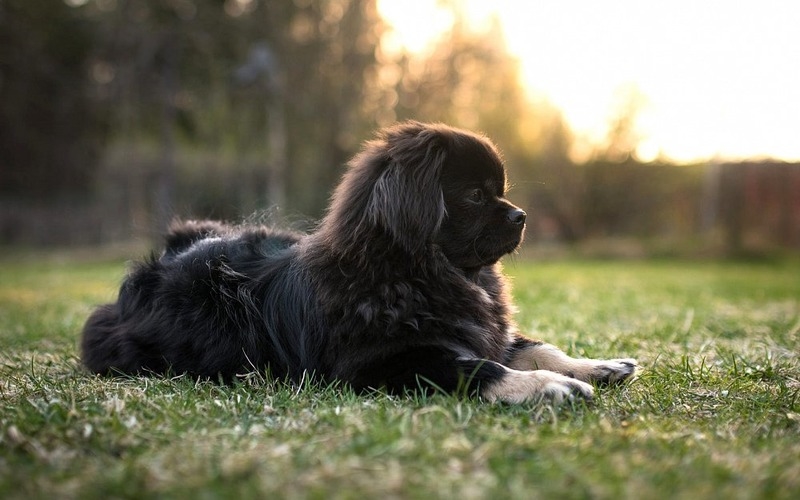
The Tibetan Spaniel is a very rare breed. They still rank near the bottom of the popularity rankings in the US and EU countries.
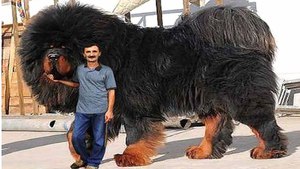
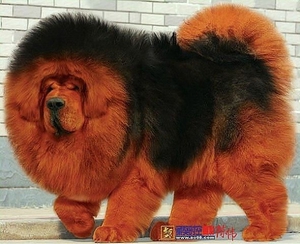
Tibetan spaniels are among the most ancient breeds, known as far back as the 8th century CE. Since time immemorial, they have served in Tibetan monasteries, spinning prayer wheels and warning larger guard dogs—Tibetan mastiffs—of approaching intruders with their resonant barks. They were considered sacred and could not be sold, but could be given as gifts. This is how these dogs arrived in China.
Europeans only learned about the tibby in 1890. However, the breed didn't gain widespread recognition until the 1920s, when an English breeder took a serious interest in them. He actively developed Tibetan spaniels, but World War II put an end to all his efforts. It wasn't until 1957 that the Tibetan Spaniel Association (TSA) was founded, and a couple of years later, thanks to it, these dogs were recognized by the English Kennel Club. To this day, the breed is considered one of the rarest and most rare.
Standard
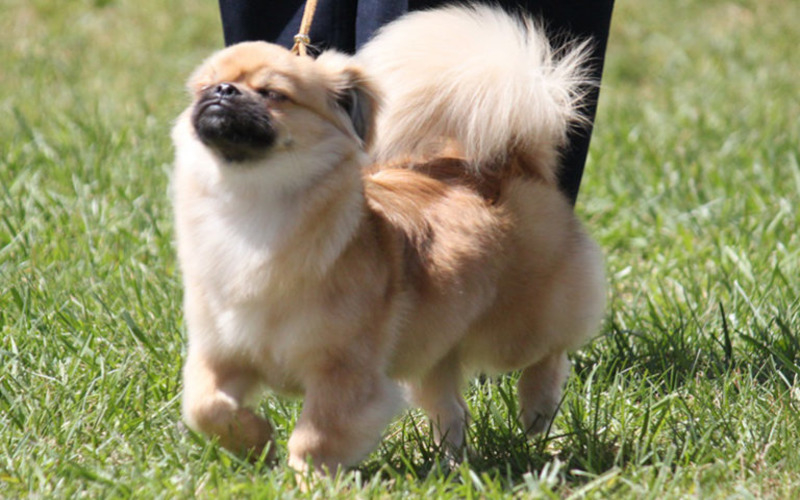
When walking or running, the Tibetan Spaniel's movements are confident and effortless, with its head held proudly high. During physical activity, a purebred should not arch its back, raise its croup too high, or have its paws overlap.
Tibetan Spaniels are modest in size and light in weight. Males reach a maximum height of 26 cm at the withers, while females reach 24 cm. Their weight ranges from 4 to 6.8 kg.
Table 1. Body characteristics of Tibetan Spaniels
| Sign | Brief description | Disqualifying faults and defects |
| Head |
|
|
| Muzzle |
|
|
| Eyes |
|
|
| Nose |
| |
| Lips and jaws |
|
|
| Ears |
|
|
| Frame |
| |
| Neck |
| |
| Back |
| |
| Limbs |
|
|
| Tail |
|
Coat and colors
Tibetan spaniels have a silky, dense coat with a thick undercoat. The guard hairs are medium-length and fine. The hair is longer on the ears, chest, tail, and breeches. Males differ from females in their distinct "lion-like" mane.
The breed's color palette is extremely diverse, ranging from black to white and cream. Various combinations of colors with iridescent and smooth transitions are also acceptable. A uniform golden color without a dark mask is especially prized by breeders.
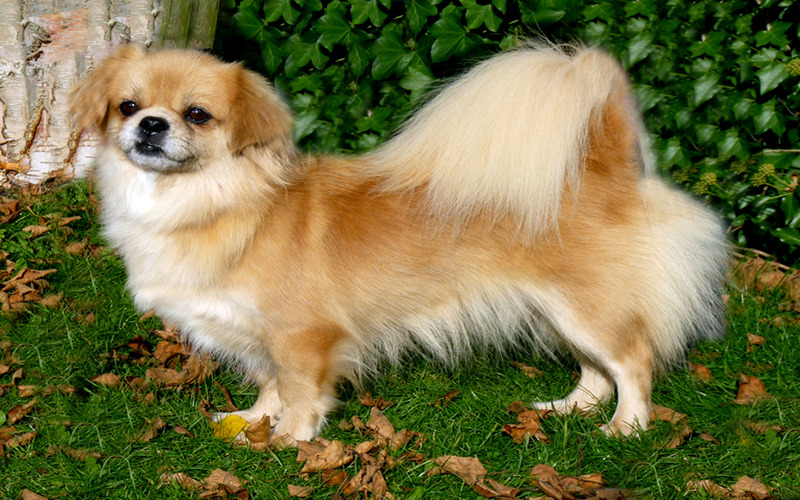
The golden color without a black mask on the face is especially prized by breeders.
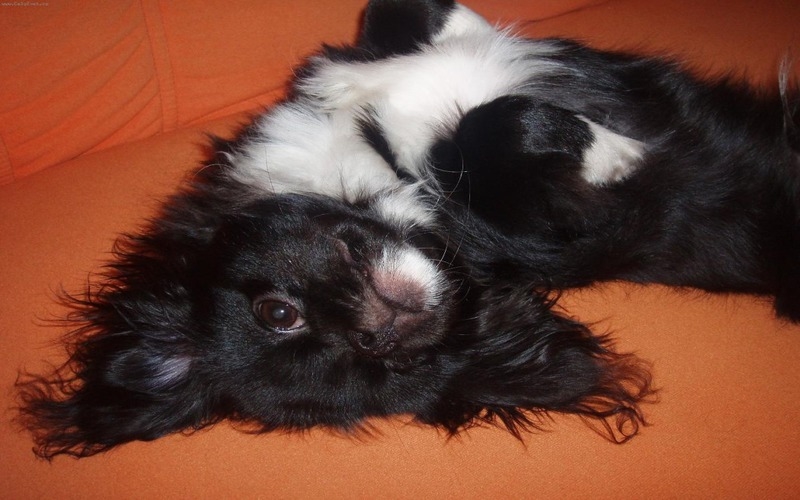
White markings on different parts of the body are only welcome and are considered an advantage of the individual, especially if it is black. Each of these light inclusions contains a specific meaning depending on its location:
- the spot on the tip of the tail is associated with the puppy's mischief and cunning;
- on the forehead - with the mark of Buddha;
- on the chest - with a symbol of a pure heart.
Pros and cons of character
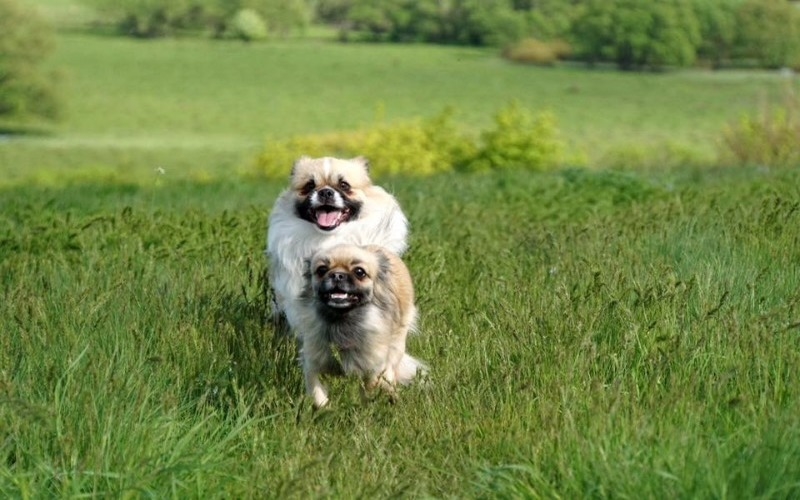
The Tibetan Spaniel is very active and requires a lot of exercise. This breed is not well suited for older or busy people who cannot devote most of their time to their pet.
Today, the main purpose of the Tibbie is to be a companion dog, man's best friend. The breed's watchdog role has faded into the background, but despite their modest size, these dogs are no less capable of guarding the home than their ancestors. They are wary of strangers and very courageous, ready to fight off an aggressor if necessary, alerting their owners to approaching danger with a resounding bark.
When not guarding territory, a dog is cheerful, playful, energetic, and happy. Its boisterous activities require maximum space and minimal restrictions. If you restrict a dog or prevent it from fully engaging in playful behavior, a good-natured animal can become a hunted, embittered, and mentally broken creature.
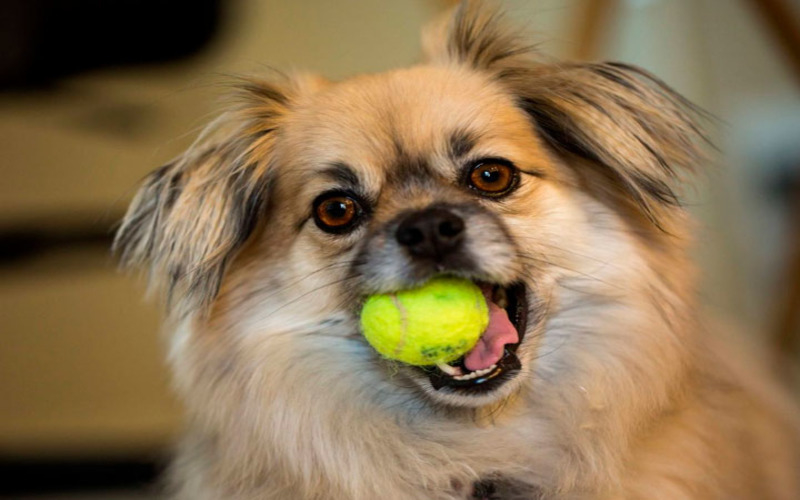
Tibbies are very active and playful. They don't stop moving even at home, so they need space to play.
Tibetan Spaniels are very demanding of their owner's attention and don't like to be left alone for long periods of time. In return, they are ready to repay with extraordinary devotion and affection not only towards the owner, but also towards his family members.
The breed is noted for its high level of intelligence and its ability to remember commands. However, this barrel of honey also contains a fly in the ointment: excessive willfulness and a desire for independence. Even with the most careful training, the dog will continue to rely on its own judgment throughout its life when assessing situations and making decisions independently.
All the advantages and disadvantages of the "tibby" are concentrated in its contradictory character, in which coexist:
- exceptional devotion and desire for independence;
- good nature and self-will;
- courage and recklessness;
- lack of aggression, anger and stubbornness.
Life expectancy and susceptibility to disease
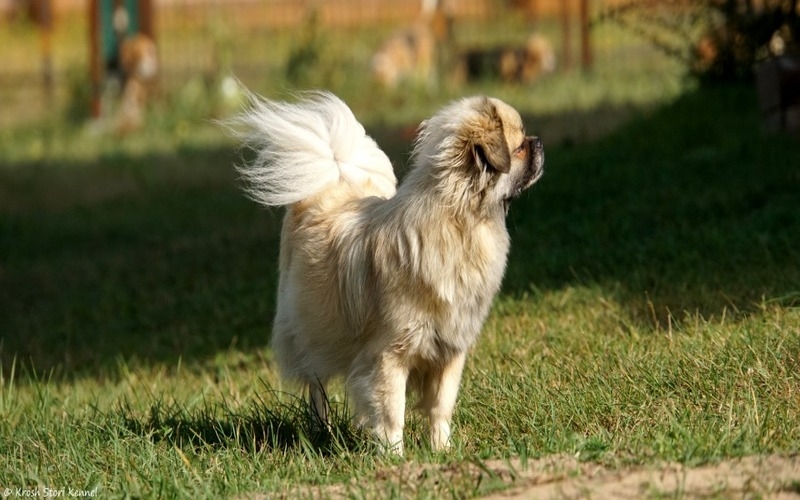
Tibetan Spaniels are not a disease-resistant breed. They require careful grooming to maintain good health.
The average life expectancy is 12 years.With proper care, they can live up to 15 years. This breed's exceptional health is not to be sniffed at, as any violation of care guidelines can lead to irreversible consequences and exposure to various diseases. The most common of these include:
- Food allergy. It is treated with immunomodulatory and histamine drugs, and diet.
- Dermatitis and other skin diseases. It is necessary to use antiseptic, fungicidal, antihistamine, immune-boosting agents, antibiotics, and physiotherapy.
- Hip dysplasia. Anti-inflammatory, antispasmodic, and chondroprotective medications are used for treatment. In severe cases, surgery is required.
- Intervertebral disc herniation, back pain and other musculoskeletal disorders. Temporary restrictions on the animal's physical activity, conservative therapy (with non-steroidal anti-inflammatory drugs to reduce swelling of the tissue around the spinal cord and analgesics) are required; in extreme cases, surgery to excise the tissue that is exerting mechanical pressure on the spinal cord, or the implantation of an implant that will serve as a replacement for the worn intervertebral disc.
- Respiratory diseases, including shortness of breath. With respiratory dyspnea, a dog requires symptom relief, oxygenation, and further therapy depending on the diagnosis. For cardiogenic dyspnea, x-rays, ultrasound, hormone and parasite tests, and blood and urine tests are prescribed. Painkillers are used to relieve pain, while diuretics and anti-inflammatory drugs are used for pulmonary edema.
- Angina pectoris, a disorder of the heart valve. Pain during angina attacks is relieved with analgesics, and anticoagulants are used to prevent thromboembolic complications. A specialist may prescribe cardiac glycosides and mineral and vitamin supplements. The animal requires complete rest and a stress-free environment.
Maintenance and grooming
The Tibetan Spaniel can be kept both in a city apartment and in a private house, provided it is provided with space for playing and running, frequent walks and outdoor activities. However, living outdoors is not suitable for these small dogs, despite their thick, double-layered coat.
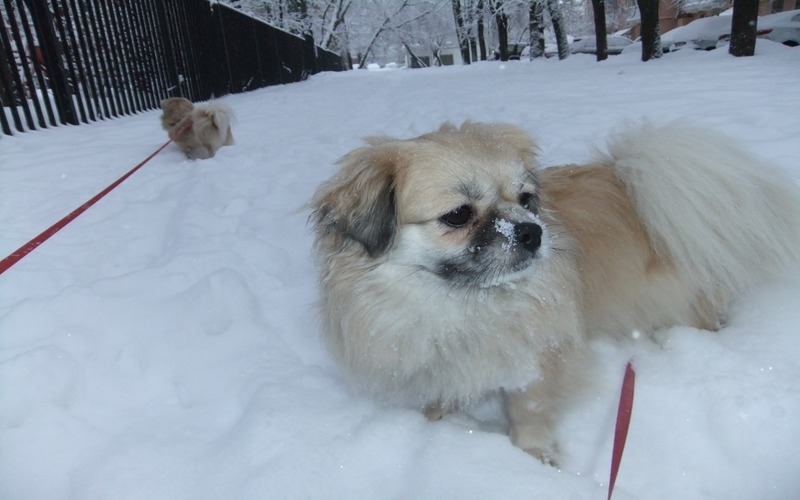
"Tibbies" enjoy walking even in cold weather
In winter, walks can be shortened, but never eliminated entirely. Tibetan Spaniels adapt easily to harsh climates, just like their ancestors who lived in the cold mountains of Tibet.
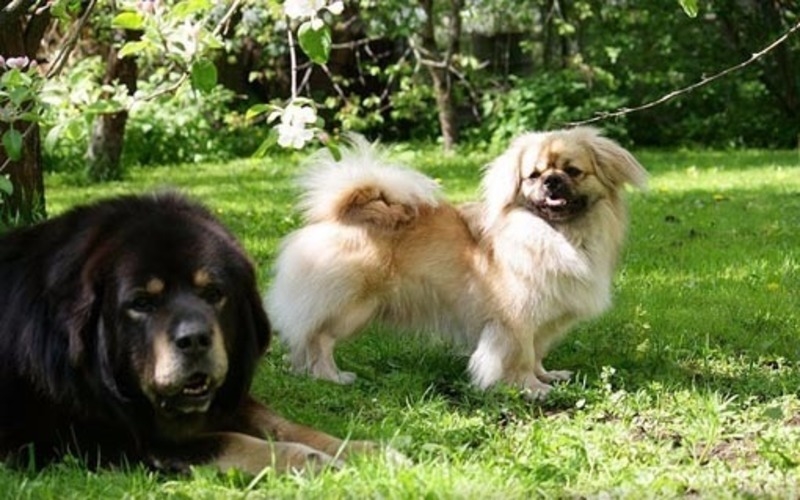
The courageous Tibetan Spaniel is not intimidated by dogs larger than itself. Representatives of the breed are very determined and can easily attack any opponent first.
However, don't let your pet off the leash until the "come" command is fully mastered, as these dogs tend to run away. It's also not a good idea to let them play with other larger dogs if they're not well-socialized. This little hero could decide to show off his fighting spirit, unafraid of his opponent's size, and end up getting hurt.
Care procedures
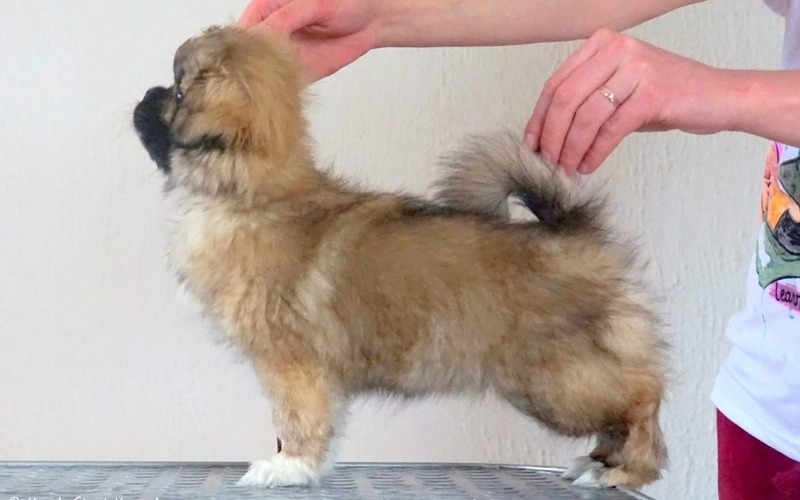
Despite their thick coat, Tibbies are easy to care for. Brushing them a few times a week is enough to prevent mats.
Tibetan Spaniels require constant grooming. To maintain their beauty and health, it's necessary to:
- Brush the coat with a soft-bristled brush 2-3 times a week. While brushing, lift the topcoat and brush out the undercoat. According to the breed standard, this breed is not clipped, with the only exception being the area between the toe pads.
- Wash your dog as infrequently as possible (no more than 3-5 times a year) using a special shampoo and conditioner. Drying your pet's coat with a hairdryer is not recommended.
- Regularly inspect the ears and eyes for debris. Remove accumulated mucus with a cotton pad soaked in boiled water or a special solution.
- Puppies should have their clear nails trimmed with a nail clipper once a month. Adult dogs wear down their nails on their own during walks.
- Perform oral hygiene several times a week using a dog toothbrush and toothpaste.
Education and training
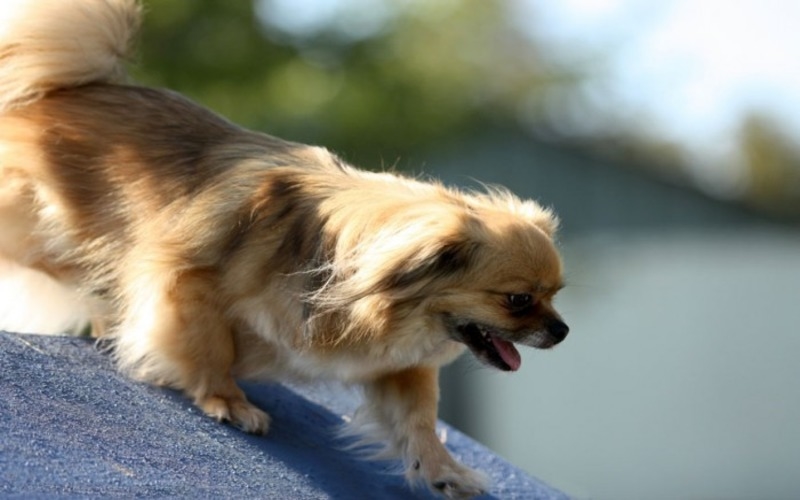
It's best to conduct training sessions in a playful manner, not forgetting to reward them with treats. This way, "Tibby" will learn all the commands faster.
Cynologists tend to consider the Tibetan Spaniel to be of average trainability, but in practice, training this dog doesn't require repeated commands for it to remember them. In fact, this furry little rascal understands its owner perfectly, but its freedom-loving, independent nature and natural stubbornness make training it a significant challenge.
Therefore, training and socialization should begin as early as possible. The owner will have to be patient and put in considerable effort to get a recalcitrant animal to obey on the first try. To do this, it's necessary to establish a leadership role and not allow disobedience, but also not physically punish the dog for disobedience.
A variety of engaging, fun, and playful activities with a trainer can be helpful. This will help your "tibby" learn basic commands. Don't skimp on praise, treats, and affection.
Proper nutrition
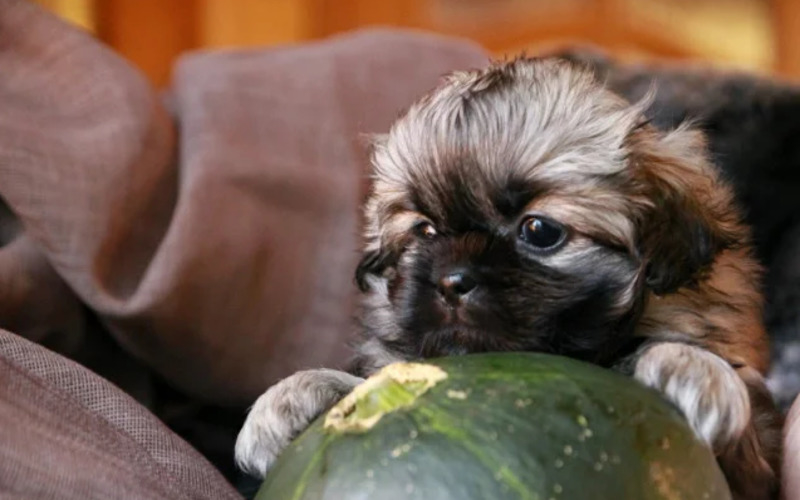
Tibbies are prone to allergies. Their diet must be carefully selected.
"Tibby" is a very picky eater and has an increased tendency to allergies. For artificial breeds, the basis of its diet should be industrial hypoallergenic super-premium food for small breeds with a protein content of 23–25%, which is selected taking into account the age and health of the pet.
Table 2. Food set for natural feeding
| Suitable product | Feeding order | Foods to Avoid |
| Lean meats (2/3 of total food intake). Beef, veal, and turkey are welcome, both boiled and raw (frozen). | Daily | Chicken, fatty pork, fried and smoked meats, sausages, and canned meats can cause stomach upset and allergic reactions. |
| Boneless sea fish | Once every two weeks | River fish that can cause parasite infestation |
| Cereals cooked in water or vegetable broth. The best choices are rolled oats, pearl barley with added vegetable oils, and buckwheat in small quantities. | Daily | Semolina contains virtually no nutrients and is not recommended for dog feeding. |
| Fermented milk and milk-containing products (cottage cheese, kefir, natural yogurt without dyes or preservatives, with reduced milk fat content) with added calcium supplements. Low-fat cheeses can be used as a treat. | Daily | Milk can cause allergic reactions and diarrhea. |
| Raw or steamed vegetables (zucchini, broccoli, carrots) | 4 times a week | Potatoes, white cabbage, pickled and canned vegetables can cause digestive upset. |
It's essential to supplement your pet's diet with vitamins and minerals. It's not recommended to feed them pasta, baked goods, sugar, candy, or food from your own table.
The daily amount is calculated based on your pet's activity level, age, and weight. It's best to feed your pet small portions twice a day (morning and evening).
Breeding and care of offspring
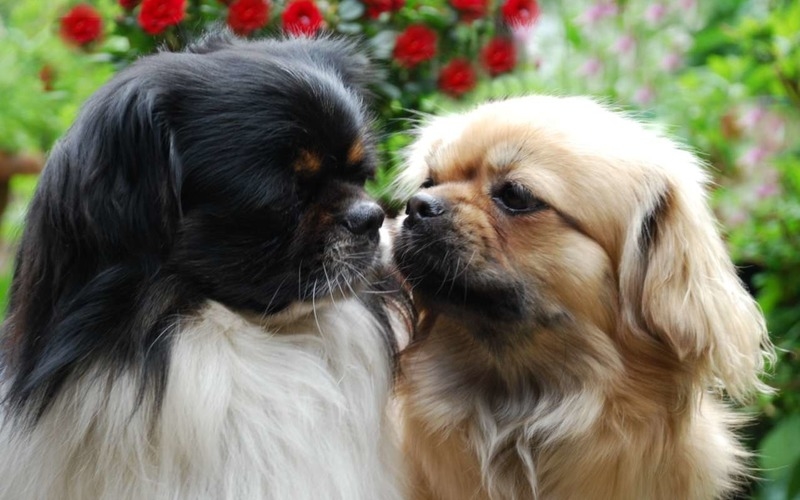
It is not recommended to breed spaniels more than once or twice a year. This can lead to health problems for both the mother and the offspring.
Tibetan Spaniels reach sexual maturity at 8-9 months. However, mating before a year is not recommended. Males are ready to mate year-round, while females have a cyclical need, linked to their heat cycles. The first mating occurs around the 11th day of the heat cycle. A second mating is necessary 24 hours later.
Only healthy, vaccinated, and documented individuals are allowed to mate. It's best to select partners with similar coloring.
Pregnancy lasts from 57 to 62 days and is stable, but at certain times is accompanied by toxicosis and weakness. Litters range from 2 to 4 puppies, though rarely, one or five are born.
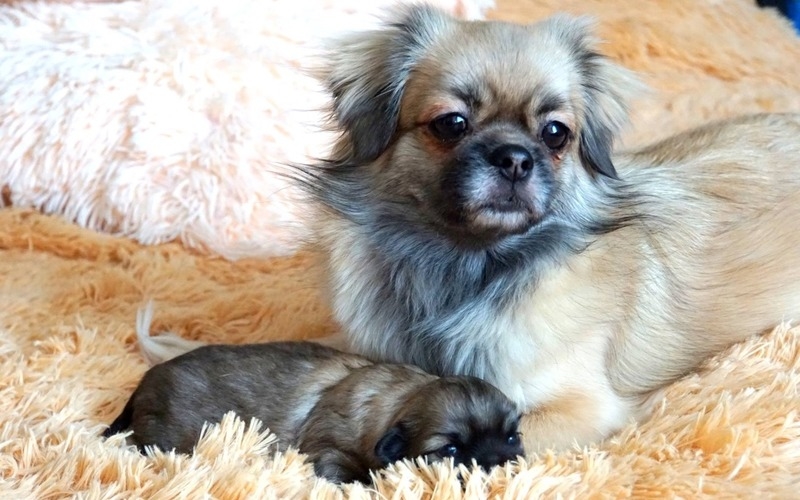
Pregnancy in females is generally uncomplicated. Litters typically consist of 2–4 puppies.
Caring for Tibetan Spaniel puppies is not much different from caring for puppies of other breeds. The puppies are regularly examined for illnesses. Signs of discharge from the eyes and ear canals, a swollen belly, and lethargy should be cause for concern.
Young pets should be fed five times a day until they reach six months. From six months onward, they should be fed three to four times a day, and from one year onward, they should be fed twice a day. A puppy should not be given to a new family until it is two months old.
Suitable nicknames for puppies
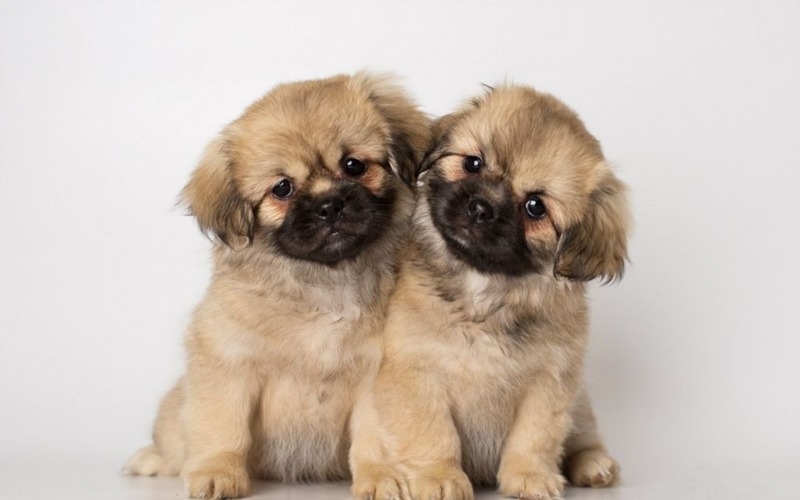
For small dogs, short and sonorous nicknames are most suitable.
Puppies from the same litter are named with the same letter of the alphabet, which corresponds to the nursery's stud book. However, a new owner can rename the future family member according to their preferences.
Short, catchy names are suitable for small "tibbies." For males:
- Barney;
- Oscar;
- Marseilles;
- Eugene;
- Yarik.
For females:
- Barbie;
- Clara;
- Mixi;
- Chloe;
- Yucca.
It's worth remembering that the Tibby's ancestors lived in Tibet. It's a good idea to try giving your pet one of the short, catchy Tibetan names: Balba, Wanmo, Dawa, Dolmo, Dorzho, Lapa, Padma, Sanmu, Chunta, etc.
According to breeders, rumors of Tibetan Spaniels' average intelligence are greatly exaggerated. These dogs understand their owners well, but their desire for independence can lead to trouble. The breed is distinguished by its exceptional devotion and kindness toward its owner and family members, especially small children. Tibetan Spaniels are easy to care for, but require careful diet selection due to their susceptibility to allergies.