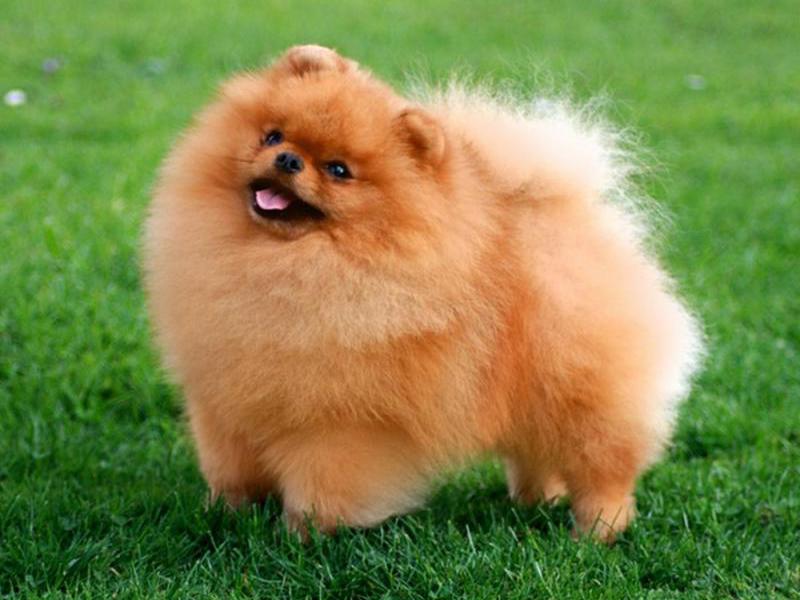
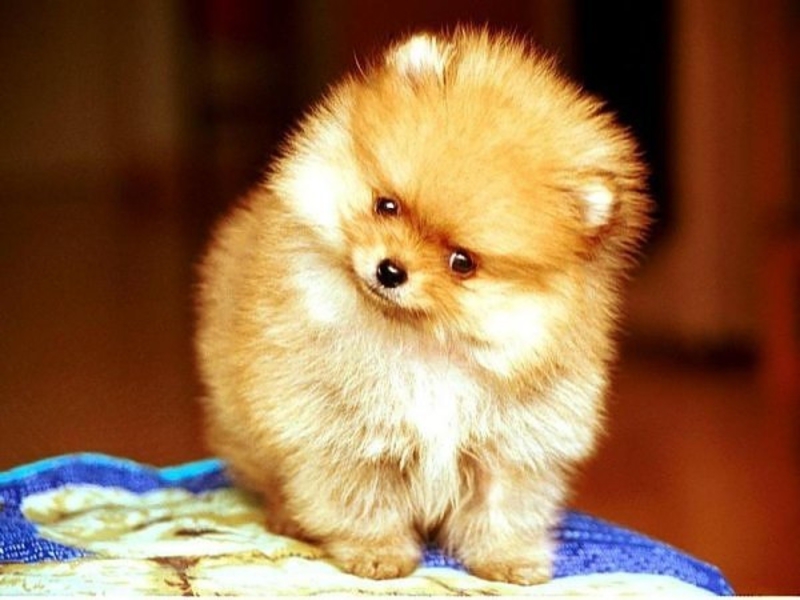
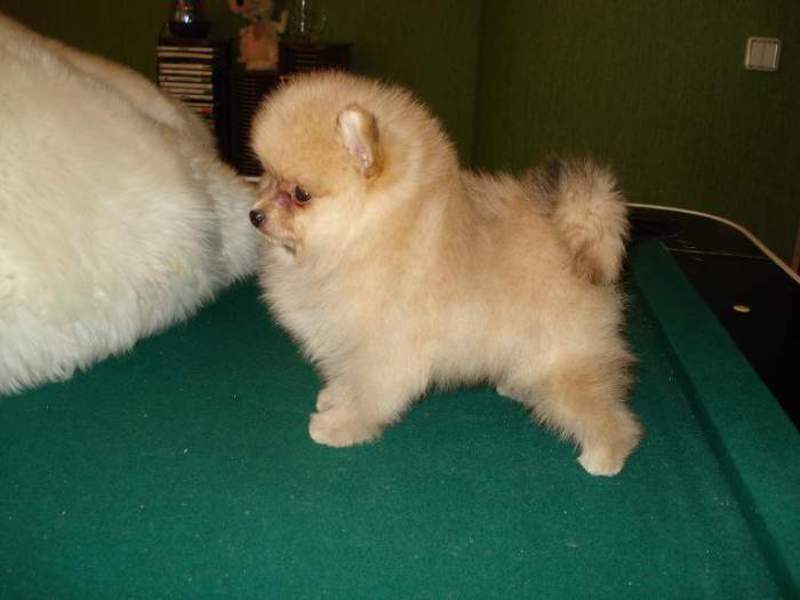
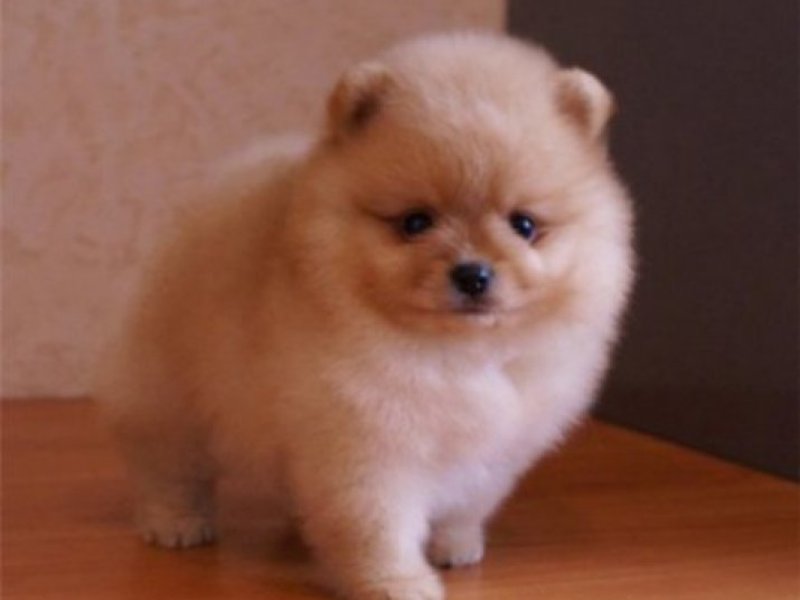
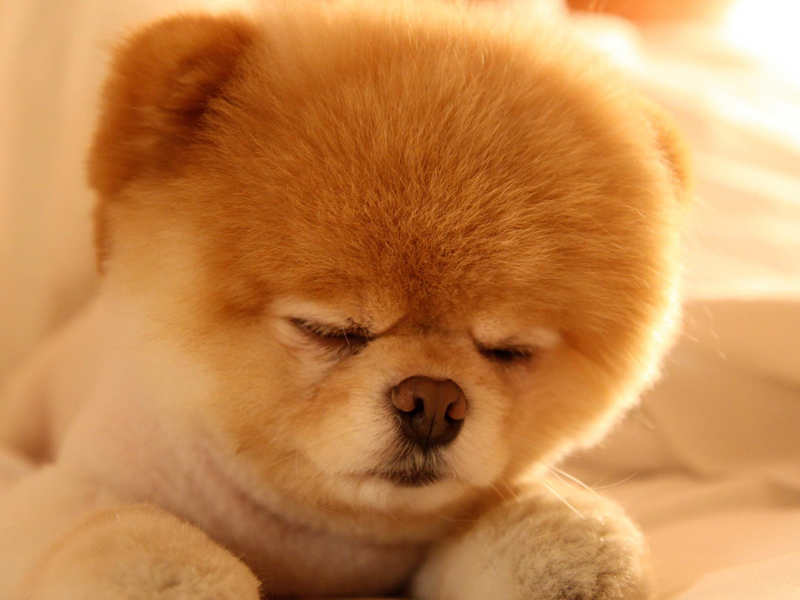
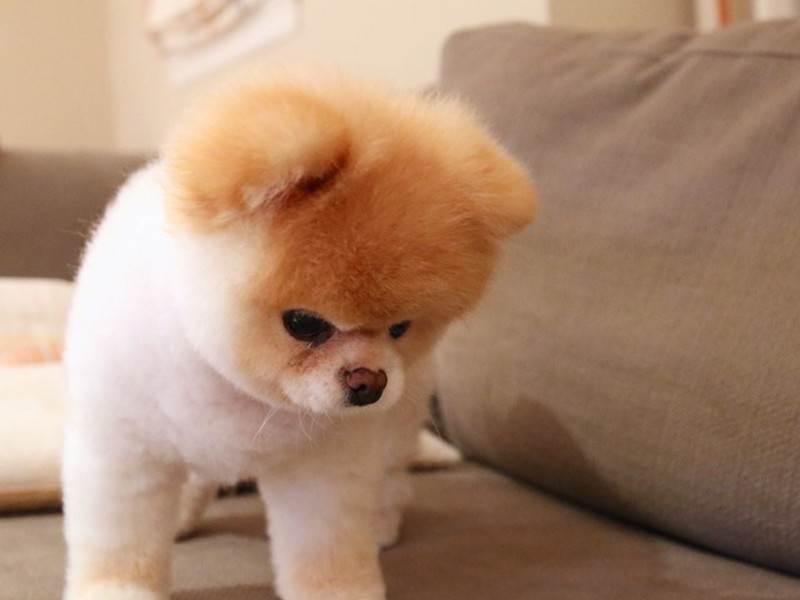
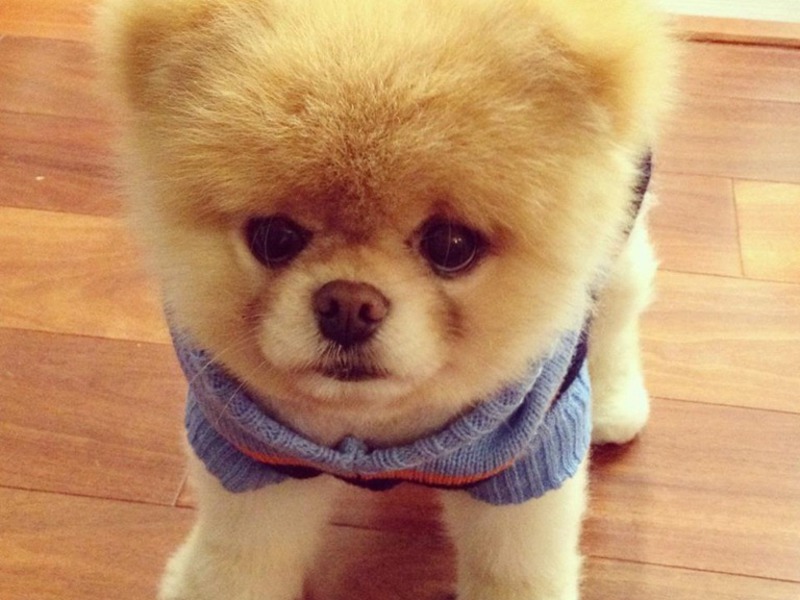
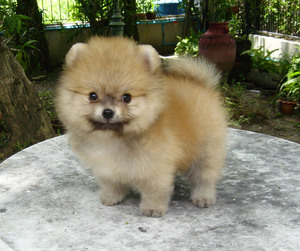
 German Spitz are the oldest dog breed in Central Europe. According to historical records, they are the ancestors of the Rütemeyer and the Turf Dog, both of which lived during the Stone Age. At the beginning of the century, small and medium-sized Pomeranians were twice as tall as they are today, and their weight at that time was approximately 15 kg. However, over time, selection for miniaturization began, and their weight dropped to 5 kg.
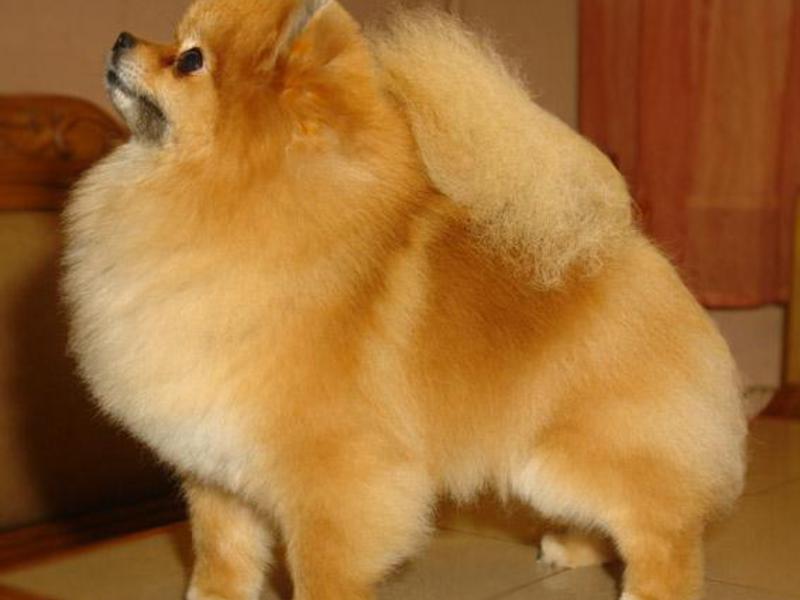
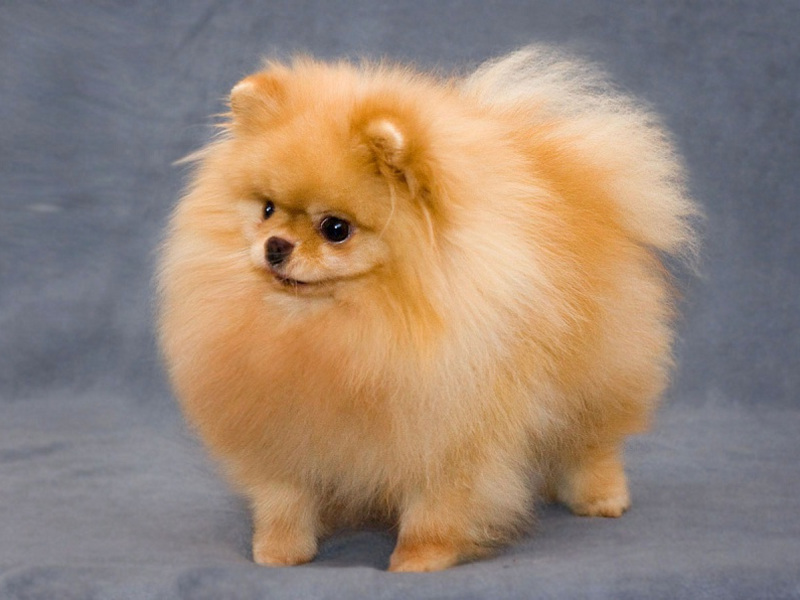
The most popular representatives of this breed today are miniature, medium and small Pomeranian Spitz, which differ in coat color and size. In other respects, their appearance shares many similarities. All breeds have small, pointed ears, a mane-like ruff, thick, long hair, a peak on the crown, and alert, small eyes.
Content
Pomeranian standard
The German Pomeranian Spitz has an FCI97 standard, adopted on January 24, 2013. The publication date of the previously adopted standard was March 6, 1998.
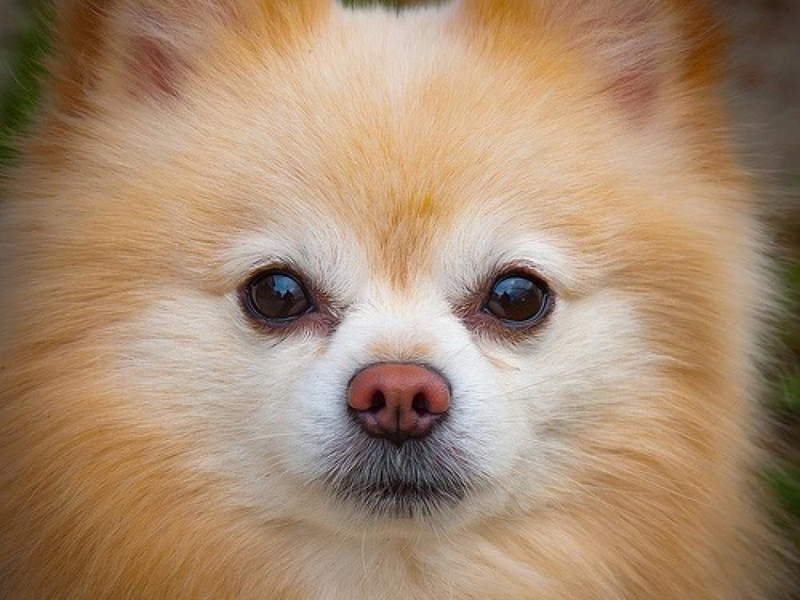
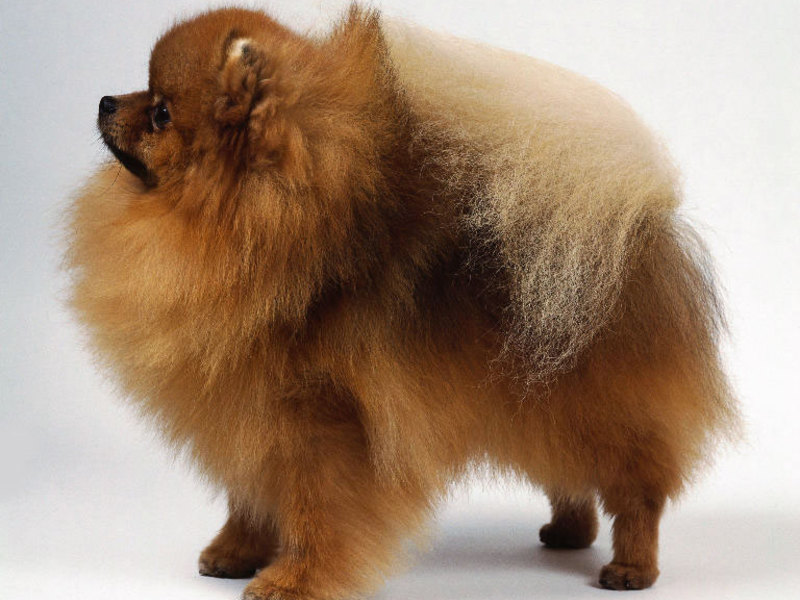
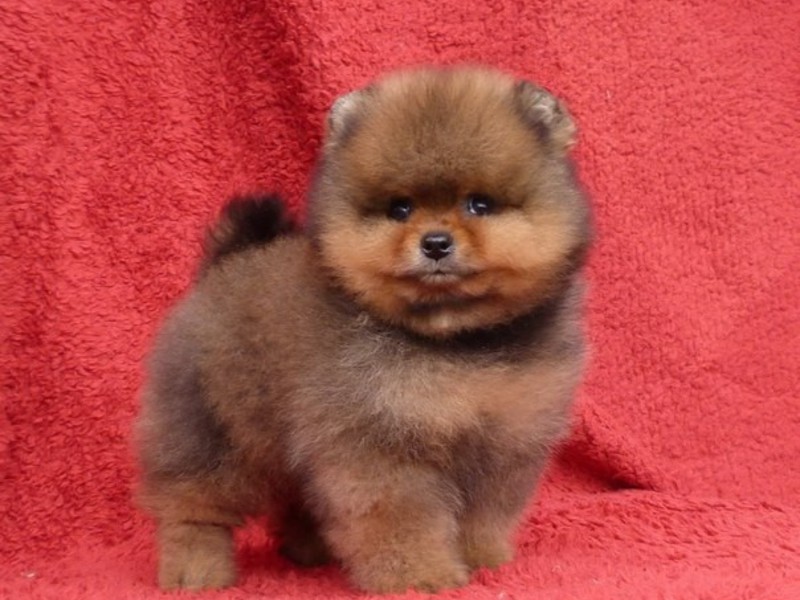
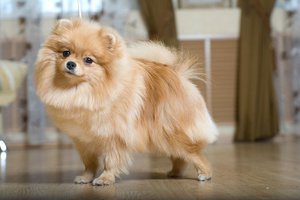
Pomeranian characteristics: When describing the dog, it should be noted that all breeds share a strong similarity in appearance. These dogs have small heads, tapering toward the nose and wide at the back. The nose is black, rounded, small.
 A Pomeranian with brown fur has brown eyes. The eyes are slightly oblong or round, small, dark, and set slightly at an angle.
- The eyelids are dark brown or black, depending on the dog's color. The ears are pointed, set high, and carried erect, always vertical. The bite is scissor-like, and the jaws are well developed. The neck is wide and arched at the nape, without dewlap.
- The tail lies tightly on the back, is fluffy, mobile, sometimes with a double loop at the end.
- The croup is wide and short.
- The belly is tucked up. The chest is deep. The limbs are muscular, strong, and have strong bones. The paws, with dense pads, are small and round.
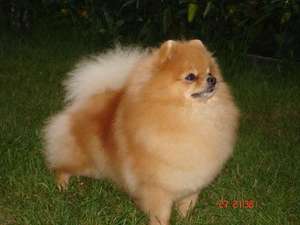 A Pomeranian with brown fur has brown eyes. The eyes are slightly oblong or round, small, dark, and set slightly at an angle.
Pomeranian weight, height, and coat color. Description and photos
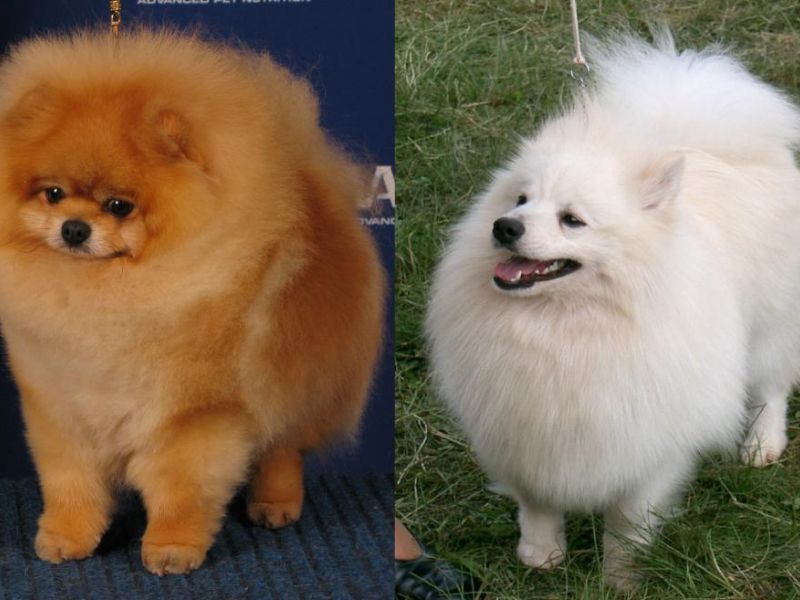
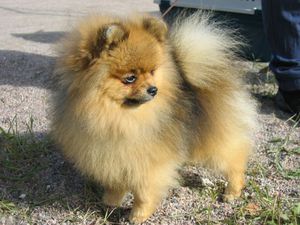
The Pomeranian's coat is straight, with a light, dense undercoat. It is long, double, and thick on the back and body. The front of the legs, ears, and head are covered with dense, short hair. Pomeranian colors vary, with each breed having its own distinct coat color.
Large Pomeranian or Keeshond, or Wolfspitz has a zonal gray color.
- Height: 42-56 cm.
- Weight: 26-32 kg.
The Mittelspitz, or medium-sized Spitz, comes in shades of gray, black, white, orange, and brown. Other coat colors are also possible.
- Height: 31-38 cm.
- Weight: 12 kg.
The Kleinspitz, or small Pomeranian, stands no more than 30 cm tall and weighs 7-9 kg. The emu comes in the same coat colors as the Mittelspitz.
Pomeranian, miniature, zwergspitz, or toy spitz, 17-23 cm tall. Coat colors are the same as other representatives of this species.
When choosing a black German Spitz, it's important to remember that its coat must be a uniform shade, free of any other colors. If there are beige spots on the paws or other parts of the body, it's not a black and tan breed.
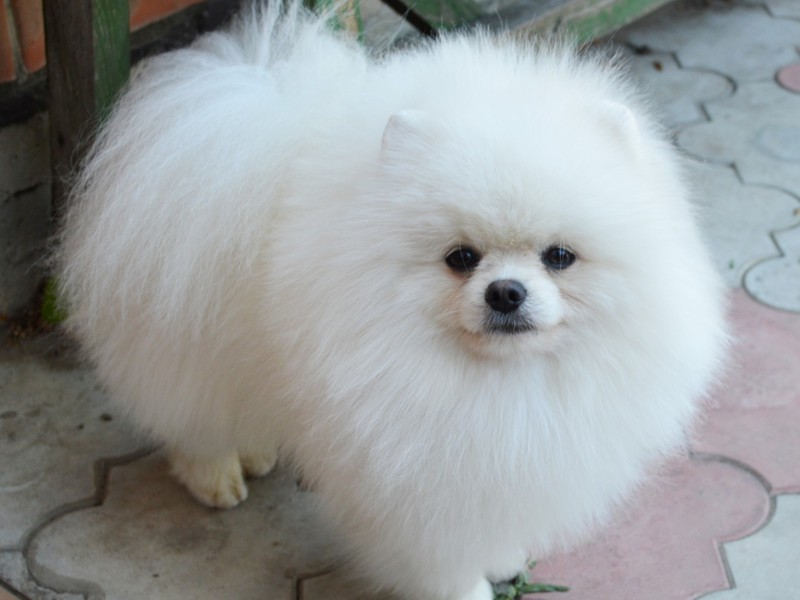
White and black Pomeranian Spitz, dog photos
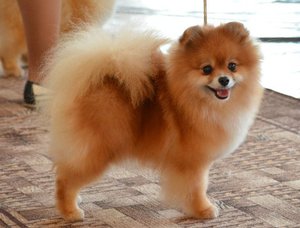 In childhood the color of the coat tends to changeA dog born black may change color after three months. However, if the puppy's lips, eyelids, and nose remain black as the puppy's coat changes to its adult color, this means the color will not change. A large Spitz's coat doesn't acquire its permanent color until its third year.
The white Pomeranian is considered the most expensive of all the other breeds because it is extremely difficult to breed. For example, when crossing two white dogs, there's a risk of producing a dog that's larger than the standard. Therefore, they need to be gradually bred with other colors, including orange, which produces a faint creamy tint. This, in turn, needs to be gradually eliminated. The result should be a snow-white coat without any off-colors or impurities.
It should be noted that cream puppies are born whiteDon't expect them to be white as adults, as their color will likely change. This color change typically occurs within 7-14 weeks. You can tell if the color will be white by looking behind the ears. If it's yellowish or creamy, the dog won't be white, but will likely be light yellow, brown, or orange.
The Pomeranian's Personality: Description and Photos
Pomeranians are friendly, affectionate, devoted, and loyal to their owners. They are not pushy, aggressive, or mean. They are initially wary of strangers, but not fearful. Despite their small size, these dogs make excellent guard dogs and watchdogs.
The most common breed of dog is the Pomeranian Spitz. are family favoritesThis is due to their many positive character traits. These dogs are sociable, affectionate, cheerful, friendly, very courageous, determined, and active. They make excellent companions and friends for all family members, quickly becoming attached and familiar with them. Furthermore, these dogs easily adapt to new living conditions and easily adapt to their owners' lifestyles. They are calm and quiet with older people, but much more active with younger ones.
Pomeranians love attention and try to attract it in any way possible: running around family members, jumping, and barking loudly. But these pets will never be annoying and, if they notice their presence is not needed, will retreat to their corner.
By nature, the Pomeranian is loyal, intelligent, and self-sufficient. The dog is easy to train and obeys even complex commands.
These dogs' favorite activities include long walks outdoors (without a collar), swimming, playing, and running. This makes them ideal for people with active lifestyles who enjoy vacations outside the city, traveling, and so on.
Miniature Pomeranian Behavior: Description and Photos
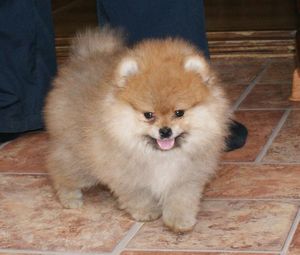 Although the Pomeranian is a small dog breed, it has excellent watchdog qualities and hearingWhen it senses danger, it begins to bark loudly and loudly. Its small size allows it to move smoothly and quickly. Those who watch a Spitz closely on a walk will inevitably get the impression that the dog is not running, but rather hovering above the ground.
If there are children in the house, the dog will act as a nanny, keeping an eye on them. Spitz dogs are characterized by balanced and patient behavior, so if a child hurts the dog during play, the dog will not growl or bite. This should never be used; instead, careful supervision is required to ensure that children do not harm the dog.
Good-natured Spitz have a vulnerable and delicate psyche and they remember people's attitudes, which must be taken into account and raised with persistence, affection, patience, but without showing aggression and rudeness towards puppies, and later towards an adult dog.
It is also surprising that, due to their agility, speed and intelligence, the Pomeranian breed has long performed in the circus, showing various funny acts and tricks.
When describing a Pomeranian, it's important to note that this pet will be active and playful almost into old age. As they reach adulthood, the dog becomes calmer and slower, becoming increasingly solitary. It becomes more difficult for them to stand up, climb stairs, or perform even simple tricks. The dog's personality also undergoes certain changes over time. An older Pomeranian has a harder time dealing with separation from its owner, and becomes more anxious when left alone, beginning to bark, whine, or howl.
Pomeranian's attitude towards strangers
The Pomeranian Spitz shows a certain aloofness towards strangers. wariness and distrustWhen meeting strangers, he often observes his owner's behavior. He is self-confident, decisive, and courageous, making him a guard dog equal to strong, large dogs. While on walks, fighting Spitz dogs often start fighting with larger guard dogs.
So, this dog is suitable for people of any lifestyle, personality, and age. It gets along well with other pets and doesn't require a lot of living expenses, but it does require a lot of time and attention.
History of the Pomeranian breed (large, medium, and small). Description and photos
 As has already been mentioned, the Pomeranian is a very ancient breed, having existed for over 3,000 years. This is evidenced by drawings of dogs on ancient pottery and tablets. Before that, these pets were kept only by commoners, because They guarded no worse than big dogs, and ate much less. Naturally, keeping them was quite economical. Furthermore, the dog was intended to accompany shepherds, guard plantations with various crops, property and estates, protect livestock from predators, and simply entertain their owners.
The modern history of the Pomeranian (both large, medium, and small) began only in the 18th century, when the breed became fashionable among aristocrats. At that time, Germany was divided into regions, each developing its own breeding program for dogs of a specific size and color, with greater emphasis on their appearance. For example, Düsseldorf, Aachen, and Krefeld bred more Wolfspitz, Pomerania bred the miniature breed, and Württemberg bred brown and black dogs. Remarkably, the miniature Spitz was a favorite pet of Michelangelo, Mozart, Empress Catherine, and other famous people.
After a certain time, the dogs become very spread throughout Europe They were favored by the nobility. White Spitz were in great demand, followed a little later by brown and orange ones. In the 19th century, the breed arrived in America. In the early 20th century, the English Spitz Club was founded, where breed shows began. In 1890, the first Spitz standard was approved. The dogs were divided into two groups: the first included dogs weighing up to 2.6 kg, and the other, those weighing over 2.6 kg. Today, Pomeranians, bred in the USA, are considered the best in the world. They are characterized by strong bones, a harmonious build, a small size, and precise and quick movements.
 In Germany, the dog gained renewed popularity in 1898, when Spitz enthusiast Charles Camerer, a popular dog breeder, sent letters to all Spitz lovers offering to support their development. In 1901, a meeting was held in Frankfurt, which resulted in the founding of German Spitz Club, a Stud Book and instructions for registration and breeding were prepared.
Medium-sized Pomeranians were bred in France for a long time. At that time, they resembled the dogs of the past, resembling their ancestors with long, pointed muzzles and thick coats but lacking an undercoat. Surprisingly, modern miniature and large Pomeranians resemble the French Spitz, but have a more correct gait and a compact build.
In Spain, dwarf Spitz dogs were bred, which were the favorite pets of Spanish aristocratic girls. Due to inbreeding, they did not shine with great beauty, so they surrounded themselves with dwarf servants and dogs, which were considered unattractive at the time, and in comparison to them, they seemed more attractive.
In the Netherlands and Denmark, small, large Keeshonds and Spitz lived on ships and barges, where guarded property, caught mice and rats.
At the end of the 19th century, the breed was divided into three types, each assigned a size: large – 46 cm, medium – less than 39 cm, and dwarf – over 24 cm. From then on, the dogs attracted even greater interest. The World Wars reduced the number of Spitz dogs, and some were taken to Eastern Europe.
In summary, Pomeranians shouldn't be treated like pretty toys or accessories. It's important to understand the full responsibility that comes with owning a dog. But if you approach this matter wisely, your dog will undoubtedly bring you many positive emotions and be a loving and loyal companion for you and your family.