When developing this domestic breed, breeders sought to create a powerful dog that could serve not only as a loyal guard dog but also as a devoted friend and companion. Determination, strength, devotion, and obedience are the key traits of the Black Russian Terrier. The animal displays its excellent working qualities and natural aggression only when working. The rest of the time, it is an affectionate and playful dog that enjoys relaxing with its family.
Content
Description of the breed
The Russian Black Terrier breed was created through artificial selection in 1949 at the Moscow government kennel "Red Star". Breeders sought to develop a versatile, large, physically strong dog with a strong character, high levels of obedience, and intelligence, well-adapted to a variety of climatic conditions. To achieve this goal, they selected four of the most suitable breeds: the Giant Schnauzer, Newfoundland, Rottweiler, and Airedale Terrier. Genes from the Caucasian Shepherd, Great Dane, and German Shepherd were also used.
The Black Terrier was bred for guard and service work. Service remains the breed's primary function to this day. These dogs are used to guard secret military installations, as bodyguards, and also to participate in sporting competitions. They are capable of lightning-fast attacks on intruders, grabbing their arm from behind to avoid retaliatory blows, earning them the nickname "Black Death."
The breed's intended purpose has influenced the animal's appearance. The Black Terrier's main features are an athletic build, well-developed muscles, and strong jaws. Its key character traits are fearlessness, endurance, and unpretentiousness.
Breed standard (FCI)
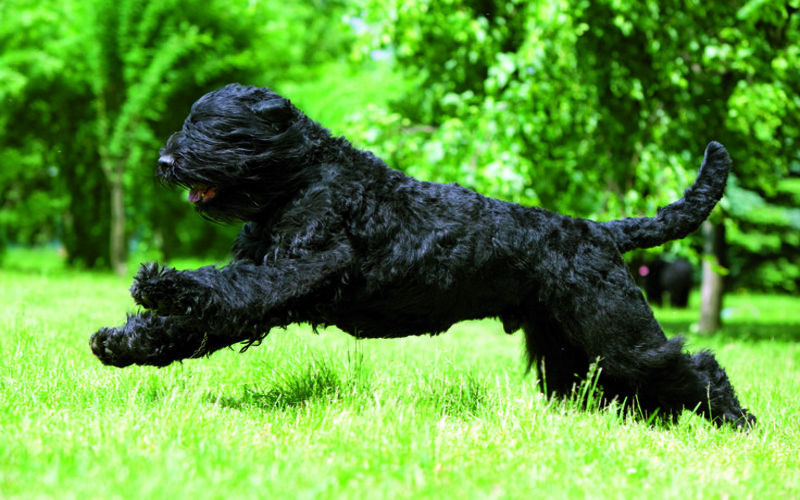
The Black Russian Terrier's gait is free and well-balanced. Typical gait
Males reach a height of 76 cm at the withers and weigh between 50 and 60 kg. Females are smaller, ranging from 64 to 72 cm in height and weighing no more than 50 kg. Males have a more powerful build and are distinguished by their massiveness. Since 1994, according to the breed description in the Russian Service Dog Standard, there has been no upper height limit for Black Terriers. Therefore, taller heights are acceptable as long as the dog's build remains proportional.
The exterior of the Black Terrier has the following features:
| Sign | Description | Disqualifying faults and defects |
| Body | It is distinguished by its large bones, harmony, power, and strong muscles. It has a deep chest and well-sprung ribs. |
|
| Back | Strong, well-muscled, with a strong, well-defined withers, the tail is carried in a straight line. Its length is approximately half the topline. | |
| Limbs | Straight, parallel to each other. The hind legs are set wider apart than the front legs. The front paws are large, rounded, and pressed together. The hind legs are oval in shape, smaller in size than the front legs. The pads and claws are pigmented black. | |
| Tail | Set high, thick at the base. When moving, it has a hare-like appearance. | Squirrel tail |
| Neck | Strong, dry, with well-developed muscles. Equal in length to the head. Set at an angle of 45–50° to the horizontal. | |
| Head | It has a large, slightly broad, and elongated skull with a flat frontal area, moderately defined superciliary arches and occipital protuberance, and dry, slightly rounded cheekbones. It is characterized by its massiveness and proportional to its body. | Short skull |
| Ears | Set high, hanging on cartilage, medium in size, symmetrical | |
| Muzzle | Rectangular in shape, wide at the base, massive | |
| Nose | With a large black earlobe | Depigmented nose |
| Lips and jaws | Thick, close-fitting, darkly pigmented. Scissor bite. Large, white teeth. | Malocclusion |
| Eyes | Set wide apart, oval-shaped, medium-sized. The eyelids are black and tight-fitting. The iris is dark. |
|
Coat and colors
Representatives of the breed have dense, evenly pigmented skin without folds, rough to the touch, thick fur with a short undercoat. The topcoat is thick, curled, and up to 10 cm long. Black Russian Terriers have prominent feathering, forming the eyebrows, mustache, and beard. The neck and withers are covered with a ruff.
There are two colors of the Russian Black Terrier:
- solid black;
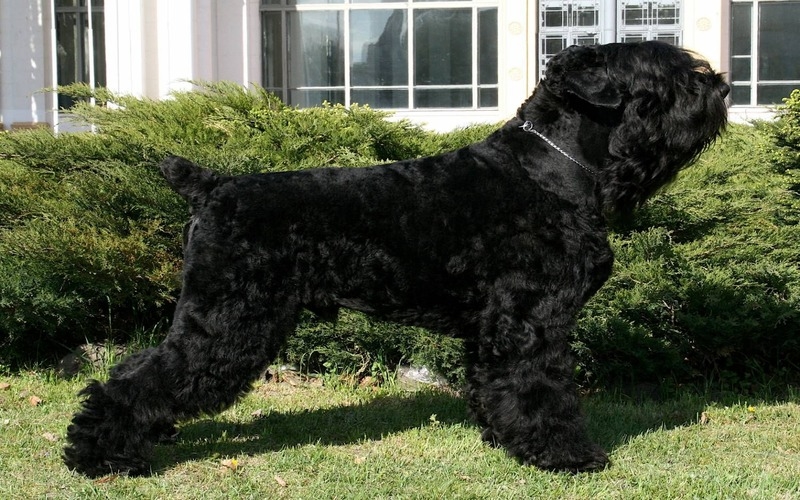
The coat should be a uniform black color. There should be no light patches or tint.
- black with a little graying, while the light hairs should cover no more than 1/3 of the entire body.
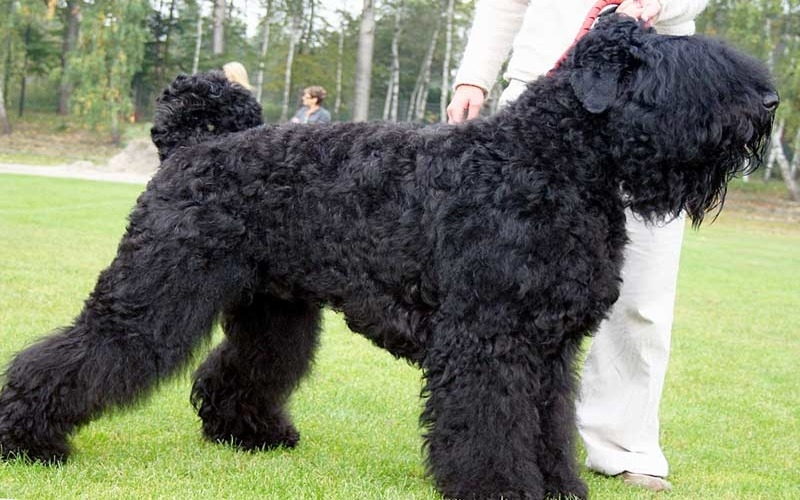
The black fur is covered with small gray hairs. The light coating occupies no more than a third of the entire body surface.
Faults include white spots, clearly defined gray patches, straight hair, and a lack of ornamental hair on the head. Individuals with these characteristics are not accepted for breeding.
Character
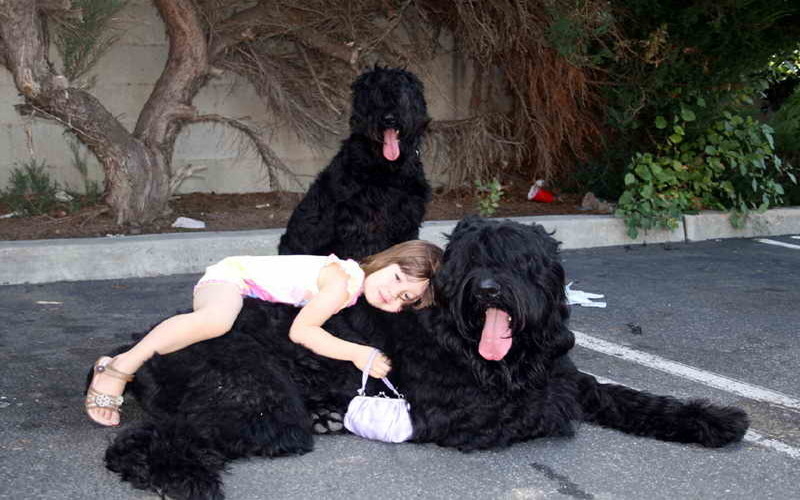
The Black Russian Terrier is a service dog with a rather aggressive nature. But with family, this ferocious animal transforms into a loving pet that enjoys playing with children.
The main character trait of Russian Black Terriers is aggression, which can be unconditionally controlled by the owner. In normal circumstances, the dog is calm and oblivious to others. However, when on duty, its temperament changes dramatically. If a stranger appears in the protected area, it can assess the danger of the situation in a matter of seconds, adopt an active defensive stance if necessary, or silently observe without revealing its presence.
If the animal fails to frighten the intruder with its threatening appearance, it immediately goes on the attack. The dog strikes, pins the intruder beneath itself, and holds them down with its paws on the chest until its owner arrives. The Black Terrier rarely uses its teeth, despite its powerful tear-off bite. The dog will pursue only on command from its owner.
A dog's relationship with its owner and family members is completely different. They display such qualities as devotion, respect, affection, friendliness, discipline, and obedience. These dogs are very tolerant of small children. They play with them for hours, allowing their whiskers or ears to be pulled without any aggression in return.
Important characteristics of the Russian Black Terrier breed are also considered to be:
- responsibility;
- courage;
- activity and playfulness;
- distrust;
- tendency to dominate;
- prudence and a cool-headed reaction to what is happening.
Health
The life expectancy of the Black Russian Terrier is 10-14 years.Long-lived dogs are very rare among these giant canines. Despite this, these animals are known for their good health and strong immune systems, as breeders have carefully developed these versatile dogs' resistance to most viral and cold-related illnesses. However, like all artificially bred breeds, terriers are prone to hereditary diseases inherited from their ancestors. The most common of these are considered to be the following:
- Elbow and hip dysplasia caused by pets being too large. Early treatment involves therapy, medication selection, physical therapy, diet, and exercise. Injections of medications to relieve inflammation and pain are also permitted.
- Progressive retinal atrophy (PRA) is a genetic disorder that leads to complete blindness. Antioxidant medications are used to slow the progression.
- Conjunctivitis and otitis are caused by excessively thick hair in the ear canals and long forelocks. Treatment includes special drops, ointments, and anti-allergy medications. Any purulent discharge must be removed by a veterinarian beforehand.
- Fungal infections that develop in poorly groomed fur or skin and cause severe itching. Nystatin ointment is recommended for treating the fungus.
Maintenance and care
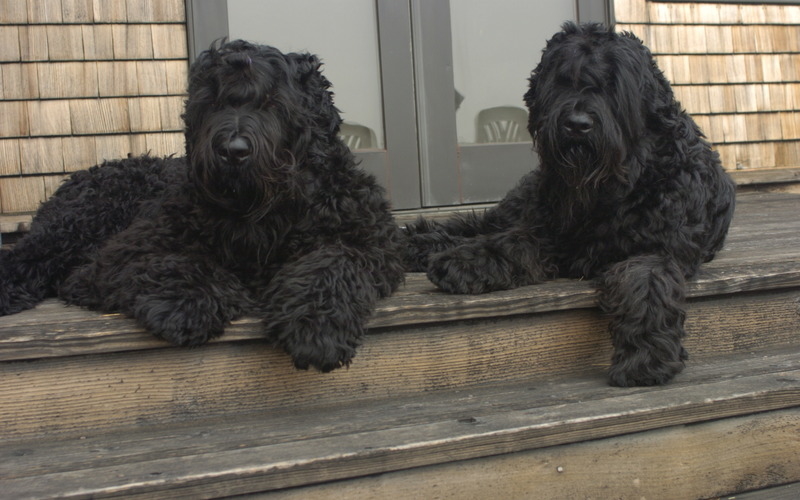
Black Russian Terriers prefer to spend most of their time outdoors in a kennel or in the courtyard of a country house. If kept in a city apartment, the dog needs to be walked as often as possible.
Black Russian Terriers are a versatile breed. They adapt well to very harsh weather conditions but also thrive in moderate climates. They prefer to spend time in a spacious outdoor enclosure or in a country garden rather than in the confined space of a city apartment.
Terriers require long walks year-round and plenty of exercise. It's recommended to visit designated areas where your dog can run without a leash or muzzle and participate in agility for at least 30-60 minutes a day.
Basic procedures
Black Russian Terriers have long, thick coats that require careful grooming. A key characteristic of the breed is its complete lack of shedding.
Because the hairs don't fall out, they tend to tangle into numerous mats. This is why brushing requires special attention.
Combing
Brushing your pet should be done a couple of times a week. This process will require the following tools:
- a rake-shaped mat cutter with wavy, blunt ends - a device that can be used to separate large mats into smaller ones;
- a comb with long teeth for combing out small tangles;
- slicker brush for combing out fluff, dead hair and dust;
- Trimming comb for final combing and giving the coat a decent appearance.
Water treatments
Brushing your pet is also essential before bathing, which should be done no more than once a month or as often as needed. A special shampoo should be used. A dog's paws and belly become very dirty after long walks and need to be rinsed daily.
Terriers' long whiskers and beards become very dirty after eating. It's recommended to wash them with clean water and brush them daily, and after drinking, be sure to blot them dry with a clean cloth. The beard is just as prone to matting as the coat, so it requires special care. It should be shampooed once every seven days and thoroughly brushed. The fur under the collar also requires regular inspection. It should always be kept dry and clean.
It's important to dry the fur. Wet, long fur can cause fungal infections, which can be harmful to the dog's health.
Shearing wool
Another important procedure for Black Russian Terriers is grooming. The dog should be groomed according to the established standard at least once a quarter. Puppies receive their first hygienic haircut at six months of age. You will need sharp hairdressing scissors, thinning shears, a long-toothed metal comb, and a slicker brush. A high-quality dog clipper is also suitable.
Many owners wonder what coat length to leave for their Black Russian Terrier. It all comes down to personal preference: some prefer dogs with longer coats, while others prefer them cut short. The recommended coat length for a short coat is up to 1.5 cm, and for a long coat, 3 to 6 cm.
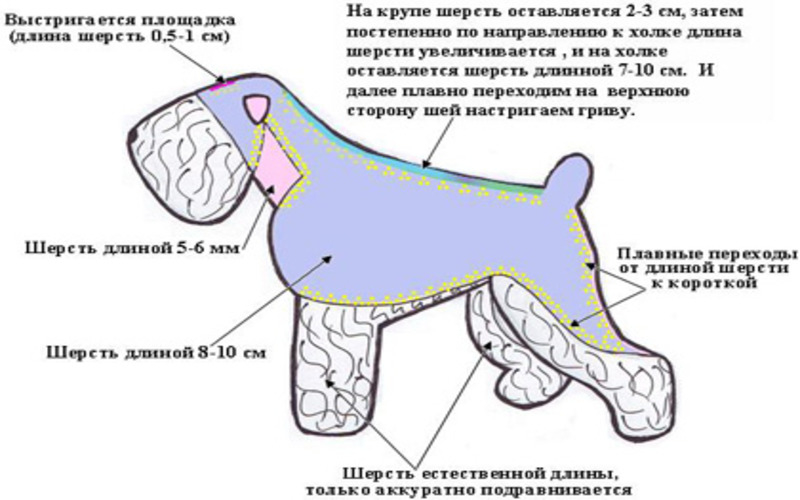
You can also trim your hair using the following pattern. The hair length in certain areas should match the hair length shown in the picture.
Claw care
Dogs have fairly strong and long nails. To prevent them from breaking or growing too long, they need to be trimmed at least once every two months.
Only the clear part of the nail should be treated to avoid damaging the pulp and blood vessels. It is recommended to trim the hairs between the toes and the pads of the fingers, as they can also become matted and cause discomfort when walking.
Ear, eye and oral hygiene
Once a week, inspect your pet's ears and eyes. Ensure there's free airflow through the ear canal. To do this, trim away any hairs. Use blunt or rounded nail scissors. Equally frequently, remove any accumulated discharge from your pet's eyes with a damp cotton swab.
Weekly dental care (3-4 times every 7 days) is essential. Use a pet toothpaste and toothbrush. Eating hard foods can help prevent tartar buildup.
Expert advice on maintaining a beautiful coat
Terriers' coats can become too rough and dull over time. To prevent this, follow a few simple rules:
- Do not leave your pet in direct sunlight for a long time, otherwise the fur will turn brown;
- Do not use a hair dryer to avoid overdrying and the appearance of a grey coating on the scalp;
- Do not use hot or cold water for water treatments, otherwise it is very easy to lose the natural hardness and shine; use only warm liquid for washing;
- Monitor the humidity in the room where your dog is most often located; dry air can make the dog's hair brittle;
- Use medium-hard combs to avoid split ends, and dry the hair thoroughly before combing;
- Organize a balanced diet for the animal, and use vitamin complexes if necessary.
Education and training
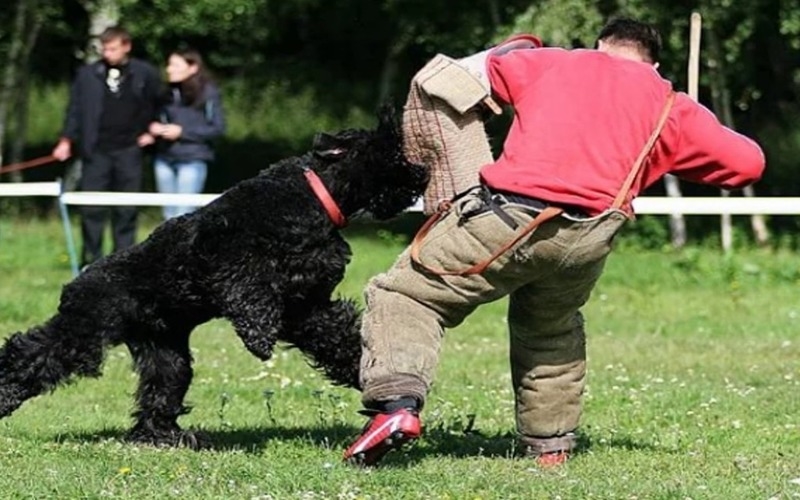
Training a Black Russian Terrier should be left to professionals. Adult Black Russian Terriers are difficult to train.
Breeders of large dogs with pronounced guard and service qualities should keep in mind that such a pet requires serious training and proper upbringing, regardless of the purpose for which the animal is acquired. This is the only way to transform an aggressive giant into a loyal friend and companion.
Since the Black Russian Terrier is primarily a service dog, it must have honed obedience and the ability to obey its owner to the point of automaticity. Training such a serious breed should be entrusted to an experienced dog trainer. Correcting the behavior of an adult pet will be much more difficult than training it correctly from an early age. During adulthood, it is important to socialize the terrier as much as possible, allowing it to interact with people as often as possible, especially family members or guests.
Training recommendations:
- Be patient and ensure that your puppy fully complies with the following commands: “Come to me,” “Sit,” “Heel,” this is the only way to achieve unconditional obedience;
- Use training tricks such as treats or praise, but only do so if the animal has followed the command exactly;
- allow your pet to independently assess the situation in certain cases, without completely suppressing its natural abilities;
- do not shout, do not change your intonation, avoid emotions such as anger and irritation, give commands in an even and calm tone with moderate notes of firmness;
- You shouldn't use physical punishment, because representatives of this breed remember it very well. You should scold the misbehaving animal immediately after the mistake, after some time the dog simply won't understand why exactly it is being punished;
- When training your pet at home, every unconscious action of the dog should be accompanied by a command from the owner. For example, if the pet sniffs something, give the command: "Sniff," if it looks at an object, give the command: "Watch," etc.
Proper nutrition
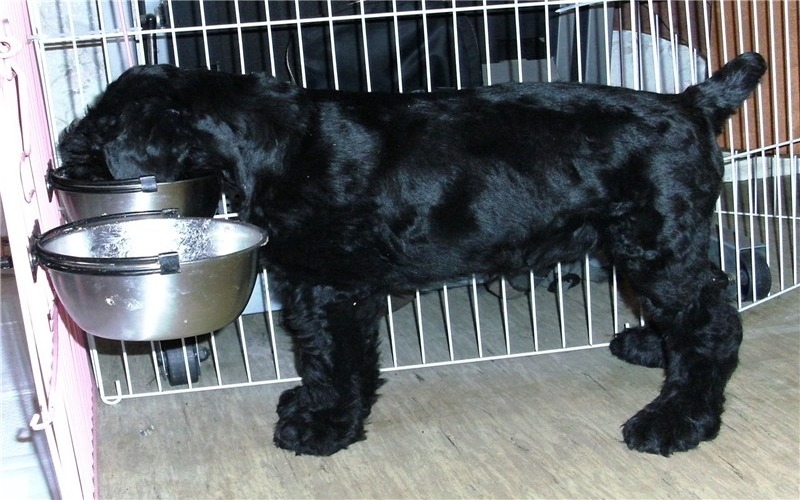
Proper nutrition is not only key to the health of a Black Russian Terrier. A well-chosen diet helps maintain the animal's beautiful coat for a long time.
Large breeds like the Black Russian Terrier especially require a diet that is balanced in composition and nutrient content. Breeders recommend feeding these "black giants" commercial super-premium and holistic foods with at least 30% protein. The daily requirement for an adult dog with optimal exercise and weighing over 50 kg is 560 grams.
With a natural diet, the daily portion should be equal to 3% of the animal's body weight. Protein should be the basis of the diet. An approximate feeding plan:
- raw, frozen or cooked lean meat, such as lamb, beef, turkey (50% of the total amount of food);
- raw frozen or boiled offal, boiled sea fish (20%);
- fresh or steamed vegetables (up to 20%);
- bones (10%).
Several times a week, you can offer your pet fermented milk products, such as kefir and cottage cheese. Hard cheese and egg yolk are also good treats. Don't forget about supplemental vitamin and mineral supplements to provide your pet with any nutrients they may need.
Veterinarians advise against feeding your pet food from your table. Smoked, sweet, salty, and fatty foods are especially avoided.
A Black Terrier puppy up to 6 months old is fed 4-5 times a day. After six months, you can transition your pet to two meals a day, morning and evening.
Breeding
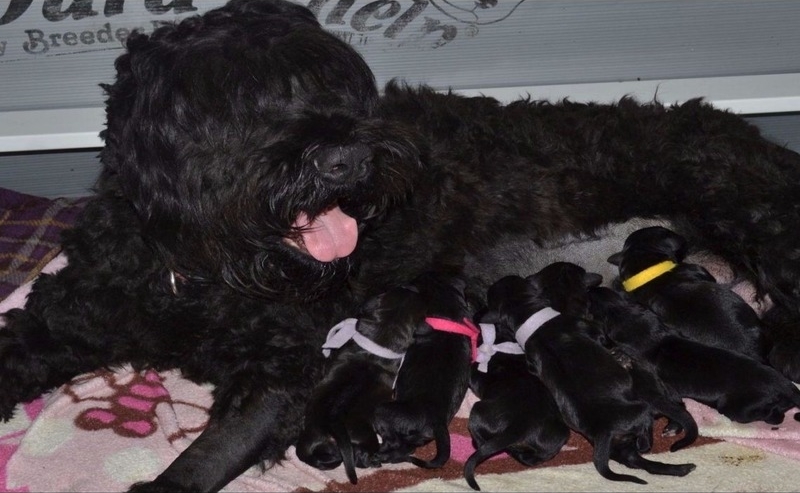
It is not recommended to breed your pet yourself. You should seek help from experienced breeders or a specialized nursery.
Breeding Black Russian Terriers is not an easy task. Experienced breeders first select individuals from the general population that are capable of producing the best offspring. They then evaluate their physical condition, appearance, and any flaws. Only then are pairs formed from the selected specimens. The breeder strives to match the breeding pairs to achieve the highest quality offspring (at least six puppies per litter) and to correct any defects in one partner by leveraging the good genes of the other.
All these nuances are difficult for the average person to take into account. Therefore, to ensure a successful mating, you should seek help from a specialized breeder. Professionals will select the best partner for your pet, provide expert advice on mating procedures, care for the puppies, and help you find homes for the puppies.
Caring for puppies
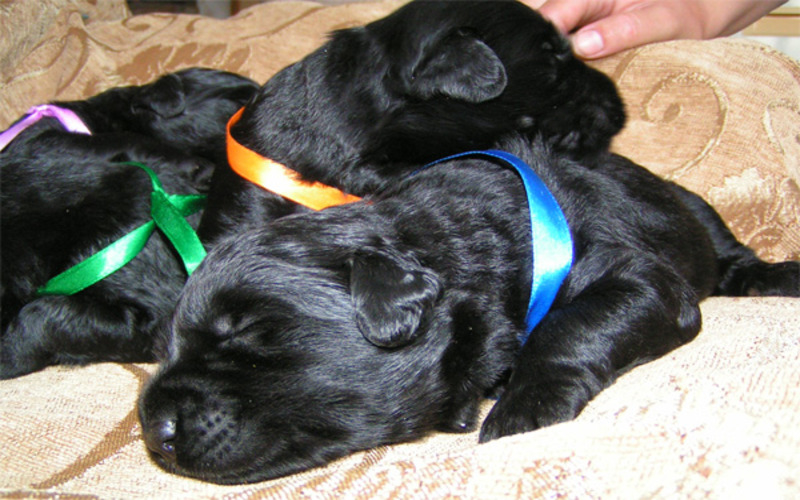
To ensure healthy puppies, they require careful care. It's important to follow the expert advice of breeders and veterinarians.
Before buying a puppy, you need to determine its gender. Males tend to be dominant and should only be adopted by experienced owners with a strong character. Females are more docile and obedient. It's recommended to bring a puppy home at two months of age, when the puppy has learned all the necessary skills from its mother and is ready for independent life.
Ask the breeder for a veterinary passport detailing vaccinations and a pet card confirming the breed's pedigree. The average price for a Black Russian Terrier puppy is around $500, with show-quality specimens costing $750 and up.
Caring for Black Russian Terrier puppies is a responsible task. Without understanding the basic rules, you can harm your little pet. Here are some expert recommendations for puppy care:
- Provide frequent feedings (4-5 times a day) without overeating, which can lead to obesity, curvature of the limbs and increased stress on the joints;
- place the bowl at the pet's shoulder level;
- Cover laminate, parquet and linoleum with carpets, as these slippery floor coverings can cause abnormal development of limbs;
- do not stroke the baby's head to avoid damaging the ear cartilage;
- Monitor the activity of puppies, as their mobility often leads to them falling from elevated surfaces and receiving serious injuries;
- comb and bathe the baby from the first days of its appearance in the house in order to accustom it to grooming procedures;
- Monitor the health of your animal, carry out scheduled vaccinations, deworming, and parasite treatment on time.
Suitable nicknames
Black Russian Terriers are giants, requiring special nicknames that befit their serious nature and strength. For males, names drawn from legends, myths, and fairy tales of various cultures, literature, or films are well-suited:
- Aragon;
- Asterix;
- Ajax;
- Bogatyr;
- Hector;
- Hercules;
- Pirate;
- Svyatogor;
- Hulk;
- Brave, etc.
Various geographical names would also sound good: Amur, Danube, Bosphorus, Hudson, etc. For girls, nicknames that are terms from various regions would be suitable:
- Talent;
- Trapezoid;
- Tequila;
- Appassionata;
- Elegy, etc.
There are many different options that can reflect the owner's hobbies or the interests of family members. Therefore, choosing a name depends directly on the owner's preferences. With a creative approach, your pet will have a unique and inimitable name that will become its calling card.
Pros and cons of the breed
The Russian Black Terrier has a mass advantages, which include the following:
- no shedding or odor;
- excellent service and guard skills;
- versatility and adaptability to various conditions;
- high level of intelligence and learning ability, ability to independently assess danger;
- unconditional obedience to the owner with good upbringing;
- agility, strength, ability to neutralize an attacker;
- increased performance and endurance;
- balance, calmness;
- good health and strong immunity;
- unpretentiousness in food.
Flaws breeds:
- natural aggressiveness, which may unexpectedly manifest itself towards the owner without proper training;
- mandatory regular grooming procedures: brushing, cutting, washing;
- large amounts of time spent on walks, physical activities, and education;
- the pet's wariness towards strangers.
The Black Russian Terrier is a unique domestic breed. Despite their impressive size, ferocious nature, and well-developed guarding skills, these dogs are extremely devoted to their owners and family members, love children, and are willing to defend their owners to the bitter end. These "black giants" combine the skills of a guard, watchdog, and companion. However, it's important to remember that such a serious dog requires proper upbringing and rigorous training under the supervision of an experienced dog handler.