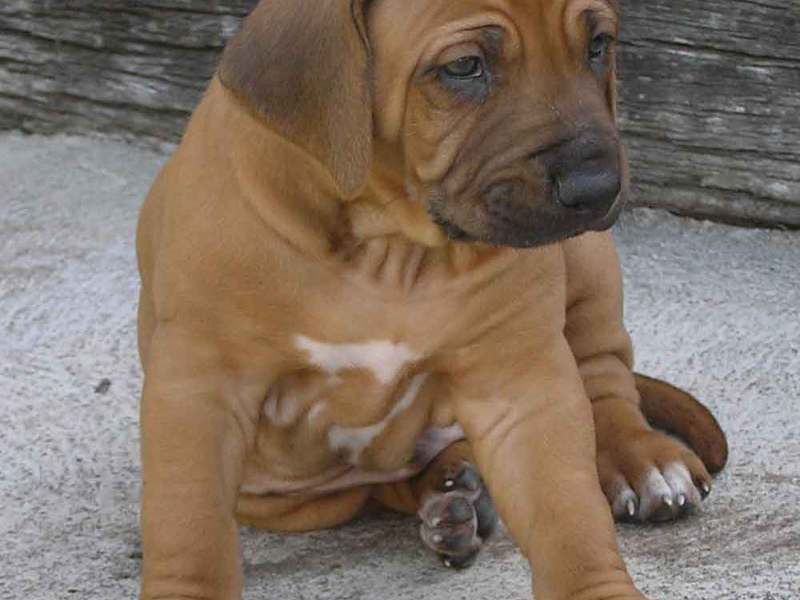
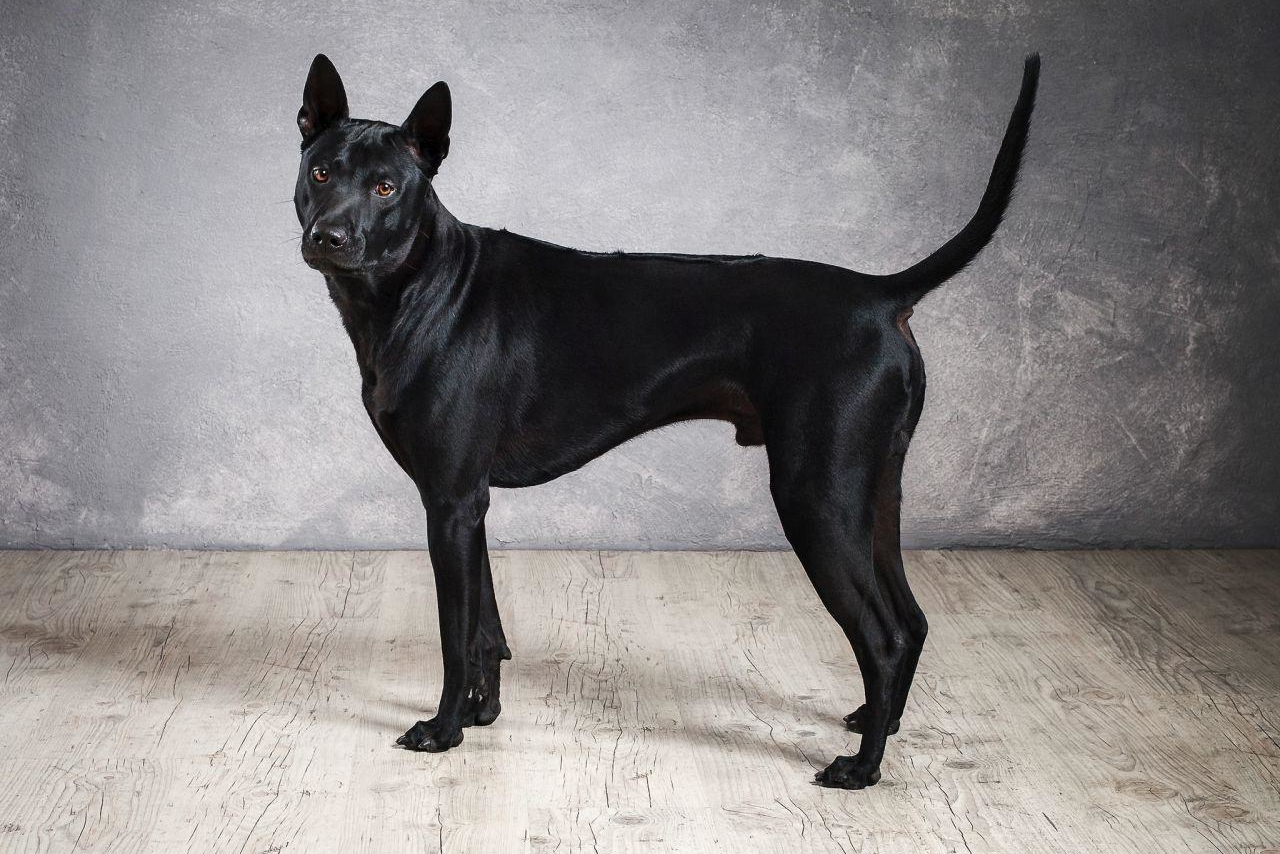
 In Africa, in the former territory of Southern Rhodesia (part of the Cape Colony within the British Empire), a remarkable dog breed emerged over a hundred years ago. Its name is the Rhodesian Ridgeback, or African Lion Hound.
Ridgebacks were developed by crossing local comb-haired dogs with specimens brought from Europe. The Boer settlers needed a hunting and farm guard dog well-adapted to local conditions. The new breed had to be predator-resistant and responsive to the dangers of the surrounding environment.
The breed is in great demand among dog lovers in various parts of the former British Empire.Australia, New ZealandIn other countries, Ridgebacks have yet to reach the peak of their popularity.
Content
Classification
The first Rhodesian Ridgeback breed standard was developed in 1926; FCI Standard No. 146 has been in effect since December 10, 1966. According to the accepted classification, dogs of this breed belong to Group 6 (hounds and related breeds), Section 3 (related breeds, without working trials).
By the way, this breed is the only one of all registered breeds that originates from South Africa.
Description
Appearance
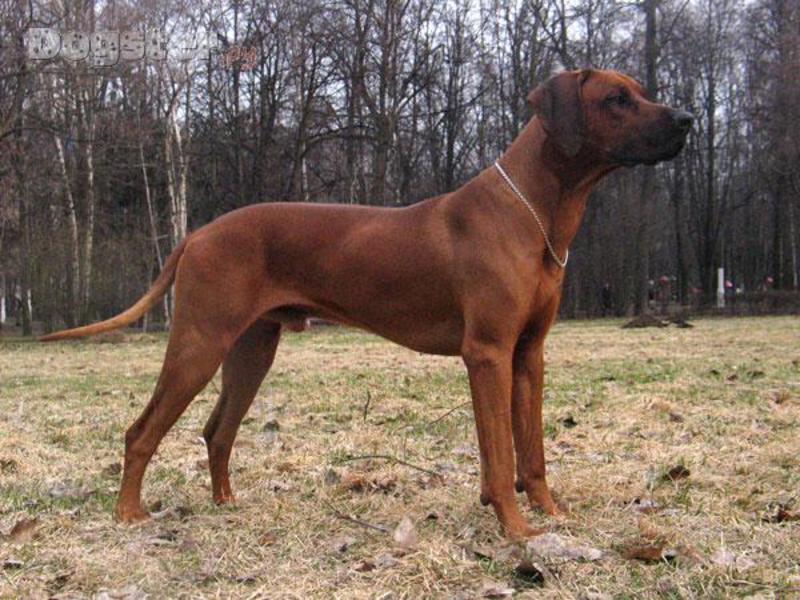
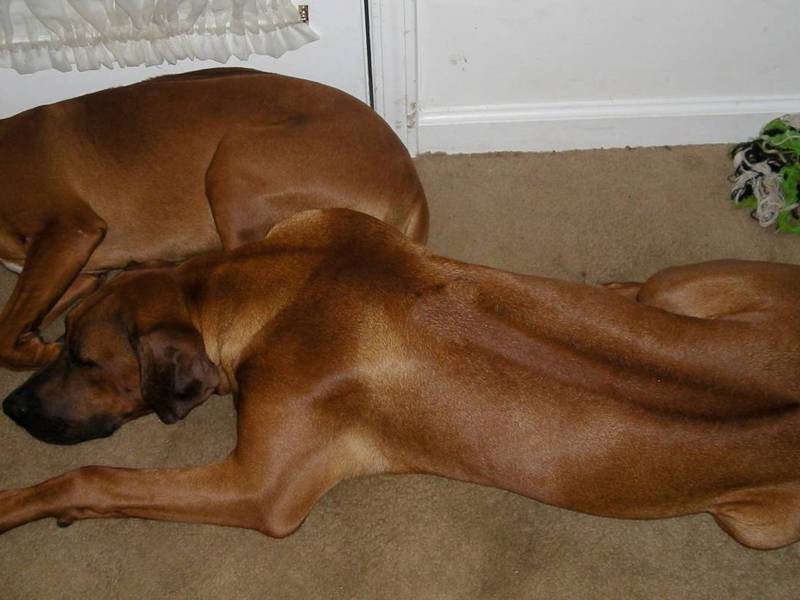
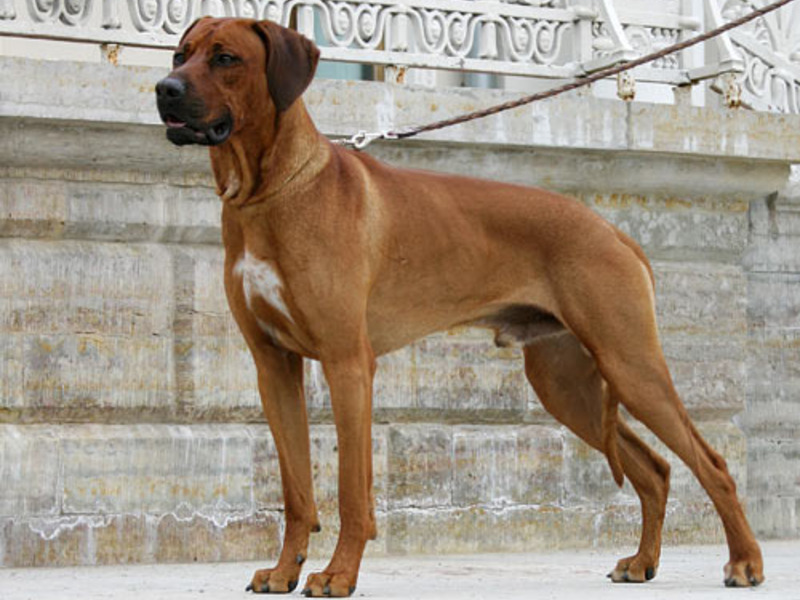
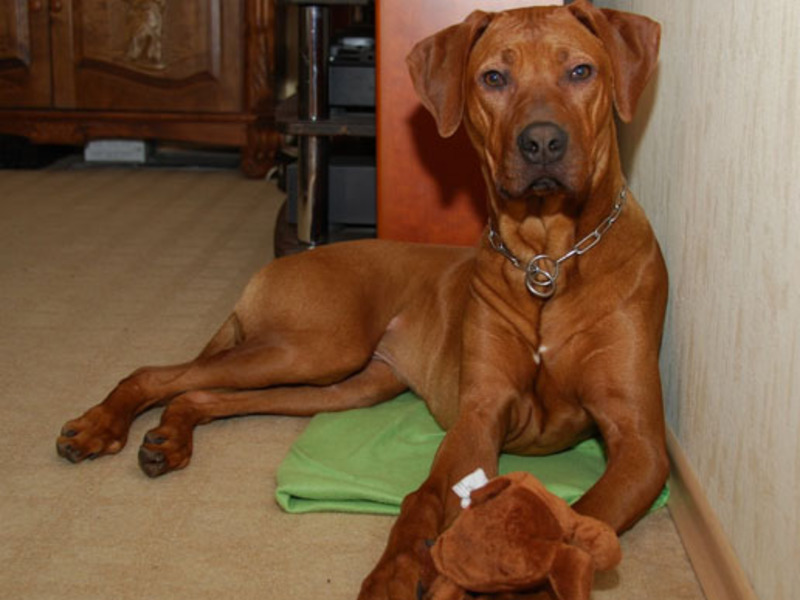
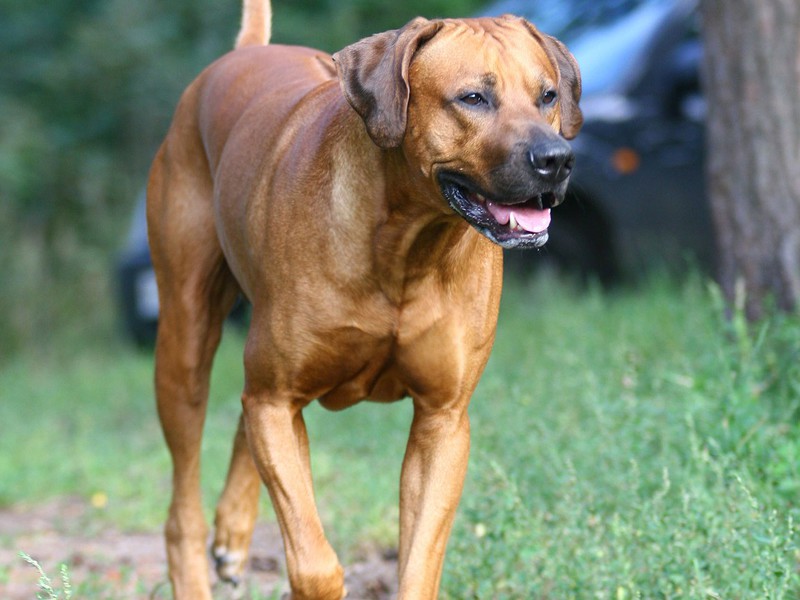
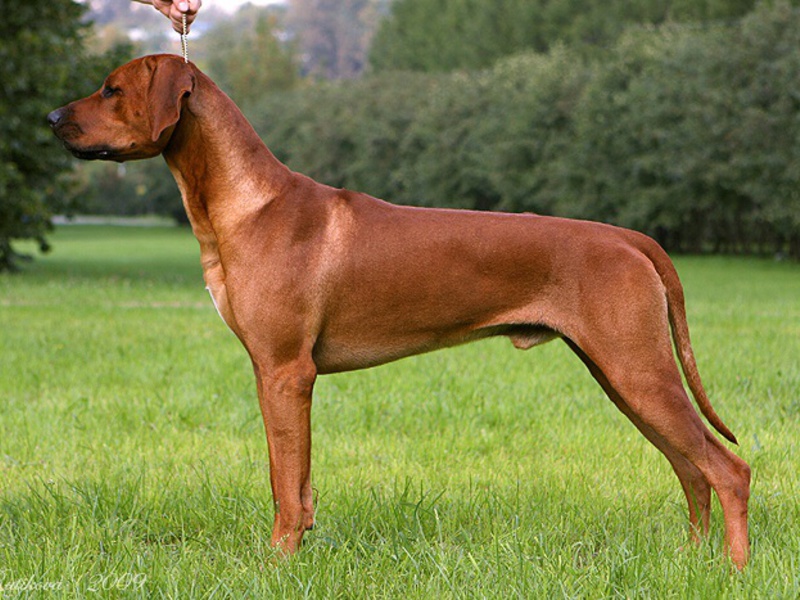
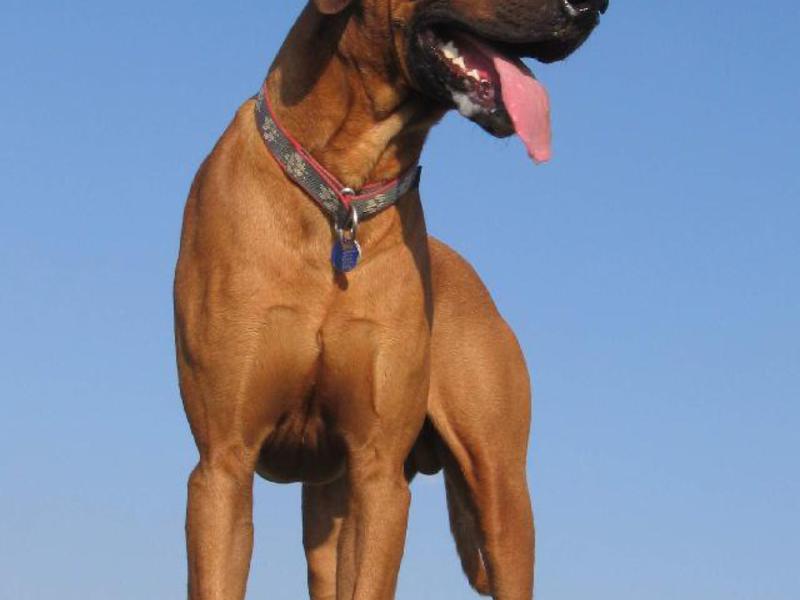
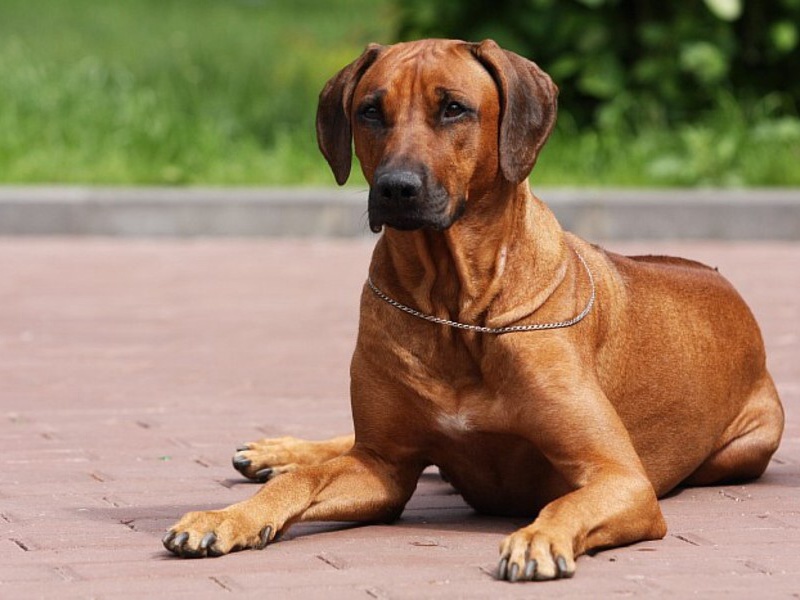
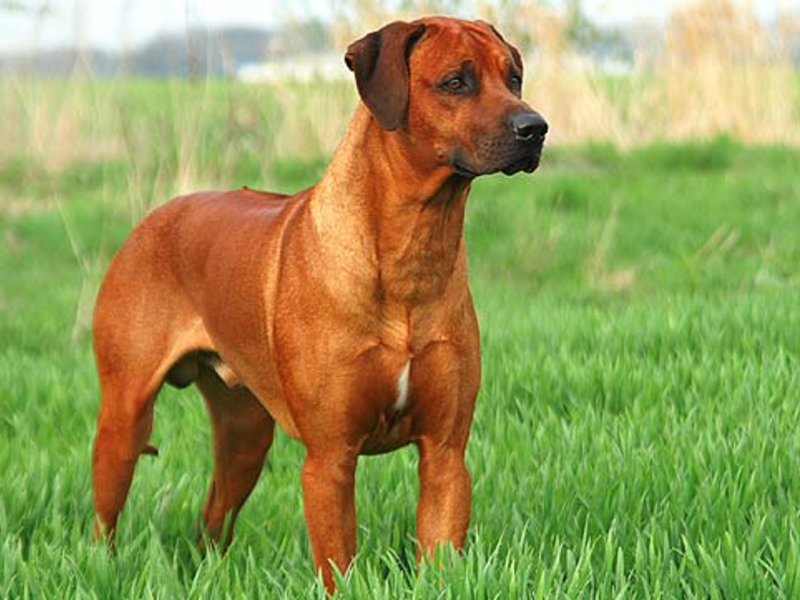
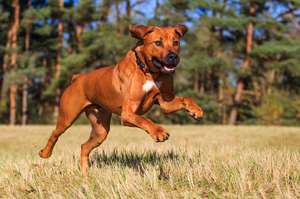 The Rhodesian Ridgeback, whose photo is shown the presence of a characteristic ridge on the back The ridge (pronounced "ridge" in English) got its name from this distinctive feature. The hair on this ridge is directed opposite to the rest of the coat. The ridge should be 4-5 cm wide and contain two curls (if the curls are asymmetrical, it is considered a breed fault).
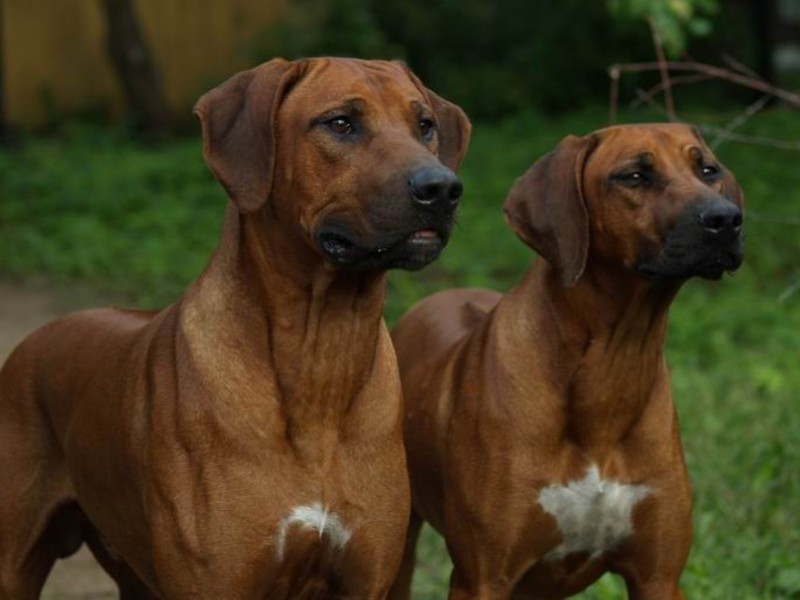
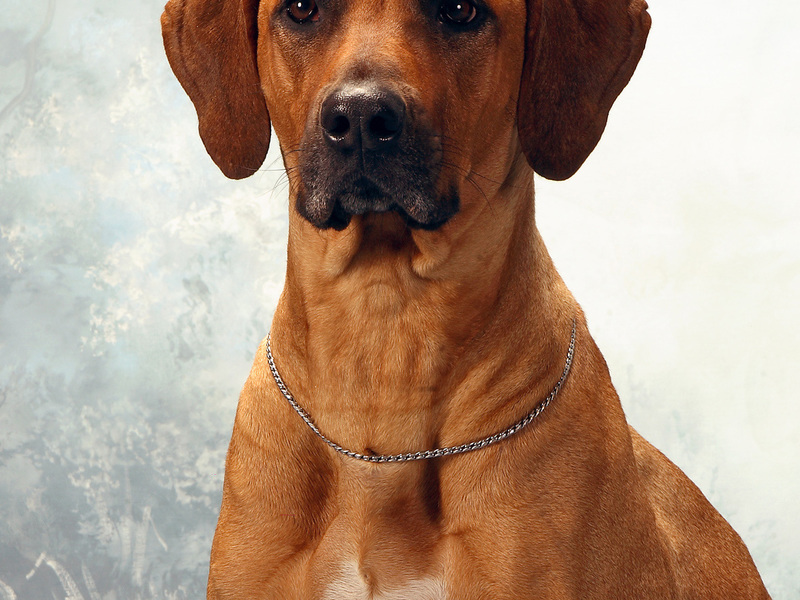
The dog's head is free of wrinkles, the muzzle is long, and the upper jaws extend beyond the lower jaws. The short coat is smooth and shiny, with a medium-thickness. The tail is medium in length and does not curl, although it has a slight curve.
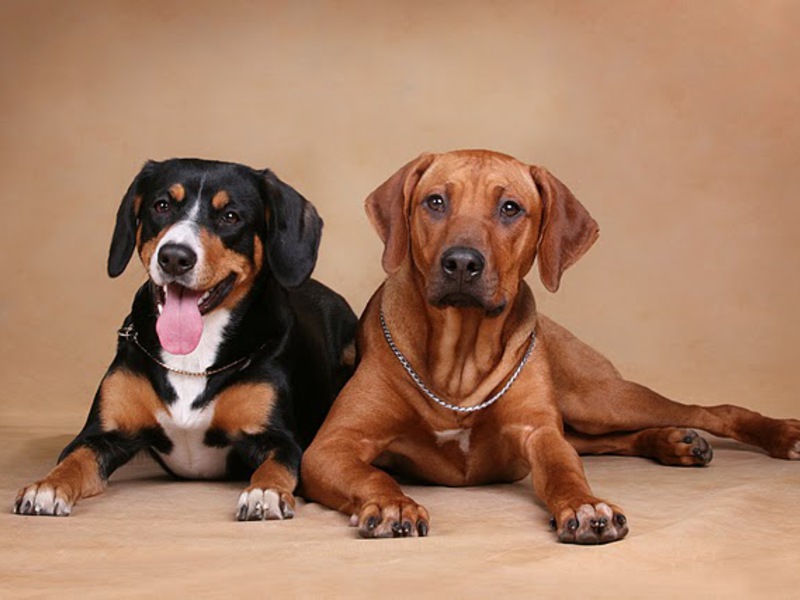
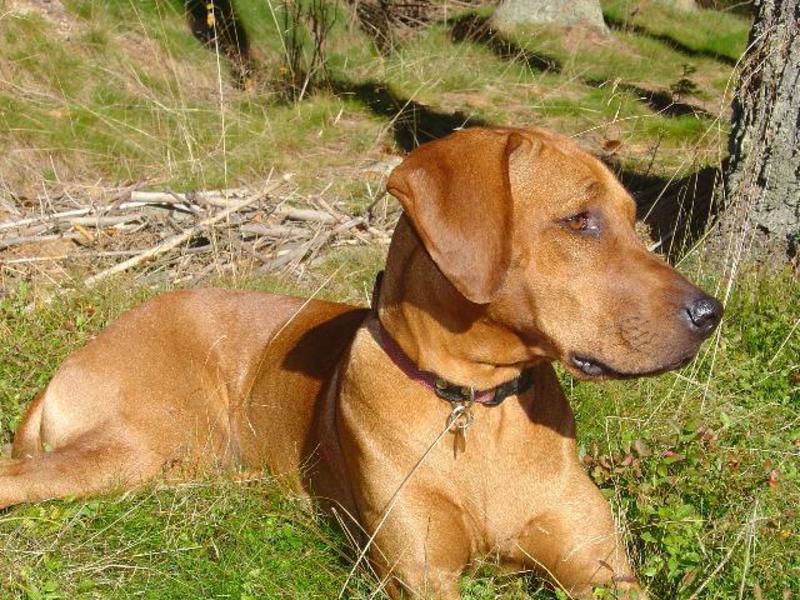
The coat ranges in color from wheaten to bright red, a reminder that the first Ridgebacks lived in the African savannah. A white patch may be present on the chest.
Standard height:
- boys - 63...69 cm;
- girls – 60… 66 cm.
Weight:
- boys up to 36.5 kg;
- girls up to 32 kg.
The dog barks loudly, but rarely. Usually as a warning.
Ridgebacks live up to 12-15 years, maintaining good physical condition into old age.
Character
A smart, strong, courageous, and strong-willed dog. But these same traits require a strong and determined owner. The dog will often try to take over the pack leadership role, and the owner must always be vigilant. If the owner is indecisive and weak-willed, they won't be a master—the Ridgeback won't listen. Moreover, the dog will be weak-willed toward a weak owner. capable of showing aggressivenessBreed characteristics: the Ridgeback can ignore a command if it deems it inappropriate. And it will hold a grudge it considers undeserved for a long time, waiting for the right moment to settle the score. But otherwise, it's a rather charming and sweet creature.
A well-behaved dog is polite to all family members, gets along with other pets, and allows children to treat it freely (it's tolerant of any pranks and will protect a child if necessary). It can even get along with a cat if they were raised close together as a kitten and puppy. However, outdoors, it will attack other dogs and stray cats. In the park, it may chase a squirrel.
By the way, the aggressive nature of the Ridgeback is not expressed in a clear formIf the owner and their family are not in danger, the dog is relatively indifferent to what's going on around them. However, in a dangerous situation, they are capable of making independent decisions and reacting remarkably well.
Specialization
 The Rhodesian Ridgeback is an excellent hunter. Remarkably, it has even been known to hunt lions. It is used to hunt wild boar, kangaroos, and other animals, no matter how large or formidable the prey. Ridgebacks track easily, both on the ground and in the air. A pack of Rhodesian Ridgebacks can hunt a lion, exhausting it with their agile attacks from various angles. Ridgeback hounds, are capable of pursuing game for long periods. However, they try not to prolong the chase. Typically, one or more dogs follow the scent, while the others follow a parallel course, choosing the right time to flank.
In Russia, hunters use Ridgebacks to hunt elk, hare, wild boar, and other game. Females are more talented hunters, while males excel at guarding.
The Rhodesian Ridgeback is a friend to the entire family and any pets living with them. A reliable guard dog. On the farm, on the street, in the apartment. He won't let strangers in. He won't let anyone harm his own.
Excellent healthThe Ridgeback's unique adaptability to both hot and cold climates, high agility, and constant need for exercise made it possible to use dogs of this breed in racing and as fighting dogs. And the Ridgeback participates in these competitions willingly and enthusiastically.
For their courage, strength, intelligence, and keen sense of smell, police and military personnel from various countries have come to love the Ridgeback breed and are increasingly using it in security, bomb disposal, search and rescue (searching for and helping to apprehend criminals, discovering drug caches), and other activities.
However, it seems that not all of this breed's abilities have been discovered. The Rhodesian Ridgeback is a versatile dog.
Care, education and training
 It's best to keep Ridgebacks in a country house. The fence needs to be very high, because Ridgebacks are excellent jumpers and not every fence can hold them.
If the dog is kept in a city apartment, daily walks and ample opportunity to run freely are essential. A vigorous walk should last at least 30 minutes. It's a good idea to find a place where the Ridgeback can romp off-leash. Due to its short coat, regular bathing and brushing are not necessary, but weekly brushing, regular ear and teeth cleaning, and nail trimming are essential.
It is recommended to feed an adult dog twice a day, a puppy no older than 6 months should be provided with feeding 5-6 times a day, strictly according to schedule. Then, the frequency of feedings gradually decreases.
If the owner prepares the food themselves, this is the best guarantee of high-quality nutrition. Natural food requires various supplements.
When buying dry food, you don't need to add any additives, and the preparation time is minimal. However, there's a risk of feeding your dog low-quality food. Purchasing expensive, high-quality food helps reduce this risk.
Mandatory vaccination of the dog:
- first vaccination (puppy is 1.5 months old);
- second vaccination (puppy is 6 months old);
- third vaccination (one-year-old puppy);
- Subsequent vaccinations are given to the dog annually.
For vaccination, the use of complex vaccines is recommended.
Training, as opposed to obedience training, is the process of accustoming a dog to the rules of behavior in the house. This process begins the first day a puppy comes into the home and is ongoing.
Training a dog requires persistence and consistency. It needs to be constantly reminded who's boss. Any displays of aggression or disobedience should be stopped immediately, decisively, and with extreme severity. But never cruelly! Ridgebacks are much more respond better to encouragement and affectionrather than punishment. The best option is for the owner and dog to establish a relationship based on mutual and deep respect. In this case, mutual understanding and affection will turn the Ridgeback into an obedient dog.
Obedience training—accustoming a dog to various commands—can begin as early as three months of age and is divided into two stages. During the first stage, the dog undergoes a general training course, while during the second stage, it can be specialized in a specific task (hunting, search, guide dog or bodyguard duties, etc.).
Ridgeback training requires a professional. The dog's personality is quite complex, and an inexperienced trainer can make a lot of mistakes when working with a Ridgeback. This is despite the Ridgeback's highly intelligent nature making it easy to train.
Where and how can I buy a Ridgeback puppy?
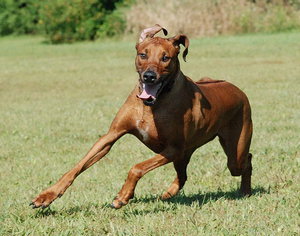 The Rhodesian Ridgeback breed is not widely known or mega-popular in the CIS. appeared here recentlyTherefore, you can't count on purchasing such puppies from breeders. Your only options are searching online and attending dog shows.
The price for a Ridgeback puppy can reach 80,000 rubles. Although it is possible to acquire a dog after a lengthy search. for 60 thousand rubles.
It's also not a good idea to give a Ridgeback puppy to children—when walked outside, the dog will attack all stray cats and strange dogs, and may even chase a squirrel in the park. While chasing, a Ridgeback is oblivious to obstacles and can be hit by moving vehicles. Therefore, on walks, this dog should be accompanied by an adult owner who is strong enough to hold the leash and is able to ensure the dog's obedience.
But having a small child in the family is not a barrier to buying a Ridgeback. This dog will not harm a child.
You should buy puppies at the age of 1.5-3 months., later it will simply be difficult to appreciate the beauty of their future exterior.
Conclusion
Ridgebacks are far from ordinary members of the glorious family of humankind's four-legged friends. Possessing strength, high intelligence, excellent health, and an independent nature, they may not accept the authority of a weak, weak-willed, or inconsistent person. If a dog lover lacks experience in owning and training a dog, it's best to look for a pet and companion among other breeds.
Anyone who has managed to tame this graceful and wonderful creature with a cute, cunning, and slightly cheeky face will be pleased. A strong friendship for many years is guaranteed, and the family will gain a reliable protector. And a well-rounded dog for all occasions.