 The Cane Corso breed has a large following, which is hardly surprising. Many appreciate the consistency of these dogs' behavior and their approach to building relationships with other dogs. They rarely respond to minor provocations with fighting, so it may seem as if they simply haven't noticed.
But these animals behave completely differently if their lives are in serious danger from other dogs and people. In this case, they an immediate attack follows, so the enemy is practically doomed to defeat. This trait makes the Cane Corso breed an ideal bodyguard. Given how balanced these animals are, they won't cause any trouble for their owners, as aggression requires compelling reasons.
Content
Cane Corso: breed description and characteristics
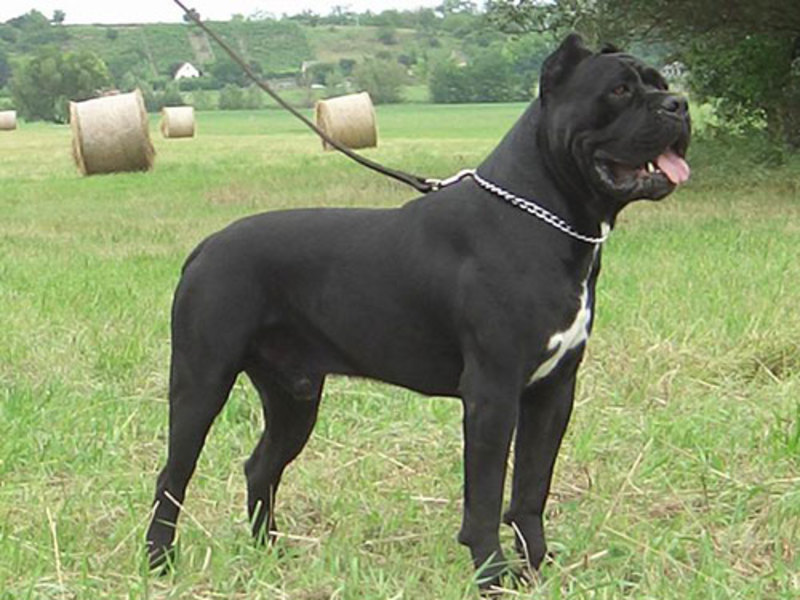
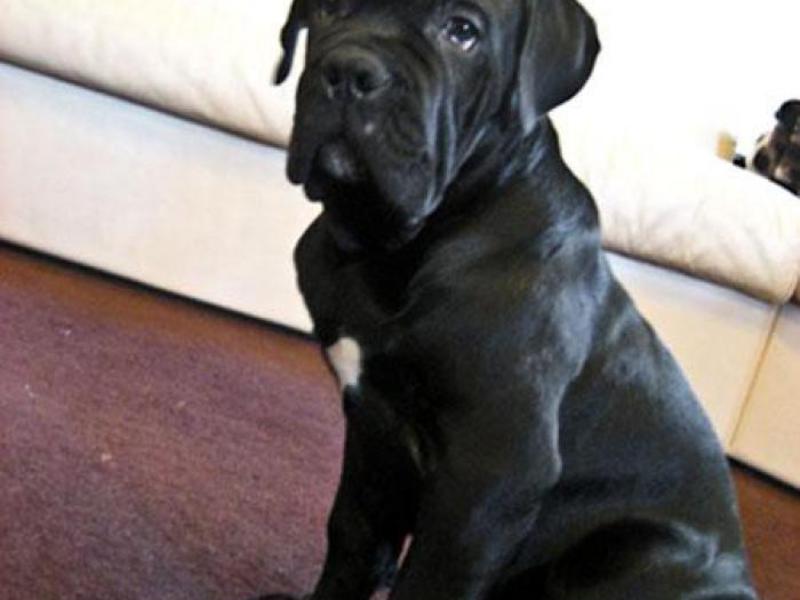
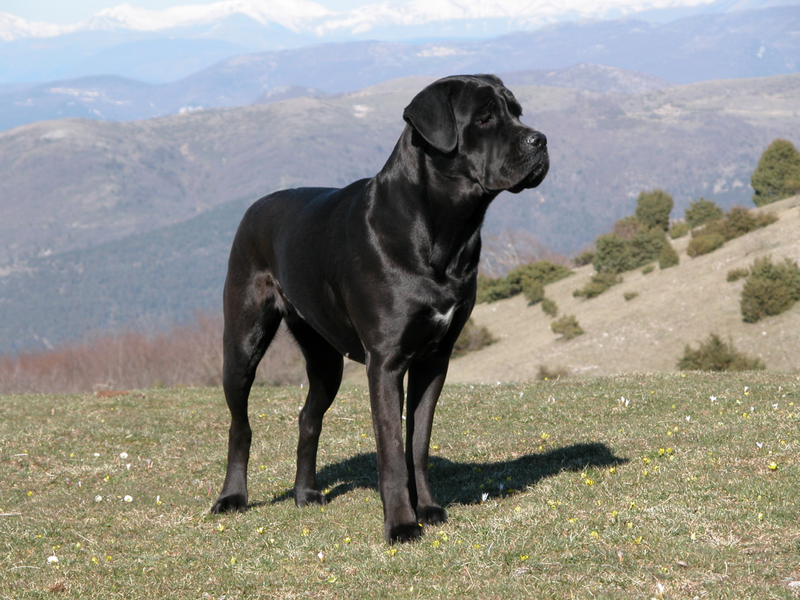
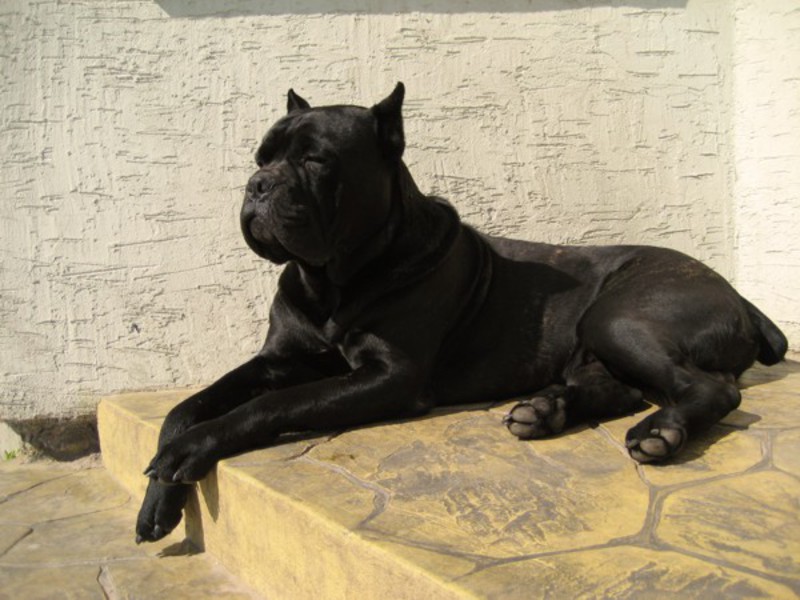
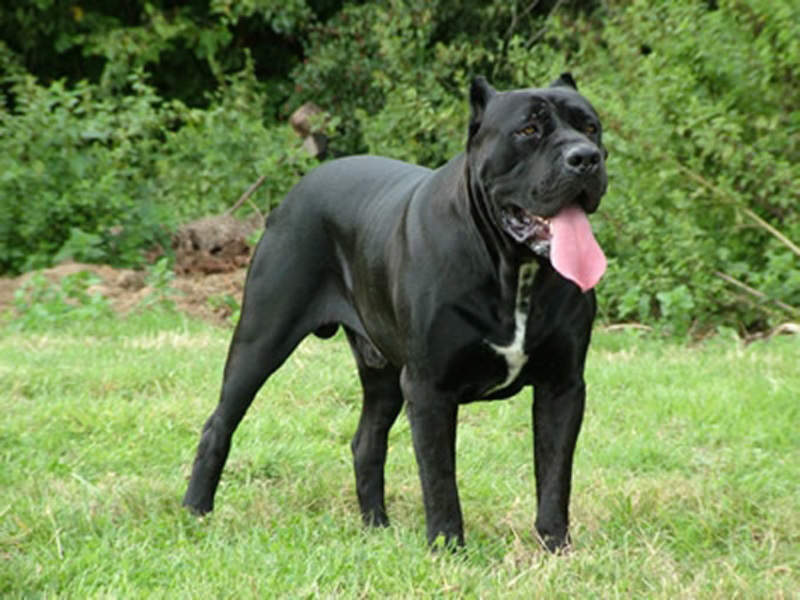
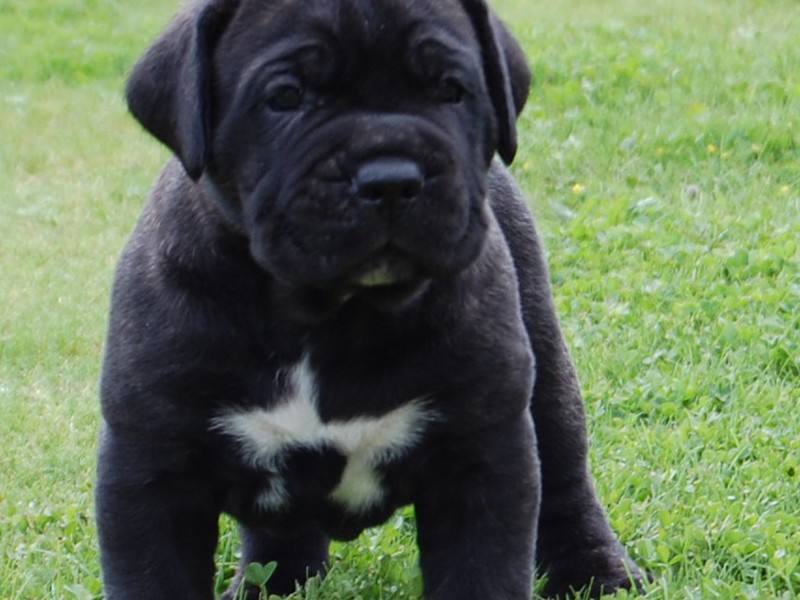
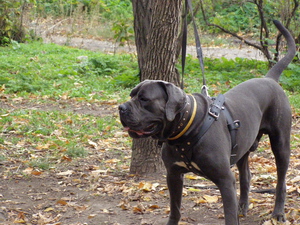
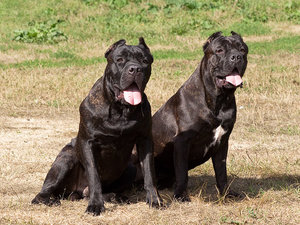 The characteristic features of Cane Corso representatives are their well-defined muscles. Their bodies also have an elongated profile, so their length is always greater than their height at the withers. Males have height at the withers 64-68 cm, female - 60-64 cmThey are practically the same in weight:
- for males - 45-50 kg;
- for bitches - 40-45 kg.
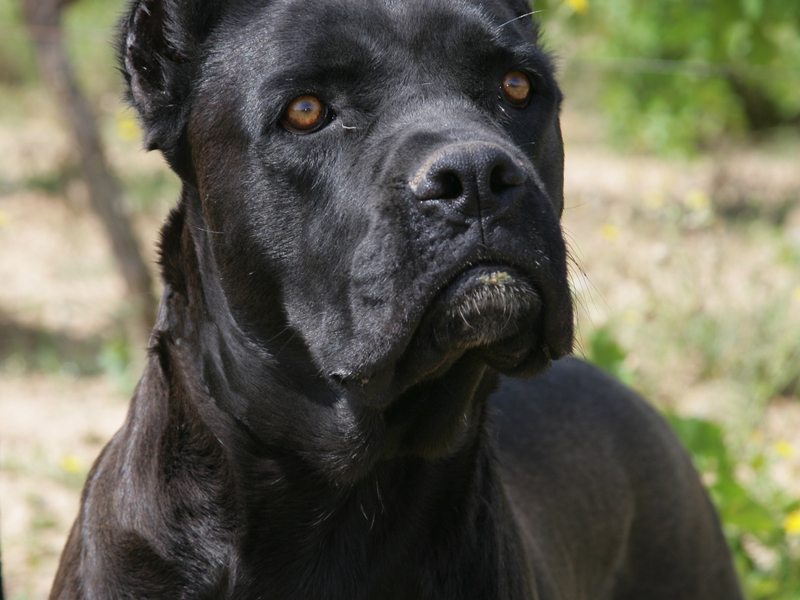
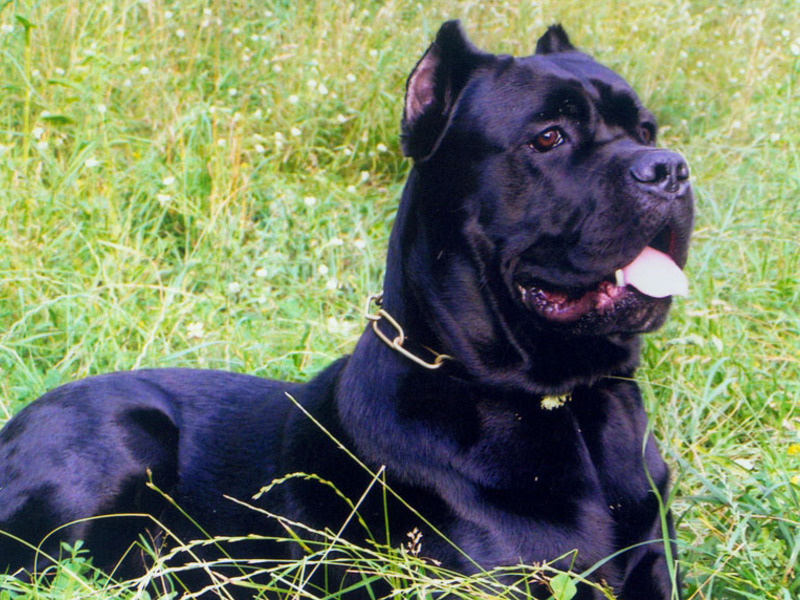
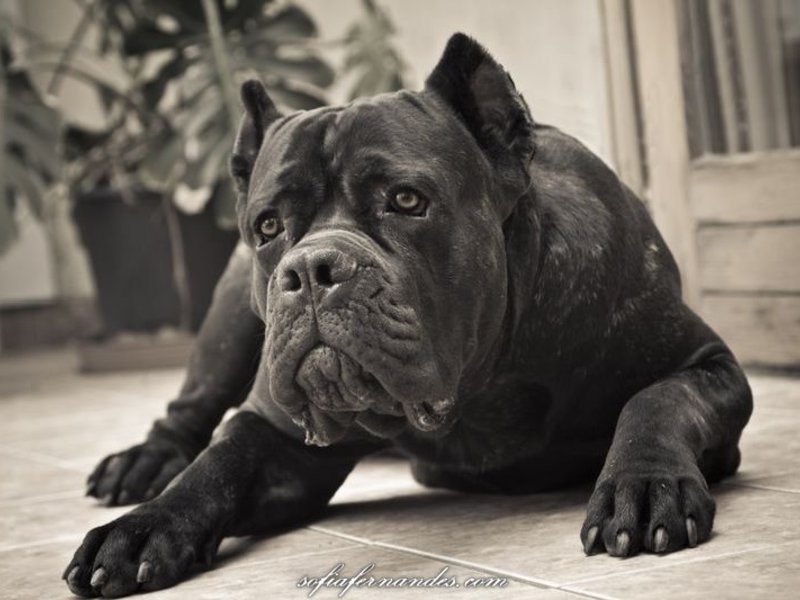
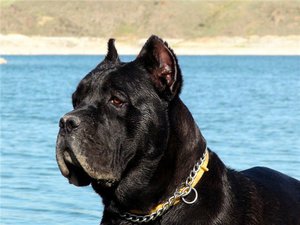
These dogs have a distinctive, massive, elongated head with a broad skull. The forehead is asymmetrical: convex at the front and flatter at the occipital protuberance. The nose is black with large nostrils.
The muzzle appears shorter than the skull, with a ratio of approximately 1:2. The width of the muzzle is always greater than its length. The lips are pendulous and positioned so that they constantly cover the lower jaw, helping to shape the profile of the muzzle. The jaws are wide, forming a slight undershot bite.
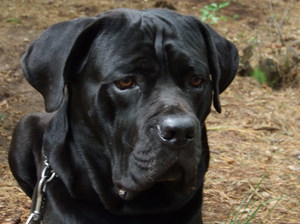
The eyes have oval and slightly convex shape, usually dark in color. Some representatives of the breed have light eyes, matching the color of their coat, but it is still recommended to choose dogs with dark eyes. Any representative of this breed must have dark eye rims. The gaze always remains focused.
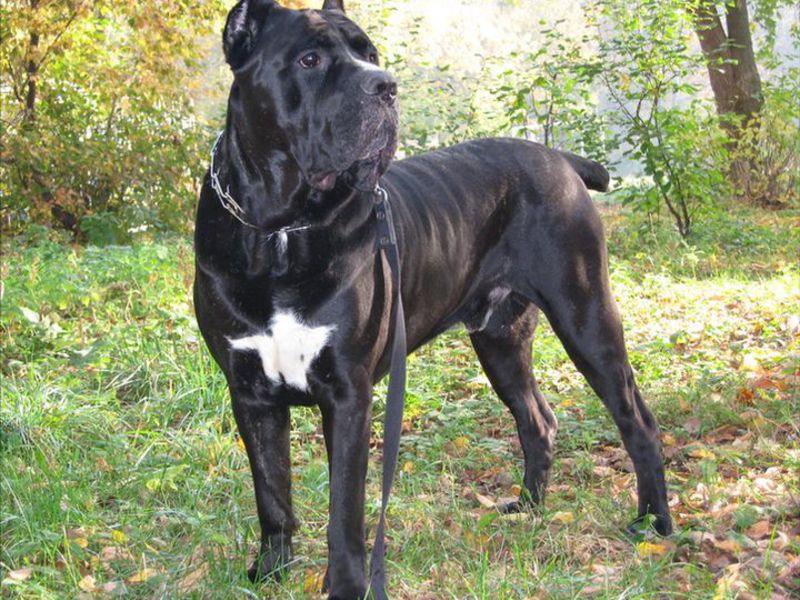
The ears are drooping, deep-set, triangular in shape, with a wide base. In many animals, they are cropped, but they are always triangular.
The neck is quite powerful and is no different in length from the head.
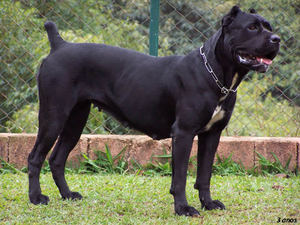
Muscles are visible in most areas, including the body, with a prominent withers that usually rise slightly above the gently sloping croup. The chest is prominent.
The tail is set quite high and has a thickening at the base, but after the fourth vertebra it is often have to be cut offWhen excited, it assumes a raised position, but the animal will never hold it vertically or twist it.
The forelimbs are particularly prominent, being quite long and muscular. Equally striking in contrast are the powerful shoulders and voluminous pasterns. Characteristic features of the hindquarters include a long femur, a lean lower thigh, and a moderately pronounced hock. When moving, Cane Corso dogs typically have a long, sweeping gait.
The skin is dense.
The coat is short with a shiny effect, the undercoat is very barely visible.
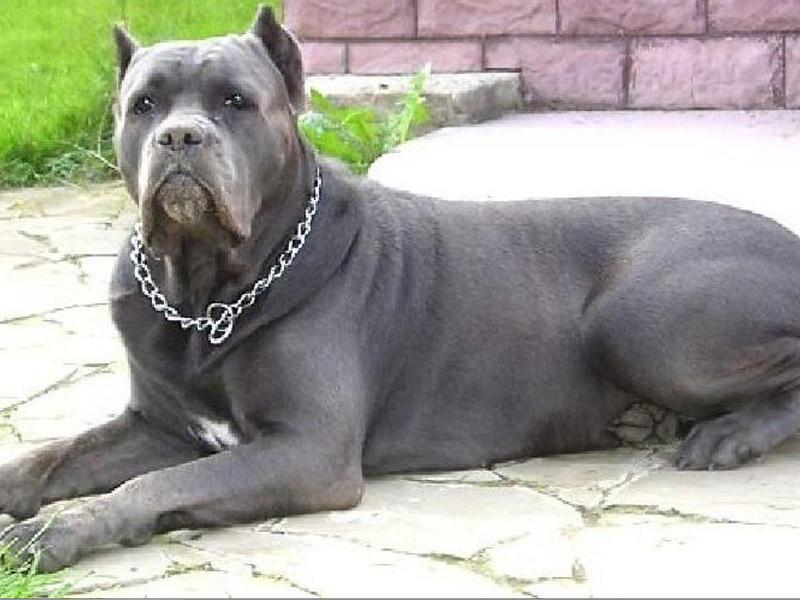
The most preferred color is black, although the coat can come in various shades of gray and red, and brindle-colored animals are also common. Some representatives of the breed have white markings on the chest and paws. A distinctive feature of Cane Corso dogs with colors other than black and gray is the presence of a mask on the face, in any of the aforementioned colors, covering the eyes.
Character
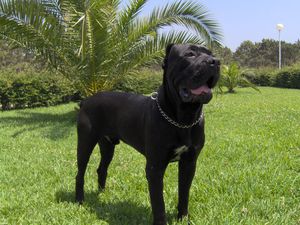 Anyone who has had to come face to face with a Cane Corso, involuntarily began to respect these animals, often they even caused timidityThis is hardly surprising, given their powerful and sturdy bodies and serious-looking faces. Anyone who isn't close to a Cane Corso owner is unlikely to want to flirt with their pet.
Dogs of this breed are very good at recognizing who is their friend and who is a stranger among the people around them. Moreover, they demonstrate this awareness towards other animals as well. Cane Corsos are creatures with a balanced character, but at the same time, they are characterized by high aggressivenessTherefore, if this animal decides to attack a person, it must have had a reason. This happens when someone tries to invade its boundaries. In this case, it becomes even more ferocious and will not wait for its owner's orders, but will first try to stop the intruder.
Many note the intelligence and well-developed intelligence of these dogs, and many are drawn to their graceful movements and robust build. Seeing such qualities in the Cane Corso is quite unusual, given that for many years they were considered a dog close to the people. It's extremely difficult to discern any haughty aristocracy in them, as they possess a distinctly lively soul and the temperament of the Italian nation.
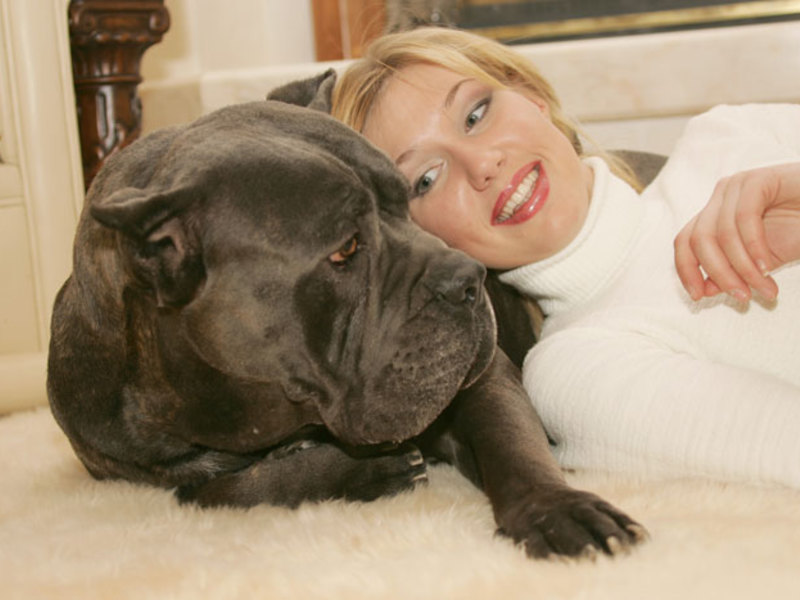
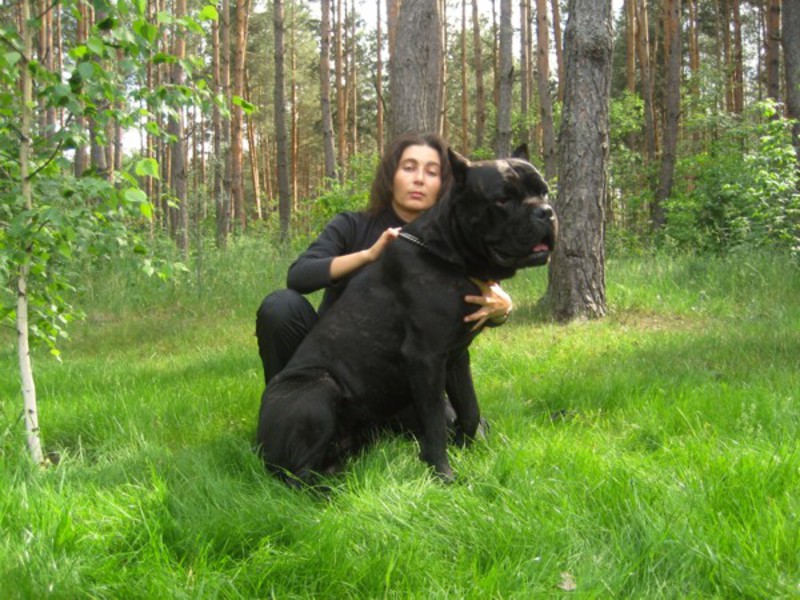
Italians are known to be very sensitive to family and children, and this has been passed on to dogs of this breed. You can expect absolute devotion to the owner, so her entire demeanor will demonstrate submissiveness and a desire to fulfill any command. These dogs are very obedient and can follow any command the first time. However, they were not created for mindless training; their primary function is to protect and guard.
Cane Corsos are constantly focused, monitoring every movement of a stranger. If they behave impulsively, they will signal that they are being watched. These dogs are unique in that they are self-aware, so they can be allowed to play with small children. When left alone with such a harmless creature, Cane Corsos will be very attentive to the child and will not allow it to fall or become frightened. Given their protective nature, Cane Corsos will do everything possible to prevent the child from crying.
Care and maintenance of the Cane Corso
These dogs need to be taken care of not only to keep them healthy, but also to have opportunity for breedingThe owner of a highly-bred puppy with an excellent pedigree can instantly lose the opportunity to present it at a show and use it for breeding if they pay little attention to its care.
Care instructions
Usually these puppies do not cause any more trouble to their owners, however there are a number of rules, which must be observed.
 First of all, you need to designate a place where your pet will rest and sleep. This is where this breed's past comes into play: after all, their ancestors, many centuries ago, lived in fenced areas, which usually served as village yards. Therefore, even then, these dogs developed the habit of considering any fence their boundary;
- A Cane Corso will behave in a similar manner in your apartment: if the puppy has had access to any room from birth, then the entire apartment will be perceived by him as his domain, so he will be distrustful of guests or repairmen, despite all your requests;
- Owners whose Cane Corso lives outdoors should be especially careful with these puppies. They won't be able to easily survive harsh winters. Therefore, any dog house you build for your pet must be insulated.
- If you decide to keep small puppies outside, it is recommended to temporarily move them into a heated room in winter, when the frosts become especially severe.
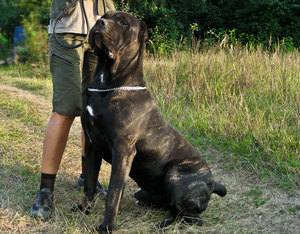 First of all, you need to designate a place where your pet will rest and sleep. This is where this breed's past comes into play: after all, their ancestors, many centuries ago, lived in fenced areas, which usually served as village yards. Therefore, even then, these dogs developed the habit of considering any fence their boundary;
Many owners have changed their attitude toward these animals due to the breed's prestige. Therefore, they no longer believe that large dogs are only suitable for those living in private homes. This explains the current situation, where Cane Corsos are increasingly being seen in city apartments.
However, you must keep your puppy active on a regular basis. through a variety of games and physical activitiesOtherwise, you may have serious concerns about the safety of your personal furnishings and finishing materials. To minimize such mischief, it's recommended to take your pet for walks more often. However, you shouldn't just spend time outdoors with your dog—include various games and runs beforehand.
When grooming a Cane Corso puppy, pay special attention to the condition of its coat. You'll need to brush it with a stiff brush from time to time. Remember that parasites can cause significant damage to the animal, as it lacks an undercoat. Therefore, after winter, you should regularly treat it for fleas and ticks to ensure your pet remains healthy and happy for as long as possible.
Ear cleaning is a necessary hygiene procedure. This should be done especially on dogs with cropped ears. Ears can quickly become clogged with dirt, but removing it is very easy: just use gauze soaked in a special solution.
Feeding
 To keep your puppy happy, you should give him meat regularlyAlthough this choice is understandable, since meat is a source of energy, which a Cane Corso needs to have in abundance. If you feed it only cereals and vegetables, don't expect it to develop into a reliable guard dog in a couple of years. Without adequate protein, this will be impossible.
A puppy's diet should be as varied as possible. Therefore, even if you can afford to feed your Cane Corso only meat and by-products, it should be combined with other, usually cheaper, foods that will provide the dog with the necessary nutrients. The most important ones are:
- dairy products;
- cereal porridges;
- vegetables;
- fruits;
- berries.
Raw fish with bones, especially freshwater fish, should be excluded from a Cane Corso puppy's diet, as they may contain parasites. Smoked foods, sweets, and foods high in carbohydrates should also be avoided.
Try more often give him large bonesFeeding your Cane Corso raw meat is quite risky. In this case, you'll need to see your veterinarian regularly for parasite prevention.
Conclusion
 Cane Corso dogs have many virtues, but the most important is their ability to serve as watchdogs and guard dogs. When first seeing this stern-looking animal, you might assume they are aggressive creatures who might attack a person at the first opportunity. However, this is not the case. They will not harm a person or another animal without provocation. Therefore, with proper training and care, a puppy can become a reliable guard dog and a beloved companion for the entire family.