The Kerry Blue Terrier is suitable for hunting, guarding the home and territory, and, with proper training, makes an excellent companion. These dogs require discipline, exercise, a balanced diet, and regular grooming. They are strong, resilient, and healthy. Individuals from elite clubs and kennels with a good pedigree and conforming appearance compete in dog shows and competitions.
Content
History of the breed
In the post-war years, the peak of terrier popularity was observed in the USA, exhibitions and competitions were actively organized, and amateur clubs were opened.
The dog originated in Ireland (County Kerry). It is considered a symbol of the country. There is no precise information about the breed's origins. There are several theories about the Kerry Blue's ancestors:
- The ancestor was the Portuguese Water Dog.
- A wheaten terrier took part in the experiments.
- They crossed black terriers (an extinct species) with “blue dogs” from Spain.
- There is an external resemblance to the Wire Fox Terrier and the Bedlington Terrier.
Initially, these dogs were used for guarding territory, hunting, herding livestock, and protecting homes from rodents. Now they are kept as companions. Their lifespan is 10-12 years.
The standards were approved after the First World War.
External description
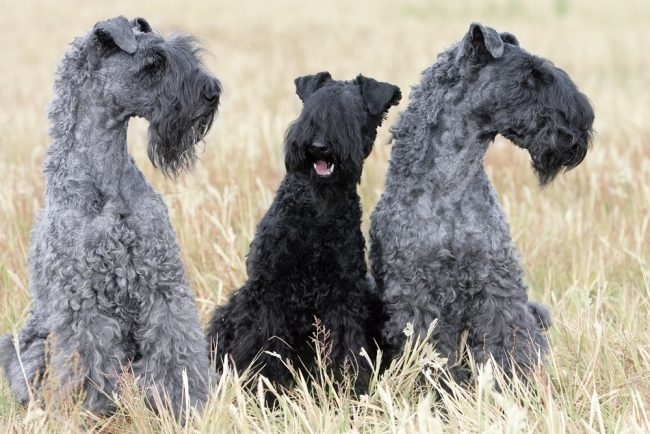
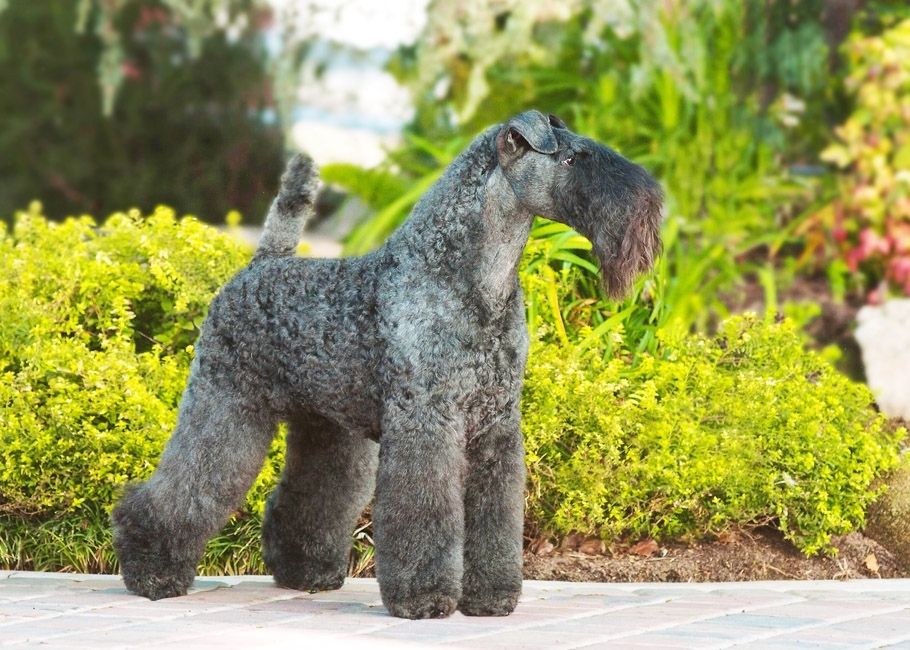
Medium-sized individuals are 45-50 cm tall at the withers and weigh 15-18 kg. Females are slightly lighter and shorter.
Approved breed standards:
- The body is proportional and lean. The muscles are well developed. The skeleton is strong. The back is level. The chest is deep. The neck is set high.
- The legs are strong. The paw pads are compact and rounded, and the claws are dark.
- The tail is thin, straight, and carried upward. Some owners dock it at an early age.
- The head is medium-sized, rectangular, with a slight stop. The ears are small, triangular, and set close to the skull, facing forward.
- Eyes are black or dark hazel. Yellow and green are not acceptable.
- The muzzle is elongated. The nose is dark with wide nostrils.
- The jaws are strong and have a good grip. The bite is either scissor or level. The gums and roof of the mouth are black. A pink tint is considered a fault.
- The coat is thick and soft, silky and wavy, with no undercoat.
- The color is gray-blue.
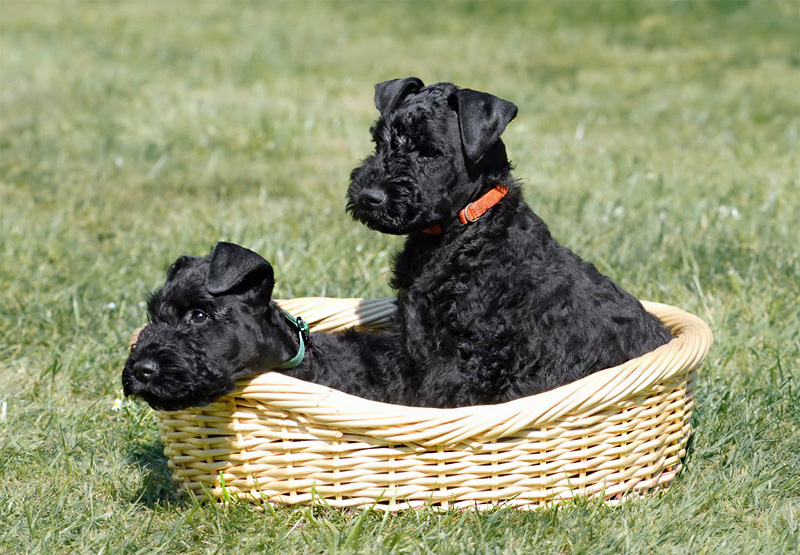
The puppies' fur is black. This color changes by the age of two.
Choosing a puppy
Buy a pet from a kennel or an experienced breeder. Choose a dog with good pedigree characteristics. It's important to review the veterinary passport and pedigree. If possible, look at the parents and their living conditions. Puppies should be active, well-fed, and have a soft, shiny coat. The price of puppies in Russia ranges from 15,000 to 25,000 rubles.
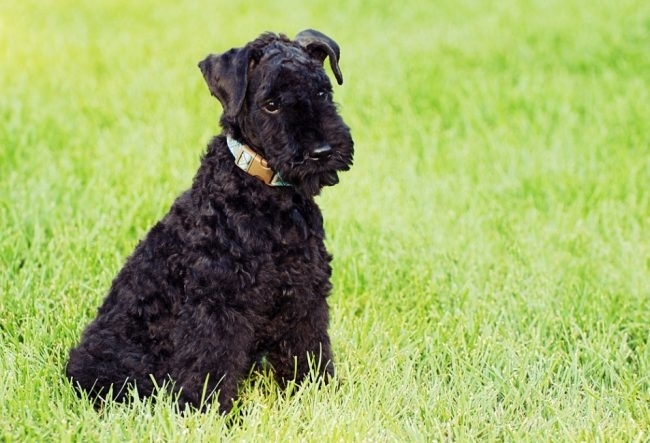
Dogs for shows and competitions are more expensive
In elite kennels, puppies are given a name (indicated in the paperwork), which can be kept or changed. The name should be short and understandable to the dog. It's important that the dog responds to it.
- For boys: Rich, Tom, Jack, Chili, Ralph, Sam, Archie, Toby, Teddy.
- For girls: Sarah, Chara, Lexi, Kitty, Jessie, Daisy, Yuta, Chelsea.
Personality traits
Kerry Blues have many virtues: they are loyal to their owners and friendly with all family members. They are active, attentive, curious, and cheerful, possessing high intelligence and quick reflexes. They can be used to guard the home and territory.
But this breed also has its drawbacks: a puppy needs training from an early age. Without proper training, it will grow up aggressive, disobedient, and unmanageable. If you lack training experience, owners should seek professional help.
Terriers don't do well alone and don't tolerate rough handling or loud shouting. They often vocalize, so it's important to teach them to calm down.
This breed doesn't always get along with other pets and can be territorial. It's important to correct its behavior.
A training session should last no more than 15-20 minutes. If the command is learned correctly, the pet is rewarded with food.
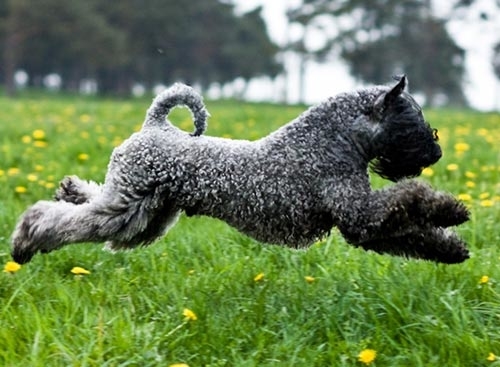
Terriers respond well to praise and work harder.
Maintenance and care
Dogs quickly adapt to life in a country house or apartment. They are given a cozy, draft-free spot. They are provided with a bed, toys, grooming supplies, a bowl, and a leash.
Maintaining appearance
The breed sheds almost nothing and is odorless. Grooming is simple, requiring regular, simple procedures that are taught from an early age:
- Teeth and ears are cleaned once a week.
- Bathe no more than once a month, using shampoos for dogs.
- The coat is combed 2-3 times a week.
- Grooming is done every three months. Show dogs are groomed more frequently. It's best to leave this procedure to a professional. A trimmer is used. You can trim the fur on the face yourself if necessary.
- It is important to regularly treat the coat against fleas and ticks.
- Claws are trimmed as they grow. Sometimes they wear down naturally.
- Wipe your eyes with a damp cloth daily.
Walking
The dog is active and requires physical exercise and active games. The pet easily agrees to long walks and trips into nature.
The terrier needs supervision and should not be let off the leash.
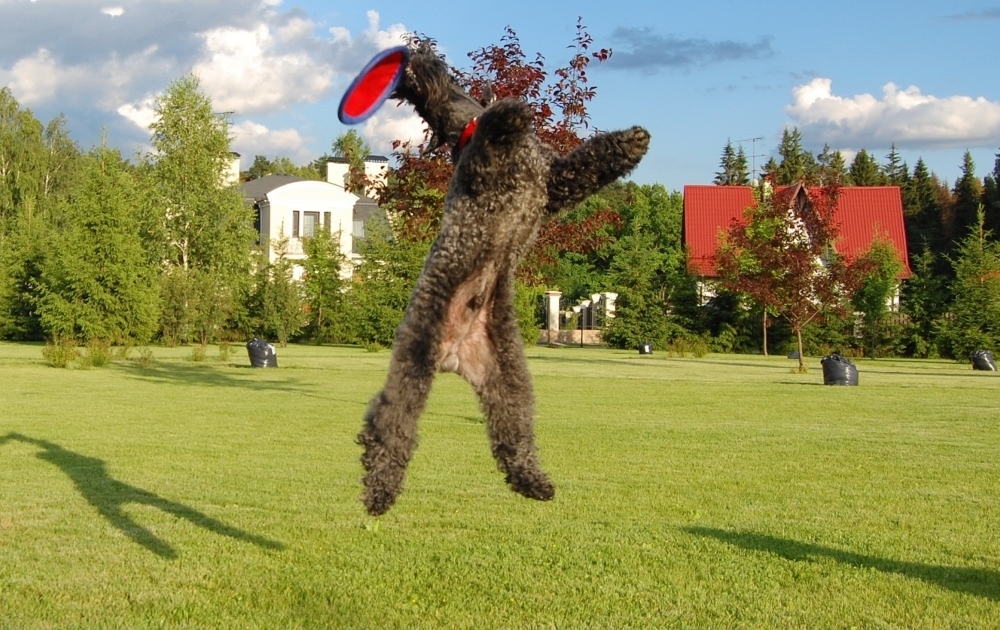
If your pet is walking on the property, you need to make sure it doesn't dig holes or jump over the fence.
Proper nutrition
It's important to maintain a feeding schedule. Puppies up to 2 months old eat 4-5 small meals a day. At 3-4 months, they need three meals a day. Adult dogs are trained to eat twice a day. Feeding amounts are gradually reduced.
Proper nutrition ensures your pet's health (strong teeth, bones, and a beautiful, shiny coat). Several diet options are available: natural food, dry food, or canned food.
- The basis of the diet is meat, 300-400 grams per day (chicken, beef, veal).
- Porridge (rice, buckwheat). Unsalted, seasoned with vegetable oil. Boiled and raw vegetables can be added.
- Fermented milk products (fermented baked milk, kefir, yogurt, cottage cheese), eggs.
- Boiled sea fish and offal.
- Vitamin supplements prescribed by the veterinarian and fish oil are administered.
- Clean drinking water all the time.
Pets are provided with fresh, high-quality food. The bowl is cleaned of any leftovers after each meal. Excessively hot or cold food is prohibited.
Leftovers from the owner's table are not suitable for dogs. The following foods are prohibited: salty, pickled, spicy, sweet, baked, fried, smoked, and canned. Boiled potatoes, cabbage, and legumes are difficult to digest. Tubular chicken bones can cause stomach damage.
Many breeders feed their pets ready-made dry food or canned food. These provide a balanced supply of nutrients and vitamins. It's important to choose premium or super-premium products.
Health
Dogs of this breed have good health.
Proper nutrition and care reduce the risk of disease. Potential problems:
- Congenital hereditary pathologies: entropion, thyroid dysfunction.
- Older dogs have various joint problems, tumors, blindness, and chronic ear inflammation (otitis).
- Regularly treat the coat against ticks and fleas and prevent helminths (worms).
- Regular veterinary checkups are essential. Vaccinations against hepatitis, rabies, distemper, leptospirosis, and enteritis are recommended. An experienced veterinarian can provide all recommendations.
Breeding
A healthy pair with good hereditary data and breed standards is allowed for breeding. It is better to look for a partner in an elite nursery or club. The mating takes place on the male's territory and is agreed upon in advance.
Females mature at 6-8 months, males at 7-10. Early pregnancy negatively impacts the health of the puppies, and the mother's body is not yet fully developed. The ideal age for mating is two years (after the female's third heat).
Pregnancy lasts 63-67 days. Regular veterinary checkups are necessary. A place for the mother and puppies should be prepared in advance in a quiet, warm corner of the house. The birth is usually uneventful, but supervision is essential. The nursing mother needs increased nutrition and rest.
Puppies are fed milk until they are 1-1.5 months old. Later, they are fed formula and milk, cottage cheese, and eggs. By 2-3 months, they become independent and are ready for sale.
It is necessary to ensure the safety of the puppies: remove all small, sharp glass objects, and wires.
Babies have weak bones and muscles. Handle them with care (avoid squeezing or tossing).
If the owner does not plan to breed the breed, castration and sterilization are carried out: the male no earlier than 6 months of age, the female at 6-9 months (before the first heat).
The surgery is safe and has no negative consequences. Animals recover quickly. The owner must maintain the sutures until they are completely healed.
The Kerry Blue Terrier is an active, intelligent, and friendly dog. It makes a wonderful companion and guard dog for the family. This breed is easy to maintain. To maintain a healthy pet, it requires proper nutrition, walks, and regular grooming.