The Boston Terrier is a breed bred in the United States with English roots. Their distinctive white "tuxedo" coat earned them the nickname "American gentlemen," but their temperament is more reminiscent of small, unruly children. These charming, sturdy dogs quickly gained popularity not only among American breeders but also among dog lovers worldwide.
Content
Description of the breed
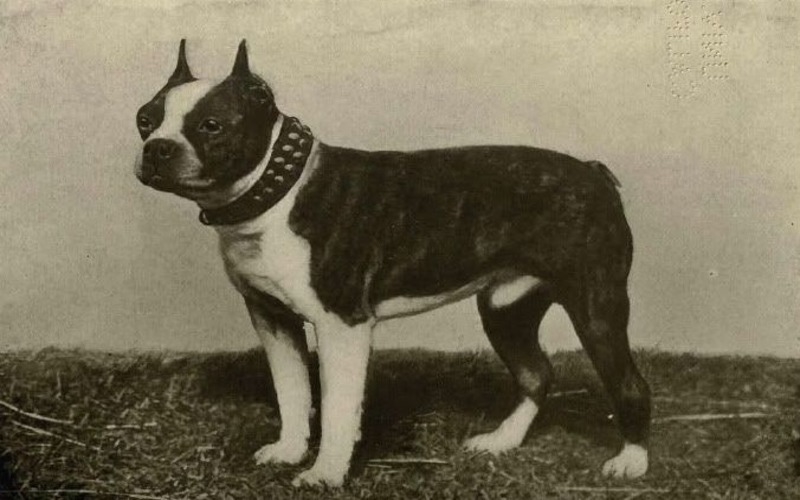
Judge's descendants were called Boston crossbreeds, round-headed bulldogs, and American bull terriers. French and English bulldogs, terriers, boxers, and pit bulls were used in the breed's development.
Boston Terriers originated in Massachusetts. In 1870, Boston resident Robert Hooper acquired an unusual brindle-and-white-spotted dog from sailor Edward Barnett, who had been brought from England. The dog became the founder of the breed. The appearance of Judge (as the new owner named the dog) showed traits of an English bulldog and a white English terrier.
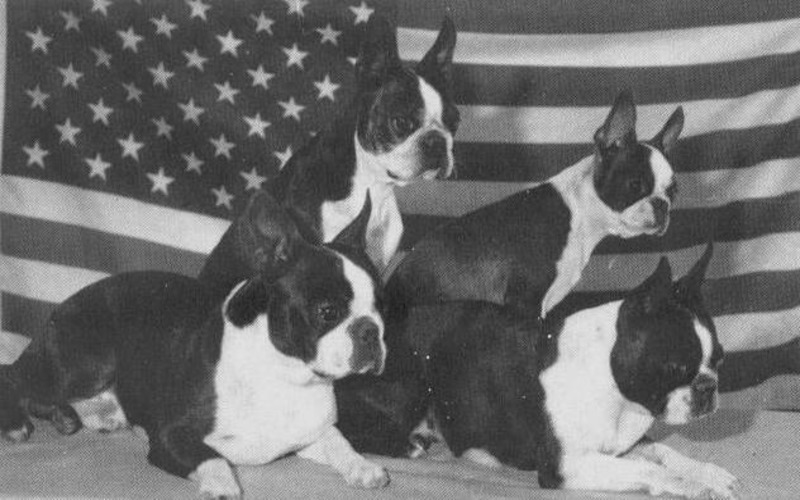
In 1979, Boston Terriers became the symbol of Massachusetts.
Seeing great potential in the dog, Hooper decided to breed it with females of other breeds to develop a specific appearance. Through crossbreeding, a completely new dog was created, which in 1878 was shown under the name "Boston Terrier." After this, Boston Terriers became very popular among breeders in the United States. In 1890, the first club for these dogs was founded, and three years later, the breed received official recognition from the American Kennel Club.
Exterior
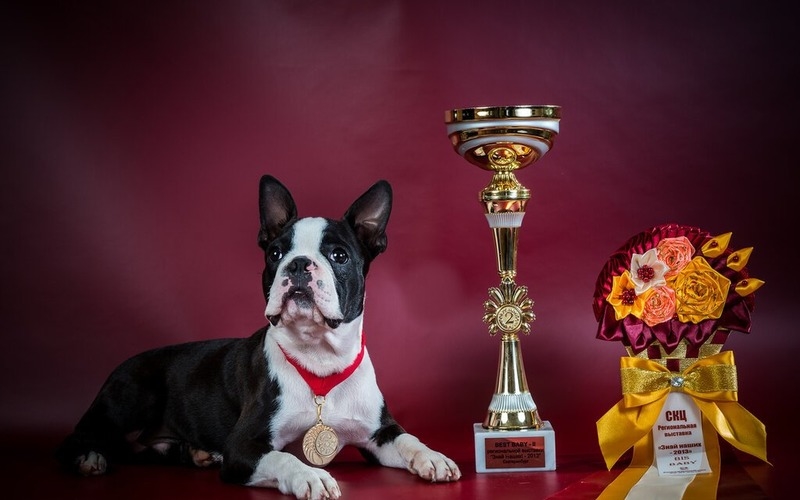
Boston Terriers are distinguished by their harmonious and proportional build.
The Boston Terrier is a toy breed, but it is not a dwarf. Its height at the withers ranges from 38 to 42 cm, and its weight ranges from 4.5 to 11.5 kg. Sexual dimorphism is highly pronounced: males are larger than females and have a more muscular and robust build.
Table 1. Breed standards
| Body part | Description | Disqualifying signs and faults |
| Head | Square in shape, massive. Tightly covered with skin, without folds or wrinkles. Flat on top, with a broad forehead, prominent cheekbones and eye sockets, clearly defined brow ridges, a clearly visible transition from forehead to muzzle, and a smooth curve. | |
| Muzzle | Wide, smooth, but a few wrinkles are allowed. Three times shorter than the forehead. | |
| Eyes | Rounded, large, slightly convex, and set wide apart. Their gaze is intelligent, friendly, and sparkling. The iris is dark brown. | Eyes with visible whites, with a blue iris |
| Nose | It is divided into two equal parts by a furrow. It has well-defined, open nostrils and a large, black-pigmented lobe. | |
| Lips | Fleshy, dense, completely hide the gums and teeth when the mouth is closed | |
| Jaws | The teeth are small but strong. The lower incisors form a straight row. The bite is pincer-shaped (straight), with the lower jaw slightly curved upward, or bulldog-type. | Crooked lower jaw |
| Ears | Medium-sized, erect, set wide apart, triangular in shape. The tips are rounded. | Ears that are too large or disproportionately small |
| Neck | Straight, proportionally curved, smoothly flows into the withers | |
| Frame | Square in shape, with well-developed muscles, a broad back running in a straight line, and a moderately wide brisket reaching to the elbows. The croup is slightly sloping, equal in size to the shoulder girdle. | Back with a sag or hump |
| Limbs | Elongated and powerful. The forelegs are parallel to each other and set under the withers. The elbows are close to the chest. The hind legs have well-defined bends at the stifles. The hand forms a neat, rounded lump, with short nails. | Straight hocks |
| Tail | Shortened (no more than 5 cm), neat, positioned and carried low. Tapers towards the tip. | A tail that is curled, set on and carried high does not meet the standard dimensions. |
Boston Terriers that are ideal in appearance are the exception rather than the rule. Most individuals have several defects of varying severity that do not affect the dog's health in any way, but prevent the animal from participating in exhibitions and receiving a championship diploma.
Most often, defects affect the tail region, so many unscrupulous breeders, in an attempt to conceal them, dock the tail. However, such dishonest manipulations automatically lead to the culling of the individual.
Coat and possible colors
The coat of the Boston Terrier is uniform, very short, close-fitting and smooth. Purebred individuals have three main colors:
- Classical. The black color of the coat is diluted with large white spots.

- Brindle (motley). The stripes are clearly visible on the main background color.
- Seal (fur). It resembles the classic one, but in daylight the dark part of the coat has a reddish tint.
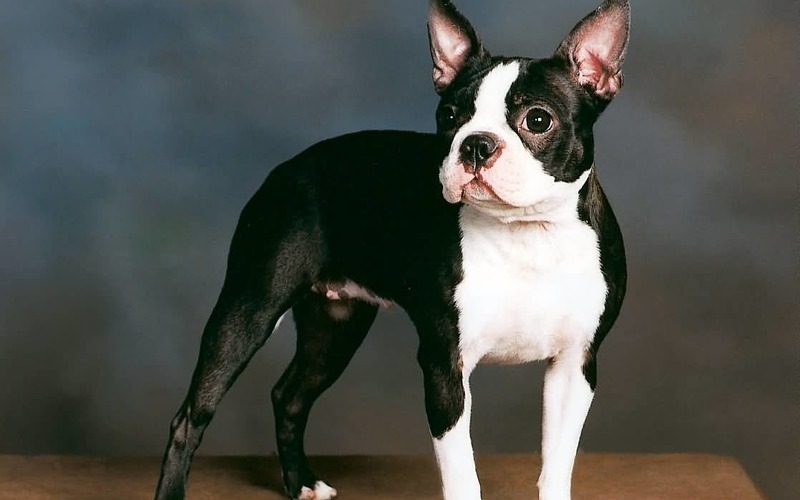
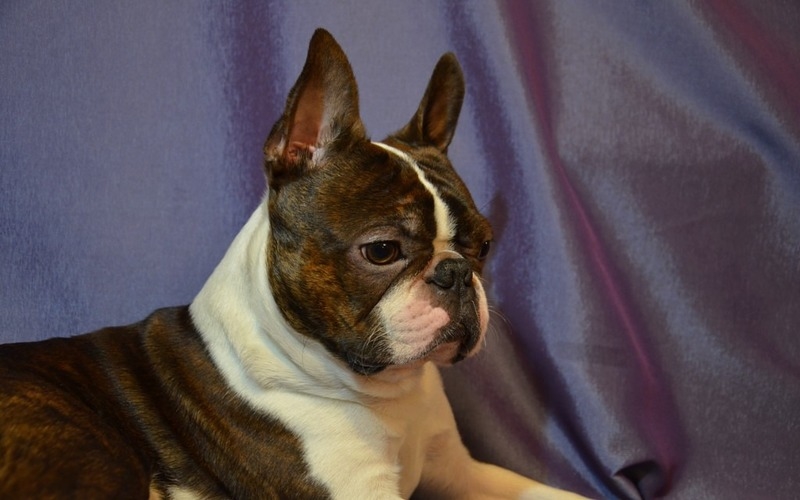
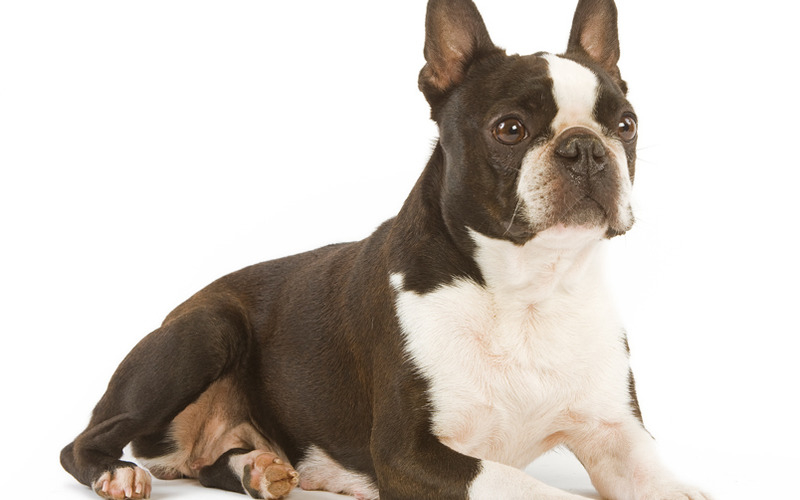
Each coat type requires symmetrical white markings. These should be located on the chest in a tuxedo pattern, on the belly, on the front and hind legs down to the hocks, and in a smooth blaze across the forehead.
Individuals with other vibrant colors are also found: red, piebald, lavender, tricolor, and albino. However, such coat coloring is considered a defect, and the non-standard animal will not be able to contribute to the further development of the breed.
The nature and characteristics of training
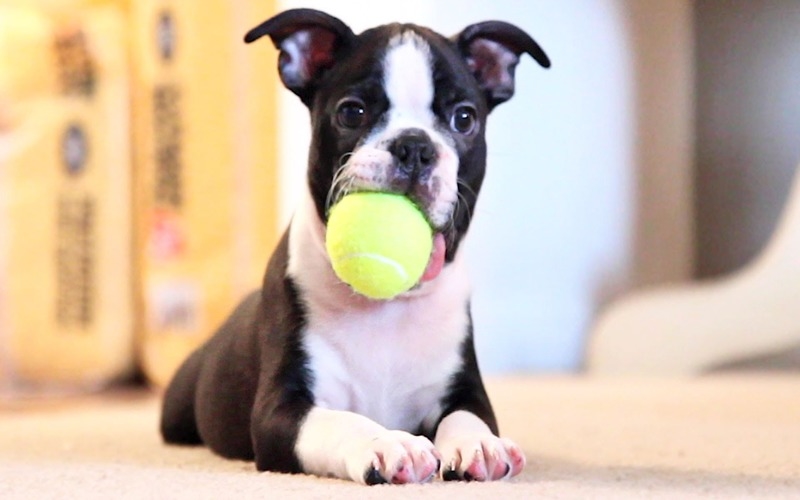
Boston Terriers are nicknamed "American gentlemen" for their white tuxedo coats. But their personality is more reminiscent of small children.
If you were to briefly describe the Boston Terrier's personality, you could call them a little child in a dog's body. They are very energetic and playful animals, capable of frolicking all day long, running around with balls, rings, and other toys, attracting everyone's attention. At the same time, the dog has a fairly balanced and docile character and is not prone to bouts of aggression. Boston Terriers are recommended for families with children; they get along well with children and other pets.
While playing, dogs can get carried away and damage furniture or wallpaper, but don't punish them too harshly. These dogs are very sensitive, and even a change in tone can be distressing and stressful.
By nature, these dogs are trusting, friendly even toward strangers, and may follow them. Problems also arise during walks, when Boston Terriers can display traits such as cockiness and pugnacity, inherited from their fighting ancestors. This behavior is easily corrected through training.
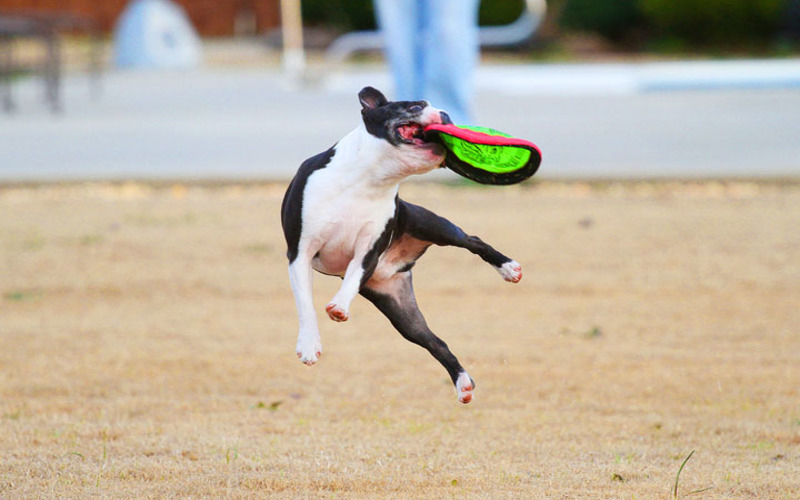
The sooner the owner starts training his pet, the more obedient the dog will be in the end.
Therefore, training and socialization should begin at a very early age. Boston Terriers are quite intelligent and remember commands well, but to become a true companion and guard dog, you'll need to put in a lot of effort and establish yourself as a leader. Canine experts recommend training dogs in special training areas, rewarding correct behavior with tasty treats and praise.
Life expectancy and susceptibility to disease
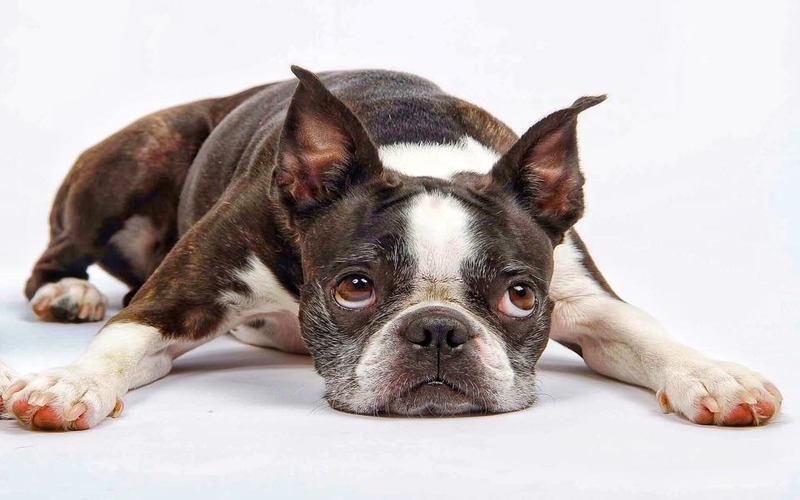
Due to the shape of their skull, Boston Terriers are prone to various respiratory problems. Therefore, the dog needs frequent breaks during exercise.
The average lifespan of a Boston Terrier is 11 to 15 years.However, representatives of this breed cannot be considered to be in good health. These problems are associated with a specific brachycephalic cranial structure, which can lead to certain illnesses. This shape was the result of extensive selective breeding, and the internal organs have not had time to adapt to these changes.
Boston Terriers often exhibit respiratory problems, manifested by wheezing, snoring, and snorting. This usually doesn't affect the pet's overall well-being, but during physical activity, it's important to take breaks to allow the dog to catch its breath.
Boston Terriers most often suffer from the following diseases:
- Deafness. Treatment depends on the cause. Both mechanical removal of earwax and elimination of inflammation with antibacterial solutions and antibiotics can help. If the deafness is congenital, the dog will have to live with this defect for the rest of its life.
- Cataract. In the early stages, the disease's progression can be slowed with special eye drops. However, in advanced cases, surgery and lens removal will be required.
- Allergy. It is treated with a strict diet and the use of histamine and immunomodulatory drugs.
Representatives of this breed can also suffer from serious congenital conditions such as knee and elbow dislocation, brain tumors, and pyloric stenosis. These problems can only be resolved through complex surgical procedures.
Maintenance and care

During the cold season, it is recommended to walk your pet in clothes.
Boston Terriers are quite compact, so they can even be kept in a city apartment. It's important to provide them with a designated resting area and a variety of toys to keep them entertained and from chewing on shoes or furniture while their owner is away.
It's recommended to walk your dog twice a day for half an hour, but avoid prolonged outdoor exposure in extremely hot or cold temperatures. Their short coat leaves their skin vulnerable to harsh UV rays and frostbite.
Grooming

Grooming for a Boston Terrier is limited to standard procedures.
Boston Terriers are low-maintenance. Their short, hairless coat sheds little and doesn't require frequent brushing. Simply wiping it with a rubber glove a few times a week is enough to give it the necessary shine.
The following procedures will be required:
- Washing. The pet's face should be wiped daily with a clean, damp towel to remove food debris and dirt.
- Bathing. Bathing a Boston Terrier too frequently is not recommended. It's best to bathe it as soon as the lighter areas of the coat become soiled, using specialized grooming products for short-haired breeds.
- Trimming claws. As the nail grows, you need to trim its transparent part once a month with a claw clipper, being careful not to damage the pulp and blood vessels.
- Eye and ear hygiene. A dog's eyes are a vulnerable spot, as they are prone to inflammation. It's important to examine the eyes and ears daily, remove any accumulated discharge with a cotton ball soaked in boiled water or a special solution, and if an infection is detected, consult a veterinarian immediately.
- Oral care. Boston Terriers' small teeth are prone to tartar buildup. They require regular brushing with a specialized toothpaste and toothbrush, and special plaque-removing sticks should be offered.
Proper nutrition
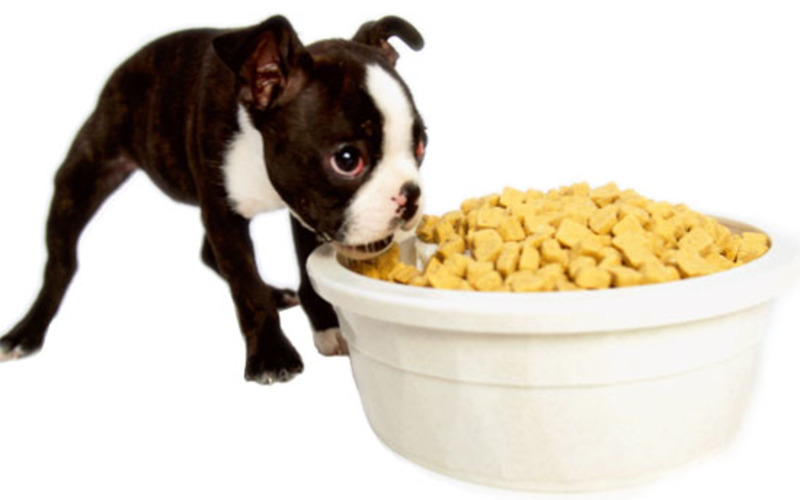
Boston Terriers are prone to allergies, so their diet must be carefully selected.
Boston Terriers have small stomachs, so finding a happy medium when feeding is crucial to avoid overfeeding or starving your pet. Portion sizes are determined on an individual basis and depend on the dog's age and activity level. Experts recommend feeding your pet twice a day (morning and evening), leaving the smallest amount of food for dinner.
When feeding, it is important to follow the following rules:
- do not give food immediately after a walk or training;
- formulate your diet so that most of your food contains the maximum amount of animal protein.
With a natural diet, it is advisable to add the following products to the dog’s menu:
- Lean meat (beef, veal, turkey) is the basis of the diet. Feed daily raw (70% of the total amount) and cooked (30%). However, fatty pork and chicken should be avoided to avoid digestive problems and allergies.
- Boiled sea fish, cleaned of bones. Offer no more than once a week. River water is contraindicated as it can cause parasitic infestations.
- Fermented milk products. Pets under one year old are recommended to be given low-fat kefir, cottage cheese, and plain natural yogurt daily. However, drinking regular milk can cause diarrhea.
- Stewed or raw vegetables, fruits and herbs. Zucchini, broccoli, pumpkin, carrots, and apples improve digestion and therefore should make up at least 1/4 of the animal’s total diet.
- Chicken or quail eggs. Give to adult animals three times a week in any form (boiled, raw).
Avoid feeding your pet tubular bones, salty, fatty, canned, baked, flour-based, or spicy foods. Healthy vitamin and mineral supplements should be used.
When feeding artificially, it's advisable to choose super-premium foods developed specifically for this breed. Hypoallergenic foods are especially preferred.
Mating and care of offspring
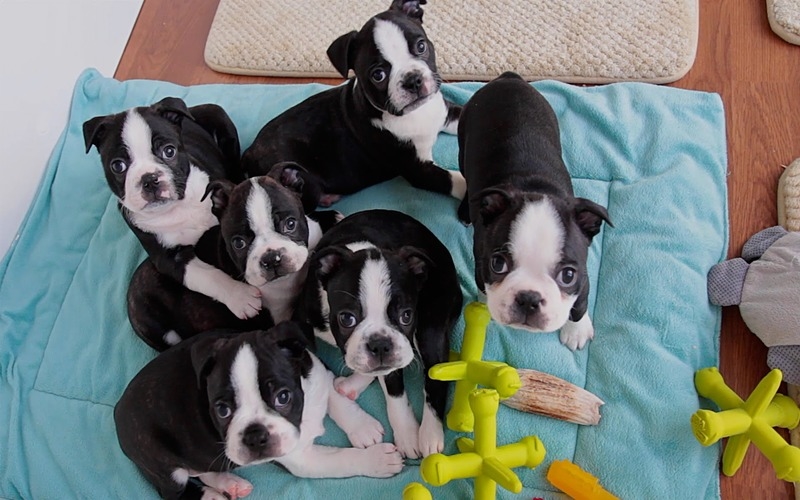
Boston Terrier puppies are born with very large heads. The female may require a Caesarean section during delivery.
Boston Terriers reach sexual maturity at 8-10 months.However, breeding them before they reach 18 is not recommended, as puppies of this breed are born with very large heads, so even an adult female who has given birth often requires a cesarean section.
Otherwise, the mating process for Boston Terriers is no different from that for other breeds. Both partners must be healthy, treated for parasites, and vaccinated no later than two weeks before mating. When choosing a partner, it's important to review the documentation to avoid producing puppies with congenital defects.
A female typically gives birth to 3-4 puppies, but she can have more. Caring for puppies is not much different from caring for adults. The only difference is the number of feedings: puppies up to six months are fed 5-6 times a day, from 6 to 12 months – 3-4 times, and from one year onwards – twice a day. Babies need to be given fermented milk products more often and egg yolks should be boiled only.
Suitable nicknames for puppies
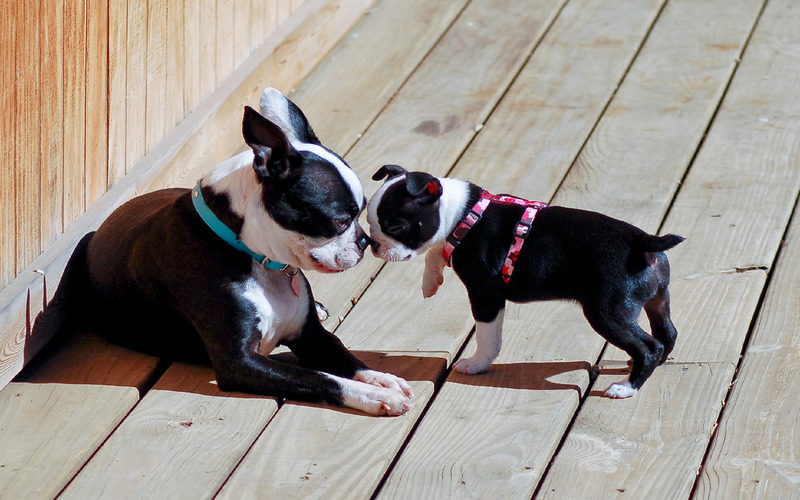
A Boston Terrier's nickname should be short and catchy. This way, the animal will remember it more quickly.
The following names are suitable for girls:
- Aster;
- Becky;
- Bonnie;
- Vira;
- Vicky;
- Lara;
- Haley;
- Emma.
Boys can be called:
- Archie;
- Billy;
- Rudy;
- Tim;
- Charlie;
- Eddie.
Pros and cons of the Boston Terrier
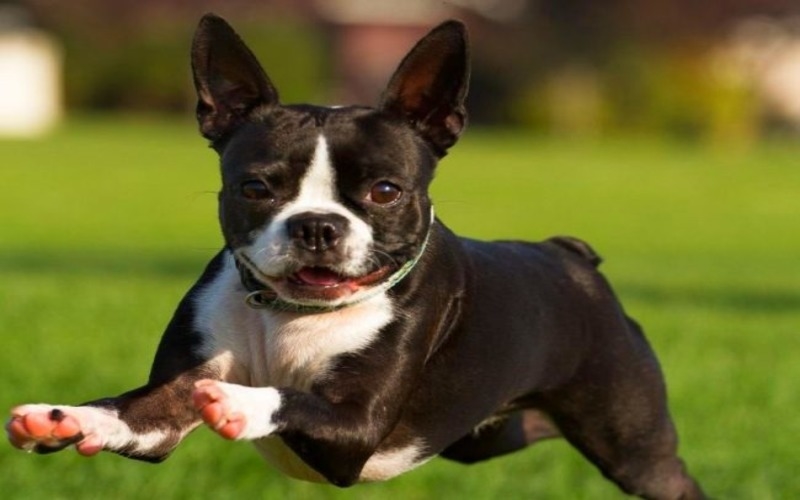
It's impossible to turn a trusting Boston Terrier into a good guard dog. But with proper training, you can teach them to be wary of strangers.
Table 2. Pros and cons of the breed
| Advantages | Flaws |
|
|
According to owners, Boston Terriers are companion dogs, distinguished by their exceptional loyalty and friendliness. Their playful nature and love of play make them ideal companions for small children. Furthermore, these cheerful and active dogs have amusing facial expressions and can easily make a hurt face or feign profound regret after yet another mischief.