The Basenji is an ancient African breed that remains popular today and is found throughout the world. Throughout history, these dogs have been prized for their loyalty and cheerful nature. They are medium-sized dogs with an attractive, distinctive appearance. The breed is easy-to-care-for, doesn't cause problems, and thrives in large families with small children. They require active play, exercise, and a proper diet. You can purchase a Basenji from a kennel in Russia and abroad.
Content
History of the breed
The Basenji (Congo Terrier, a forest dog from the Congo) is a very ancient breed. It developed independently (without human intervention or experimentation) in Africa over five thousand years ago. It was presented as a gift to the pharaohs of Egypt, loved and revered, and considered a protector and talisman.
Basenjis didn't spread around the world immediately. In 1895, several animals were brought to England, but they couldn't adapt to the climate and died. In 1905, the dogs were taken to a German zoo and exhibited as exotic animals. In 1930, terriers returned to England. It was here that specialists established breed standards. In the 1940s, the animals were brought to the United States for exhibition. Since then, they have gained popularity and spread throughout the world.
Initially, dogs were used for hunting, now their main role is to be a companion to their owner. Average life expectancy is 10-15 years.
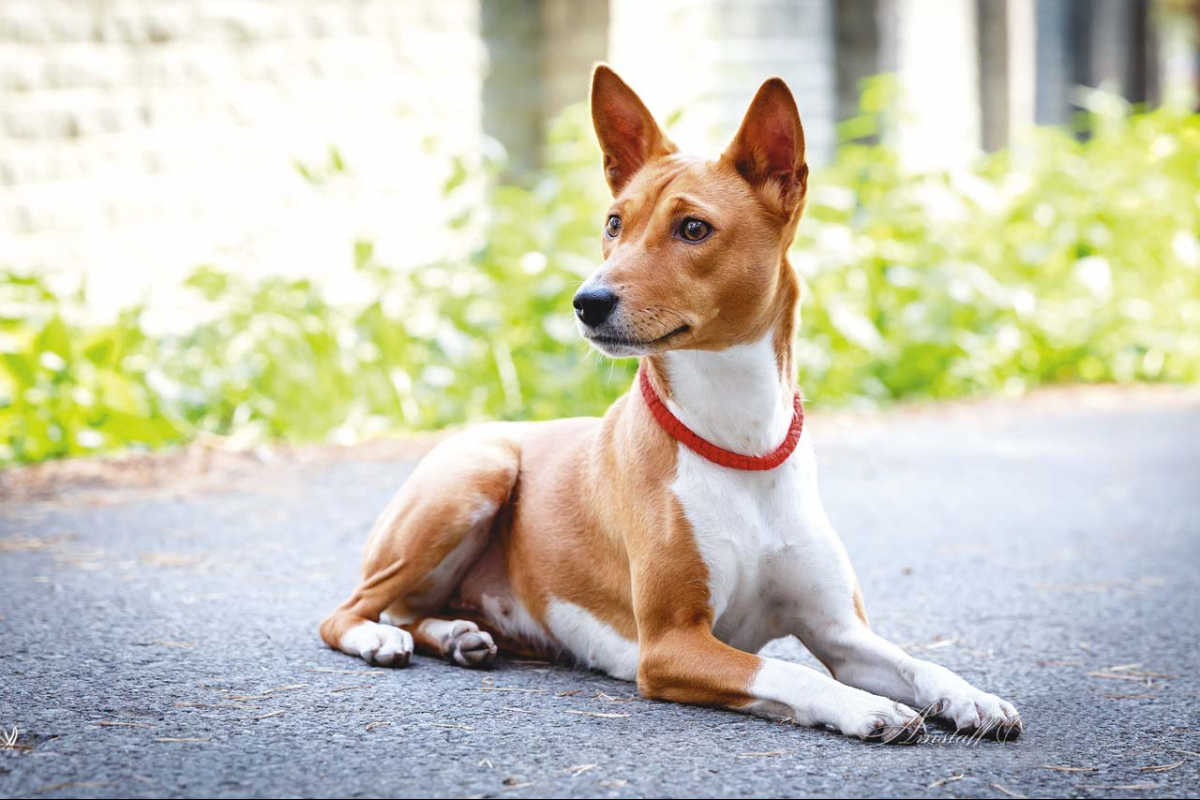
External description
The Basenji's appearance hasn't changed over time. Experts believe that ancient dogs looked similar to modern ones.
Description of the breed:
- The female's height at the withers is 40 cm, weight is 9-9.5 kg, the male's height is 45 cm, weight is 10-11 kg.
- The body type is proportional and graceful.
- Muscular body, powerful long legs.
- The neck is strong, wide and well developed.
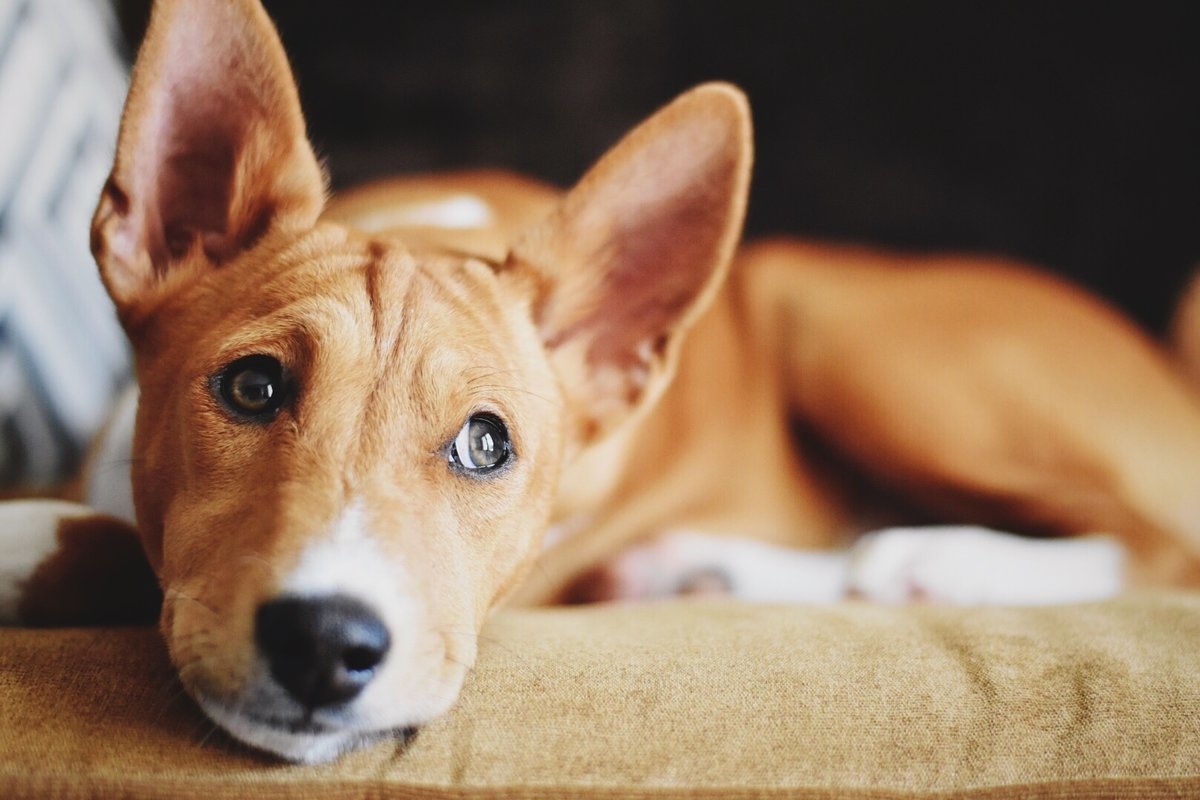
- The head is medium-sized. Wrinkles are always present on the forehead (more pronounced in puppies).
- The ears are erect, pointed at the ends, tilted forward.
- The coat is short, thick and shiny.
- The tail is tightly curled into a ring.
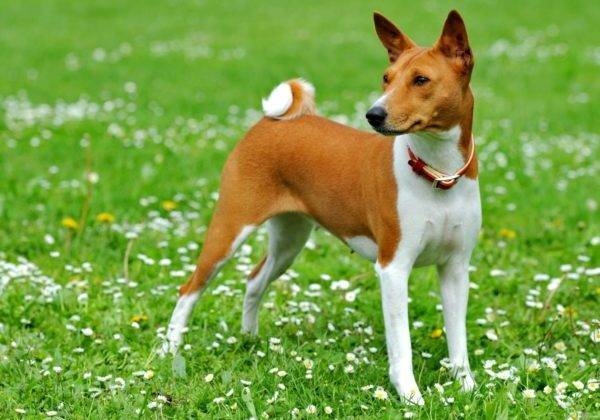
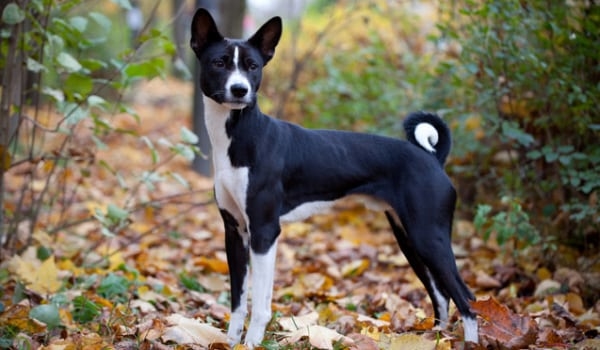
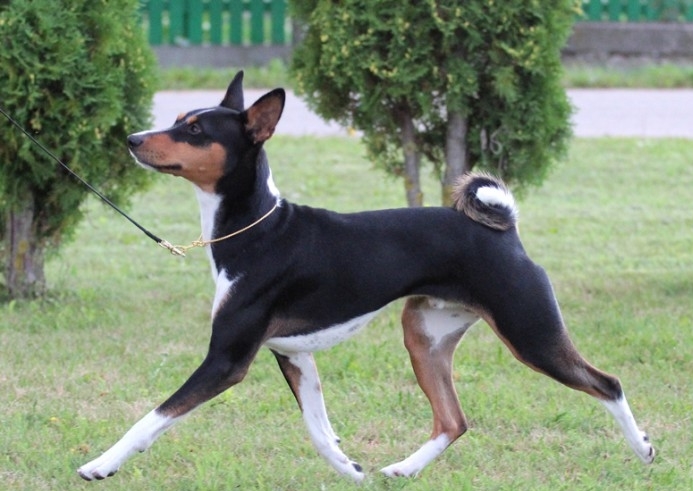
4 colors approved:
- red (ginger) and white;
- black and white;
- tricolor (black with red tan);
- brindle (black stripes on a red background).
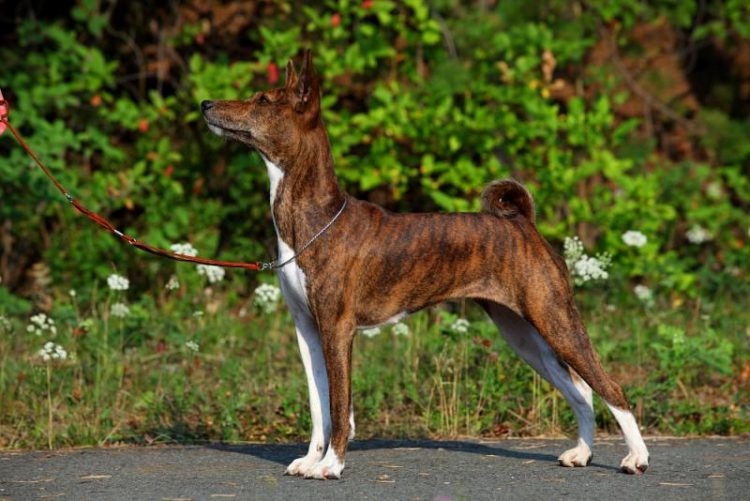
Regardless of color, there must be white on the paws, chest, and tail. The coat color is rich. The white markings are clearly defined and distinct.
Choosing a puppy
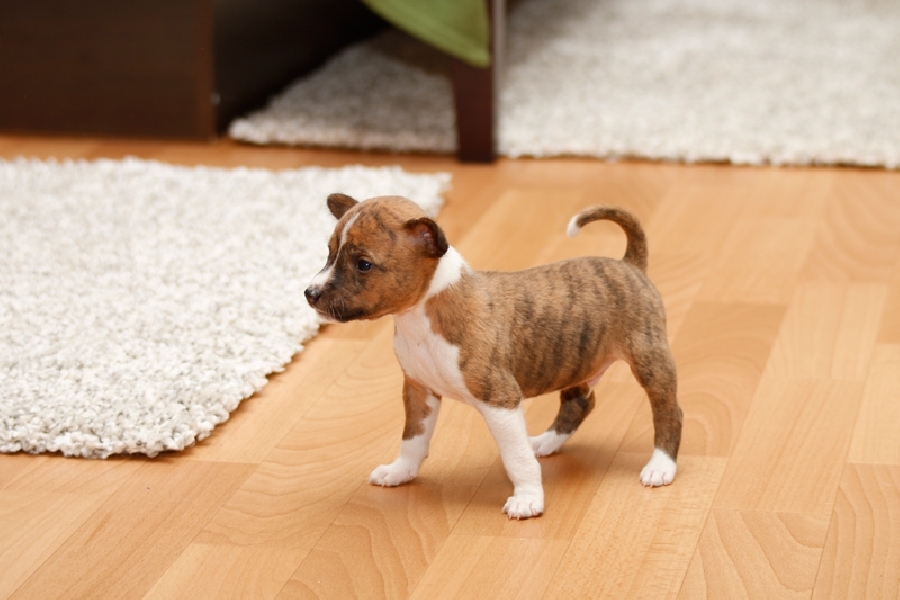
Basenjis are purchased from nurseries or experienced breeders:
- Young animals aged 8 weeks are offered for sale.
- It is necessary to decide on the gender and color in advance.
- The selected dog must have age-appropriate vaccinations and a veterinary passport. If the dog is being purchased for show, a pedigree is required.
- It's important to examine the animal and observe it in its natural environment. A healthy pet is well-fed, active, and happy.
- The price is influenced by gender, pedigree, and color.
Behavioral features
Breed personality: clean, curious, active, cheerful, enjoys active games, and is non-aggressive. These dogs are attached to their owners and can sense their moods. They are ideal for families with children. A drawback is their disobedience: they don't always comply with orders and may run away.
The dog is smart and intelligent, easy to train, and quickly remembers any commands.
The pet has no odor. Its fur is hypoallergenic. The Basenji never barks. It expresses emotions through sounds similar to purring and snorting.
Maintenance and care
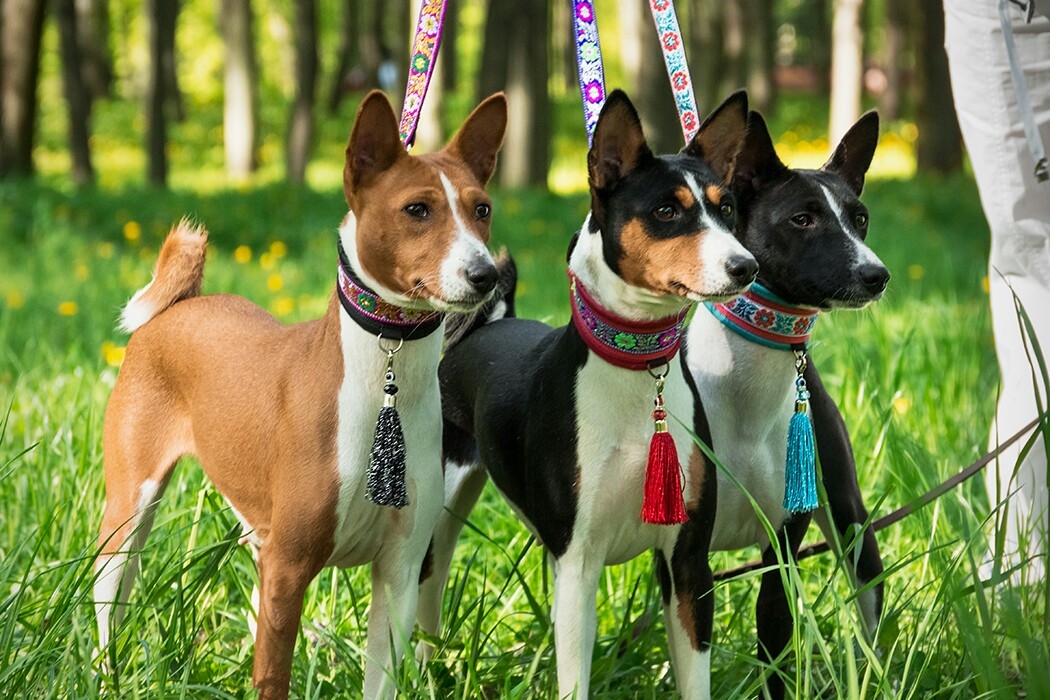
A dog adapts easily to life in an apartment or a country house. It needs a quiet place to rest. A soft bed and a few toys are sufficient.
Nutrition
Dogs of this breed have a good appetite, but you shouldn’t overfeed them.
The diet should be balanced and varied.
Puppies aged 2-5 months are fed 5-6 times a day. Starting at five months, they are gradually transitioned to two meals a day. Dry food, canned food, or natural foods can be used. Dogs have a fragile digestive system and are fed high-quality, fresh foods.
The third part of the diet consists of raw meat (chicken, veal, turkey). Pork and lamb are difficult to digest. By-products (cooked) can be used. Various cereals (pearl barley, rice, buckwheat, wheat) are included in the diet. Chopped boiled or raw vegetables are always mixed in. Dairy products (cottage cheese, sour milk, kefir, milk, cheese), eggs, and fruits (except citrus and exotic fruits) provide additional nutrients. The dog should have constant access to clean drinking water.
The following foods are excluded from the natural diet: sweets, fatty, salty, spicy, smoked (fish, sausages, salami), chicken and fish bones. Corn grits, millet, and semolina are poorly digested. Raw potatoes and legumes are also excluded.
Bones are rarely given as they have no nutritional value.
No salt or spices are added to the food!
Walking
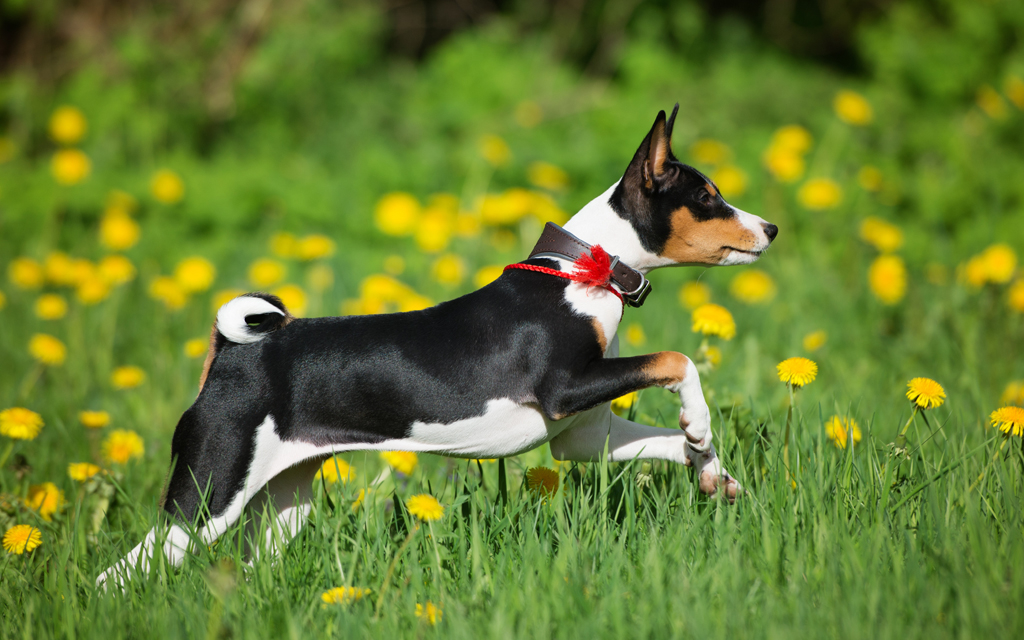
The dog needs long walks and active games. Don't leave your Basenji unattended. They might get carried away chasing birds or cats and get lost. Experienced owners attach address tags to their collars. Basenjis enjoy playing outdoors and can be taken on vacations.
The breed is suitable for active people and families with children. The pet is unobtrusive and quiet.
Grooming
The breed is short-haired and requires minimal grooming:
- The dog is afraid of water. Bathing is only necessary if the coat is very dirty. Otherwise, the body is wiped with a damp cloth and brushed with a special brush.
- You should inspect the eyes and ears once a week. Remove dirt if necessary..
- The claws are trimmed once a month.
- For dental health, children are given hard toys and special edible bones that remove plaque.
Breeding
Dogs are ready to mate at 8-12 months of age, but experts recommend not rushing. Early pregnancy can lead to dangerous complications for both mother and puppies. Ideal option: male - 2 years, female - 1.5 years. The female goes into heat once a year.
A healthy, experienced partner is selected. The mating takes place on the stud's property and is agreed upon in advance. The price and other conditions are discussed. The dog is walked and fed 3-4 hours beforehand.
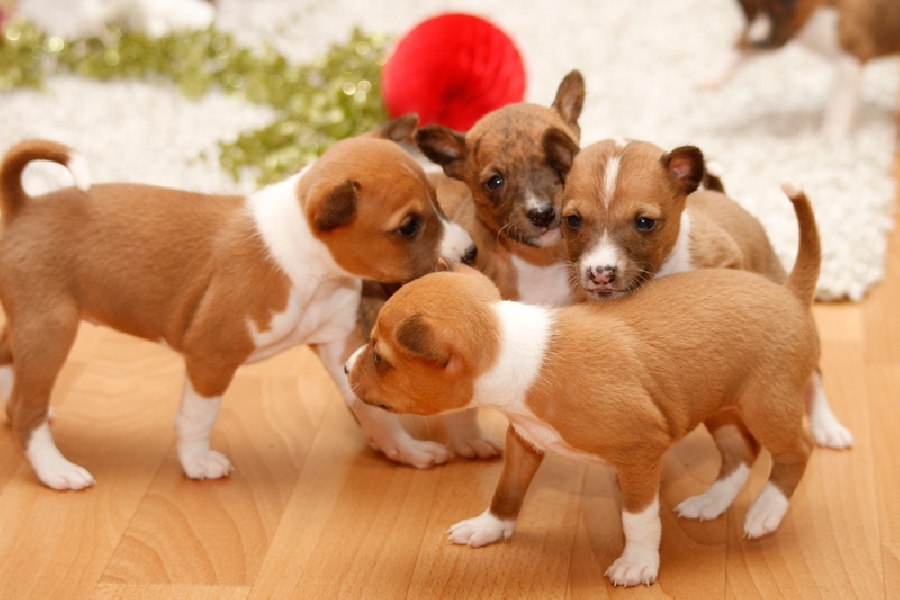
A Basenji's pregnancy lasts 60-65 days. Early pregnancy symptoms are difficult to detect. Over time, the female becomes calmer, activity decreases, she rests more, and her appetite increases. Before giving birth, several veterinary examinations are necessary, along with rest and increased nutrition. A litter typically contains 4-5 puppies. If there is no need for puppies, the dog is spayed. This procedure is not harmful to health.
Diseases
Your pet is susceptible to certain illnesses. If your pet is feeling unwell, exhibiting decreased activity, lethargy, drowsiness, or loss of appetite, consult a veterinarian. There may be various causes:
- Impaired renal function. A life-threatening disease that is difficult to detect in its early stages.
- Cataract, retinal dystrophy. Leads to blindness.
- Digestive problems. It is necessary to select an appropriate diet and give special medications.
- Pathology of the pelvic bones. A hereditary problem, uncommon. As the dog ages, it becomes more difficult for it to move, and lameness develops.
- Umbilical hernia. It can be corrected with surgery. The dog quickly returns to an active life.
- Thyroid hormone deficiency. Difficult to treat.
- Anemia (a decrease in the number of red blood cells in the blood). The disease is incurable and the pet dies at a young age.
- Urolithiasis in male dogs.
To identify health problems, you should visit your veterinarian 1-2 times a year. If a dog has chronic diseases, it is not able to produce healthy offspring and is not used for breeding.
A pet can be profitable if bred for sale. Basenjis are easy to train and participate in shows and competitions.
This breed presents no problems for breeders. They are active, playful, and cheerful, making excellent companions. They love children, are odorless, do not bark, and their coat is hypoallergenic. Special grooming is not required, and maintenance costs are minimal. Disadvantages include fear of water, occasional overactivity, and unruliness.