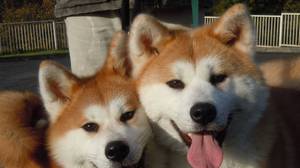
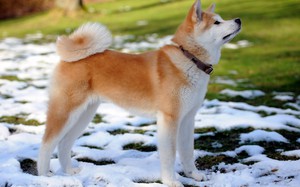
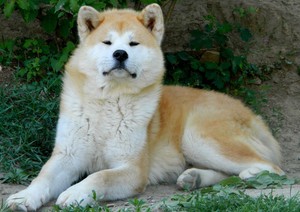
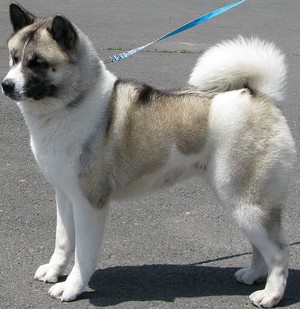
 The Akita Inu is one of the oldest dog breeds, having spawned an entire subculture around itself. Japanese people write children's books and songs in their honor, and erect monuments. Photos of Akita Inus adorn bus stops and subway stations. And in the famous Hollywood remake of the Japanese film "Hachiko," the Akita Inu symbolizes the most significant concepts for all humanity: kindness, love, and devotion.
Content
History of the breed
There is an opinion that the ancestors of the Akita were Chinese Spitz-type dog and mastiffAccording to another theory, the breed was created by crossing a mastiff and a Siberian husky. However, while the Akita Inu bears some resemblance to the Russian Laika, they are not related at all.
Archaeological research has shown that these dogs appeared in what is now Japan approximately 8,000 years ago. Furthermore, ancient depictions depict a dog similar in appearance to the modern Akita Inu. The Japanese didn't hesitate long to name the breed. "Akita" is the name of a province in northern Honshu, and "inu" means "dog" in Japanese.
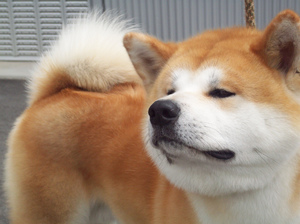 The appearance of the modern Akita Inu was finally established in the 17th century and has remained unchanged since then. Dogs of this breed were favorite pets of the royal nobility, as well as the most influential figures of Japan and even emperors. Initially, the Akita Inu was an excellent hunter and served as a guard dog in poor peasant homes, but by the 18th century, the dogs had become "aristocrats," available only to the highest government officials and members of the imperial family. This fact played a significant role in the breed's subsequent development.
The feeding, housing, and care of an Akita became a ceremonial affair. Each dog had its own personal servant, as well as a specially made leash and collar, which determined the social status of its owner and the rank of the Akita itself.
It is noteworthy that the Akita Inu is one of those few breeds that throughout its history retained true "purebred" Without the admixture of new bloodlines. To further preserve the breed's purity and prevent crossbreeding, the Japanese even created a special Akita Inu Preservation Society in 1927. The club united not only breeders and breeders, but also archivists and historians who participated in the search for reliable information about Akita Inu behavior, care for representatives of this breed, and the main directions of breeding.
Due to a lack of funds for the dogs' upkeep and feeding during World War II, the breed's development was somewhat delayed. Although few purebred Akitas remained after the war, the breed nevertheless managed to survive and retain all its qualities.
In the post-war period, work to restore the Akita gene pool resumed with renewed vigor, and soon these intelligent and loyal animals could boast of their spontaneity and magnificent appearance.
You can see dogs in the drawings of those years. red-fawn, white and red with black tipsNaturally, this attracted tourists who took Akitas to European countries, increasing the breed's popularity. Furthermore, officers of the American military, whose bases were located in Japan, considered it their duty to bring this Japanese beauty back to their homeland.
After some time, the situation changed, and Akitas became more accessible. This was due to dog fighting, which was becoming increasingly popular. The largest and strongest representatives of the breed were selected to participate in competitions. Their opponents were most often Japanese molossoid dogs (Tosa Inu), which were essentially a mix of European breeds such as St. Bernards, Bull Terriers, Great Danes, and Mastiffs.
The purity of the breed is under threat, since the Akina can give a full-fledged rebuff to these giants, and breeders have already begun to think about crossing them with large “Europeans”.
Breed characteristics
American breeders, noted for their radicalism, developed an entirely new breed by crossing a German Shepherd with the classic Japanese Akita Inu. The resulting breed became known as the Large Japanese Dog. These dogs differed from the Akita in their increased aggressiveness, fiery temperament, more developed muscles, and a black mask on their faces. However, the Japanese still consider this last trait a flaw in the breed.
Intelligence
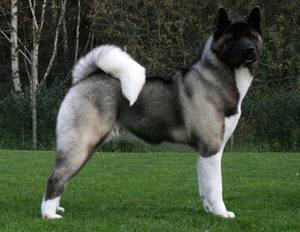 Representatives of the breed are distinguished by their highly developed intelligence and the ability to control their behavior depending on a given situation. Akita Inus are very intelligent animals and can resort to cunning when necessary. They are also quite independent and capable of making decisions on short notice. Mental abilities The "Japanese" traits allow them to be both very thoughtful dogs, not always showing their emotions, and extroverted. Thus, the Akita Inu's temperament is very similar to that of a samurai. The dog maintains a level head even in the most difficult situations.
Each representative of this breed is not only a sociable, brave and loyal friend, but also a wise animal, always ready support the owner in a difficult situationThe Akita Inu's loyalty is legendary.
Scientists have established that the memory of "samurai" dogs is so well developed that they remember not only facial expressions, human words, and virtually all commands, but even every detail of their lives, right down to what they ate for lunch three to four weeks ago. Adapting to the rhythms of their owners' lives, they independently develop their emotional cycles and are guided by more than just instinct.
There is even an opinion among professionals that dogs born in captivity and acquired by ordinary people remember their sisters, brothers, mother, and first owners very well.
Character
The dog's character has evolved over several millennia. Initially, they belonged to hunting breeds, then became bodyguards and guards of wealthy aristocratic palaces. This change in vocation and specialization had a significant impact on the breed's subsequent development—Akitas acquired new qualities while retaining the old ones. Furthermore, the respectful and caring attitude of their owners allowed these animals to thrive. study human psychology well.
Akita Inu behavior is anything but typical (especially compared to American and European breeds). As puppies, they are very playful and active, but as they mature, they become incredibly wise, sincere, and sedate.
The character of this breed is based on seemingly mutually exclusive paradoxes. On the one hand, these dogs are very attached to their home and their owners, but on the other, they are quite willful and independent animals, loving to go for walks without a leash and choosing their own "place of residence" within the house. They can even suddenly disappear for long periods, but always return to their familiar haunts.
Thanks to high-quality breeding work, scientists have succeeded in creating a dog breed ideally suited for guarding homes and their owners. Furthermore, these dogs— excellent companions and just cute little smarties at home.
Remember! Your dog doesn't need excessive displays of affection or excessive attention. An Akita values sincerity above all else and doesn't tolerate condescending behavior. When walking your dog, act not as its owner, but as its best friend and companion.
Socialization
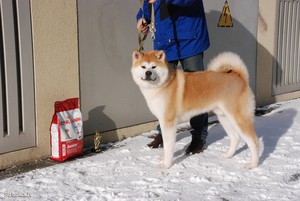 Thanks to their sociable nature, Akita Inus get along quite well with other pets, especially if they were raised together. In this case, your Persian cat or dachshund will become your Akita's best friend.
But to the street dogs Akita may show aggression and show a desire to dominate them. They especially dislike small dogs with loud voices.
Akitas are polite and calm toward visitors, but they maintain a distance. Thus, while appearing indifferent and concealing their emotions, the dog is hiding its curiosity and interest in the stranger. This behavior is explained by the fact that their guarding and hunting instincts compel the animal to exercise caution while discreetly studying the stranger.
Akitas, however, are not averse to playing with children. Even adult dogs forget their calm and samurai-like composure to actively participate in children's activities. They are very patient and attentive with children, and show no signs of hiding their joy when interacting with them. Because Akitas can spend a considerable amount of time with children, Japanese aristocrats often used them. as nannies for their children.
Education
Although Japanese terriers have highly developed intelligence, excellent memory, and intelligence, training them is not easy. Puppy training should be measuredly and without unnecessary intensity.
Remember! Overtiring a dog reduces the effectiveness of training.
 This breed matures very slowly, and its character, psychological traits, and value system are fully formed only by the age of two. When training an Akita puppy, it's important to take its personality traits into account and avoid any aggressive training. This is because this breed has a strong, independent nature, and teaching a puppy aggressive behavior from an early age risks creating a dangerous monster.
- Samurais are very temperamental. A moment of playfulness can suddenly give way to imperturbable calm, and vice versa. However, adults are quite good at picking up on their owner's mood and understand perfectly well when it's appropriate to go a little crazy and when it's best not to.
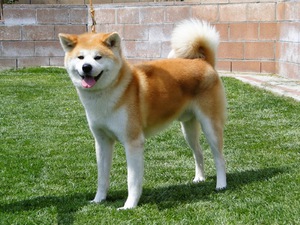 This breed matures very slowly, and its character, psychological traits, and value system are fully formed only by the age of two. When training an Akita puppy, it's important to take its personality traits into account and avoid any aggressive training. This is because this breed has a strong, independent nature, and teaching a puppy aggressive behavior from an early age risks creating a dangerous monster.
Akita exercise and walking
Dogs thrive in apartments and aren't at all bothered by their small living space. However, like other canine members, the Akita Inu needs regular exercise and walks.
Ideally, walks should last at least two hours a day (an hour each morning and evening). If your work schedule doesn't allow you to devote that much time to your pet, you can shorten one of the walks, making up the missing hours on weekends. In any case, it's essential to constantly maintain your pet's physical fitness.
Akita Inus are distinguished by their powerful build; their dense, muscular frame is a reflection of their character and high intelligence. Therefore, proper training and psychological well-being directly depend on the dog's physical fitness.
Owner reviews
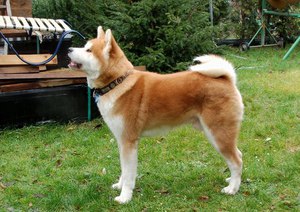 Advantages of a dog:
- calm;
- stubborn;
- beautiful;
- smart;
- almost never barks.
Flaws:
- requires constant, low-intensity education;
- difficult to train;
- wayward;
- freedom-loving.
An incredibly loyal, affectionate, and loving dog!!! The owner must be persistent and patient. It's best to hire an experienced trainer who understands your pet's personality. If you decide to get an Akita, be prepared for calm, non-swearing interactions and try to explain right and wrong to your stubborn dog in an even tone. Eventually, the dog will repay you with its devotion and abundant love.
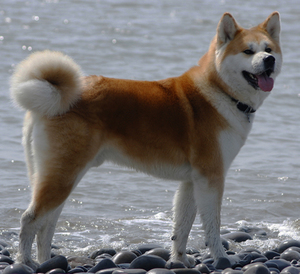 So, I got an Akita Inu puppy for my birthday. While the dog is certainly beautiful, inexperienced dog owners are better off choosing a pet of a different, calmer breed. Akitas are very active and difficult to train. It's best not to keep them in an apartment, as they'll destroy everything, and they eat quite a lot, although this can vary depending on their personality and upbringing. If you do decide to get an Akita, make sure you have plenty of toys and treats, otherwise the little beast will chew everything up!
Hello. I'd also like to share my opinion about this breed. If anyone wants to buy an Akita puppy, don't hesitate to take one. This is a very affectionate, sweet, and very intelligent creature who gets along well with everyone in the apartment and adores children. This dog happily eats vegetables and can stock up on vitamins for the winter right from your garden. However, you should explain to her beforehand that she can only eat the vegetables you feed her, and that digging up carrots from the garden or nibbling on cucumbers is absolutely forbidden. Rest assured, your Akita will understand!
Be sure to monitor your pet's health, keep them up to date on vaccinations, and protect them from ticks. This breed loves affection, so a lack of attention can make them sad.
So, a new family member has moved into your home. Try to give him the proper upbringing and provide good careAnd then, as an adult, the dog will thank you with its incredible devotion, friendship, and will provide reliable protection for the entire family and home.