When we talk about such breeds, we mean that they are not recognized by the Federation Cynologique Internationale (FCI).
There may be many reasons for this, but the main one is that the country of origin of the breed itself has not declared its desire for recognition.
Russian Tsvetnaya Bolonka
The breed's development began in 1951. The main proponent of this idea was Zhanetta Avgustovna Chesnokova. The founder of the breed was a black-coated puppy named Tin-Tin. His father was a white male lapdog from Hungary, and his mother was a coffee-colored circus lapdog named Zhu-Zhu. In subsequent years, miniature poodles, Shih Tzus, and Pekingese were also involved in the breeding process. The Cynological Council developed and adopted the breed standard in 1996.
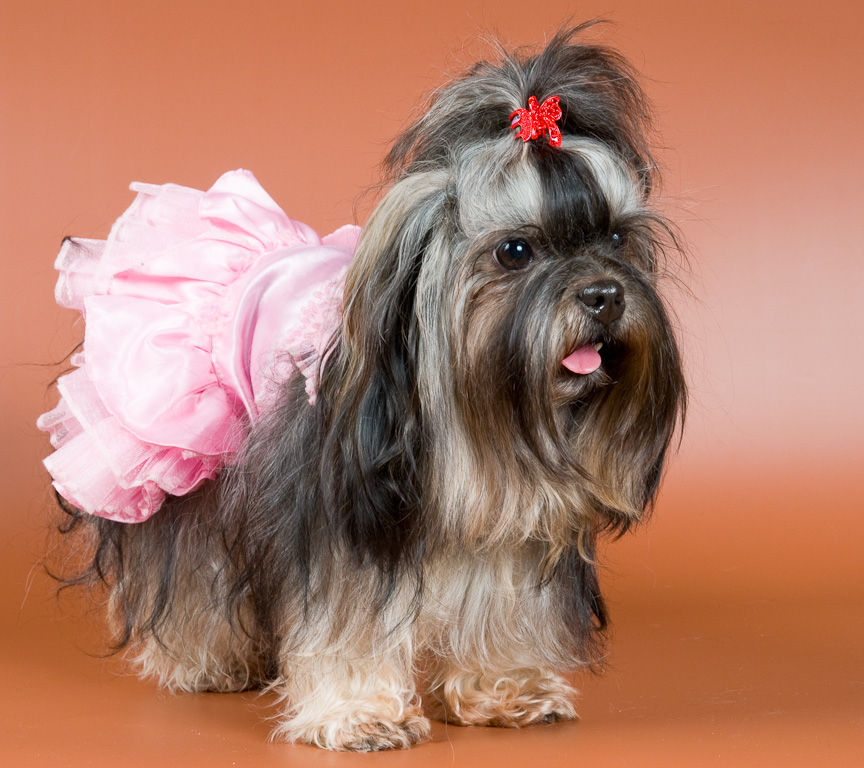
This lapdog was named Colored for the variety of possible colors, they can be:
- Black.
- Fawn.
- Gray.
- Delicate cream.
- Redheads.
- Saddle-backed.
- Tiger.
- Brown.
There are some specimens of the breed with tan markings that differ from the base color. However, such individuals do not conform to the standard.
According to accepted standards, this dog should not exceed 26 cm in length. Its weight ranges from 1.5 to 4 kg. Its legs are short, and its body is slightly elongated. Its head is rounded, proportionally making up about a third of its body. Its muzzle is square.
The lapdog has long, soft fur. Those with curly hair are considered especially valuable. The undercoat is thick.
These toy dogs are very friendly and can get along with any family member and other pets.
To this day, the FCI has failed to recognize the dog. Some experts believe this dog is a replica of another breed, the Bolognese.
Russian hunting spaniel
Spaniels were first seen in Russia in the late 19th century, brought from abroad and used for hunting. However, the conditions of Russian hunting grounds were harsh for these foreign dogs. Therefore, in 1945, breeders set out to develop a new breed that would be more efficient and resilient. The breed standard was approved in 1951 and subsequently revised several times.
The Russian Hunting Spaniel is a slightly stocky breed with a strong build and well-developed muscles. The breed has long ears that hang down at the sides. The tips are rounded, not pointed. The tail is thick at the base and straight. It is recommended to dock it halfway to prevent injury during hunting. These dogs are distinguished by their long, soft coat, often wavy. The hair on the head and legs is short. The dogs come in tricolor, piebald (a combination of two colors), or solid colors. In the latter case, Russian Hunting Spaniels can be black, brown, or red. The coat of piebald dogs can be contrasting, with spots on a white background, or speckled with small splashes of color.
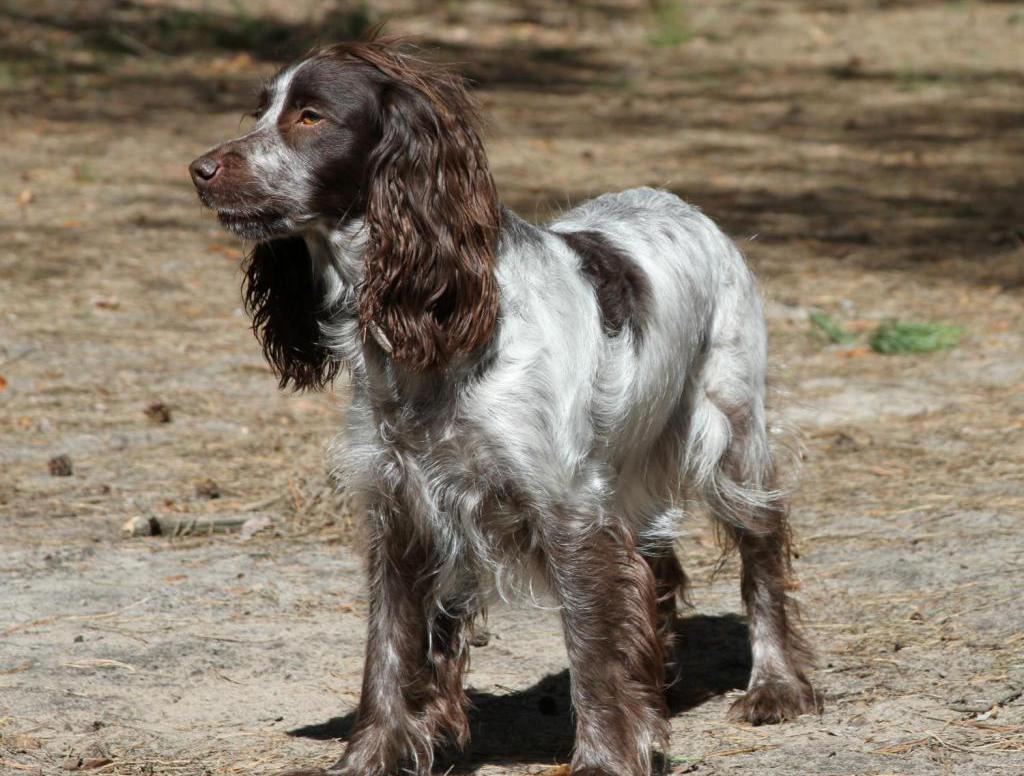
Russian Spaniels move freely and easily. They are friendly, active dogs and possess all the qualities of an excellent hunter.
Moscow Watchdog
In the post-war period, cynologists set out to develop a good guard dog breed. They selected St. Bernards, Caucasian Shepherds, German Shepherds, Newfoundlands, and Russian Greyhounds for this work. The first specimens of the new breed were seen at a show in Moscow in 1950.
Moscow Watchdogs come in three colors: a white base color, spots, and markings. Their coat is long, with a thick undercoat.
The resulting breed is powerful, agile, and easily trained. The dog has a massive head, a large body, and a broad back, with a thick tail. Males stand at least 78 cm tall, while females stand at least 73 cm tall. These dogs weigh between 45 and 55 kg, depending on gender.
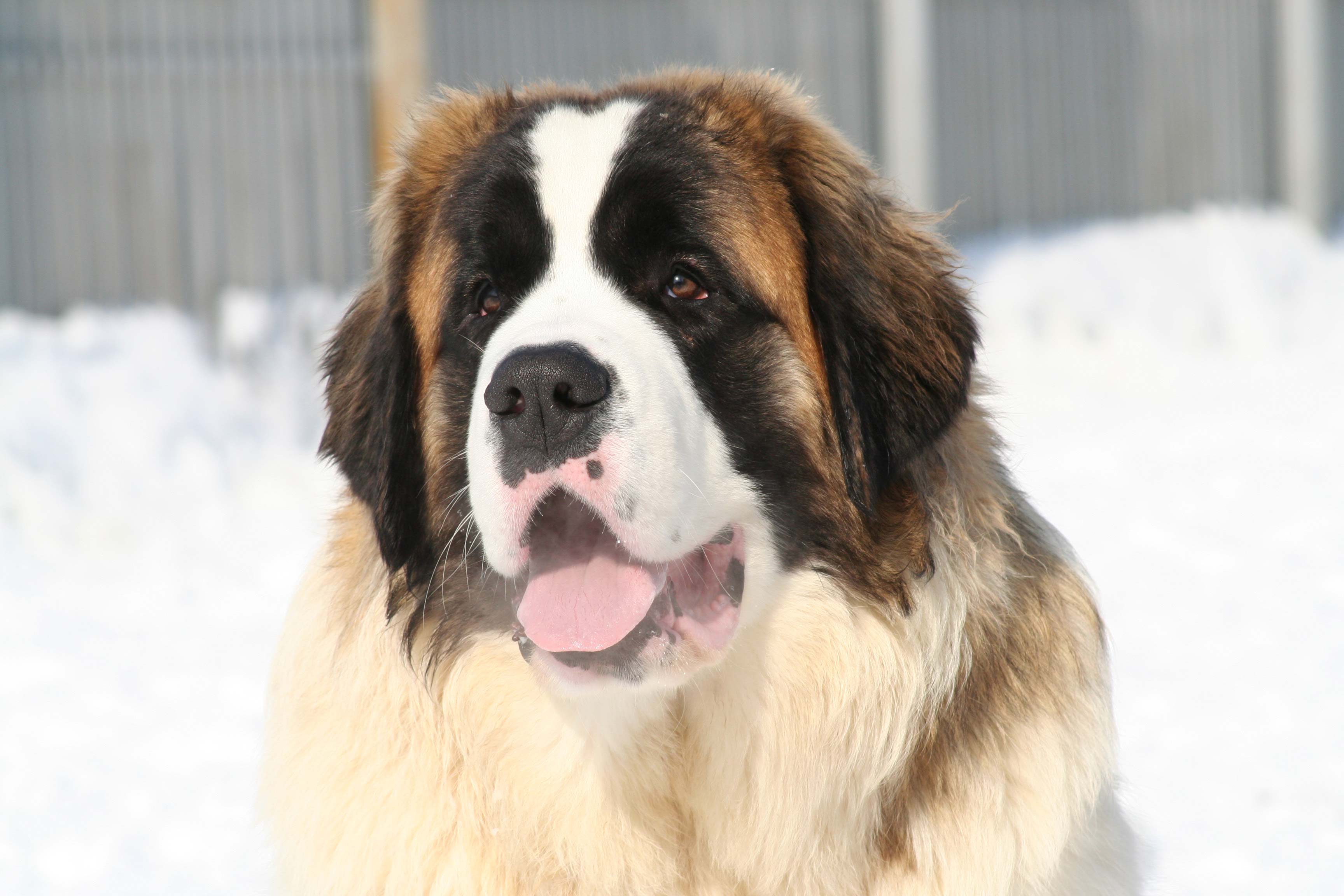
The dog is trainable, but only in the hands of a patient owner. Members of this breed are wary of new ideas.
During the training process, the main thing is not to give the dog a leading role in the family.
The dogs are fearless and never retreat when on guard duty.
Russian hound
Work on developing the breed began with a show in Moscow in 1874. The first standard was approved in 1925.
The Russian Hound is medium-sized. Its body is elongated. Its head is carried low, reminiscent of a wolf. The skull is wedge-shaped. The muzzle is elongated, with a protruding nose tip. The dog's ears are triangular and drooping. The brown eyes are slanted at an angle. The loin and croup are broad.
The Russian Hound's coat is short on the head and legs, but longer on the body. Dogs have a thick, lighter undercoat. Coat colors include saddle-back, reddish shades with additional colors, and undercoat or crimson.
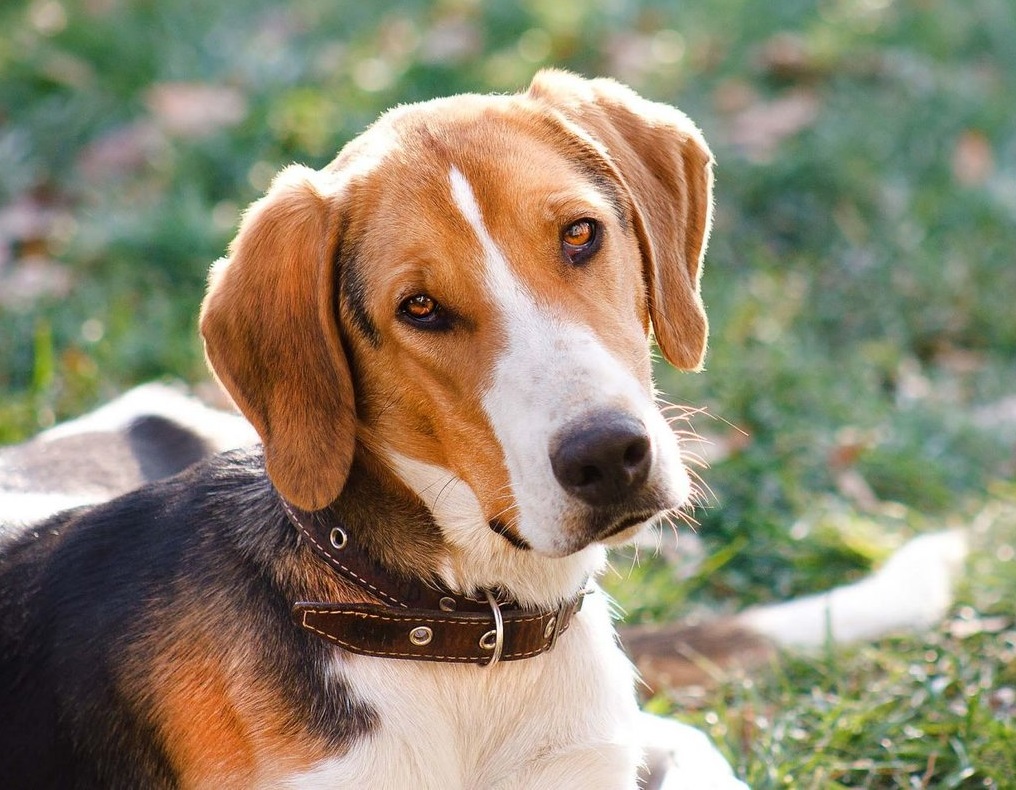
The Russian hound has a keen sense of smell and can maintain a hare's scent for long periods. It can also vocalize the progress of a game hunt. These dogs are also hardy and can withstand a variety of weather conditions. The Russian hound is best trained to hunt foxes and hares.
East European Shepherd
In appearance, the breed strongly resembles German Shepherds. This is no coincidence, as German shepherds are their direct ancestors. Soviet cynologists developed the breed at the request of the government. The first standard was approved in 1964, with subsequent amendments.
At the withers, dogs reach 76 cm (males) and 72 cm (females). The body is elongated, with well-defined muscles. The head is wedge-shaped, but not too pointed. Dogs of this breed have triangular, erect ears. The East European Shepherd usually carries its tail down.
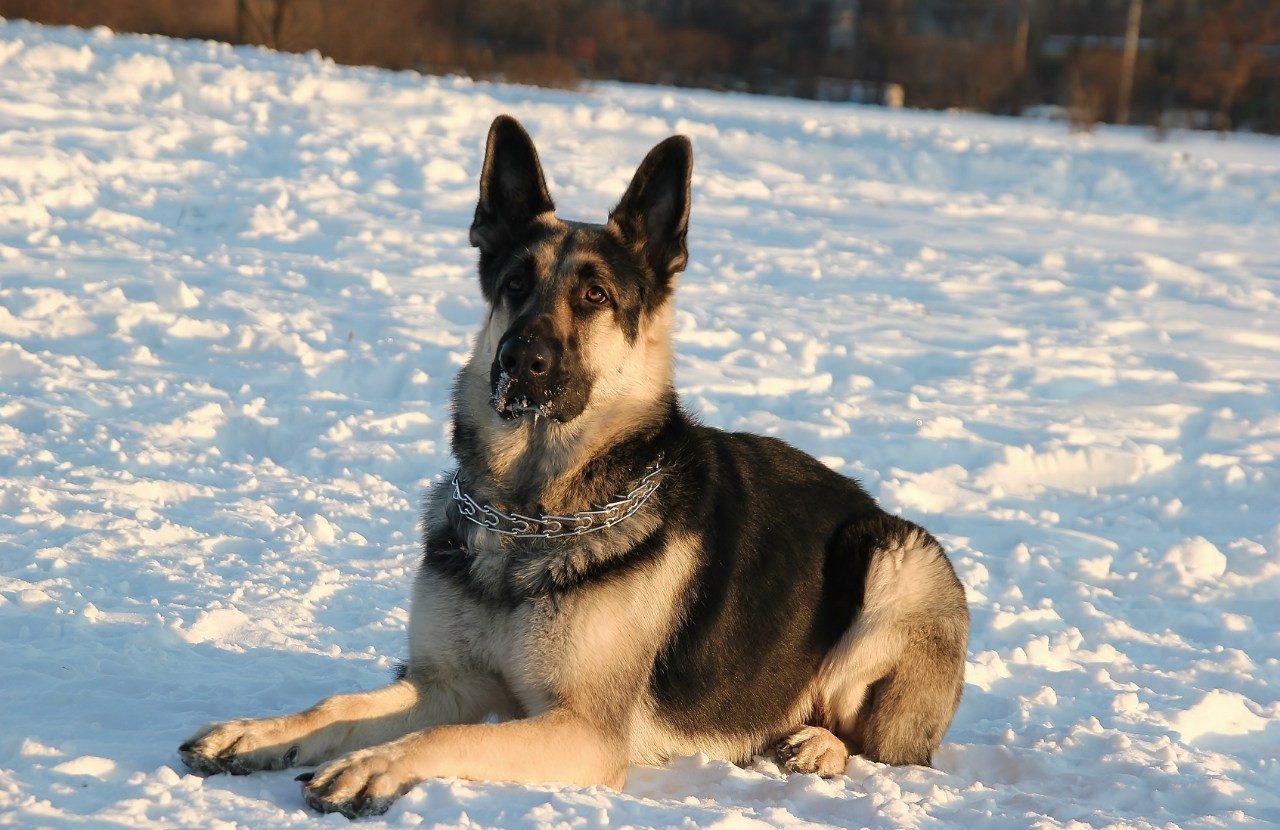
The dogs' coat is medium in length, with longer hair on the forearms and outer thighs. The coat is thick, harsh, and lies close to the body.
The East European Shepherd's distinctive feature is the dark "mask" on its face. Its body color is black or saddle-back.
The differences between the Eastern Shepherd and the German Shepherd are as follows:
- The easterners have a larger body.
- The back line is less inclined downwards.
- Wider chest.
- Light skin tones are more common among Eastern Europeans.
- More calm character.
Dogs of this breed are boundlessly devoted to their owners, willing to give their lives for them. They have excellent reflexes and are easily trained.
The breed recognition process is quite lengthy, as is the final establishment of the breed. If the breed hasn't been refined and the presented standard is frequently violated, recognition will be impossible.
 Paul
Paul  Natasha Legend
  Ivan
Ivan  tati
tati  Dima
Dima
6 comments