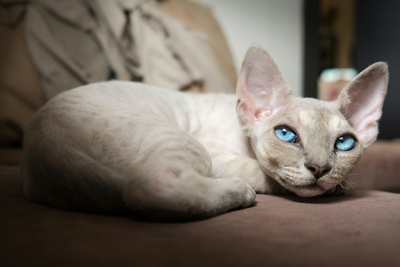
Most cat breeds with large ears come from countries with hot climates. It's in these climates that their size matters. It's simple: blood circulates faster in hot weather, so the larger the ears, the better protected the cat is from overheating. This doesn't affect the cat's hearing; it hears just as well as its smaller-eared counterparts.
Oriental
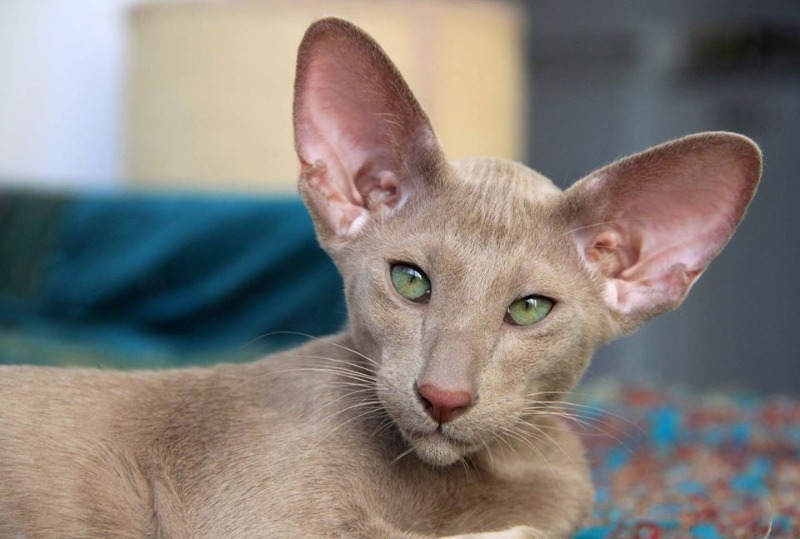
Orientals have the largest ears of any similar breed. The historical homeland of this animal is Thailand. The first mention of Oriental cats dates back to the 13th century. Because the country's borders were closed for a long time, the world only learned about this breed towards the end of the 18th century. Orientals were first shown in London, but cat connoisseurs were unimpressed, thinking they were not purebred Siamese. The breed began to gain popularity in the 1950s in America. After that, it began to be mentioned in other countries, and in the late 1980s, cats appeared in the USSR.
Orientals come in a variety of coat colors, but the most sought-after is the chocolate shade known as "Havana." Their eyes are most often green, slanted, and almond-shaped. Blue is also common, but only in white cats. Adult weight ranges from 2.5 to 4.5 kg. Length from withers to tail is approximately 90 cm.
The character of this breed of cat is beyond praise. Orientals are very friendly and devoted to their owners, but are sometimes prone to touchiness. They are exceptionally intelligent and quite quick-witted. But their most important advantage is their hypoallergenicity, which is, of course, an important criterion for those with an intolerance to animal hair. Orientals are easy to care for, but they do not tolerate cold.
Devon Rex
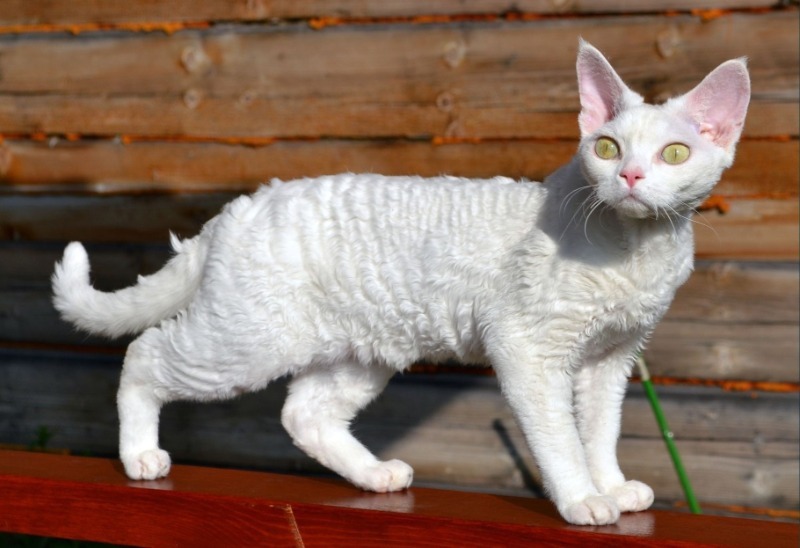
The cat's homeland is England. Initially, the breed wasn't recognized as a distinct one, being thought to be the Cornish Rex. It is now recognized on all continents, but is especially popular in the United States and Canada.
The breed's distinctive feature is its curly, sparse coat. It comes in a wide variety of colors, though some individuals have spots and markings distinct from the rest. The wide-set eyes range in color from blue to yellow and green. The ears are large and often have tufts. The tail is quite short.
Devon Rexes are very peaceful and get along well with children. Their affection for their owners borders on canine. This is why this breed is not recommended for those who are often away from home. A major advantage of the Devon Rexe is its almost complete lack of shedding.
Canadian Sphynx
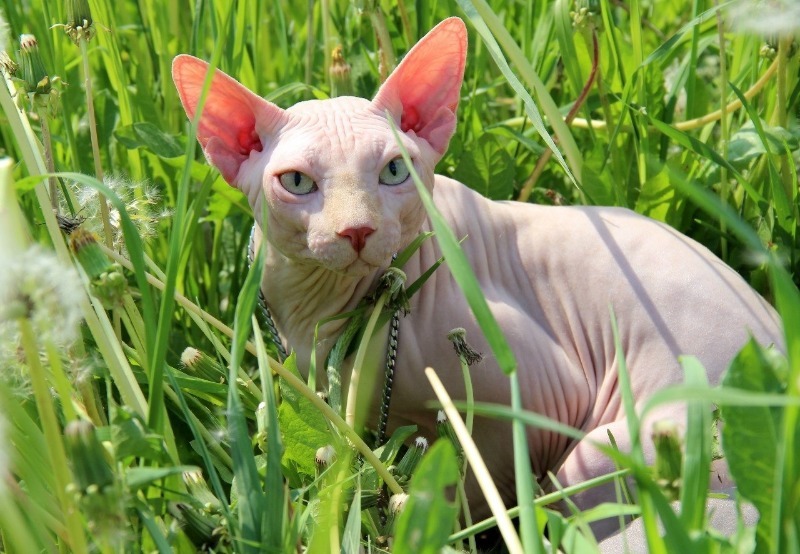
The breed originates from Canada. It was there, in 1966, that a hairless kitten was born in a litter of a normal female cat. The kitten was named Prune. He was later crossbred with closely related Devon Rexes to create a new breed. A cat named "Epidermis" is considered the ancestor of the Canadian Sphynx.
Cats of this breed are distinguished by their hairlessness. They are characterized by numerous folds on their body. Skin color varies widely, from black to brick red. However, white and cream are most common. Their eyes are predominantly blue, green, and orange, and are lemon-shaped. Their ears are set high and large.
Canadian Sphynxes are very loyal pets. They love attention and have a hard time being separated from their owner, sometimes even becoming aggressive. Their lack of a hunting instinct allows them to easily tolerate other animals in the house. They remain playful and active into old age. Sphynxes sweat, requiring careful grooming. This secretion can cause allergies in those prone to it.
Elf
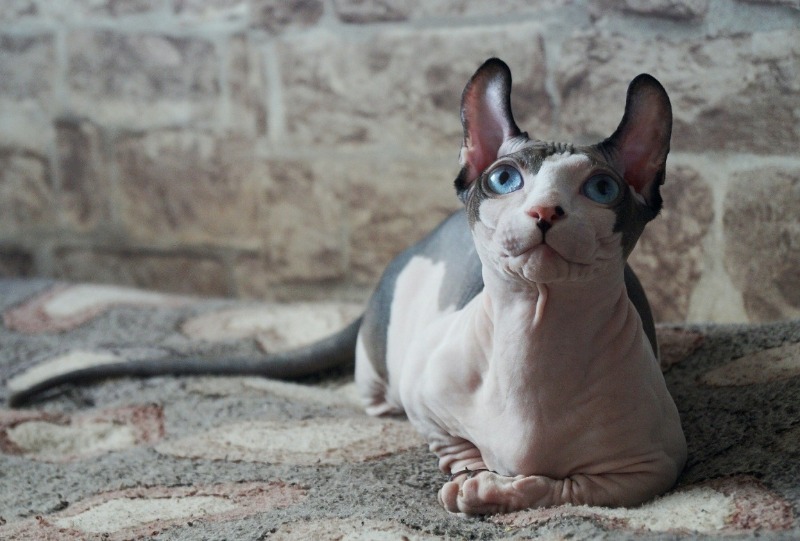
A relatively new cat breed, developed in the United States in 2006, the Elves were created by crossing Canadian Sphynx cats. They got their name from the unusual shape of their ears, reminiscent of those of famous fairy tale characters.
The breed's main characteristic is its ears, which are folded back at the tips. The skin is very dense and folded. It is hairless, but has a light coat of hair all over its surface. The eyes are almond-shaped and can come in almost any color. Elf cats are quite large. Adult weight ranges from 5 to 8 kg. The most common colors are blue, chocolate, and white. Spotted cats are also common.
Elves are very sociable and not prone to aggression. They are calm with other pets. They are inquisitive and active, but as they get older, they prefer to be lazy. They love children very much. They can be wary of guests, but are infinitely devoted to their owner.