Modern people might think cats have always been present in Rus'. In fact, this is not true. These familiar and beloved pets were brought to us from afar.
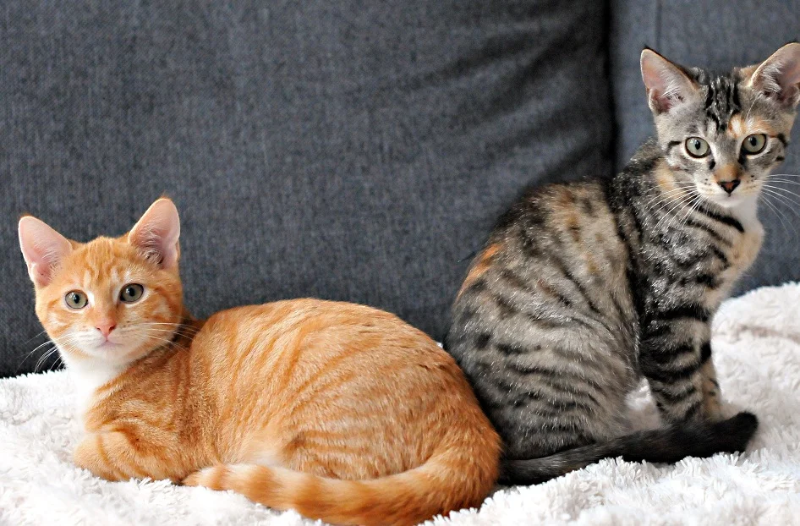
Cats were expensive
No one knows the exact date of the appearance of furry animals in Rus'. It is generally accepted that it occurred even before the adoption of Christianity. They were brought by seafarers. Soon, they were considered companions of the god Veles and guides to the other world.
They weren't found in commoners' homes, as such an acquisition was prohibitive due to the high cost. Cats were the preserve of wealthy households. Owning a cat was a sign of prosperity and well-being.
The animal rid its owners of rodents. Therefore, until the 15th century, the value of a rat-catching cat was equal to that of a healthy arable animal. It was paid for in real silver bars weighing 205 grams.
Furry pets began to appear in simple peasant huts by the end of the 18th century, after Peter I issued a decree requiring cats to live in all barns to protect food from rats and mice.
The word "cat" was not there
The word "kot" (cat) was borrowed into Russian and is derived from the Latin "cattus." For a long time, female cats in Rus' were called "kotka." Around the 16th century, it was slightly amended to "kosha," and then it began to be called "koshka."
But in some Slavic languages, for example, in Bulgarian, the old name has been preserved.
Harming a cat is a serious crime.
Russians quickly appreciated the benefits of small, furry animals. It wasn't always easy to protect food and tack from rodents on their own. Therefore, in the days when cats were rare in Rus', stealing them was considered one of the most serious crimes. The penalty was a hefty fine, exceeding the fine for stealing a cow.
Killing a cat carried the penalty not only of a fine but also of public flogging. The accused was also required to buy the victim a new cat.
Cats were allowed to enter Orthodox churches
The Bible never mentions cats, but it often mentions dogs in negative contexts. Some church officials tried to defend dogs, claiming that the holy book never accused animals of being "unclean." However, according to Christian canon, dogs are considered unclean creatures and are forbidden from entering the church, just like other animals. Cats, however, were treated in a special way. Only they, as pure and bright creatures, were allowed in Orthodox churches.
It's all a matter of physiology: a dog can deliberately be taken out in the mud, but a cat, even if it gets dirty, will immediately wash itself. It's a very clean animal. Furthermore, it won't bark at parishioners or bite out of fear.
Priests also believed that a soft and gentle cat, which is always quiet and unfussy, encourages parishioners to pray.
In addition, cats helped monasteries and churches get rid of rodents, which provided them with additional patronage from the clergy for many years.
Cats lived in the royal chambers
These animals also inhabited the royal chambers. They were also used primarily to control rodents. Therefore, over time, cats came to be considered protectors of the hearth. It was believed that the domovoi himself rode them, and they were the first to be let into the house.
The artist Moucheron depicted Tsar Alexei Mikhailovich's cat on canvas. The Hermitage currently houses an engraving by the Czech artist Vaclav Hollar, based on this painting.
Peter the Great also had a cat, which he bought from the Dutch trading in Vologda in 1724. His name was Vasily.
During the reign of Catherine the Great, shorthaired cats with ash-blue fur lived in the palace. Nicholas I also kept a cat named Vaska.
Kazan cats were considered to be the best rat catchers.
Tsarina Elizabeth Petrovna was very afraid of mice and cared for her cats as best she could. In the 18th century, she commissioned 30 rat-catching cats from Kazan for the Winter Palace. She also hired a caretaker to look after them.
Kazan cats were considered the best rat-catchers and real fighters, especially males.
Today, there are a great many cat breeds with different colors, sizes, and fluffiness. Of course, they have long since lost their original purpose—controlling rodents. But these fluffy little creatures still provide us with warmth and comfort in our homes. Therefore, their popularity as pets hasn't diminished since the time of Peter the Great; on the contrary, it has grown.


 Tanis
Tanis
1 comment