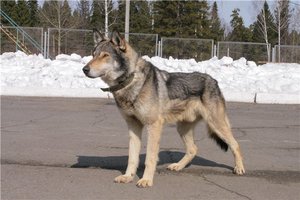
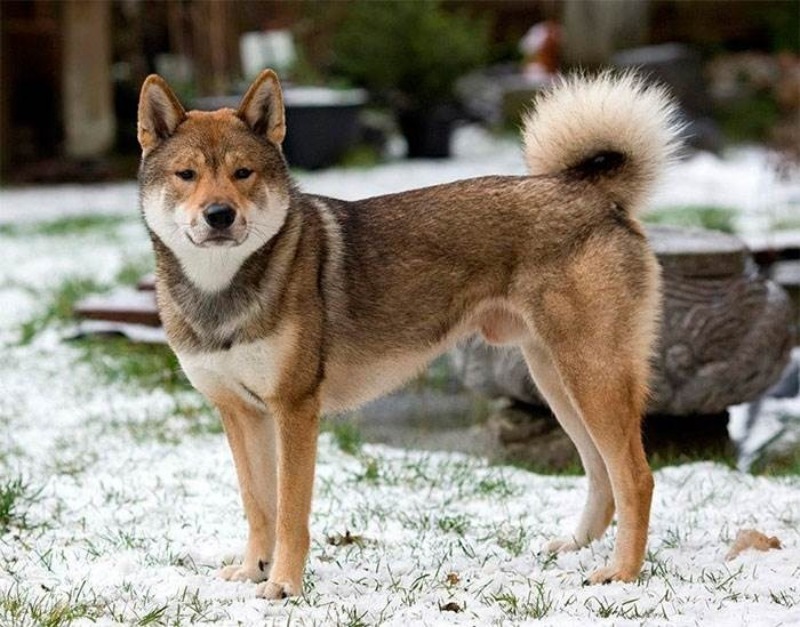
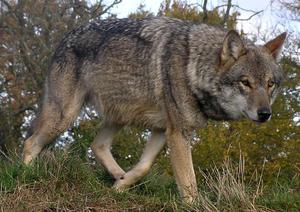
 Throughout history, humans have associated wolves with dangerous predators. And stories of hunters have contributed to this image. They describe them as highly intelligent and cunning animals. But in reality, this isn't quite the case. There are very few known cases of these animals attacking people without apparent provocation. They typically choose habitats far from people, and they hunt for their livelihood.
Content
General characteristics of the wolf
In the wolf genus, it is customary to distinguish several species, among which the gray wolf occupies a place of honor due to its most impressive characteristics — weight and height. The gray wolf stands apart from the coyote and jackal due to its unusual DNA sequence, which is strong evidence to consider it a direct ancestor of domestic dogs.
Gray predators are accustomed to living in a strictly defined environment. A couple of centuries ago, these animals were abundant across Eurasia and North America. However, in recent decades, humans have hunted them. which led to a decrease in their populationMoreover, this was also influenced by intense human activity. In addition to the construction of cities and industries, whose activities inevitably impact the surrounding landscape, wolf hunting became a popular pastime.
In our country, the main representatives of this genus are the gray wolf and the tundra wolf. Given its size, it can be said to be the largest animal in the canine family.
- the wolf's body from the top of the head to the tail can be up to 160 cm long;
- the weight can reach 62 kg;
- The height at the withers can be approximately 90 cm.
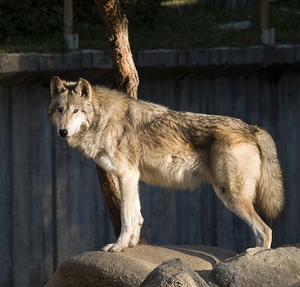 Wolves are distinguished not only by their beautiful appearance but also by their intelligence. Currently, approximately 32 subspecies of wolf are recognized, each with a variety of sizes and fur colors. Wolves are tasked with the function of orderlies, as they help maintain the balance of ecosystems. These animals can be found in a wide variety of natural environments—forests and steppes, tundra and taiga, and mountain ranges.
However, today a very sad picture is emerging: everywhere the number of wolves has become extremely low, and in some places it is the animal is on the verge of complete extinctionBut this does not bother people too much, and they continue to mercilessly hunt these animals.
The appearance of a wolf
The wolf's appearance is shaped by the climate of the area it inhabits. Therefore, in areas where low temperatures prevail most of the time, these animals will have the most impressive sizesIf we consider a single population, then the males will certainly be larger in size than the females, while also having a more prominent head.
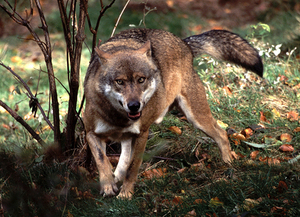
When first encountering this animal, it's easy to mistake it for a large, pointy-eared dog. But upon closer inspection, you'll notice the characteristic features of a predator:
- tall and strong legs,
- large paws with two middle toes extended forward.
Thanks to this paw structure, these animals can reach very high speeds, leap high, and move silently. They can be distinguished by their tracks:
- it is 15 cm long and 7 cm wide;
- The distinctive feature is two fingers that protrude clearly forward.
Head
All wolves have a wide muzzle, which is elongated and has sideburns on both sides, and a broad forehead. Wolves experience different emotions, so they can express joy, fear, anxiety, and calm. All of these are clearly visible on their faces. This feature has not gone unnoticed by scientists, who have been able to identify a group of facial expressions:
 fear and anger;
- anger and threat;
- alertness and calmness;
- obedience and affection;
- fun and recklessness.
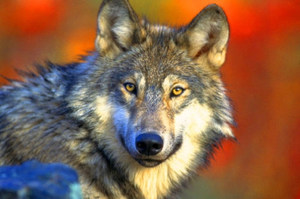 fear and anger;
These animals have a large, massive skull, which explains their broad forehead. The nasal opening is wide and begins to taper off at the base. The skull length of males ranges from 268 to 285 mm, while that of females is 251 to 268 mm. Cranial bone in males The cheekbone width in males is 147–160 mm, while in females it is 136–159 mm. The eye sockets in males are 84–90 mm wide, while in females they are 78–85 mm. The upper row of teeth in males is approximately 108–116 cm long, while in females it is 100–112 mm.
It's not for nothing that they say a wolf's teeth feed him. This animal clearly confirms this saying in life. Thanks to them A wolf can do more than just defend itself from enemies., but also to obtain food. Both the upper and lower jaws have several types of teeth:
- incisors;
- fangs;
- premolars;
- molars.
For wolves, canines are very important, helping them capture and hold prey and defend themselves from attack. Thanks to the molars and premolars the animal can cut and chew foodWolves' teeth can easily withstand forces exceeding 10 MPa. Therefore, teeth are essential for wolves; without them, they simply cannot survive in the wild.
Tail
These animals have a long, thick tail, which is always held low. The way it moves gives insight into the wolf's mood. This is very important for any hunter., because you can choose a wolf from the pack that is experiencing fear or anxiety by its tail.
Fur
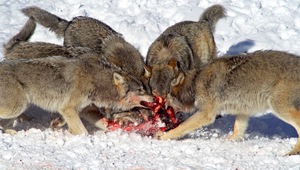 Of particular importance to these animals is their fur, which is double-layered and has low thermal conductivity. Its thick, long coat gives wolves the appearance of larger, more massive animals. Traditionally, the first layer of wool is formed by the stiff guard hairs, which provides the wolf with protection from dirt and water and allows it to withstand seasonal weather fluctuations. It also has an undercoat, which is generally considered the lower, second layer of hair. Essentially, it's a waterproof down that retains heat. All wolves shed their fur, which occurs in late spring or early summer.
Color
These animals have a different color of their first coat, which is influenced by their habitat. Traditional the color of the wolf is gray-brownTundra wolves are almost entirely white, desert wolves are entirely red, and predators living in the highlands of Central Asia traditionally have a bright ochre coloration. Predators of other colors—white, pure white, red, and black—are also found. What all wolves have in common is that they always have the same undercoat color: gray.
Fur color is very important to the timber wolf, as it serves as camouflage. It's particularly important for each specific species, as it contributes to its unique appearance.
Also Wolves have different vocal frequencies., which can have a fairly wide range. Voice is necessary for communicating with one another about the location of an animal or person. They can produce a wide variety of sounds:
- howl;
- barking;
- yapping;
- growl;
- grunt;
- whining;
- howling.
After receiving information from another wolf, the predator throws back its head and howls in a low, vibrating voice that eventually rises to the highest notes.
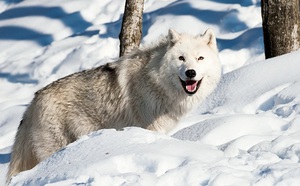 Wolves that are members of a pack always live together and often take part in a chorus of howls. The first part is reserved for the leader, who begins to howl at dusk or dawnAfter this, it's the turn of the rest of the pack. The desire to participate in choral singing is associated with the expression of certain emotions, similar to how wolves demonstrate their belonging to their community.
The pack can only begin an attack if it hears the leader's battle cry: it is more reminiscent of the growl of a dog when it rushes at a person.
Wolves have a hard time finding food. Therefore, they must travel long distances from their habitats in search of food. Their structural features allow them to withstand multi-kilometer journeys.: a narrow, streamlined chest, strong legs, and a sloping back. Typically, these predators can travel 10 kilometers in an hour. But when pursued, they can move at speeds of up to 65 km/h, leaping 5 meters.
The structure of the wolf's paws deserves special attention. Thanks to it, they adapt perfectly to any habitat. The paws are distinguished by the fact that have webbing between their toesThey allow for weight redistribution, which is why these predators move faster than all other animals in the forest. Thanks to this unique paw structure, they can balance their weight while moving.
The wolf's paws contain specialized blood vessels that provide protection against hypothermia. It is very easy for the predator to maintain balance even on a slippery surfaceThis is aided by blunt claws and bristly fur on their paws. Another distinctive external feature is the presence of scent glands between the toes. These glands are what give a wolf's tracks their distinctive scent. These animals use these glands to navigate and inform other members of their pack of their location.
Distribution of the wolf
Over the course of this predator's existence on earth, its distribution has changed significantly. Today, it is found primarily in the Northern Hemisphere. In North America, these Predators can be found in the territory from Alaska to Mexico, in Japan Not a single representative of these animals remains, which is explained by the high level of urbanization. The European wolf is most widespread in Europe and Asia—primarily in Russia, Ukraine, Belarus, Poland, Spain, the Balkans, and Scandinavia.
These predators thrive in forest-steppe and steppe zones, as well as tundra and semi-desert. Dense forested areas are less preferred habitats for wolves. They prefer to inhabit more open or less rugged areas.
These predators are accustomed to living near human settlements. When the taiga is cleared, this animal also begins to expand its territory within the taiga zone.
Wolf packs are not prone to frequent movements and usually live for long periods of time in a certain territory. The area these animals occupy, typically measuring 30-60 meters in diameter. Predators living in the tundra and steppe behave somewhat differently: they are nomadic animals and regularly change their campsite depending on the herd's movements.
 With the onset of mating season, groups of pairs begin to emerge within the pack. The strongest pair takes the best position, while all other members of the pack are forced to search for food elsewhere during this period.
Wolves require certain conditions to raise their young. To do this, they need to create a den, a secluded spot. Most often, they build it in rock crevices or dense bushes. Sometimes She-wolves make their homes in the burrows of other animals – Arctic foxes, badgers, or marmots. The male is not inclined to constantly remain near the she-wolf, as he needs to find food.
To do this, he can move away from the den for long distances - 7-10 kilometers. Newborns wolf cubs are little different from puppiesTheir brown coloring adds to their resemblance. When the young animals grow up and master the skills of survival in the wild, the she-wolf leads them out of the den, and after that, they begin to live an independent, nomadic life.
Conclusion
Wolves are one of the dangerous predators that each of us has heard about since childhood. But, unfortunately, in recent decades, hostility towards this animal has reached such proportions that in some places its population has approached critical levelsThese animals still retain a presence on the Eurasian continent.
In our country there are enough representatives of these predators, mainly the gray wolf and the tundra wolf. These animals have special characteristics, which make them easy to distinguish. It's especially worth mentioning that they are digitigrade creatures, which allows them to move through the forest faster than other animals.