Curly-coated dogs like poodles and water spaniels are famous worldwide. But what about curly-coated cats? These unusual creatures with their fantastic appearance aren't particularly popular, even among pet lovers, and the average person knows little about them. Meanwhile, these "domestic lambs" are sweet, charming, and deserve attention simply because of their truly unique appearance.
Selkirk Rex
The first representative of this breed was born in the United States in 1987. A curly-furred kitten, born in a shelter, attracted the attention of specialists. Later, Persian and British cats, as well as exotic species, were used in the development of the Selkirk Rex.
This resulted in the emergence of a breed of cats with long, curly hair, a voluminous round head, radiant eyes, a stocky build and thick paws.
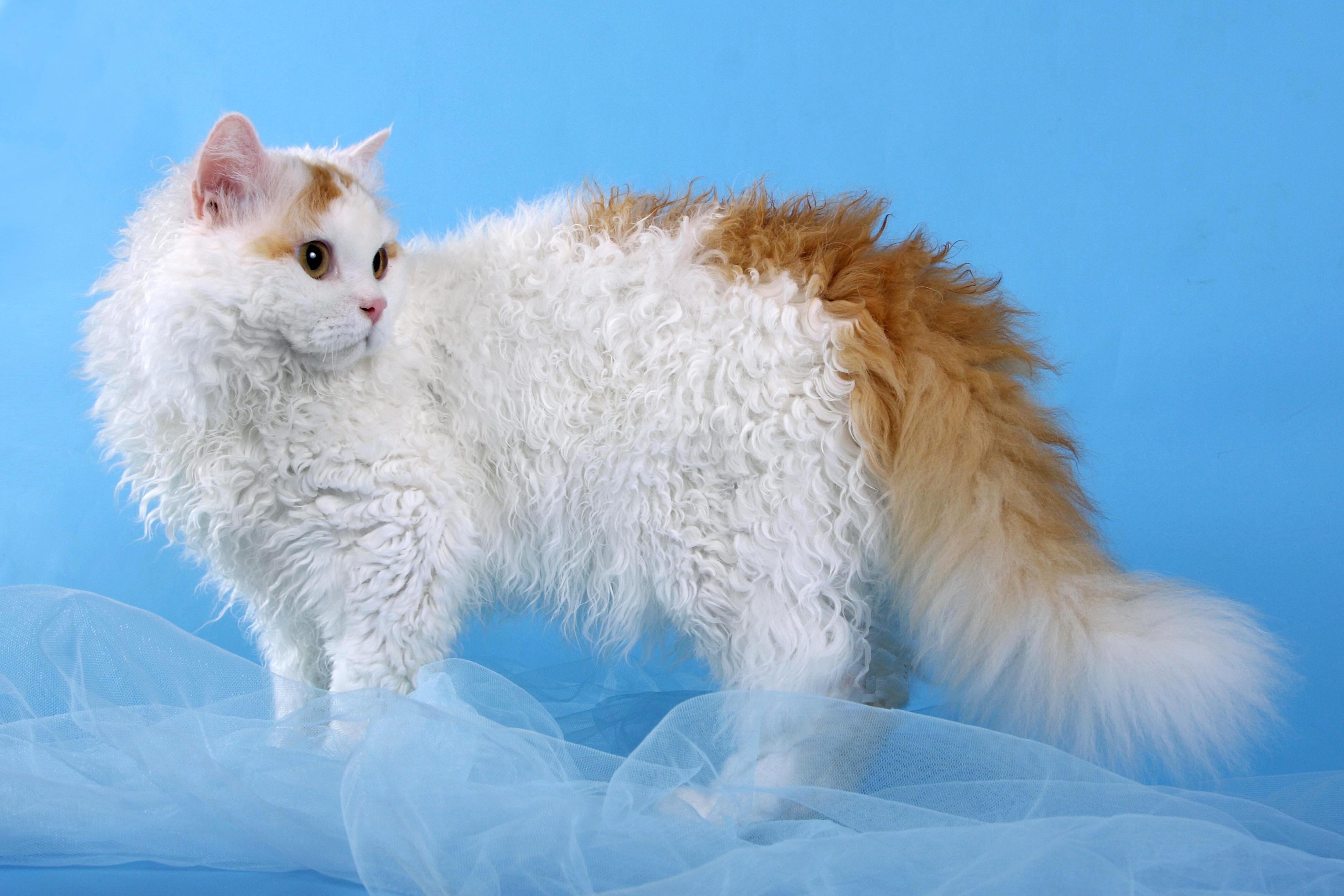
Selkirks have thick, long or medium-length fur. The degree of curl depends on the season, color, and age of the animal.
The coat of these cats is unusual in structure: it consists of curly, wavy and straight hairs, making the animal look like a sheep.
Longhaired Selkirks resemble Persian cats in appearance, while shorthaired Selkirks have a fur texture reminiscent of soft plush toys.
Selkirk Rexes are incredibly sweet and friendly: they love the company of people, don’t mind playing with children, and get along well with other pets.
These cats require constant companionship; they are highly sensitive to their owners' moods and, if necessary, will try to lift theirs. Their only drawback is their omnivorous and gluttonous nature, which leads to a predisposition to obesity.
Devon Rex
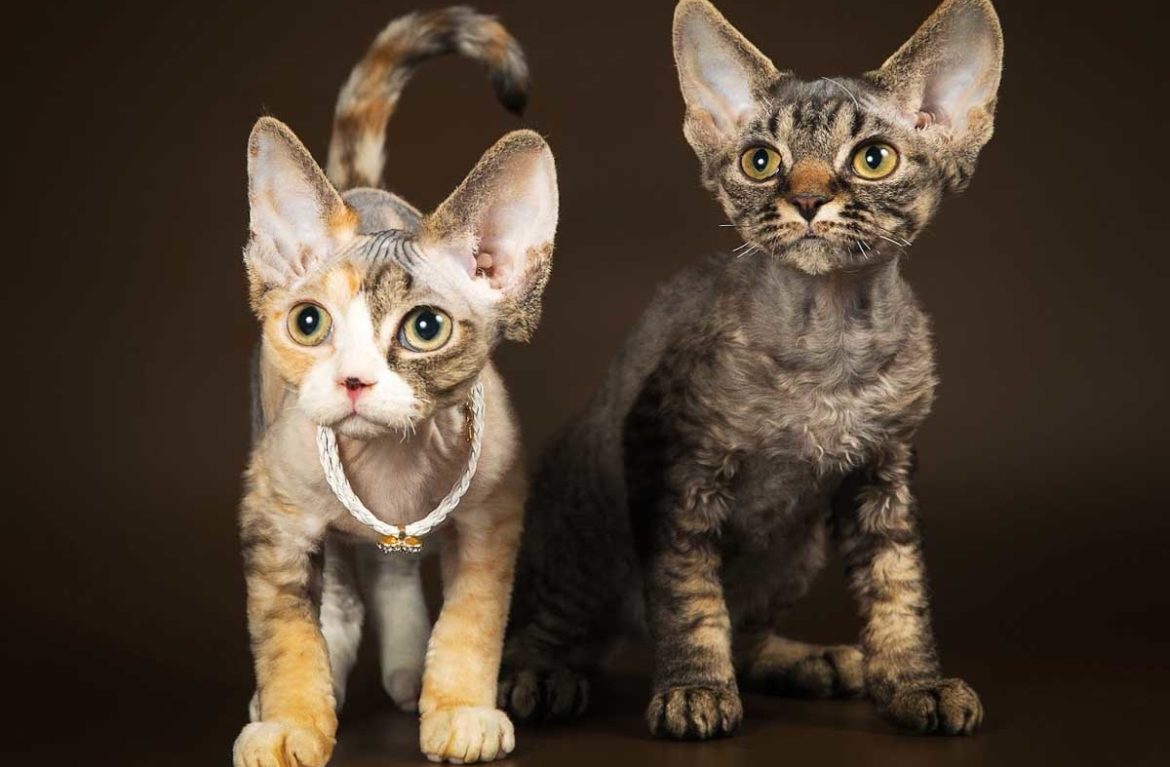
Devon Rexes originate in Britain, where the first kitten with a unique "alien" appearance was born in the 1960s. It was a black cat named Kirly, who became the founder of the breed.
The appearance of his descendants turned out to be so unusual that Devon Rexes are often compared to such fairy-tale creatures as elves and fairies.
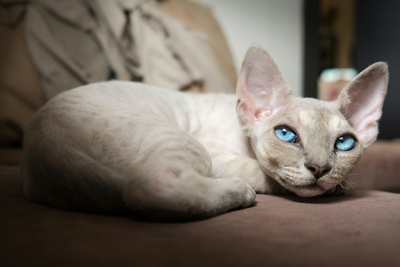
These cats have large, wide-set ears. Their large, expressive eyes should complement their coat color. Devons often have yellowish or greenish eyes. However, Siamese-patterned cats have unusual, sky-blue eyes.
The fur is very soft, pleasant to the touch, and hypoallergenic. Colors can be any, from solid to variegated.
Devon Rexes are energetic and active; they love to run, jump, and play, which is why they are often compared to monkeys. These cats have well-developed fine motor skills, which makes their movements unusual and playful.
They are highly intelligent and easily trained. However, due to their small size, Devon Rexes must be handled with care and gentleness. These cats do not tolerate drafts well and require indoor living only.
Devon Rexes lack a sense of satiety. If you feed them based on their hunger, this slender and refined "elf" will quickly lose its natural grace and become overweight.
Cornish Rex
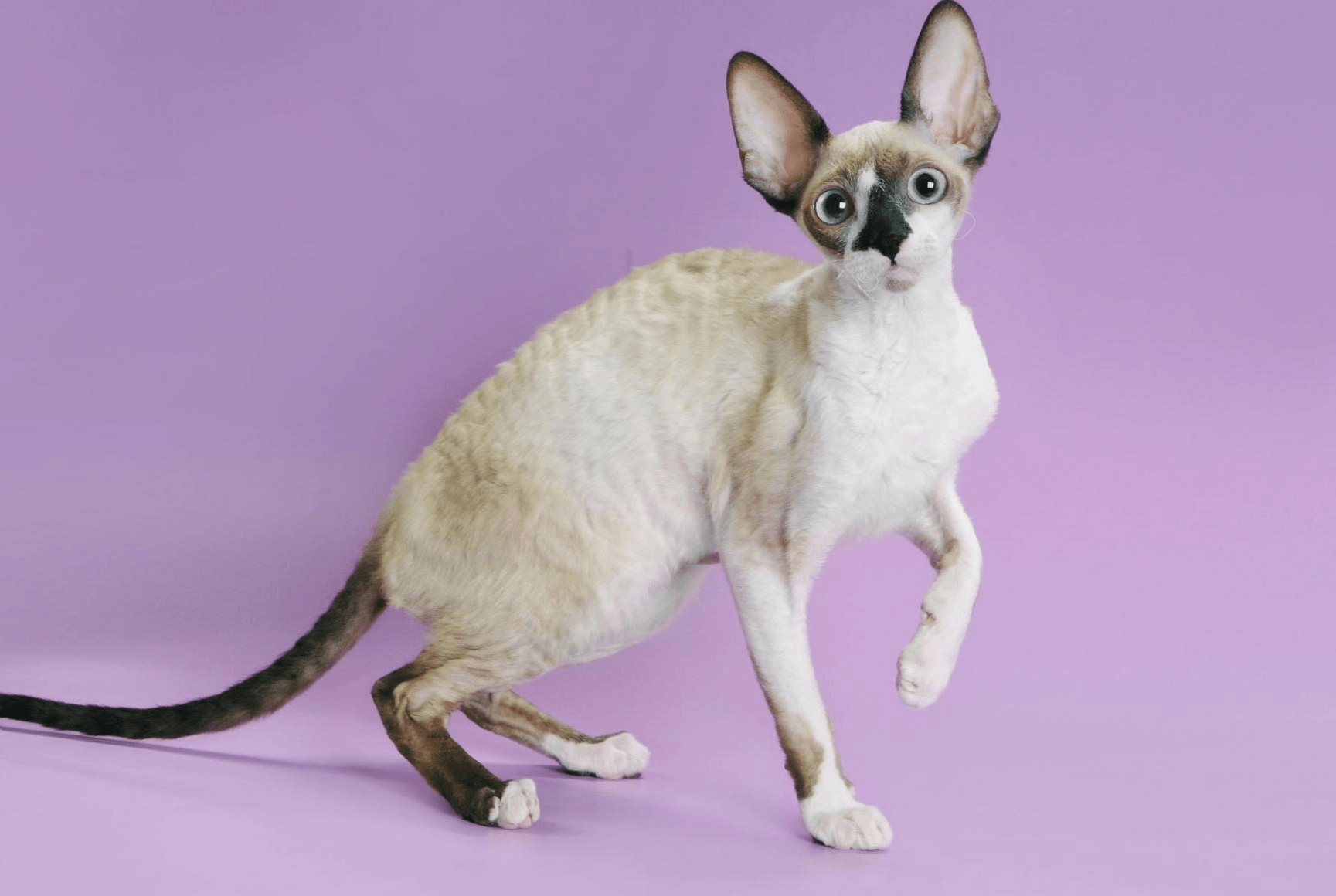
The first cats of this breed appeared on a British rabbit farm in the 1950s, but the Cornish Rexes were not officially recognized until 17 years later. Siamese and common domestic cats were used in the breeding process.
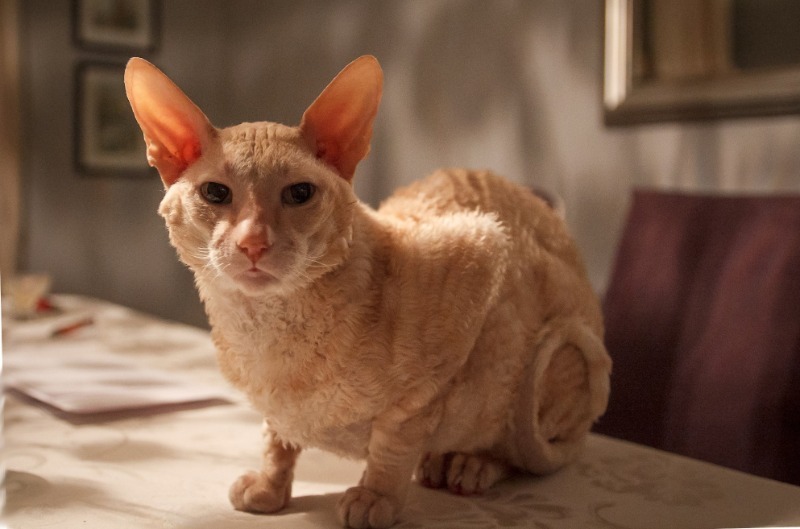
The result was incredibly graceful and elegant animals. Cornish Rexes have a lean build, long, high legs, and a thin tail. Their ears are large and set wide apart, and their eyes are quite large and round.
Cornish Rexes resemble Sphynx cats, but they have fine, curly fur without guard hairs, similar in texture to astrakhan. These cats are friendly and inquisitive. They get along well with people, including children, and with other pets. They are intelligent and easily trained.
Owners note a surprising characteristic of Cornish Rex cats: they don't meow, but rather practically speak. Sometimes they seem to repeat words spoken by humans, which is quite unusual.
The Cornish Rex's devotion to their owners is astonishing. Once attached, a cat will remain faithful to its owner for life.
Ural Rex
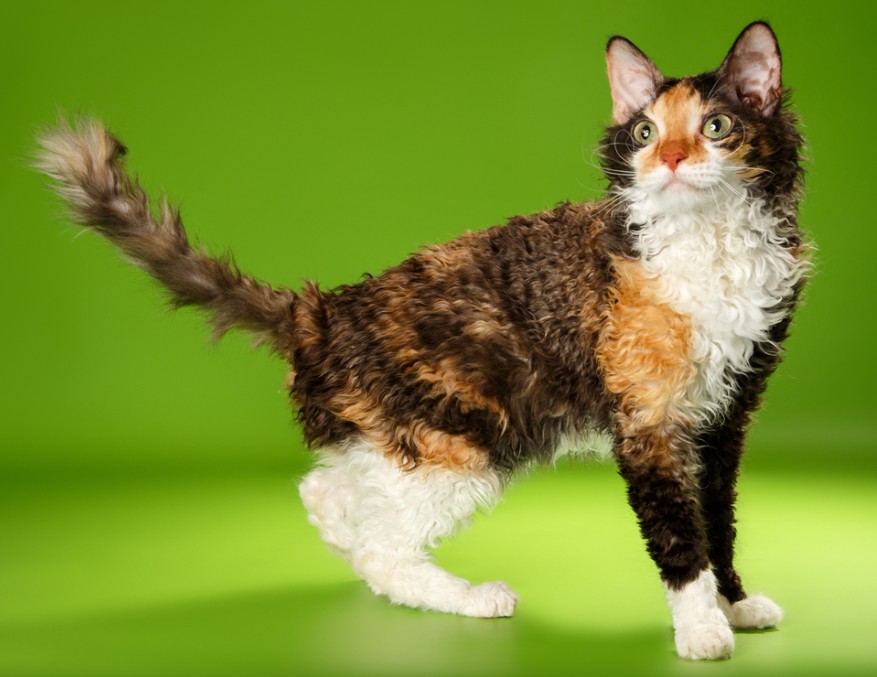
Unlike most other curly-haired cat breeds, Ural Rexes are a native breed. For a long time, these domestic "lambs" didn't attract the attention of professional breeders. Meanwhile, a fairly large population of these animals had already formed in the Urals by the 1940s. Tourists and geologists mentioned these remarkable curly-haired cats back then. To local residents, however, they seemed quite ordinary, and no systematic breeding was conducted.
In 1992, curly-haired cats of the domestic breed were first exhibited at a show in Yekaterinburg, sparking a wave of interest among breeders. To consolidate the breed's key exterior traits, breeders attempted to infuse the breed with blood from other breeds. However, as it later turned out, Ural Rexes could only be bred within their own population.
Ural Rexes are cats with a strong, muscular build. They have large, almond-shaped eyes. Their coat is medium-length or short, thick, and dense. Their curls are relatively large, which can create difficulties during shedding because loose hairs can get caught in them. During shedding, Ural Rexes require thorough brushing with a special brush.
Ural Rexes are kind, cheerful, and somewhat simple-minded. They make wonderful family pets. They are very affectionate and sociable. These cats are patient and attentive to their owners. Ural Rexes try to avoid doing anything that might upset their owners. They are also wonderful with other pets and children.
Another positive trait of Ural Rexes is their robust health. They are free of genetic diseases. They also live quite a long time: the average lifespan is 14-15 years.
Curly-haired cats are a wonderful gift of nature. All the first representatives of these breeds were the result of various mutations that altered the structure of their fur and even their whiskers. These animals' appearance is unusual, and some even find it frightening. But this is deceptive. All curly-haired cats are distinguished by their affectionate and loyal nature. They are highly intelligent, intelligent, trainable, and get along well with other pets. If you adopt a little "lamb," they will become a wonderful companion—affectionate, playful, and loyal.