 The lucky owners of proud and affectionate male cats may wake up one dreary March morning to discover a completely unexpected side to their pets' personalities. The need for affection from members of their own species can arise in cats completely unexpectedly—at any time of year, and sometimes even at a very young age (cats from the same litter may become sexually active four to five months apart, depending on the individual animal's temperament).
It usually takes some time for inexperienced cat owners to realize that the problem can't be waited out or ignored. Some cats don't limit themselves to the characteristic howls, but also begin marking territory, scratching furniture or otherwise exhibit unusual behavior. This problem needs to be addressed immediately.
Content
Ways to solve the problem
Among the possible solutions, the most common ones that come to mind are:
- chemical contraceptives;
- searching for a sexual partner for a pet;
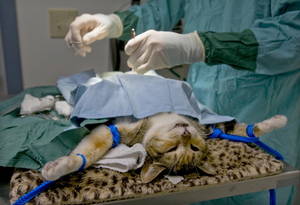
- castration.
Unfortunately, the growing number of different pills on the market doesn't mean improved quality. A desperate owner might overlook serious side effects from pills, and a busy schedule might prevent them from administering them at the right time. Incorrect administration of these medications can impact both the effectiveness of the pills and the pet's health.
Finding a mate for your pet Often prove futile or difficult. This is especially difficult for cat owners, as solving their problem means the other party will have kittens. Furthermore, the first two methods only allow one to forget about the sex issue temporarily, while castration is a more radical approach, which is what attracts many determined individuals.
Why you should consider castration
However, before deciding on castration, it is necessary to carefully weigh all the pros and cons. Neutering cats is undoubtedly has many advantages:
 It allows you to avoid the unpleasant consequences of taking chemical drugs that have an uncontrolled effect on the animal’s hormonal balance.
- Allowing a cat to roam freely can be even more dangerous. A neutered pet doesn't need access to the outdoors, where they run the risk of collisions with cars, dogs, unfriendly people, and, ultimately, diseases and the numerous parasites they bring home.
- Even in the best-case scenario, breeding a male or female cat at home with a friend's pet is fraught with failure, according to owners. Many domestic cats are unable to charm a frightened and often aggressive female cat, even on their own property. Furthermore, kittens need to be placed in good homes, and unfortunately, their supply is limited.
- The hope that kittens will be sold regularly doesn't hold up against reality, and owners who believe in the kindness of strangers willing to rehome their kittens for a small fee simply prefer to turn a blind eye to the obvious prospect of their death.
 It allows you to avoid the unpleasant consequences of taking chemical drugs that have an uncontrolled effect on the animal’s hormonal balance.
Castration or sterilization?
Once a cat owner is considering surgery, the first thing they need to decide is which surgery to choose and what the desired outcome is. Many people misunderstand the difference between castration and sterilization.
- Castration is an operation to remove the testicles in a male cat and the uterus and ovaries in a female cat.
- Sterilization is the ligation of the spermatic cords in male cats and the removal of the uterus while preserving the ovaries in female cats.
In the first case, male cats lose both the ability to conceive and their sexual desire, while in the second case, they only lose the ability to reproduce. Even after sterilization, male and female cats retain their attraction to the opposite sex. This method is suitable for animals living in pairs or for owners of cats living in a private home who not ready to have regular offspringBut it absolutely does not solve the problems of the owners of a lonely pet, who will continue to show a desire to mate.
Spaying and neutering are different surgeries. Cats can be either spayed or neutered. Spaying involves removing only the ovaries, without removing the uterus. The uterus continues to be supplied with blood and nutrients, but it serves no practical function and can become susceptible to disease.
 In the latter case, neutering is more appropriate. Veterinarians may not understand the motives of owners and fail to emphasize this important distinction, so it's up to cat owners to decide.
Reviews from cat owners considering the surgery or having experienced its consequences in other cats are often tinged with guilt, stemming from a reluctance to deprive their pet of an important part of their life and a fear of causing psychological harm. However, it must be acknowledged that cats lack the ability to think logically and understand cause-and-effect relationships, which is an undeniable advantage for sensitive owners. Neutered male or female cats will not feel any inferiority.
After my cat was neutered, the smell disappeared and he stopped peeing everywhere. The only downside, I think, was my own experiences.
The positive aspects of castration
The undoubted advantage of castration is the positive, from the owners’ point of view, changes in the cat's characterNeutered cats are calmer and more docile, willing to spend more time with their family members. Their lives are measured and predictable, and with proper care, neutered cats live several years longer than their healthy counterparts.
Among the benefits cited in owner reviews is an improvement in the condition of cats' fur, possibly due to the animals' hormonal balance being stabilized or to the proper living conditions. Furthermore, veterinarians note a reduced risk of exacerbation of hormonally related diseases.
Contrary to popular belief, castration of male and female cats can be performed at any stage of life, not just before puberty, although the latter is generally easier for the animal to tolerate.
Possible consequences
Of course, castration, like any surgery, has its downsides. First of all, it's important to understand the irreversibility of this step and be prepared for those consequenceswhich it will entail.
Don't leave your pet's health to chance. Before agreeing to surgery, make sure you understand all the risks:
- Make sure the veterinarian has the necessary qualifications;
- Check what is included in the service price;
- Make sure you can pay attention to your pet during the postoperative period.
 Many negative reviews from cat owners are related to poor medical care at veterinary clinics. The cost of surgery can also vary, but don't be fooled by the lowest price or by the opinions of interested parties. Saving money may be based on the lack of necessary tests to assess the cat's overall health. performed under general anesthesia, and any anesthesia, especially of insufficient quality, causes stress for the body.
Prices in the price list may differ from actual prices. The price list indicates the cost of a single procedure and does not include anesthesia, preoperative examination, etc.
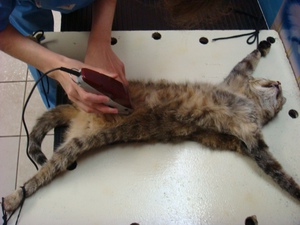 Another aspect that requires serious attention from owners is the rehabilitation period. It is especially important to pay attention to cats that have been in a state of physical exertion and jumping should be avoidedIf abdominal surgery (castration in cats) was performed, the sutures should be treated for 10 days and the animal should not be allowed to lick the wound. Owners should be very attentive throughout the postoperative period.
There's a common misconception that neutered cats become obese. In this case, excess weight is a result of overeating and hormonal imbalances. To mitigate this, consider switching to a special food for neutered cats, which is available from almost all popular pet food manufacturers. If your pet is already weaned on a homemade diet, consult your veterinarian about their diet.
According to owners, another disadvantage of castration is development of urolithiasisIt's difficult to find support for this opinion in the specialized literature, but in any case, this problem can be prevented with a proper diet (the cat should drink more and exclude fish from its diet) and regular veterinary observation.
Accepting responsibility
In each specific case, the pros and cons must be carefully weighed. Regardless of the pros and cons of surgery in a given situation, cat owners must clearly understand that their pets' health and well-being are entirely in their hands. After all, caring means, first and foremost, attention and care.