 One of the most important moments in a domestic cat's life is pregnancy. Beyond the complexity of the birthing process itself, there are many challenges that arise during the gestation period. Any responsible cat owner needs to know the approximate day of conception in order to calculate the expected delivery date and prepare for it.
Everything is described in order in this article.
Mating in cats
When can a young cat be allowed to mate?
The amount of sex hormones responsible for mating in cats reaches the required level at about by 8–9 months of the first year of lifeHowever, the size and breed of the cat also play a significant role. It's at this age that a cat may first begin rolling on the floor and meowing loudly, beckoning potential suitors. This anxious behavior often causes discomfort to owners, but it's still worth taking the time to find a suitable mate.
The first heat should be skipped because the female cat is not yet physiologically and psychologically ready to bear a litter. Statistics show that cats bred early are more likely to abandon their kittens or miscarry. Furthermore, pregnancy at this age can lead to injuries, hormonal problems, and spinal curvature in some breeds. Experts consider the ideal age for the first mating to be one and a half years. For some breeds, the age limit is raised to two years.
Signs of a successful first mating
 There is one of the immutable rules of knitting: a cat is brought to a male cat, not the other way aroundThis is due to the nature of the animals themselves – it's easier for a male cat to court a female in his own territory and he's less nervous than when moving. Before mating, it's recommended to have the cat clinically examined for any existing viral diseases, dewormed and flea-treated, and have her claws trimmed. Most often, owners should provide food and water bowls, food, and the usual litter for their pet when sending her to the "groom." It's best to bring the female cat to the groom's home on the 2nd or 3rd day of her heat cycle.
If all goes well, mating behavior begins within a few hours of the cat's arrival. However, there may be instances where, even after a long period of time and having become accustomed to the situation, the cat still refuses to let the cat approach. This behavior is either due to the cat being brought in at the wrong moment—either too late or too early—or because I didn't like the cat Your pet. It's not a good idea to scold the animal or force it to mate: partner selection is driven by instincts that owners are powerless to resist.
After a successful mating, the male cat loses all interest in his partner and begins to do his own thing. The female cat also lounges and purrs, but no longer calls the male cat. Heat does not stop immediately after mating; signs of it can be observed for several days.
If your pet starts bleeding or develops a strange odor after returning from the cat, you should immediately seek veterinary help – internal problems are quite possible.
Signs and progression of pregnancy
People start talking about the first signs of pregnancy after the end of the heat. So, Possible noticeable signs:
- in the first week after estrus, the mammary glands turn pink;
- morning sickness may occur;
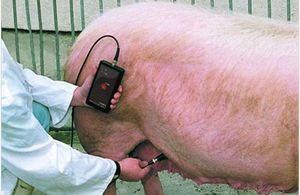
- by 2–3 weeks, visual rounding of the abdomen and confirmation of pregnancy by ultrasound;
- reducing the cat's active time, increasing the time of sleep and rest.
In addition, the color change may not affect all the mammary glands, but only 2-4 lower nipples.
It's important to monitor your cat for signs of nausea: excessively frequent vomiting can be a sign of underlying problems, including intrauterine embryo death. In such cases, a specialist examination of the pregnant cat is recommended.
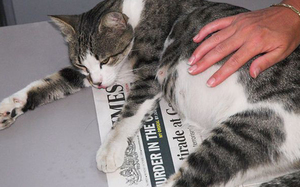
The first slight movements of the kittens can be noticed as early as three weeks, and by the sixth week of pregnancy, if you place your hand on the cat's belly, you can easily feel the kittens kicking with their paws and their erratic rotational movements. From one and a half months on, the kittens have great difficulty moving freely and begin to change location, which they will occupy until the very birth.
There are cases where mating occurs spontaneously and it's impossible to determine the exact date. There are two ways to determine the pregnancy period: a precise one, using an ultrasound at a veterinary clinic, or a visual one, where owners estimate the approximate date based on the color of their pet's mammary glands and the size of her belly. If the belly isn't visible and the nipples are pink, the pregnancy is usually around four weeks.
The gestation period of a cat
In most cases, the cat I've been pregnant for 65 days., but there are several factors that influence the time frame.
 So, the duration of a cat’s pregnancy depends on:
- the number of kittens a cat is carrying;
- breeds;
- the size of the animal - large or small cat;
- age of the animal.
Statistically, the larger the expected litter of kittens, the higher the likelihood that labor will begin slightly earlier than expected. This can sometimes lead to complications. For example, kittens may be born prematurely and require urgent resuscitation after birth.
For long-haired cat breeds, the gestation period is up to 72 days, for short-haired cats – no more than 68 daysIf a cat carries her litter a week overdue and it doesn't affect her health, there's no reason to worry.
Peculiarities of pregnancy in some breeds
 Breed has a particular influence on the duration of pregnancy, the number of kittens in a litter, and the subsequent development of the kittens.
So, it has long been scientifically established that Siamese cats carry kittens longer than others.
Persian cats and extreme sports enthusiasts with upturned noses and wide-set eyes, they carry kittens for 63 to 68 days.
Furthermore, these three breeds have undergone extensive and extensive inbreeding, making their births considered quite difficult. Quite often, cats are unable to deliver their kittens on their own and end up in the hands of a veterinarian for a cesarean section.
Another breed that is considered difficult to produce naturally is British and Scottish FoldsA British shorthair cat's pregnancy lasts for about 70 days, while a Scottish shorthair's pregnancy lasts for about 67 days, but it's highly likely that she'll be pregnant before the fifth day. The potential for complications during labor is related to the narrow pelvis of the British shorthair mother and the relatively large size of her kittens.
But the greatest complications are likely to occur during birth for Sphynx cats. Through selective breeding and the removal of their fur, these cats have lost the ability to undergo the easy natural births intended by nature. Therefore, an ultrasound is recommended to determine the exact number of kittens expected, their presentation, and the probable gestation period.