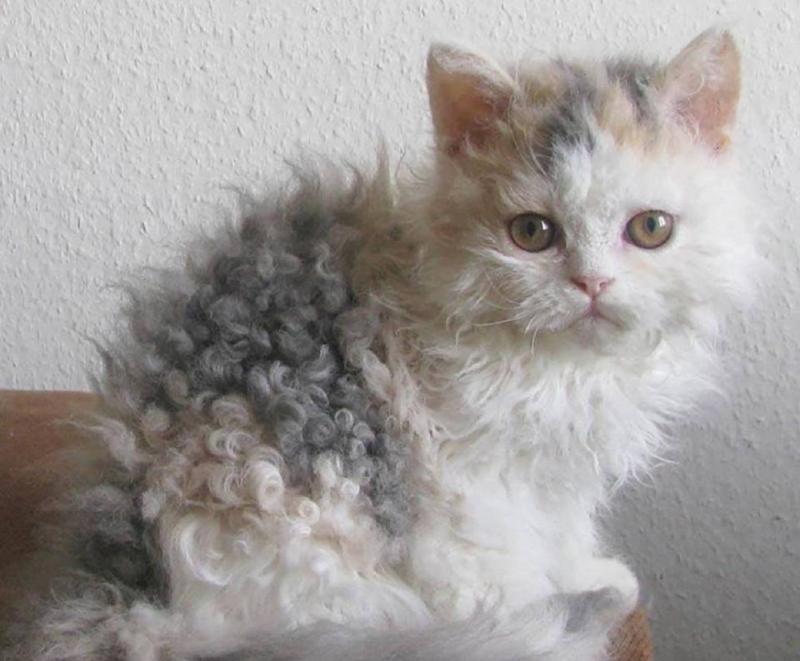
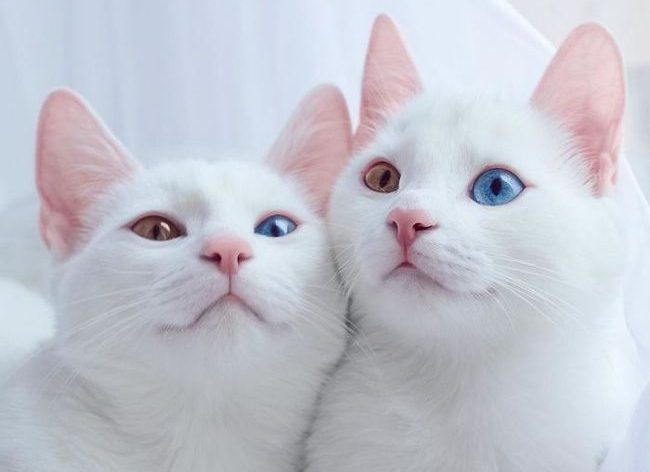
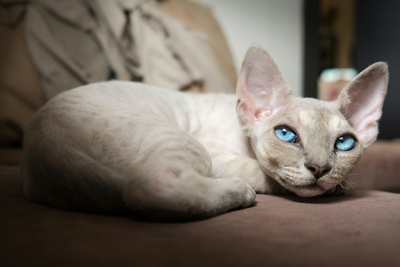
The Selkirk Rex is a cat breed developed in the United States. Exotic, Persian, and British Shorthair cats contributed to its development. Selkirks are distinguished by their curly coats, which make them resemble small sheep or teddy bears. These cats have a calm and friendly nature, enjoying human interaction and being the center of attention. They are generally healthy, with an average lifespan of about 15 years.
Content
Origin of the breed
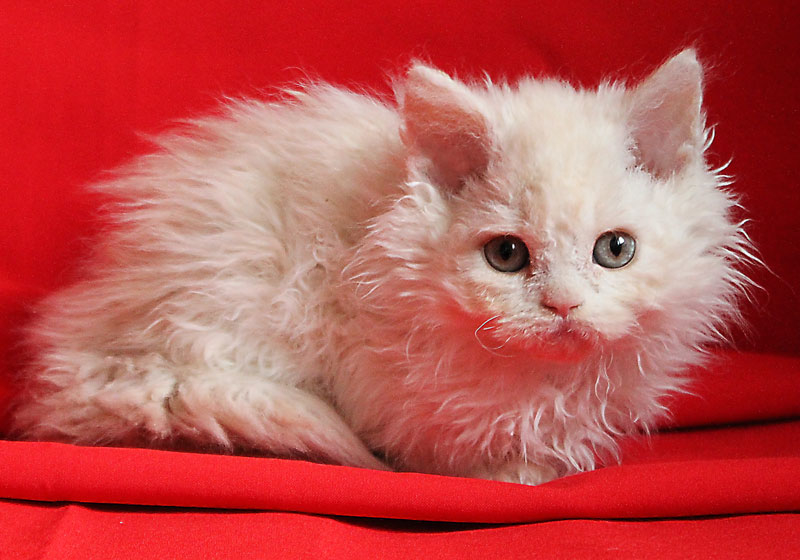
The first curly-haired "sheep" were brought to Russia in 2008.
In 1987, a kitten with a plush coat was born at an American animal shelter. Breeder Jerry Newman adopted this exotic-looking kitten and named her Miss de Pesto of No Faces. When the kitten grew up, she mated her with her Persian male. The resulting litter yielded six kittens, three of which inherited the curly coat.
Further work on breeding the new breed revealed that the gene responsible for the curly coat is dominant. A breed standard was developed in 1992. In 2015, crossbreeding was banned, and only Selkirk Rex cats were allowed to participate in breeding.
Description of appearance
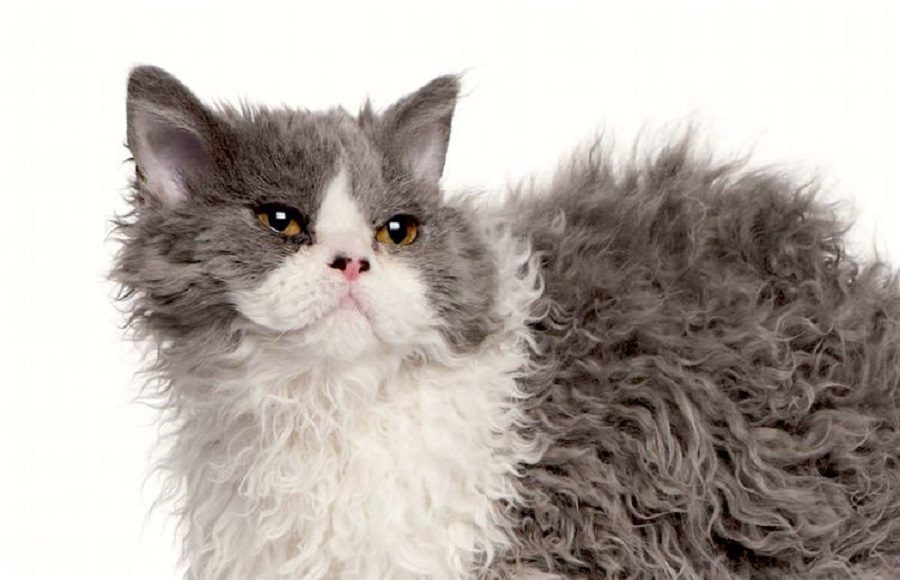
The breed is heavy-boned, and their weight varies depending on gender. Males weigh between 5 and 8 kg, while females weigh around 3 and 6 kg.
Exterior Description:
- round head, full cheeks, wide forehead and chin;
- curly mustache and curled eyebrows;
- large eyes, the pigmentation of the iris is in harmony with the color of the coat;
- wide ears with a rounded tip, with curls inside the auricle;
- strong build, rectangular in shape;
- thick neck with curls;
- powerful limbs of medium length, paw pads are round in shape;
- The thick tail tapers smoothly towards the end.
Kittens are born curly, but their fur straightens out over time and curls back up by nine months of age. It reaches its full, mature appearance by two years of age. Shorthaired specimens have a thick, plush coat. Longhaired specimens have a coat that looks like cascading locks, with the curls scattered haphazardly. Unlike other curly-coated breeds, the Selkirk's coat consists of straight, slightly wavy, and distinctly curly hairs.
The nature of curls is influenced by climatic conditions, hormonal changes, and also the period of puberty.
Existing colors
The standard allows Selkirk Rexes to have a variety of colors with unusual patterns. However, animals with a uniform, richly colored coat are more valuable.
Among the interesting colors:
- chocolate;
- blue;
- tabby;
- tortoiseshell;
- point (color point);
- spotted (any color, spots of random shape).
Character
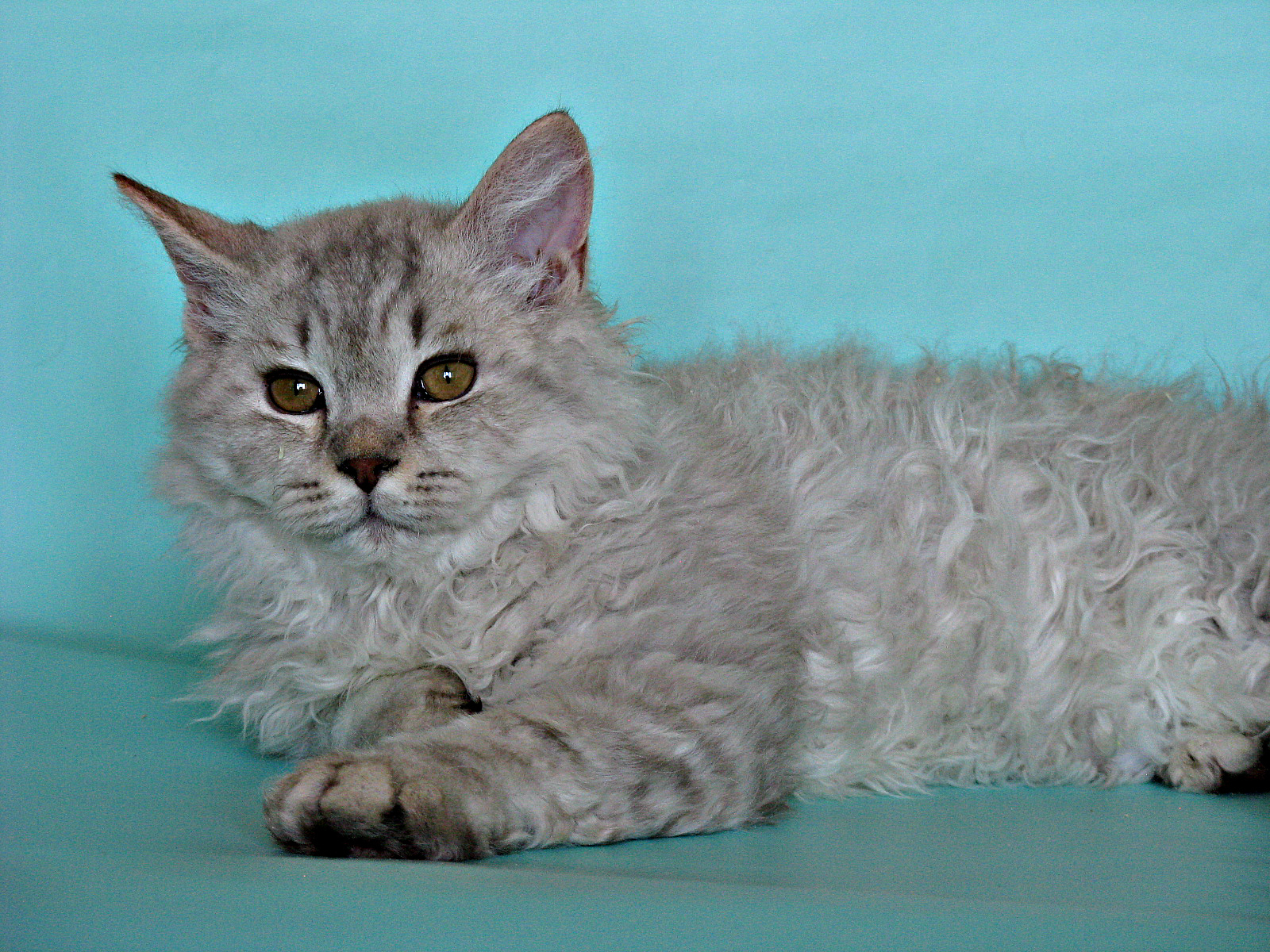
Selkirks are non-aggressive and are ready to jump into the arms of even strangers.
Cats have a docile and noble character. They are good-natured, adore their owners, and are sensitive to their moods. They treat children tenderly and tolerate their antics. They get along well with other pets, be it dogs, rabbits, or parrots, and never get into conflicts.
The breed's representatives have combined all the virtues of their ancestors. The gentle temperament, inherited from the Persians, is successfully combined with the playful nature of the Exotics and the sedateness of the British Shorthair.
Pros and cons
The Selkirk Rex has many advantages. These include:
- attractive appearance;
- tenderness and lovingness;
- strong immune system;
- ability to learn;
- Kittens are easily recognized by their curly fur.
The breed doesn't have many disadvantages. Among them are the following:
- thick fur quickly gets dirty and tangled;
- shed heavily;
- high price for kittens.
Buying a kitten
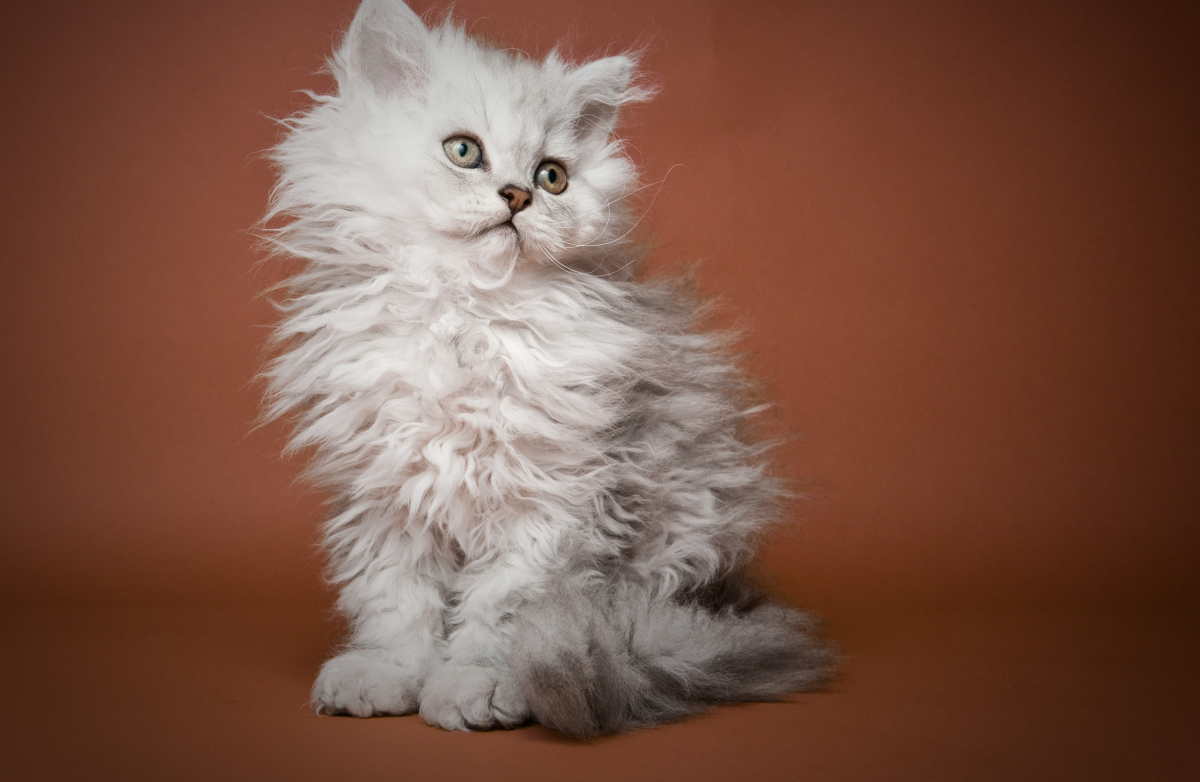
You shouldn't buy a kitten that is under three months old.
Pets must be purchased from specialized breeders. The breeder is required to provide the following documents to the new owners:
- a pedigree that contains information about both of the kitten's parents;
- a veterinary passport indicating the name, date of birth, breed of the animal and vaccinations received.
When choosing a baby, you need to pay attention to its appearance and behavior. A healthy kitten should look like this:
- looks like a teddy bear;
- the exterior meets the standard;
- ears and eyes are clean;
- the coat is free of bald spots, clean and not tangled;
- behavior is active and friendly.
The average price for a kitten is around 25,000 rubles. The price depends on the prestige of the cattery, the animal's gender and class, the purity of the breeding lines, and the availability of a pedigree.
Content Features
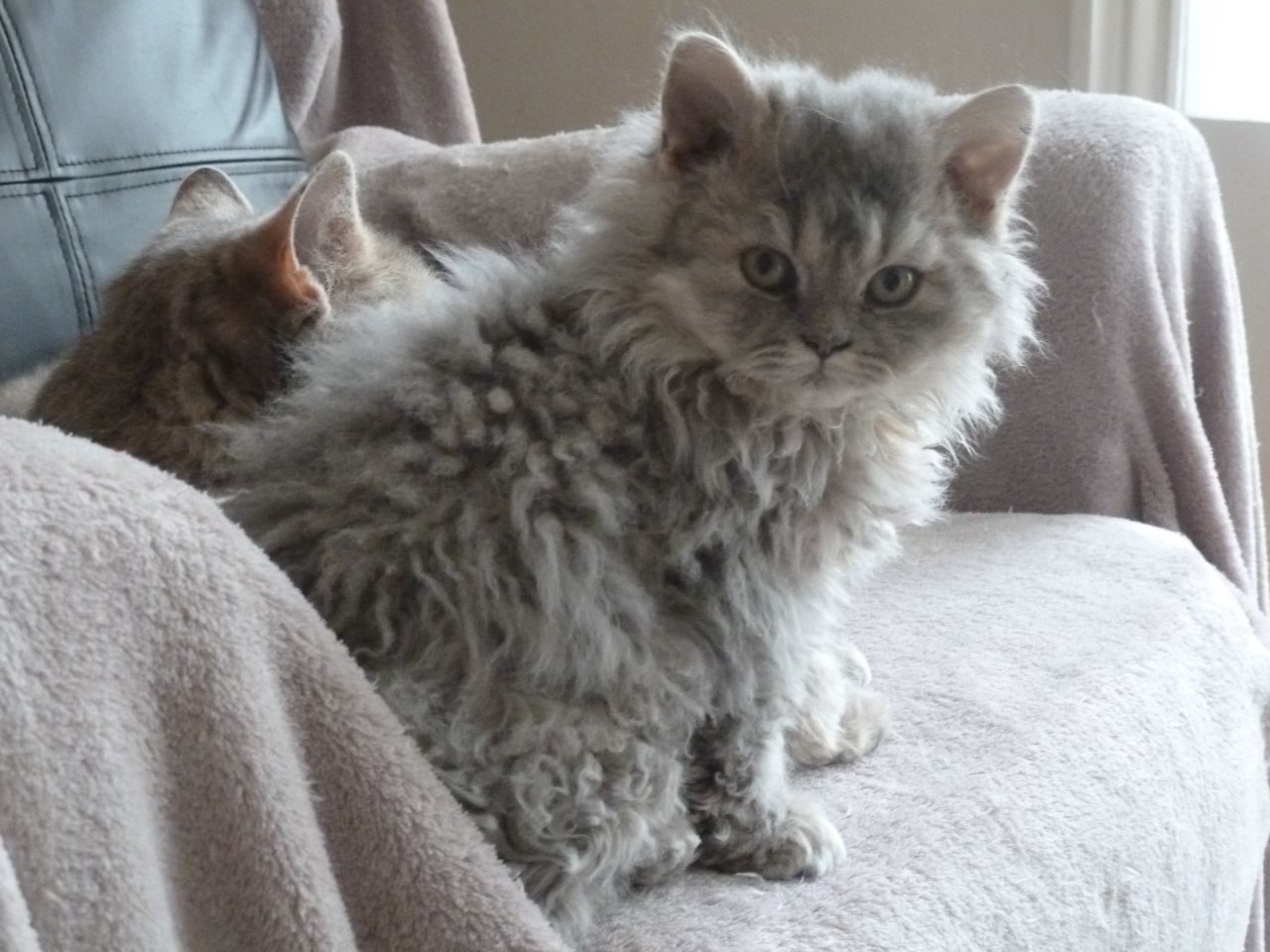
A cat's emotional state is just as important as its physical state.
An apartment or private home is ideal for keeping a Selkirk Rex. These animals have warm fur, so buying them a house is not necessary. A cozy place to rest is essential. A thick blanket can serve as a bed.
Kittens love to run around the house and play active games. Running around promotes healthy development and improves their sleep. To prevent them from damaging personal belongings and furniture, provide them with a variety of toys.
Hygiene procedures
Selkirks require special care. This should include the following procedures:
- The animal's eyes are regularly examined and the inner corners are wiped with a damp cloth.
- Once a week, clean the ears of accumulated dirt. Use cotton pads soaked in Vaseline for this purpose.
- Mucus is removed from the nose with cotton swabs. This procedure is performed carefully to avoid damaging the mucous membrane.
- Brush your cat's teeth monthly with a special cat toothpaste. Human dental products can be toxic to cats.
- Trim your pet's nails several times a month using a nail clipper. If a blood vessel is cut during trimming, treat the cut with brilliant green.
Grooming
This breed is bathed more frequently than other cats. Once a week, their coat is wiped with a damp cloth, and a full bath is given once a month. A special shampoo is used for bathing. After washing, the coat is dried with a dry towel.
You shouldn't dry your pets with a hairdryer, as the hot air can cause their hair to become brittle and tangle quickly.
Short-haired cats should be brushed several times a month, while long-haired cats should be brushed weekly. To avoid tangling, brushing cats should be done in a specific order:
- First, a wide-toothed comb is run over the fur.
- Then the straightened hairs are combed out with a fine-toothed comb.
- The armpit and ear areas are treated with a soft brush.
- The ends of the curls are trimmed by 1 cm to prevent the wool from tangling.
- The tangles are cut lengthwise and then untangled by hand.
- After combing, the curls are kneaded with wet hands so that they curl again and become attractive.
Nutrition
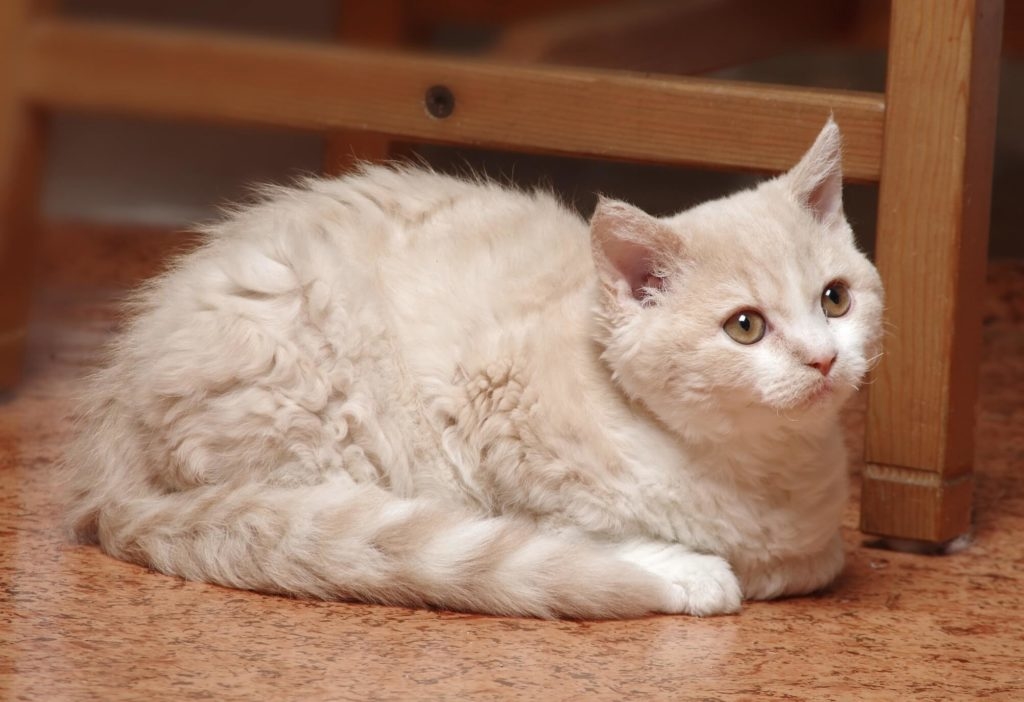
Obesity is a common disease among domestic cats.
It's important to maintain a feeding schedule, as curly-haired cats love to eat. Kittens have a fast metabolism, so they need to be fed four times a day. Adult cats are fed twice a day. Super-premium commercial foods are also available. Well-established brands include Hill's, Royal Canin, and ProPlan.
You can feed cats natural food, but it should be 80% protein. The diet should include:
- dietary raw meat (rabbit, turkey, beef);
- raw but pre-frozen offal (heart, kidneys);
- fresh vegetables and herbs (carrots, cucumbers, parsley);
- raw quail or chicken eggs;
- cottage cheese, unsweetened yogurt, fermented baked milk.
Fatty, smoked, and salty foods, as well as sweets, are excluded from the Rexes' diet. Filtered water should always be available for drinking.
Upbringing
Representatives of the breed have excellent intellectual abilities and quickly learn the rules of behavior in a new home. Kittens are litter-trained from an early age. As soon as they begin to run restlessly around the rooms and meow, they are taken to the litter box and waited for to use it.
To protect furniture, owners purchase a scratching post. They treat it with Smart Spray, the scent of which attracts cats. Cats are walked on a leash and harness. At first, they put the harness on several times a day and walk the cat around the house. Once the cat gets used to it, they take it outside.
Mating and care of offspring
Breeding hybrid breeds can only be entrusted to experienced breeders. Before breeding a female, you should review your partner's documentation. He must be dewormed, flea treated, and vaccinated.
The first heat cycle begins before the age of one year. To preserve the health of the cat and her future offspring, she should be bred during her third heat cycle. After giving birth, the female's body needs to recuperate, so she is bred every six months at most.
The pregnancy lasts for about two months. Three to four weeks after mating, the mother loses her appetite, and weakness and nausea develop. During the second half of pregnancy, she sleeps a lot, and her mammary glands and abdomen enlarge. Three to four days before giving birth, the mother begins to become restless and run around the house looking for a cozy spot. A cardboard box lined with newspapers should be prepared for her. Fabric bedding should not be used, as this can cause the newborns to become entangled and suffocate.
Labor lasts from two to six hours. When the kitten is born, the mother bites through the umbilical cord. If she doesn't, the owner cuts it themselves with a sterile instrument. After labor, the new mother feeds the kittens colostrum.
Choosing a name
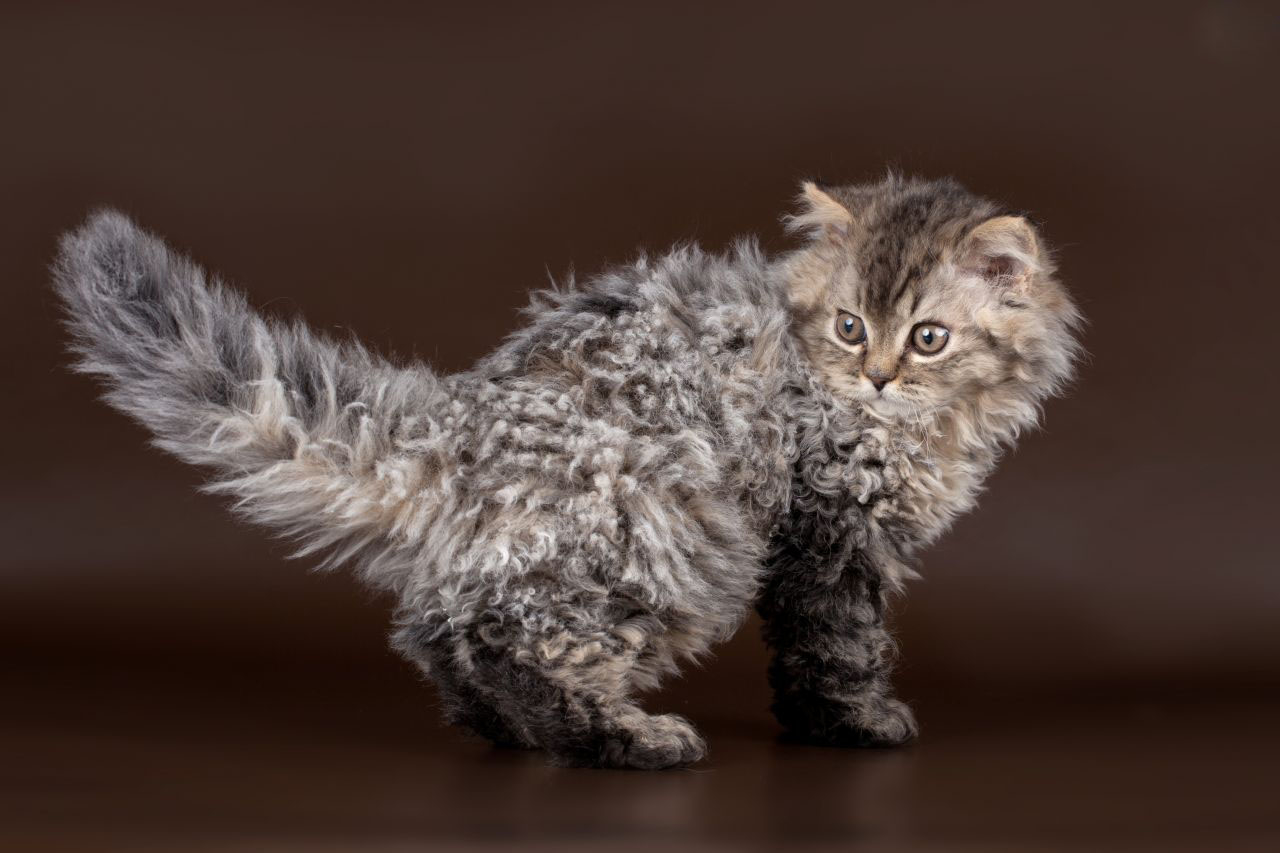
It is important to choose a nickname as early as possible so that your pet gets used to it from puppyhood.
Simple nicknames (Murka, Funtik, Yashka, Vaska) don't suit the beautiful, sweet, and fluffy Selkirk Rex breed. Their names should be original and harmonious. Ideally, they should reflect the pet's personality or appearance.
The following nicknames are suitable for girls: Ariel, Hera, Matilda, Ophelia, Sue, Sweetie, Tsatsa.
Boys can be given the following names: Azhur, Amur, Leo, Losk, Toffee, Saffron.
Health
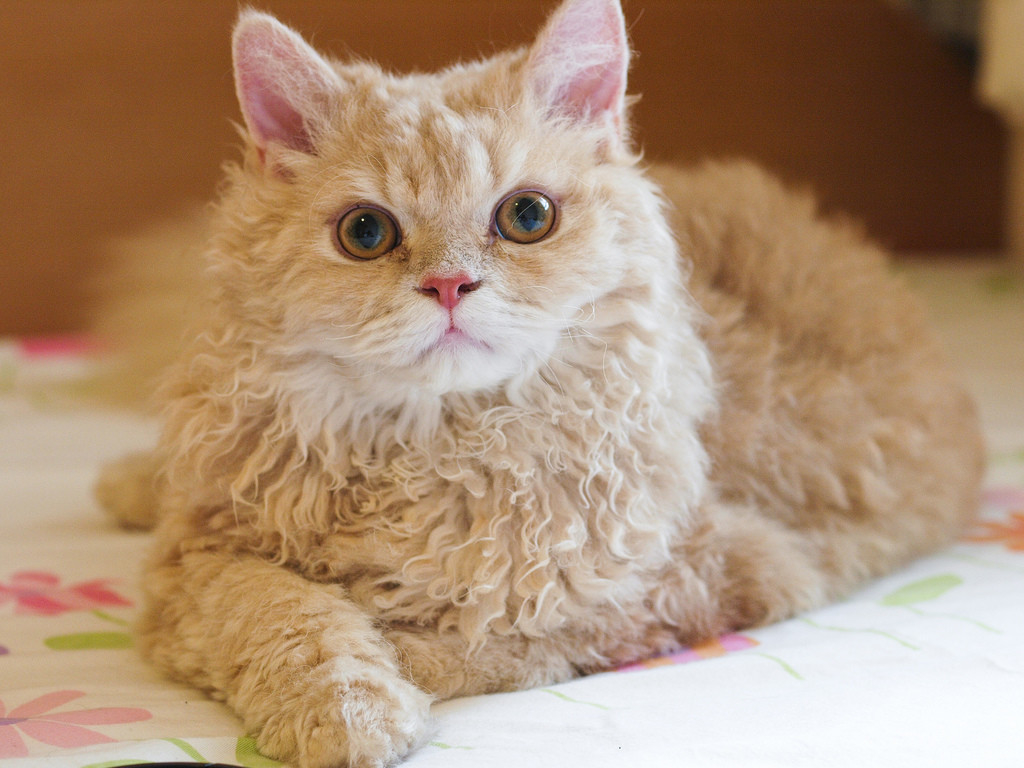
Proper care of your cat is the key to its health and longevity.
Rexes have a strong immune system and are practically free of genetic diseases. To avoid health problems, you need to follow certain rules:
- Take your pet to a veterinary clinic for a check-up twice a year.
- Vaccinate your animal annually.
- Give your cat anthelmintic drugs (Drontal, Prazicide) once every three months.
- Every month from March to November, apply drops against fleas and ticks (Dana Ultra, Bravecto) to the withers.
The diseases that Selkirk Rexes most often suffer from are:
| Disease | Description and symptoms | Treatment |
| Conjunctivitis | A sick pet is afraid of light, the eyelids become red and swollen, and tearing appears. | The cat's eyes are washed with a furacilin solution and tetracycline ointment is applied under the eyelid. Do not dilute the solution yourself, as exceeding the dosage can cause irritation and corneal burns. |
| Snore | A genetic disorder that occurs in cats with a flattened face. The cat snores and wheezes while sleeping. | Most often, snoring is harmless, but if the animal has breathing problems, it will undergo surgery. |
| Urolithiasis | A condition characterized by the presence of stones and sand in the kidneys or urinary tract. The patient's gait changes, pain occurs during urination, and blood appears in the urine. | To relieve an attack, antispasmodics (Baralgin or Spazmolitin), as well as antibiotics and homeopathic remedies (Magnesia and Cantharis) are prescribed. The dosage is determined by the attending physician. Stones or sand are removed surgically. |
Selkirk Rex cats don't tolerate loneliness; prolonged absences from their owners can cause them to become homesick and ill. These curly-haired cats are ideal for large families whose homes are always cheerful and noisy.