Some breeders still consider Nibelungs to be merely a long-haired version of the Russian Blue. However, this breed is quite individualistic and is gradually gaining popularity worldwide thanks to its distinctive appearance and friendly nature. "Mist cats" are more suitable for older or single people, but they may not do well in families with small children, as they dislike loud noises and unnecessary fuss.
Content
Breed overview
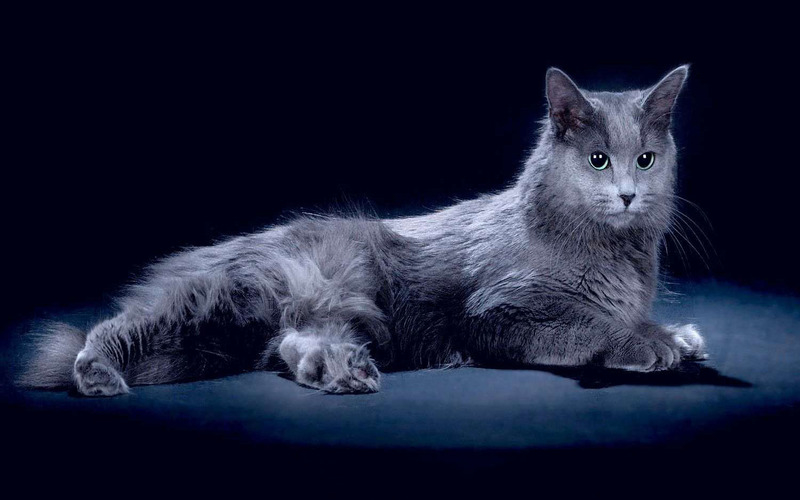
The breed is still not recognized by some breeders as a distinct one and is considered a longhaired version of the Russian Blue. Nibelungs are even used to improve their gene pool.
Nibelungs were developed in the early 1980s in the United States. A litter of six kittens was born between a black domestic shorthair named Elsa and a Russian Blue male. Five of them were normal-colored, but the sixth stood out among his brothers with a beautiful blue coat, fluffy fur, and long limbs. It was this kitten that caught Cora Cobb's eye, who named the baby Siegfried (after the hero of Wagner's epic opera, "Der Ring des Nibelungen").
In Elsa's next litter, the breeder produced an extraordinarily beautiful female cat, Brunhilda, with a silky, smoky coat. It was Siegfried and Brunhilda who founded the new breed of Nibelungs, and their owner, Cobb, wrote the first breed standard herself. In 1987, TICA recognized the breed. In the 1990s, it was registered by the TCA, WCF, and CFF, and in 2008, by LOOF.
Breed standard
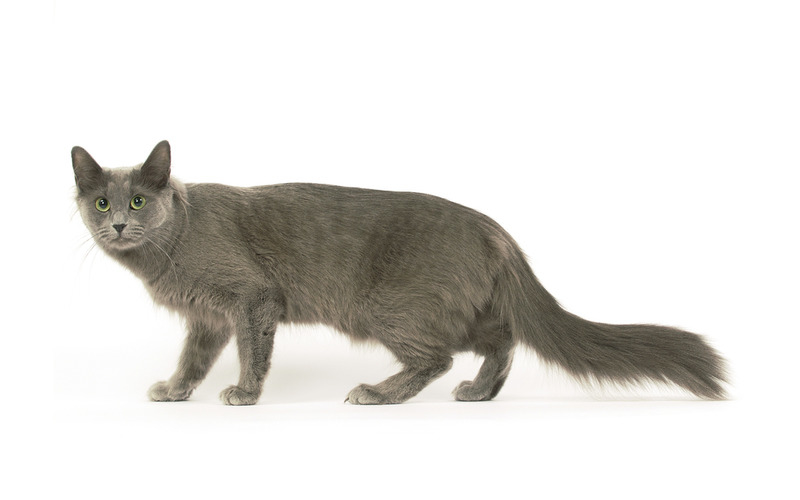
Nibelungs are distinguished by their ideal proportions and harmonious build. Their gait, from the side, looks like a cat sneaking up on tiptoe.
Due to their semi-long, thick coat and medium size, Nibelungs appear disproportionate and stocky. In fact, their build is harmonious. Representatives of the breed are distinguished by a strong build, yet they move with great grace and ease. Sexual deformity is moderate: females are slightly smaller than males, weighing approximately 4 and 6 kg, respectively.
| Parameter | Peculiarities | Disqualifying signs and faults |
| Head |
|
|
| Ears |
| |
| Muzzle |
|
|
| Nose |
| |
| Eyes |
|
|
| Neck |
| |
| Frame |
|
|
| Limbs |
|
|
| Tail |
|
|
Coat and color
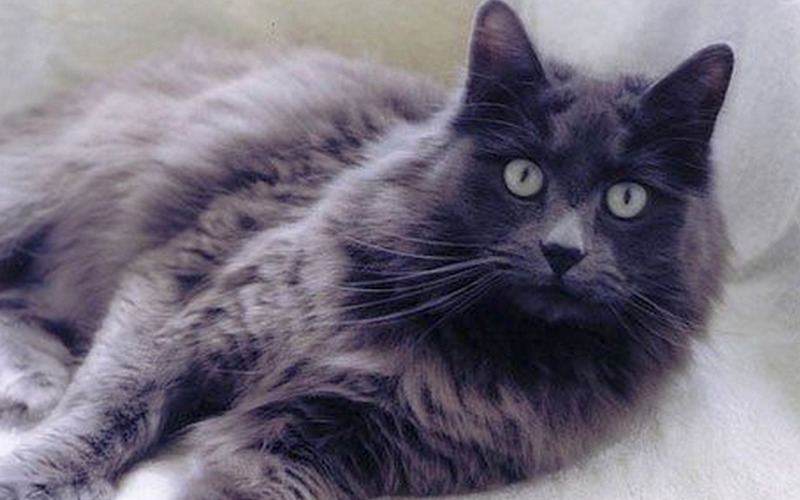
The Nebelung's coat color should be rich and deep. Disqualifying faults include coat that lies close to the skin, light points, or coloring that does not conform to the standard.
The Nibelung's double coat is fine and silky to the touch, medium in length, with a dense undercoat. The body, from the shoulder area to the tail, has slightly longer guard hairs, and the tail is quite feathery. There's a ruff on the neck, and "trousers" on the hips. The quality of the coat can vary significantly depending on the season: in winter, it's denser and longer, while in summer, it becomes somewhat harsh and less dense.
The Nibelung's color palette includes only one color: blue of varying intensities with a slight silvery sheen, achieved by coloring the tips of the coat in lighter shades—called tipping. Breeders prize individuals with a deep, rich coat color and minimal tipping. The presence of white markings or shades of coat other than blue are considered significant faults.
Character
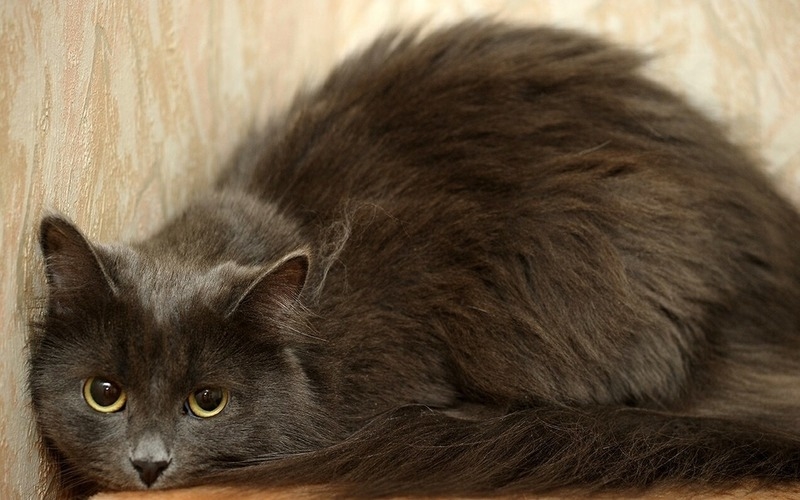
The Nibelungs' character combines contradictory traits. These animals have a relatively calm disposition, but can also be extremely active.
They have a rather contradictory nature. They simultaneously coexist:
- playfulness and meekness;
- sociability and independence;
- energy and calmness;
- distrust and the ability to get along with other pets (except birds, hamsters).
Another very important trait of the breed is conservatism. Nebelungs tolerate change of environment, relocation, and separation from their beloved owner worse than other cats. Even simple loneliness and neglect from the owner can put an animal into a state of stress, which will ultimately lead to adverse behavioral reactions.
The phlegmatic nature of "mist cats" makes them excellent companions for the elderly or single people. However, families with small children may find them uncomfortable, as Nebelungs dislike loud noises and unnecessary fuss.
It's worth noting that Nibelungs are highly intelligent. With proper upbringing and playful, non-coercive training, they can learn to follow basic commands.
It's worth paying attention to what your pet enjoys doing. For example, if he likes to fetch toys, you can teach him to fetch a ball, rewarding him with treats and praise for successfully completing the command.
Health
The average lifespan of Nibelungs reaches 15 years. These animals enjoy excellent health and a strong immune system. Despite the fact that this is an artificially bred breed, its representatives do not have any predisposition to genetic diseases.
But like all pets, if not cared for properly, Nibelungs may show some signs of serious infectious diseases:
- bloating;
- diarrhea, constipation, blood streaks in the stool;
- profuse discharge from the ears, eyes and nose;
- dull coat;
- nausea and vomiting;
- inflammation of the mucous membranes;
- loss of appetite and weight loss;
- constrained movements.
Any of these symptoms may indicate serious illnesses that threaten your pet's health and life. Therefore, it is essential to immediately seek qualified veterinary care.
Nibelungs can also suffer from diseases common to Russian Blue cats:
- diabetes mellitus;
- renal failure;
- urolithiasis;
- hyperthyroidism;
- cystitis.
Care and maintenance
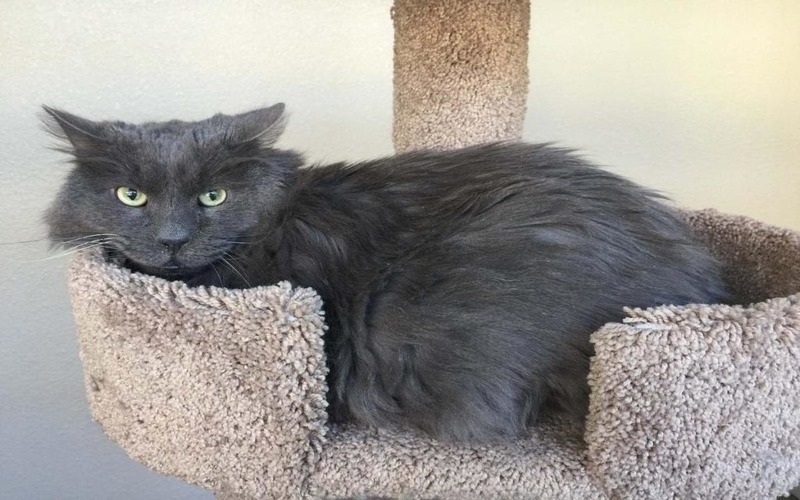
Nibelungs don't require any special care. However, their thick, unusually colored coat requires careful grooming.
Maintenance is straightforward. They require a separate sleeping area, preferably closed and secluded, where they can hide and rest, and two litter boxes with suitable litter. Ideally, a play structure would be appropriate, as Nibelungs are very active, curious, and love to explore high surfaces.
When taking your cat for walks outdoors, always keep it on a leash and choose appropriate times. Direct sunlight can negatively impact a cat's beautiful coat, causing it to fade and change color, possibly resulting in brown or russet spots.
Procedures
The Nebelung is one of those cat breeds that requires special daily care. Their fur is quite soft and practically does not form tangles, but to maintain its beautiful appearance, regular brushing and removal of dead hair is simply impossible.
This breed is also prone to inflammatory conditions. Therefore, hygiene procedures and regular examinations of the ears, eyes, and gums are essential.
Combing and bathing
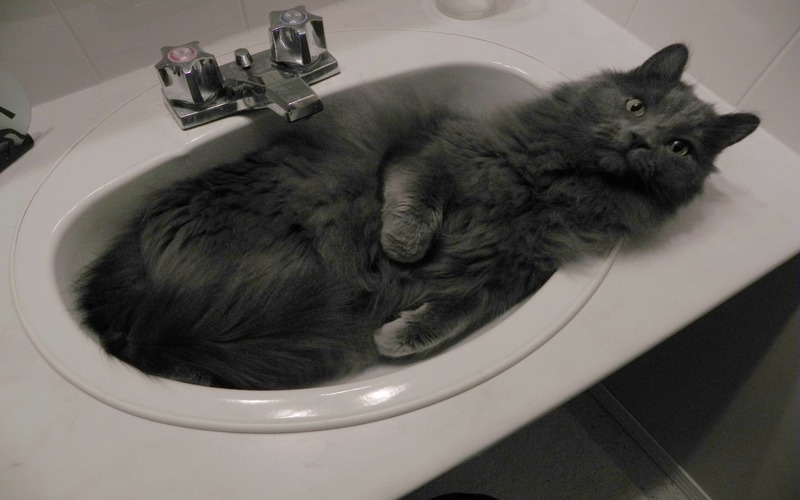
Nibelungs' coats are very sensitive to harsh external factors. They should be washed no more than twice a year, and the shampoo should be natural and dye-free.
Brushing along the guard hairs several times a week is recommended. A natural bristle brush or a comb with wide, rounded teeth is recommended for this procedure. Weekly thinning with a furminator is recommended. During the mid-season shedding period, brushing should be done daily. This will prevent tangles from forming in the dense undercoat. To add shine, you can buff the hairs with a suede or velvet cloth.
However, experts advise against washing Nibelungs frequently. Bathing should be done only as needed and only if their coat is heavily soiled (no more than once every six months). It is important to use natural shampoos without dyes, otherwise the beautiful shade of the "foggy cat's" coat will be spoiled, and apply the product only in the direction of hair growth with light massaging movements. Before bathing, it is recommended to cover your pet's ears with cotton swabs to prevent water from getting inside.
To dry the fur, it's best to use a regular clean towel, gently patting the fur rather than rubbing it. Avoid using a hair dryer, as the hot air will overdry the coat and make it too stiff.
Eye, ear and oral hygiene
Your pet's eyes and ears should be examined daily. This will help detect inflammation and possible infections early. The accumulated wax is removed with a regular cotton pad without the hard edges, soaked in warm boiled water or an herbal infusion of chamomile or calendula. Excess wax is removed from the ears with cotton swabs soaked in a special drying lotion, which helps eliminate excess moisture in the ear canals.
Your pet's oral hygiene should be done weekly, as Nibelungs' gums are prone to inflammation. However, brushing their teeth should be done no more than twice a month to avoid damaging the enamel. It's best to use a pet toothpaste with natural ingredients and a very small toothbrush. This simple procedure will help soften plaque and slow the growth of pathogenic microflora.
Tartar removal should be left to the professionals. Clinic specialists will prescribe treatment options: polishing, mechanical chipping, or ultrasonic cleaning.
Trimming nails
The Nebelung's claws are quite long and strong, so natural filing doesn't produce the desired result. To shorten the claws, use a nail clipper, and the procedure is performed quarterly. Only the clear portion of the claw should be trimmed, no more than 2 mm, to avoid damaging the blood vessels.
You should also purchase a scratching post. This will help your pet file down their claws.
Feeding
When choosing a menu for Nibelungs, great care should be taken. Certain foods can negatively impact their beautiful coat color. Veterinarians recommend feeding young kittens natural food 4-5 times a day until they are six months old, and gradually introducing super-premium prepared foods into their diet to monitor the animal's reaction.
However, most breeders agree that even in adulthood, natural feeding twice daily is preferable for Nibelungs. Special supplements containing sulfur and vitamins A and B can help improve the coat quality. Protein (boiled beef, veal, turkey, chicken) should be the basis of the diet. Easily digestible foods can also be added:
- rolled oats or rice porridge with water;
- natural cottage cheese;
- yogurt without dyes and preservatives;
- kefir;
- sea fish;
- yolk of chicken and quail eggs.
Finely shredded low-fat cheese can be offered as a treat. Fresh fruits and vegetables are also essential. However, there are exceptions; for example, regular carrots can negatively affect the color of the coat.
It is not recommended to give Nibelungs products and substances that negatively affect their color:
- liver;
- buckwheat;
- preparations containing iodine and copper;
- seaweed.
It is strictly forbidden to feed your pet fried, fatty, salty, smoked, sweet, pickled foods, milk, tubular bones, freshwater fish, canned food, bread, dried fruit, or spicy dishes. Also, avoid overfeeding your pet, as they are prone to obesity.
Mating and care of offspring
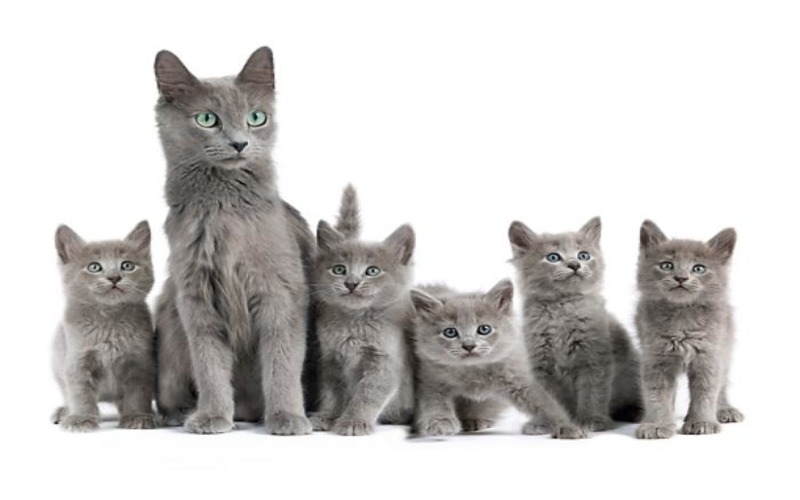
Nibelungs mature quite late. Therefore, experts recommend not breeding them before they are one and a half years old.
Animals should not be mated too frequently (no more than twice a year). The first mating occurs after the second or third heat cycle. Otherwise, the mating process is unremarkable and proceeds as with other felines.
If the mating is successful, the cat can give birth to 3 to 6 kittens. They are typically born with a distinctive silvery-blue coat. However, occasionally, individuals with a light gray coat or tiger stripes are seen, which disappear as they mature. The irises of the kittens are yellow, but by four months, a green rim appears around the pupil, which gradually grows, coloring the eyes green. The kittens' erect ears initially curl slightly, so petting them on the head is not recommended until they stand erect.
From birth, they have a fluffy coat that should be brushed weekly with a wide-toothed comb. Bathing a young Nibelung is strictly prohibited before vaccinations, and bathing should only be done when it gets dirty. It's also important to monitor the condition of the eyes, ears, gums, and belly; it shouldn't be hard or large.
Kittens shouldn't be given away before they're 3 months old. It's only by this age that they learn social skills and develop a strong immune system.
Suitable nicknames
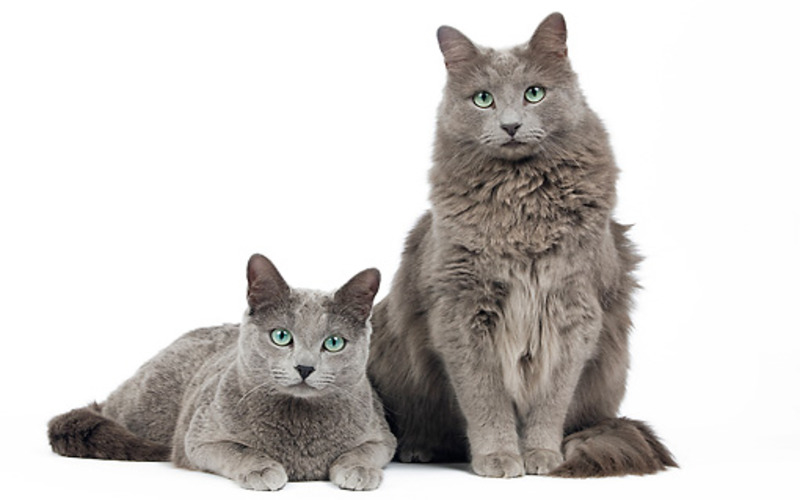
"Mist cats" are distinguished by their unusual coloring. Names associated with the color blue or light blue suit them best.
The Nibelungs' main asset is their beautiful blue coat with a silvery sheen. The tipping creates the impression that these animals are shrouded in a mysterious haze. The following names are suitable for boys:
- Fog;
- Topaz;
- Sapphire;
- Smoke;
- Knapweed;
- Crocus;
- Gray.
The following nicknames are suitable for girls:
- Haze;
- Hera;
- Lavender;
- Aqua;
- Daphne;
- Bella;
- Dora.
Pros and cons of the breed
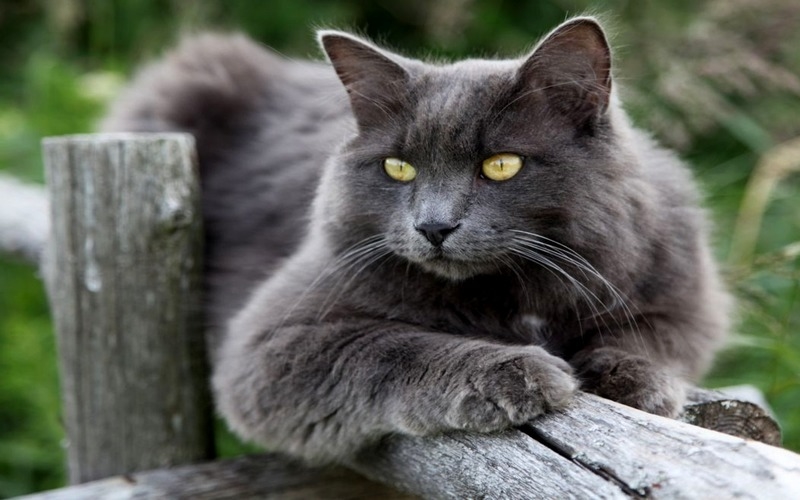
Nibelungs have a wonderful character and are easy to care for. However, this breed does have certain drawbacks, which stem from the need for careful grooming and a carefully selected diet.
Like any other feline, the breed has its advantages and disadvantages:
| Pros | Cons | |
|
|
According to owners, you simply won't find a better pet. Nebelungs aren't just beautiful cats; they're also highly intelligent creatures capable of learning basic tricks. Although they're easy to care for and feed, they require careful grooming for their unique coat. Their silvery-blue coloring can be damaged by exposure to sunlight, poor nutrition, or poor grooming.