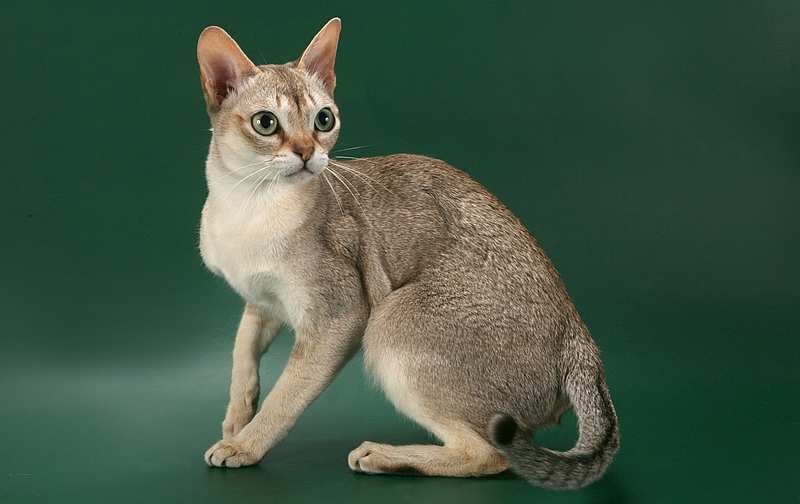
The Lykoi cat breed is rare and unusual. Fanciers have mixed reviews of their appearance; some find it intimidating and repulsive, but most are positive. Acquiring a Lykoi cat is difficult. Scientists are still conducting research, studying the animals' characteristics, their health, and crossbreeding.
Content
History of the breed
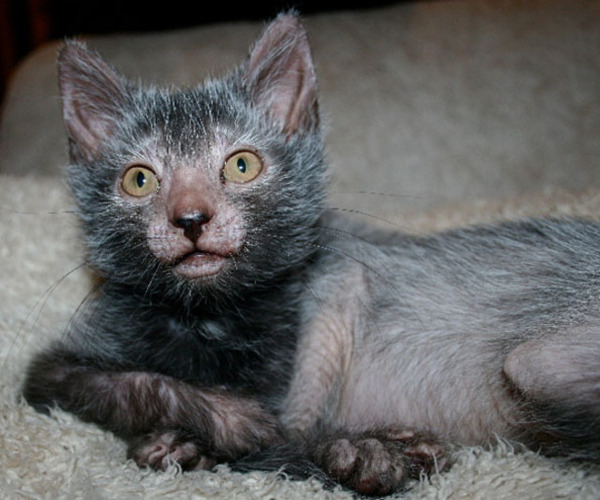
The Lykoi breed arose by accident. In 2010, in the United States (Virginia), a pair of ordinary domestic cats gave birth to several kittens with a strange appearance. They had sparse fur. Scientists became interested in the individuals and began conducting research. It was believed that they had "hairless" ancestors—Sphynx or Rexes—but DNA testing did not confirm the relationship. It was later discovered that a mutation had occurred in the gene responsible for fur. In 2011, another pair of similar animals, born naturally, was discovered in Tennessee.
To avoid losing these unique individuals, specialists began crossbreeding. They took animals from different litters, and kittens with unique appearances were born. Thus, a new breed of cat, the Lykoi—a "reborn wolf," or "werewolf cat"—was born.
External description
In 2012, TICA – The International Cat Association – officially recognized the breed. The following standards were approved:
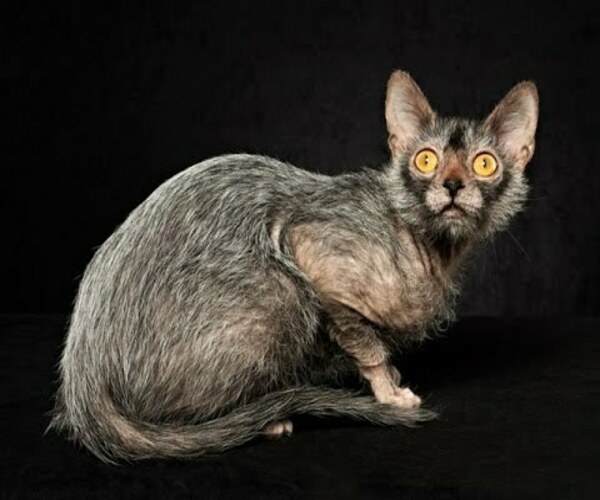
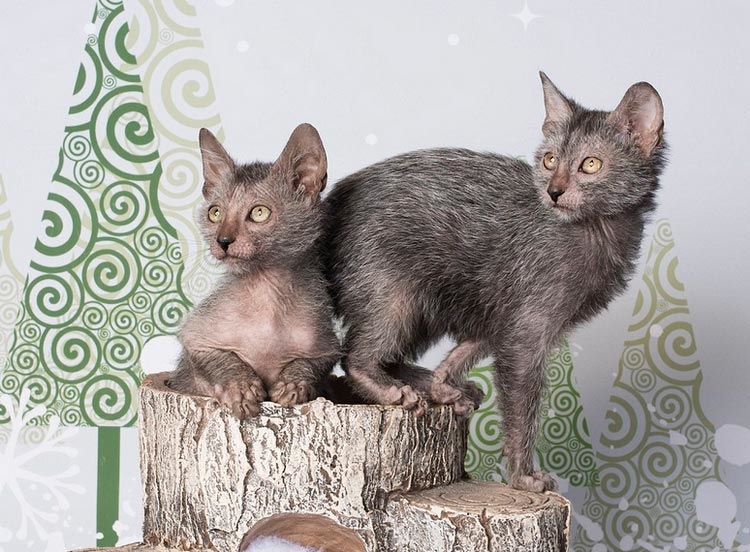
- Medium-sized individuals. Males weigh 3.5-4.5 kg, while females are smaller, weighing 2-3.5 kg. Their build is proportional: lean, slender, flexible, yet muscular. The body is elongated. The skeleton is of medium density.
- The limbs are of medium length, almost hairless, the paws are oval, with long toes.
- The head is small in size, in the shape of a modified wedge with rounded contours and a rounded long forehead.
- The center of the muzzle is hairless, forming a mask from the eyes to the chin. The nose is bare, rounded at the tip, and the whisker pads are well-defined and rounded. The cheeks are distinct and fleshy.
- The ears are large, set erect, wide at the base and pointed at the tips, sparsely covered with hair or bald.
- The eyes are medium-sized, wide-open, and set well apart. Any color is acceptable, but yellow tones are preferred.
- The tail is of medium length, thin, gradually tapering towards the tip.
- The coat is sparse and soft, with hairs of varying lengths (medium or short). There is almost no undercoat. The guard hairs are long. The skin has numerous folds.
Roan (black) coloration—black hairs cover 30% to 70% of the body. These hairs alternate with pure white, with the ideal proportion being 50/50. Other colors are possible; these individuals are allowed to be bred but are not eligible to compete.
Other official organizations are slow to recognize the new cat breed.
Kittens are born with pure black fur, after the first molt (at 1 month of age) it completely changes and acquires the standard color.
Behavioral features
Animals have many virtues. They are active, playful, affectionate, and become very attached to their owner, but are unobtrusive and do not show aggression. This pet appreciates care and attention. They are highly intelligent and quick-witted, and are capable of following simple commands.
These pets are comfortable being left alone, playing with toys, and patiently awaiting their owner's return. They have a well-developed sense of smell and are adept at hunting small rodents.
The breed has some drawbacks: it is wary of strangers and needs time to acclimate to a new environment. Cats don't get along well with other pets. If threatened, they may defend themselves by biting or clawing.
Choosing a kitten
This is a rare and little-known breed. In the US, the most popular cattery is located in Tennessee. There's also a "Murmuolet" cattery in Moscow. Shipping is available worldwide. Many reserved orders are received, making it difficult to secure a pet. The breed hasn't been fully studied. Research, testing, and trial crossings are still being conducted to identify hereditary abnormalities and diseases. Estimated price: 100-160 thousand rubles. The breed was first presented in Russia in 2016 at the Royal Canin Grand Prix exhibition.
Suitable names:
- For girls: Laura, Mia, Eli, Santa, Zoya, Chili, Samantha.
- For the boys: Sam, Tom, Louis, Zeus, Rich, Luke, Casper.
Maintenance and care
This pet doesn't require any special living conditions. It can live in an apartment or a country house. Cats enjoy spending time with their owner and don't need a separate space.
You'll need toys, a bowl, a litter box, a scratching post, a brush, and shampoo. Your pet will quickly learn the rules of housekeeping and won't cause any problems. It's easy to train your pet to use a scratching post and litter box, but this should be done from an early age.
The Lykoi can be walked on a harness. It should not be left unattended for long periods of time; its hunting instincts drive it to seek adventure and it can easily get into trouble.
Maintaining appearance
The animal requires standard grooming procedures, which are taught from an early age:
- Bathing is done approximately once a month. It's important to thoroughly rinse the skin folds. Cats don't tolerate water well. If necessary, bathing can be replaced with wiping with wet wipes.
- Combing is done using a soft rubber brush.
- Once a week, clean the ears and teeth, and wipe the eyes with a damp cloth.
- Trim the nails regularly (they grow quickly). Remove only the inward-curving portions. Use special nail clippers.
During shedding, the fur falls out almost completely, then grows back. The amount of fur depends on the time of year.
Proper nutrition
Proper balanced nutrition ensures the health and attractive appearance of your pet. A specialized, high-quality food (dry or canned) is ideal for your pet. It contains all the nutrients and microelements. A standard diet of natural ingredients can also be created. It should include the following:
- The basis of the menu is boiled or raw meat (rabbit, chicken, turkey, beef, minced meat).
- Offal (heart, liver, lungs, chicken stomachs), treated with boiling water.
- Boiled fish.
- Porridge (rice, river, oatmeal). It is prepared without salt, seasoned with vegetable oil, and topped with chopped vegetables and herbs.
- Fermented milk products (fermented baked milk, whey, kefir, yogurt, unleavened cheeses).
- Boiled chopped eggs, 1-2 pieces once a week.
- Clean, warm drinking water is always available.
- Additionally, you can administer vitamin supplements prescribed by a veterinarian or fish oil.
Food should be fresh. Meat and fish should be chopped into small pieces. The bowl should be cleaned of any leftovers after each feeding.
The pet has a good appetite and should not be overfed. Adults eat twice a day, while kittens eat 4-5 times a day.
Prohibited: smoked, salted, fatty, fried, spicy, pickled, flour-based foods, legumes, chicken and fish bones, and various canned foods not intended for feeding cats.
Maintaining health
There is currently no official data on possible illnesses or disorders. According to breeders, these dogs are in good health. There is no precise information about lifespan. The animal's well-being depends on the care and attention of its owner:
- It's important to monitor the condition of your pet's coat and skin. Prolonged exposure to the sun can cause dark spots on their skin, which can even turn completely black. After some time without exposure, its color returns to a pinkish hue. A hot radiator can also cause burns.
- The animal is afraid of cold and drafts. It should not be allowed outside in winter.
- Cats should receive standard vaccinations according to their age. Veterinary examinations are performed at least twice a year.
- Preventative deworming is essential. This is mandatory before vaccinations and before mating.
Breeding
Interbreeding is not performed. It will be difficult for a novice to find a mate without connections. The process can be time-consuming, and a significant financial outlay will be required for services and delivery, but selling the kittens will recoup the costs and bring in a good profit. The procedure is agreed upon in advance, and all terms and conditions are discussed.
The selected individuals must be in good health and of perfect appearance. Mating occurs after the female's third heat, with the male starting at 14 months of age. The mating takes place in the male's territory. If the mating is successful, pregnancy occurs. This can be confirmed by a veterinarian.
The birth occurs after approximately 60 days. The first time, the cat needs to be supervised. The mother feeds the kittens with breast milk. At 2.5-3 months, the kittens become independent. They easily learn to use a scratching post and litter box and are ready for a new home. A new home is selected in advance. Demand is high. By this time, standard vaccinations against key diseases are administered, a veterinary passport and documents confirming the kittens' pedigree are issued.
Individuals with a roan coat are suitable for exhibitions; animals with non-standard coat colors can be used for further breeding.
The Lykoi is an unusual breed. Cat lovers have mixed feelings about it; some are put off by its unusual appearance, but many are drawn to it. Demand for kittens is high.