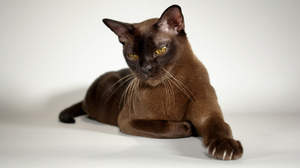
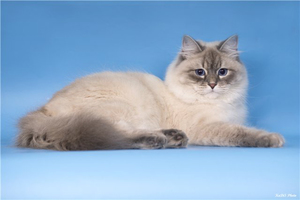
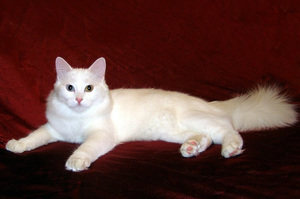
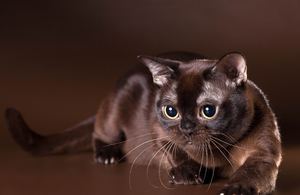
 The Burmese is a shorthaired cat breed that originated in Central Asia many centuries ago. The breed's founder is believed to be a brown female cat given to Dr. Joseph Thompson. The animal was brought from the eastern country of Burma.
According to some ancient sources, the Burmese cat breed appeared even earlier than the Siamese, but the official year of its origin is considered to be 1934, when Joseph Thompson began breeding Burmese cats. In 1938, the first standard for Burmese cats was established.The standard was subsequently revised several times and was only finally approved in 1957.
The breed became increasingly popular, and in 1949, Burmese cats were brought to England, from where they spread throughout Europe. The English also contributed to the breed's development, and as a result of their work, they succeeded in producing a blue Burmese cat (previously only brown had been available).
Felinologists and breeders have shown great interest in crossing and developing new hybrids of the Burmese cat:
- In the UK, they created a hybrid called Burmilla - a cross between the Persian Chinchilla and the Burmese;
- The Bombay breed, a cross between an American Shorthair and a Burmese, emerged in America. The Tonkinese hybrid, a cross between a Siamese and a Burmese, also appeared.
Interestingly, all hybrid breeds are very similar to the Burmese in character and temperament.
Content
Description of the breed and photo
Burmese cats have an incredibly beautiful, memorable appearance and a satin-like coat that shimmers in the sun. Their fur is short and soft to the touch, with virtually no undercoat.
Burmese cats have medium size and weigh from 3 to 5 kg, the hind legs are slightly longer than the front onesThe back is straight, the chest is rounded. The forehead is smoothly rounded, the cheeks are well developed, without hollows, a dimple is noticeable at the base of the nose, and the chin is strong. The eyes are large, the ears are set high and rounded.
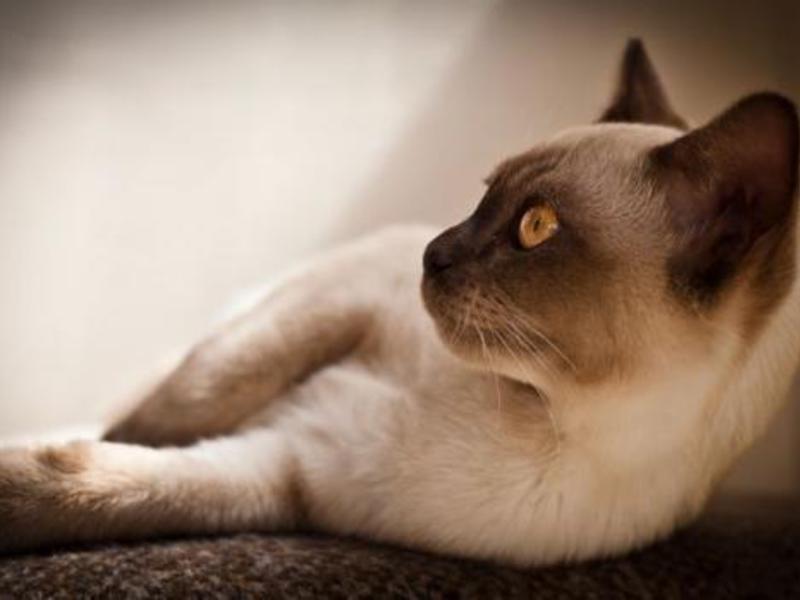
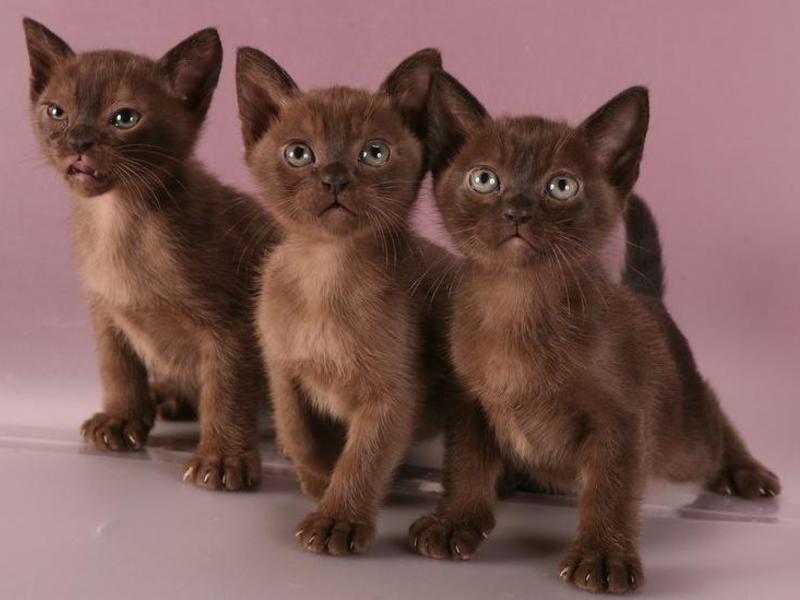
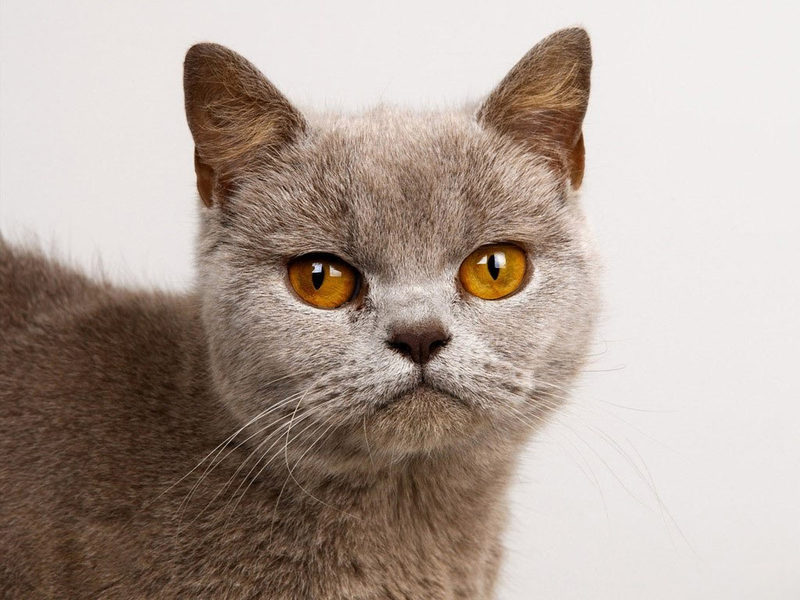
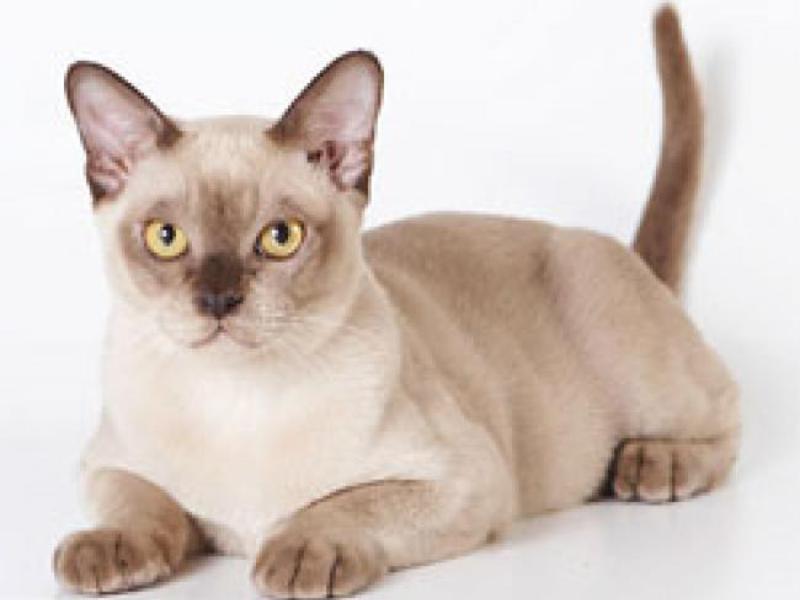
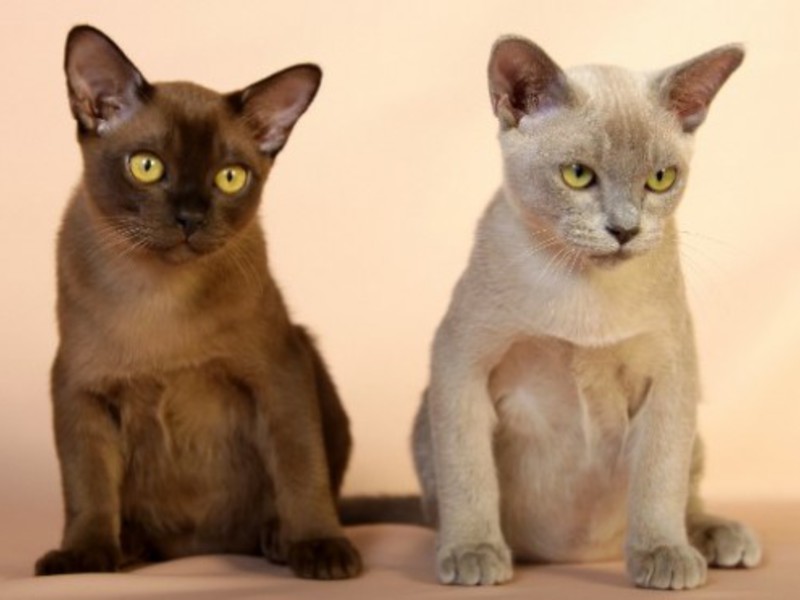
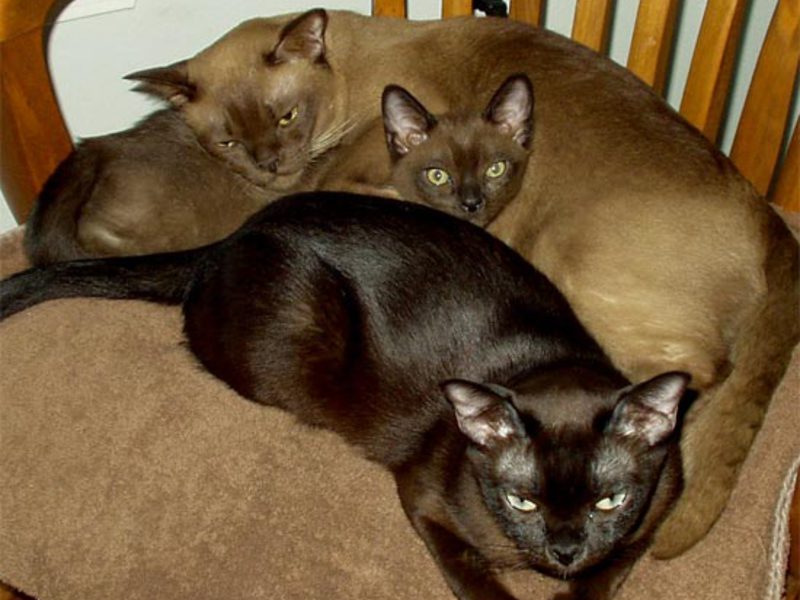
A special gene is responsible for the unusual coloring of these animals. Currently, Burmese cats come in 10 coat colors: 4 tortoiseshell (found only in European standard cats) and 6 solid colors.
- chocolate;
- red;
- purple;
- brown;
- smoky;
- beige.
Typically, the underparts are slightly lighter than the upper parts (back and legs). Kittens may have a lighter color. Blue cats have greenish eyes, while other cats have eyes ranging from rich yellow to amber.
Burmese cat standards
American Standard
Representatives of this breed have a rounded head with a full, well-developed muzzle. The eyes are round and set wide apart, as are the ears. The body is small and well-muscled. The legs are medium-length, rounded, with strong bone structure and muscularity.
European standard
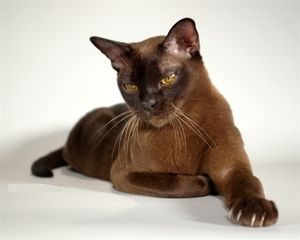 The head is shaped like a short, blunt wedge, with wide cheekbones. The eyes are oval, "oriental type," and slightly slanted toward the nose. The ears are medium-sized, wide at the base and rounded at the tips. European Burmese cats have an elongated, muscular body with correct proportions. The paws are fine-boned, elongated, and oval-shaped. The chest is well developed.
Character
The eyelid structure of European Burmese cats gives them a heavy and serious look. However, this is a misconception, as these animals have an unusually easy-going and docile nature.
Burmese cats are pretty sociable and able to make friends with other pets, even aggressive ones. They also adore children and allow them to do a lot. Burmans treat their owners with respect and devotion.
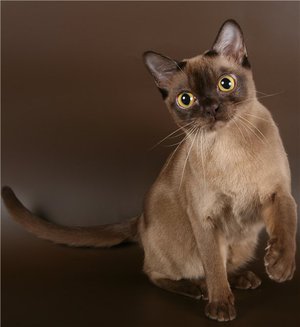
Because the Burmese cat is an adventurous spirit, it dislikes loneliness and isn't the least bit afraid of street noise or traffic. Therefore, when leaving your pet home alone, you should ensure its safety—close windows and doors tightly to prevent your pet from wandering into the open.
These animals are just like dogs love to accompany their owner wherever he goesBurmese cats are known for their well-developed natural instincts and are highly trainable. They can even bring prey into the house and, out of the goodness of their hearts, offer their owner a small "treat."
Burmese cats remain active as they age. They still love to run, play, and fetch, like dogs. That's why Burmese cats are called "cat-dogs."
Health
Burmese cats are known for their robust health and strong immune system. They produce 4-6 kittens per litter and care for them with true maternal care.
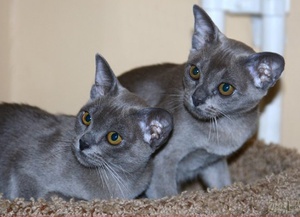
Overall, the breed is considered quite healthy, but some problems do exist in some of its representatives. For example, withAmong Burmese cats there are some specimens that are real gluttons, who are ready to eat anything and everything constantly. Therefore, it is very important to maintain a feeding schedule and monitor the amount of food consumed.
Since these animals are prone to gingivitis, they require regular annual dental visits, and to prevent the disease, it is necessary to introduce high-quality solid food into the diet of Burmese cats, which helps remove plaque.
Newborn kittens may experience watery eyes, skull deformities, and difficulty breathing due to the shortened nose. Burmese cats are very heat-loving cats and should be protected from drafts.
Care
Burmese cats don't require any special grooming, but regular grooming is essential. To keep your pet looking neat and well-groomed, just brush them once a week with a special rubber brush. A distinctive feature of the breed is that Burmese cats have virtually no pronounced shedding.Burmese cats don't require regular bathing; once every four months, using shampoo for short-haired cats, is sufficient. After bathing, allow the cat to dry naturally.
It is not recommended to use a hair dryer, as this can damage the Burmese's delicate skin.
Burmese cats are quite clean creatures and between washings they take care of the cleanliness of their unique fur themselves.
You can trim your cat's claws about once a month. However, this procedure is optional and is done at the owner's discretion.Teeth cleaning is performed 1-2 times a month, ears - as neededYou should also maintain eye hygiene and wipe the tear ducts with a cotton swab soaked in boiled water.
Nutrition
You can feed the Burmese cat with ready-made industrial food or natural products.
Never mix these two types of food! The diet must be balanced and healthy, and appropriate for your pet's physiological condition (neutering, spaying, pregnancy, age, etc.).
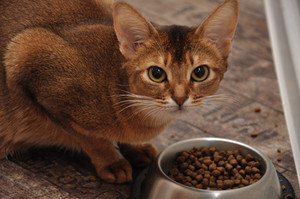
Burmese cats have an excellent appetite and will eat both natural food and store-bought food with equal gusto. For dessert, you can offer a piece of cheese—they'll be delighted!
Natural food should be nutritious and of high qualityThe basis of the diet (80%) is lean meat, the rest is vegetables and cereals, as well as dairy and fermented milk products in small quantities. Once a week, the animals are given a boiled quail egg and sea fish fillet.
You should exclude spicy, salty, fried, fatty and sweet foods from your cat’s diet.
If your Burmese cat eats natural food, it's important to include vitamin and mineral supplements in their diet. Owners who prefer commercially prepared foods should choose premium and super-premium varieties. There's no need to add anything to commercially prepared foods, as they already contain all the necessary nutrients.
Choosing a kitten
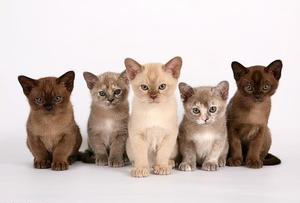 Avoid buying kittens that are too young; it's best to wait until they reach three to four months of age. By this time, kittens are independent and easily adapt to new surroundings.
When choosing a kitten, you need to take into account the fact that Burmese kittens grow more slowly than kittens of other breeds., so they will look smaller.
Don't be alarmed by clear discharge from your kitten's eyes. The fluid released when they blink serves to cleanse the eyeballs. Any hardened discharge near the eyes should be carefully removed. If you notice yellow or white discharge, take your pet to the veterinarian.
And another important feature of the breed is that Animals only acquire their true color when they reach adulthood (1 year)Therefore, if you need a pet of a certain shade, it is better to buy an adult cat.
The price of a Burmese kitten depends on the breed's purity, compliance with standards, the prestige of the cattery, and other factors. In Russia, a Burmese cat costs approximately $400–$500.
So, you've welcomed this sweet, beautiful creature with an incredibly kind and cheerful personality into your home. Surround your pet with warmth and affection, and in return, you'll receive a sea of positivity and a great mood.