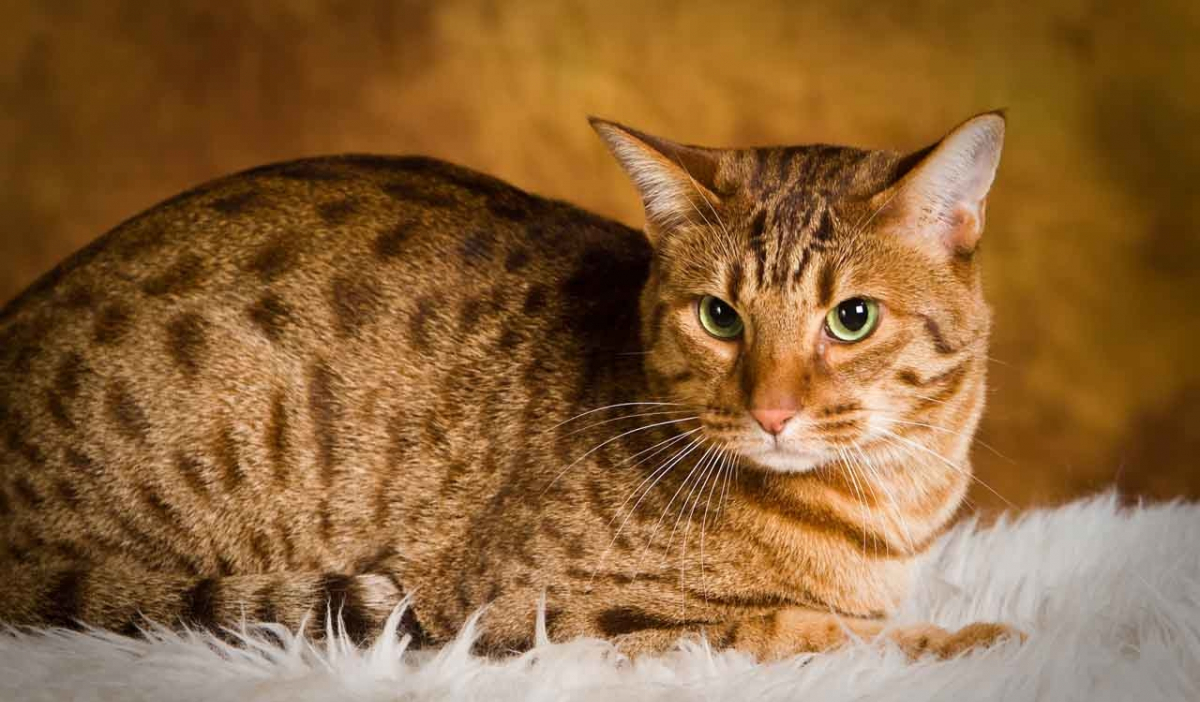
The Ocicat is a graceful cat with a wild-looking spotted coat, originally from the United States. It is most popular in Canada and France. They are highly intelligent, affectionate, friendly, and active, and are generally easy on their owners. They require minimal grooming and proper nutrition. They adapt quickly to any living conditions and are suitable for families with children. They shed very little hair, and their fur is hypoallergenic.
Content
Historical data
The first kitten was named Tonga.
The Ocicat is a rare breed of shorthaired cat. It was first bred in Michigan, USA, in 1964. Virginia Daly crossed Siamese with Abyssinians. American Shorthairs were also used in the experiments.
The breeder succeeded in producing offspring with an unusual spotted pattern (similar to an ocelot). She then collaborated with geneticists to develop a breeding program for Ocicats.
External description
In 1987, the breed was officially registered and its standards were defined. Medium to large sized individuals. Females weigh 2.5–4 kg, males 4–6 kg. Males are noticeably larger and more massive. They live on average 15–19 years.
- The body is proportional and dense (well-fed). The body is elongated and flexible. The muscles are well developed. The chest is broad. The back line is straight or raised closer to the tail. Strong skeleton.
- The legs are strong and of medium length. The paws are rounded.
- The tail is long and of medium thickness.
- The head is wedge-shaped. The jaws are strong and the chin is prominent. The bite is correct, and the teeth are white.
- The ears are large and set proportionally at a 45° angle. Tufts at the tips are welcome.
- The eyes are large, almond-shaped, slightly slanted, and set wide apart. Any color except blue is acceptable. It does not depend on coat color.
- The coat is short, smooth, silky, shiny, and lies close to the body. There should be no hint of a fluffy texture.
A distinctive feature of Ocicats is their unusual spotted “wild” coloring. This is achieved through ticked hairs (each hair is colored in several colors).
There are 12 officially recognized colors. The background (base coat color) is chocolate, blue, lilac, brown, cinnamon, and fawn. The remaining six are silver variations of these colors. White markings are permitted around the eyes, nose, chin, and upper neck.
Another distinctive feature of the breed is a dark “M” shaped pattern on the forehead.
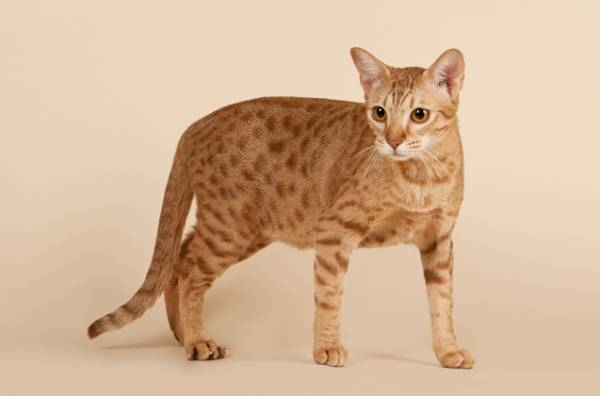
All spots must be clearly visible from all angles.
Personality traits
The Ocicat is a completely domestic cat, without any wild habits and with many advantages. She is intelligent, quick-witted, curious, affectionate, and loyal. Despite her impressive size and weight, she is still active, agile, energetic, and playful. She is agile and agile, easily climbing trees and over tall obstacles.
This pet adapts easily to family life. It is especially devoted to one family member, which it chooses. It does not tolerate prolonged loneliness well; it follows its owner everywhere, but is not overly clingy.
The Ocicat adapts easily to new surroundings. It is friendly even with strangers and makes quick contact. Its intelligence allows it to learn simple commands and tricks, and it can also remember its name. It easily adapts to established house rules (using a litter box, scratching post, and brushing). It vocalizes when necessary, to request something or express dissatisfaction, and purrs frequently.
Ocicat enthusiasts consider it an ideal breed, free of flaws. The only drawback is its excessive activity. These cats are suitable for energetic owners.
Choosing a kitten
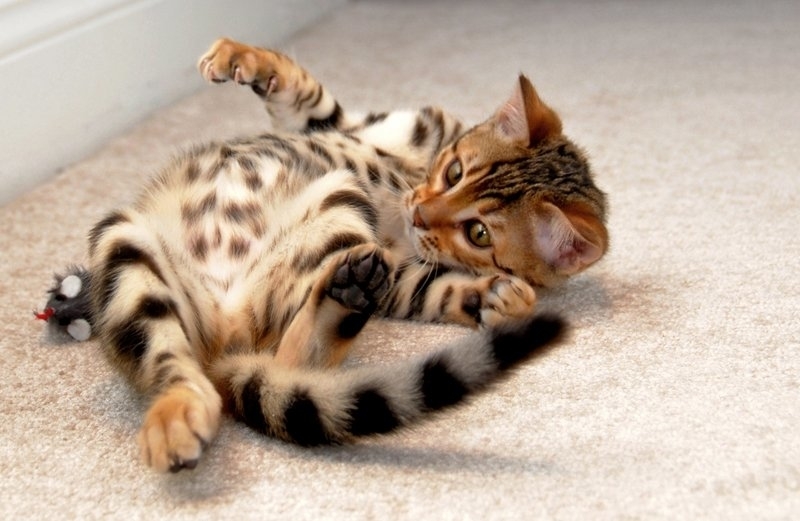
Show animals must be perfect.
The breed is rare, so there is a risk of acquiring a mongrel animal. Pet-class kittens (pets) start at 30,000 rubles. Show and competition cats with a pedigree and titled ancestors are much more expensive.
Since 2012, the Alma Mater Cattery has been operating in Moscow, where you can purchase a purebred Ocicat. It's important to check the veterinary passport and the parents. The cats must meet all breed standards. Minor deviations are acceptable (for a simple pet).
A healthy kitten is well-fed, happy, and playful. Its fur is soft and shiny, its eyes and ears are clean, and its teeth are white. Specialists will share recommendations for care, feeding, and maintenance.
The kitten needs a name. It's best to choose something short and descriptive.
For the boy: Thomas, Richard, Max, Denis, Rich, Luke, Oscar, Oliver, Tim, Dan.
For girls: Thea, Martha, Miki, Elsa, Asya, Irma, Lada, Dune, Mary, Molly.
Care and maintenance
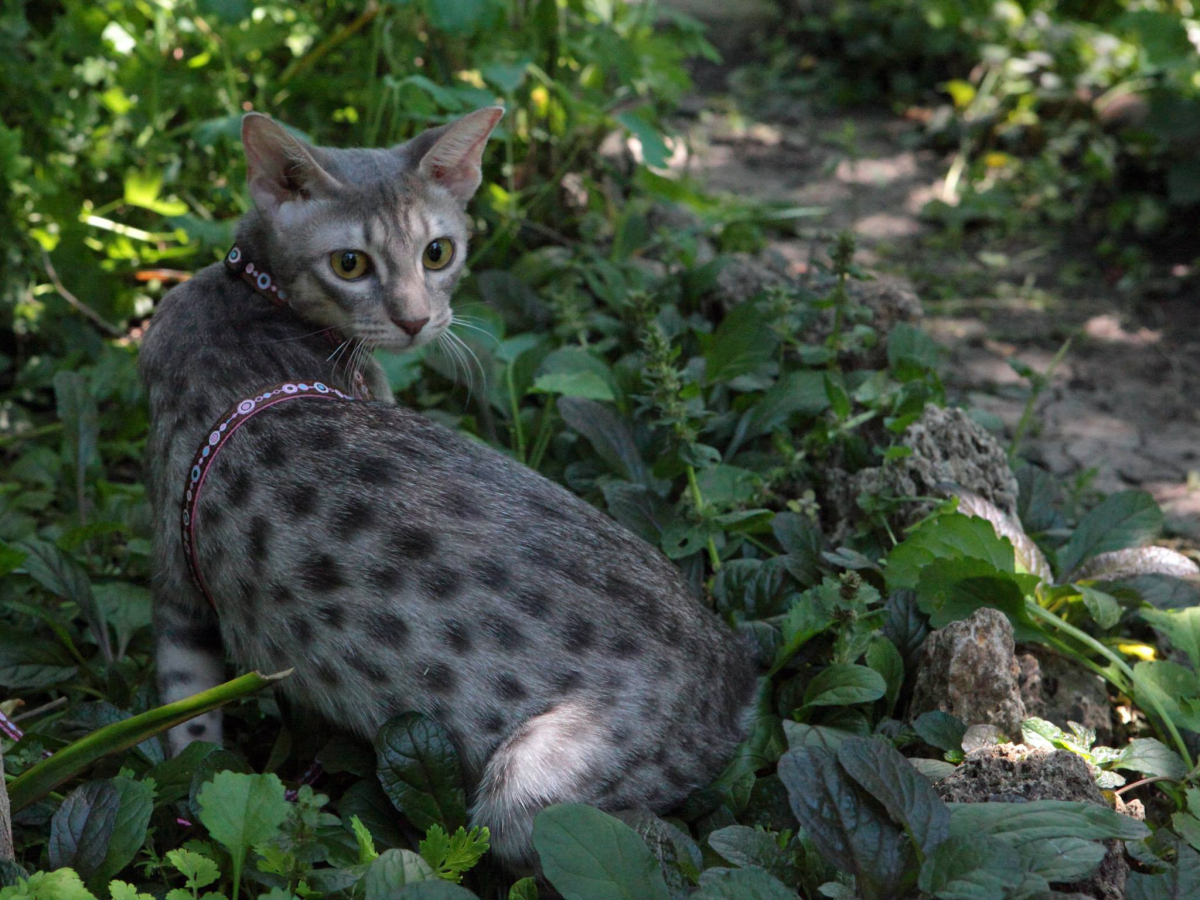
Outdoor walks are encouraged, and the cat is walked on a leash.
The Ocicat does not require any special conditions. He can live in an apartment or in a country house, but he needs space for games and physical activity.
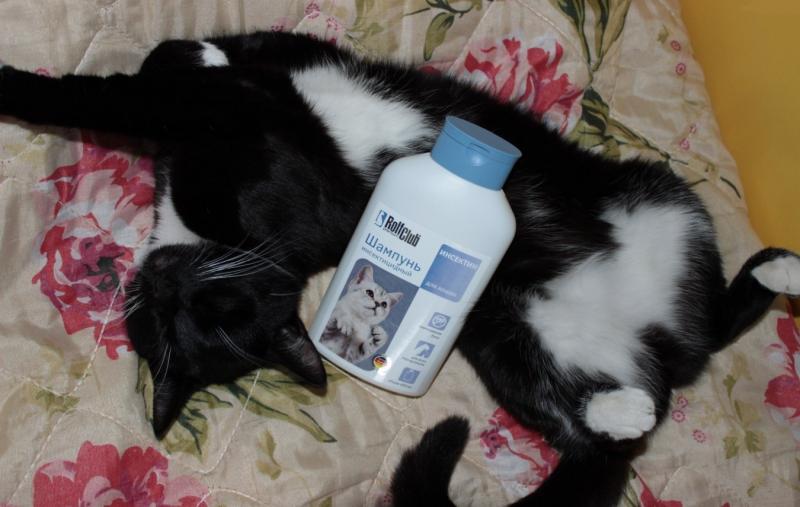
She also needs a scratching post, a litter box, a grooming glove, shampoo, a food and water bowl, and a variety of toys. If space allows, a multi-level house is installed.
Maintaining appearance and health
Ocicats shed very little. Their fur has no undercoat. Maintenance is minimal and uncomplicated:
- Wash your pet only as a last resort, if it is very dirty.
- The coat is combed once every two weeks using a special rubber glove (combs with metal bristles are prohibited). Afterwards, the coat can be polished to a shine with a piece of chamois cloth.
- If necessary, trim the claws with a claw clipper.
- The ears are cleaned of accumulated dirt using a cotton swab.
- Special attention is paid to teeth, which are brushed weekly. This breed is prone to oral diseases.
- The coat is regularly treated for ticks and fleas. The body is dewormed.
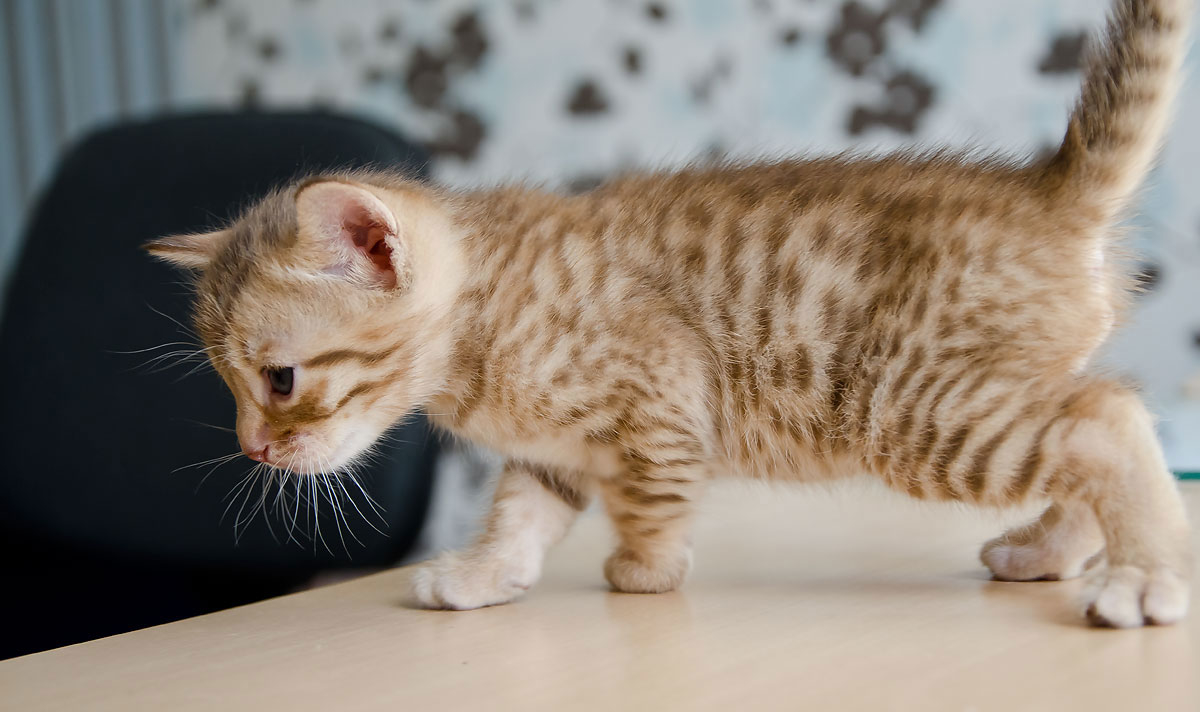
Pets are put up for sale after three months of age, by which time they have received all the necessary vaccinations.
Ocicat cats are long-lived and generally healthy, but they can sometimes develop certain health issues common to cross-bred cats.
- Renal amyloidosis. A disorder of protein metabolism in the body.
- Anemia (blood problems).
- Cardiomyopathy (heart disease). Kittens usually die at a young age.
- Dental problems: plaque, gum inflammation, tartar.
These diseases may not manifest themselves, but routine veterinary examinations are essential. Kittens are also regularly vaccinated against panleukopenia, calicivirus, chlamydia, rabies, and others. This procedure is repeated throughout the cat's life.
Cat diet
Your pet can be fed natural food or commercial cat food. Dry kibble and canned cat food contain all the necessary vitamins and nutrients. Adult cats are fed twice a day. Kittens are fed 4-5 times a day. The portion size is gradually reduced.
Creating a natural, balanced diet is more challenging. It should include fresh, high-quality foods:
- Lean boiled meat (turkey, beef, chicken). Cut into small pieces.
- Sea fish (boiled), offal.
- Porridges (oatmeal, rice, buckwheat). You can season them with vegetable oil and add boiled vegetables.
- Eggs (steamed omelette or boiled).
- Fermented milk ingredients (kefir, cottage cheese, fermented baked milk, unsalted cheese, whey).
- Fish oil and vitamin supplements as prescribed by your veterinarian.
- Drinking water.
Avoid: smoked foods (fish, sausage, etc.), canned foods not suitable for cats (stewed meat, saury), salty, fatty, spicy, sour, sweet, pickled, baked, fried foods, chicken bones (they irritate the stomach and esophagus and are not filling), legumes, and pearl barley (not digestible). Food should be warm; cold or very hot foods should not be served.
Breeding
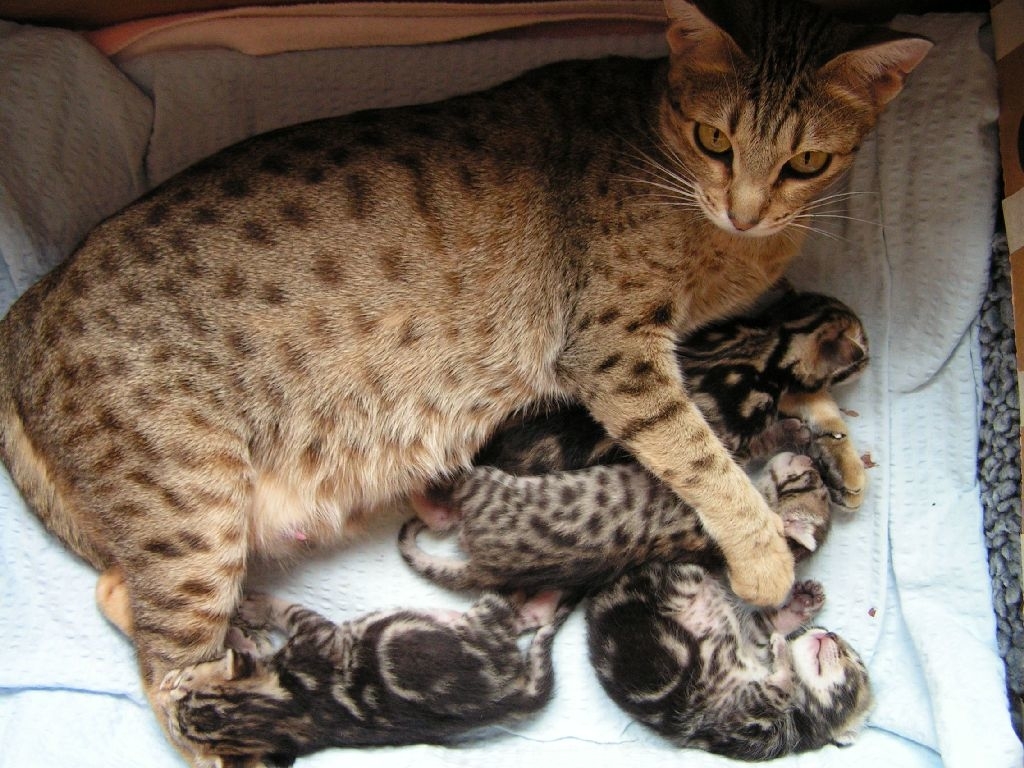
From the age of two months, babies become independent and are taught the rules of behavior in the house.
This animal is rare for Russia, and it is not easy to find a good partner. It may be necessary to transport it from another city, and this will incur additional financial costs.
A healthy pair with the main breed characteristics (2 years old) is selected. The meeting takes place on the male's property, if necessary, the female is left with him for a few days. She is mated no more than twice a year. The body needs time to recover. Deworming is performed before the procedure.
Pregnancy, childbirth, and caring for kittens
If the mating is successful, pregnancy occurs. The cat requires rest and increased nutrition. The birth occurs without complications. The young female requires supervision to assist if necessary. A litter typically consists of 5–6 kittens.
After birth, the mother cares for them well. If a male lives with her, he also participates in raising the kittens. The kittens grow and develop quickly, and their eyes open within 10–15 days. The mother feeds them with milk, and later they are gradually transitioned to kitten food or natural food.
The Ocicat is a beautiful cat with an unusual coloring. There are few such breeds in Russia, so when buying a kitten, it's worth paying attention to whether it meets the standards. They are active and intelligent. This pet will be a loyal companion for all family members.