It's a well-known fact that cats, like other carnivores, consume not only animal but also plant foods to maintain their vitamin balance. Coarse plant fiber promotes proper digestion, cleanses the intestinal walls, and enriches the body with vitamins. Let's take a closer look at why cats eat houseplants.
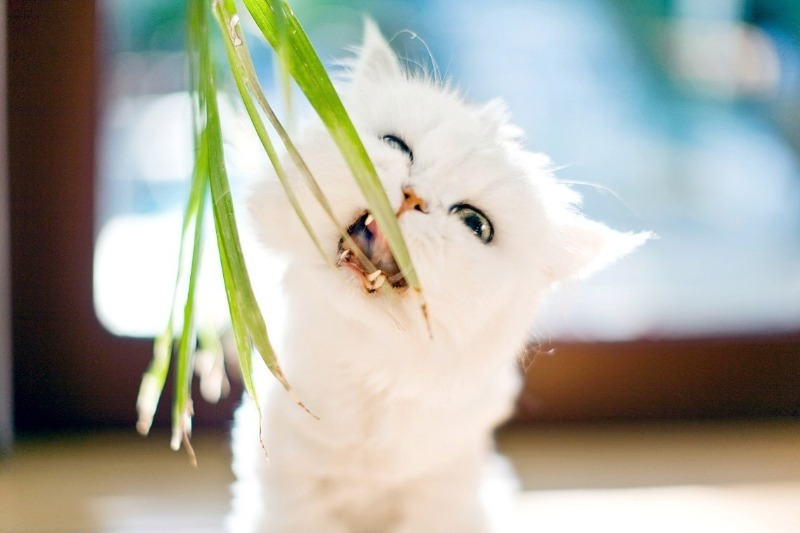
Lack of vitamins in the diet
One possible cause could be a vitamin deficiency in your pet's daily diet. Pay particular attention if your cat has become lethargic, has a poor appetite, or if you notice brittle, dull, or dandruff-like fur, then the food you're offering is likely lacking essential vitamins and minerals.
Gastric cleansing
Another reason your pet may trim potted plants is to clear their stomach. Cats intentionally induce vomiting by ingesting prickly, sharp plants that irritate their mucous membranes. They need to get rid of the hair that's accumulated in their stomach. Every time they lick themselves, some of the hair ends up in their stomach, where it accumulates, causing discomfort. After a while, the cat tries to relieve this discomfort by eating plants in the house.
They are attracted by the aroma of plants
A cat's sense of smell is very sensitive; while it's not as developed as a dog's, it's far superior to human perception. There are plants whose scents not only appeal to cats, but actually bring them pleasure. These include catnip, valerian, and similar plants, which contain substances that resemble feline sex hormones.
But there are cats who love other scents; some adore the scents of carnations, pine needles, mimosa, violets, and other houseplants.
Unusual entertainment
Like people, our pets can not only feel sad and happy, but also, for example, boredom. And boredom can lead to the most seemingly absurd situations. A bored cat might become curious about a potted plant. She'll sniff it, touch it with her paw, nip at the moving leaves and flowers, and if she really likes it, she might even dig up the soil and "accidentally" knock the pot onto the floor—anything is more fun than just lying on the bed.
Another way to tease your owners out of boredom is to tease them. Many cat owners know firsthand that their pets intentionally do things they're often scolded for: sharpen their claws on furniture, knock items off the table, or dig up the soil in a flowerpot. And how exciting it is for them to then run away from their angry owner and hide under the sofa or behind a cabinet. And what can't you do when you have nothing better to do?
How can you protect your plant from being eaten by cats?
For convenience, we'll divide the reasons cats eat houseplants into physiological (vitamin deficiency and stomach cleansing) and psychological (boredom, thirst for entertainment). The solutions will also vary.
Combating physiological causes:
- When addressing physical issues, remember that stomach cleansing is a natural process and cannot be prevented. Your cat needs to periodically remove accumulated hair. To prevent damage to your plants, give your cat a separate pot with some oats (sprouted oats are very beneficial for cats, not only as a stomach cleanser but also as a source of vitamins and minerals). Pet stores also sell special edible hair removal pastes (ask a specialist for advice on how to use them), and there are also foods containing ingredients that facilitate the natural elimination of hair.
- The second physiological cause (low levels of nutrients and vitamins) can only be addressed with the help of a specialist. It's essential to take your pet to a veterinarian. They will select the optimal vitamin complex for the patient and, if necessary, prescribe medication.
Never physically punish your pet, douse it with water, or try to scare it. Such methods can be harmful to your pet's health.
To prevent your cat from ruining all the flowers in the house out of boredom, try to occupy her time as much as possible. Buy various balls, ropes, and other soft, squeaky, and rustling toys from the store.
In the wild, cats love to climb to all sorts of elevated positions, for safety and to get a good view (they are predators, after all). Offer your pet a ladder, a pole, a shelf—anything that can help them gain height above many things in the room.
If your cat has already taken a liking to your flowers, spray the plants with citrus or pepper water from a spray bottle, and to reinforce the effect, place a few lemon wedges directly into the pot.
You can also protect the soil in the pot with pebbles (large enough to make it difficult to dig) or cut circles out of foam (the same diameter as the pot) with a hole for the flowers.
And cover the windowsill with double-sided tape around the perimeter (cats don’t like sticky surfaces).
To live harmoniously with your pets, try to understand them. To do this, observe and listen to them more often. This way, their behavior won't seem strange or incomprehensible. Every "prank" has its own valid reasons; you just need to recognize them and try to defuse them as much as possible.