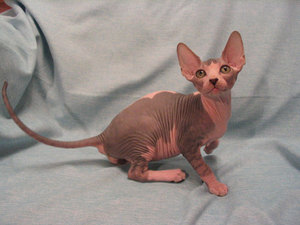
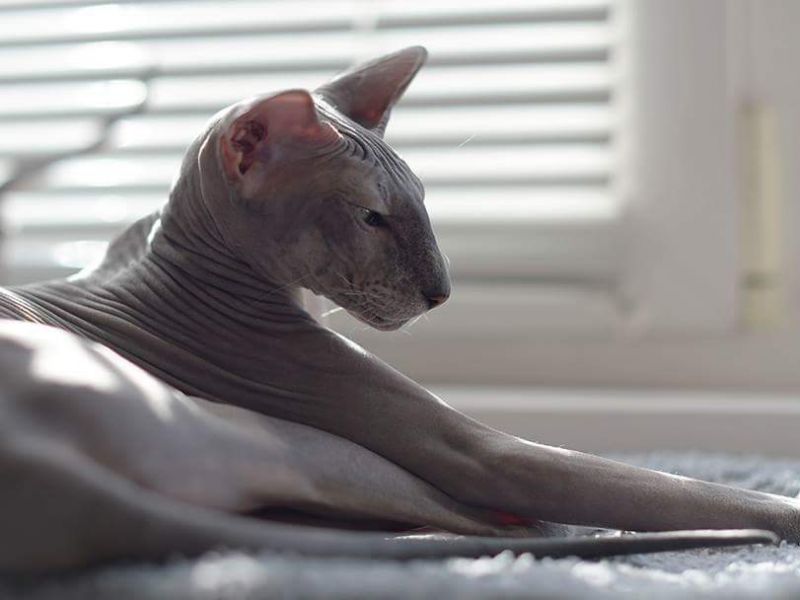
Hairless cats occupy a special place among the many felines due to their exotic appearance and graceful movements. Of the several varieties of hairless cats existing worldwide, the Don Sphynx is the most recent, with its history beginning about thirty years ago.
Content
The origin of the Don Sphinx
In the late 1980s, a Rostov-on-Don resident discovered a three-month-old kitten on the street, hairless in places. The kind woman, believing the cat had dermatitis, demodicosis, or ringworm, took her home to treat her. But time passed, and neither medications nor treatments produced the desired results.
Meanwhile, the cat was doing well: she grew, developed, and was playful. Some time later, she gave birth to kittens, some of whom were also hairless. This event completely clarified the situation: it became clear that the hairlessness was a hereditary genetic mutation. Breeders became seriously interested in the unusual kittens, and the painstaking and lengthy work of developing a new species began. In 1992, the Don Sphynx received its first standards and description, and already in 1996 the breed gained international recognition.
Hairless cats have attracted the attention of allergy sufferers. It was initially believed that hairless members of this family were completely non-allergenic due to their lack of fur. However, studies have shown that the main allergen is not the fur itself, but the animal's saliva and substances produced by its skin. Although a significantly less allergenic breed, this cat can still cause allergies.
To determine if this breed is right for you, spend at least half an hour to an hour in the room where the animal lives and observe its reaction. If there is no sneezing, itching, redness of the skin, rash, swelling of the mucous membranes, or watery eyes, you can confidently adopt this unusual cat!
Description and breed standard
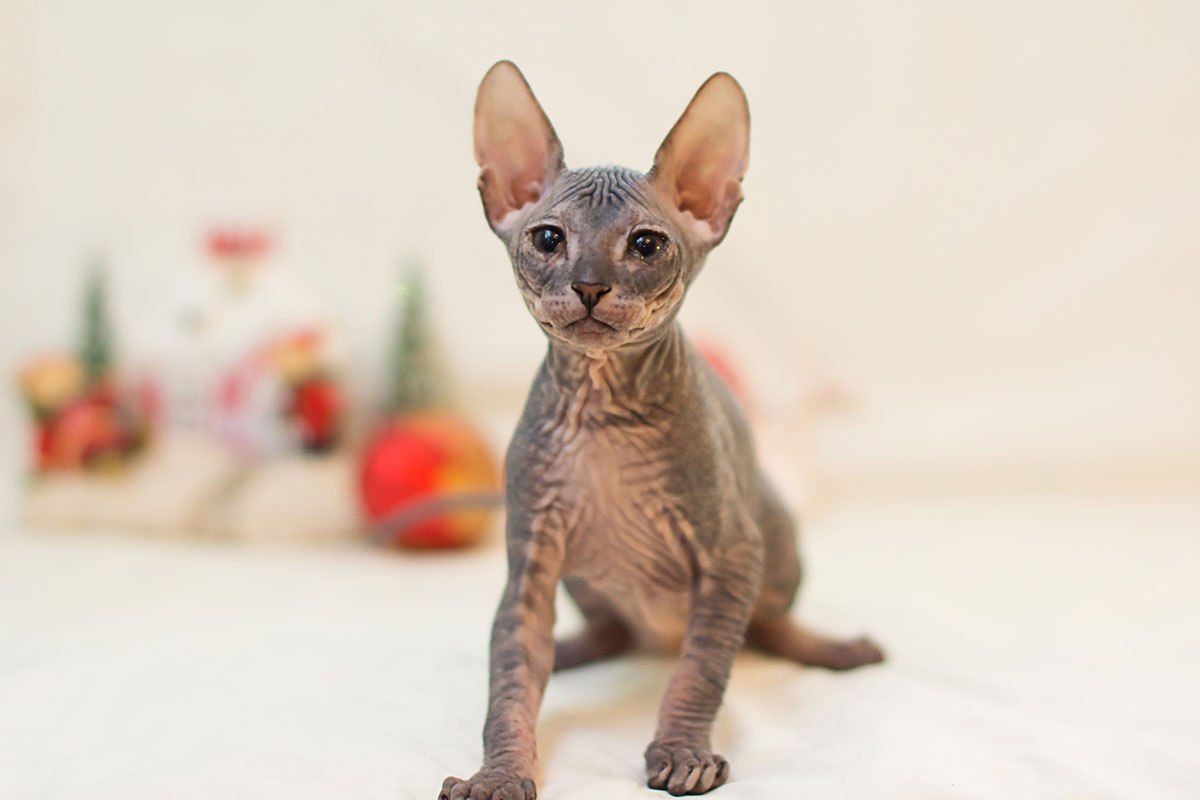
The Don Sphynx's appearance has attracted many lovers of exotic cat breeds.
The Donskoy Sphynx is a breed characterized by smooth and refined features. Its distinctive appearance includes:
- An elongated, muscular, pear-shaped body with long, elongated legs and a straight tail that curls slightly at the end. Adult males can weigh up to 7 kg, while females can weigh up to 5 kg.
- The head is wedge-shaped with clearly defined cheekbones, eyebrows and small vertical folds diverging above the eyebrows.
- The muzzle is short and slightly rounded, with a slight pinch and a firm chin. The nose is straight, and the ears are large, rounded, and tilted slightly forward.
- Curled whiskers may be very short or absent altogether.
- A correct bite in which strong teeth and long canines of the upper row are slightly visible from under the lip.
- The eyes are medium-sized, almond-shaped, set obliquely (at a slight angle), and not wide open. Eye color may vary. Eyelashes are completely absent.
- The skin is pleasant to the touch, elastic, forming small soft folds on the body.
There are three types of breed:
- hairless, which have no hair at all;
- velour - hairs up to 2 mm long in small quantities concentrated on the paws and tail;
- brush - there is sparse hair on the skin (wavy or coarse), which falls out from time to time and grows back.
The animal's color varies and can be black, red, gray, white, blue, and other shades.
-
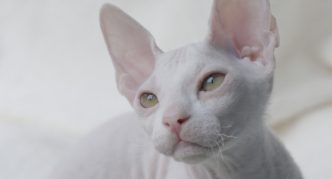
- White sphinxes are distinguished by their neat and gentle appearance.
-
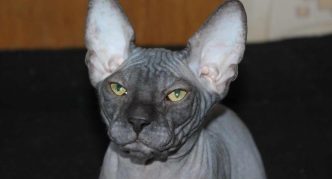
- The grey colour of Don Sphynxes is one of the most common
-
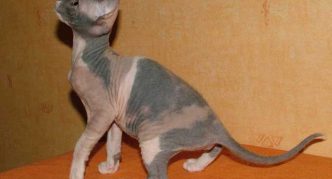
- Spotted Don Sphynxes will not leave anyone indifferent
-
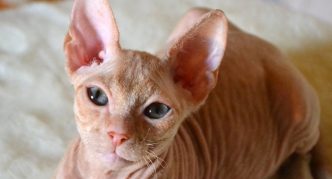
- Red color is one of the rarest
The Donskoy's older relative is considered to be the Canadian Sphynx, another hairless cat native to North America. Despite their superficial similarities, they do have a number of differences:
- Mustache. Canadian Sphynxes do not have them.
- Wool. Don Sphynxes can be completely bald or have a light coat of hair. Canadian Sphynxes have a barely noticeable downy fur covering their bodies.
- Limbs. The Canadian Sphynx has longer legs.
- Tail. The Donskoy's tail is straight, long, and flexible. The Canadian's tail is tapered and has a small, fluffy tuft at the end.
- Character. Canadian Sphynxes are more reserved, while Don Sphynxes are very affectionate and docile.
- Health. Don Sphynxes are distinguished by greater endurance.
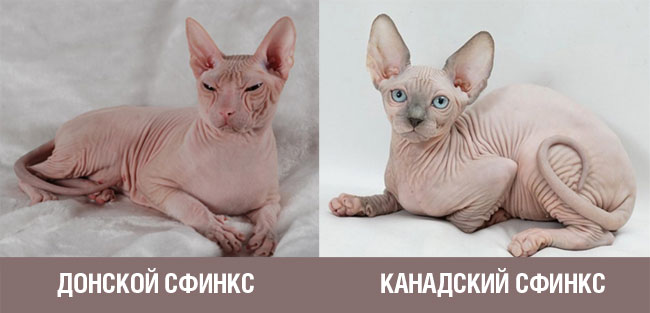
The Donskoy Sphynx differs from the Canadian Sphynx not only in appearance, but also in character.
Character
This is a peaceful animal. It is almost never aggressive and is very affectionate, gentle, and kind. Strongly attached to its owner, it behaves more like an equal family member than a pet. It loves to show off and knows how to do so with incredibly elegant and majestic poses.
These cats are generally calm and even a little lazy: they spend a lot of time in a sweet slumber, choosing a warm, cozy spot to curl up and rest. When awake, Sphynxes become incredibly playful, constantly darting around the rooms in search of entertainment and companionship.
They especially need affection and contact with their owners, so they can be quite pushy, constantly seeking attention. At the same time, Don Sphynxes are sensitive to their owner's mood and never push their luck.
Hairless cat lovers remark on the Sphynx's unique ability to relieve fatigue, stress, and improve mood. All it takes is just touching their pet's incredibly warm, velvety skin.
Pros and cons of the breed
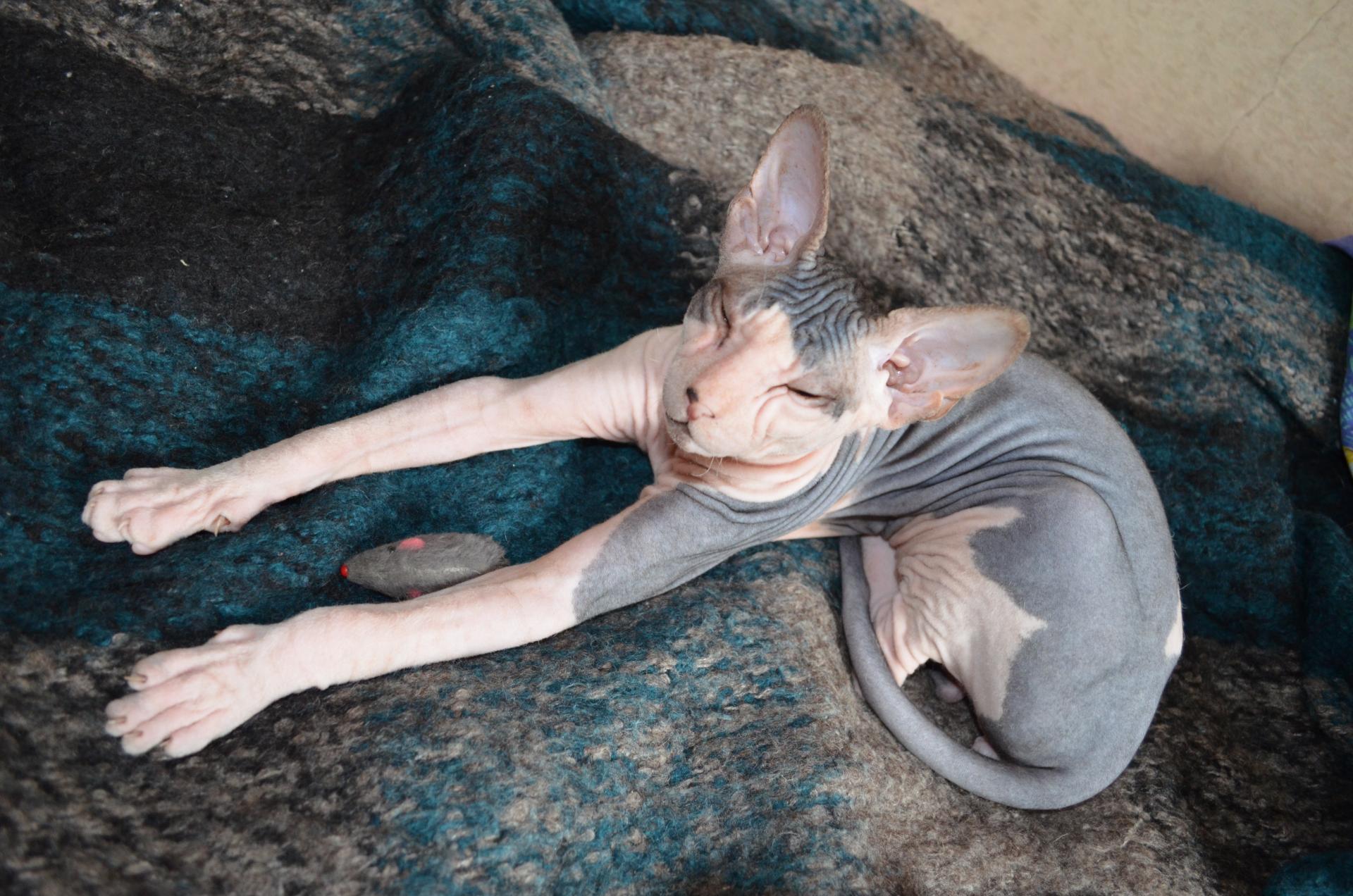
Don Sphynxes are very calm animals.
The main advantages are:
- good nature, non-aggressive;
- affection and excellent contact with household members (especially children), gratitude for communication in the form of loud purring;
- absence of hair and fleas;
- friendliness and ability to get along well with other animals;
- pleasant to the touch warm skin, touching which has a beneficial effect.
There are also some disadvantages, which are as follows:
- a habit of climbing on tables, chairs and cabinets that is impossible to eradicate;
- long claws that can damage wallpaper, furniture, curtains;
- excessive sweating (especially during sleep), which may cause grayish marks to remain on surfaces where the animal lies;
- release of a specific odor;
- increased demands for warmth and comfort;
- susceptibility to skin diseases.
When becoming the owner of a Sphynx kitten, a person must be fully aware of the enormous responsibility for this unusual representative of the feline family. Ensuring their comfort and safety is the owner's primary responsibility. Particular care should be taken to ensure the cat doesn't freeze or escape outside: if left in unfamiliar conditions, the animal won't survive.
Care and maintenance
What to feed
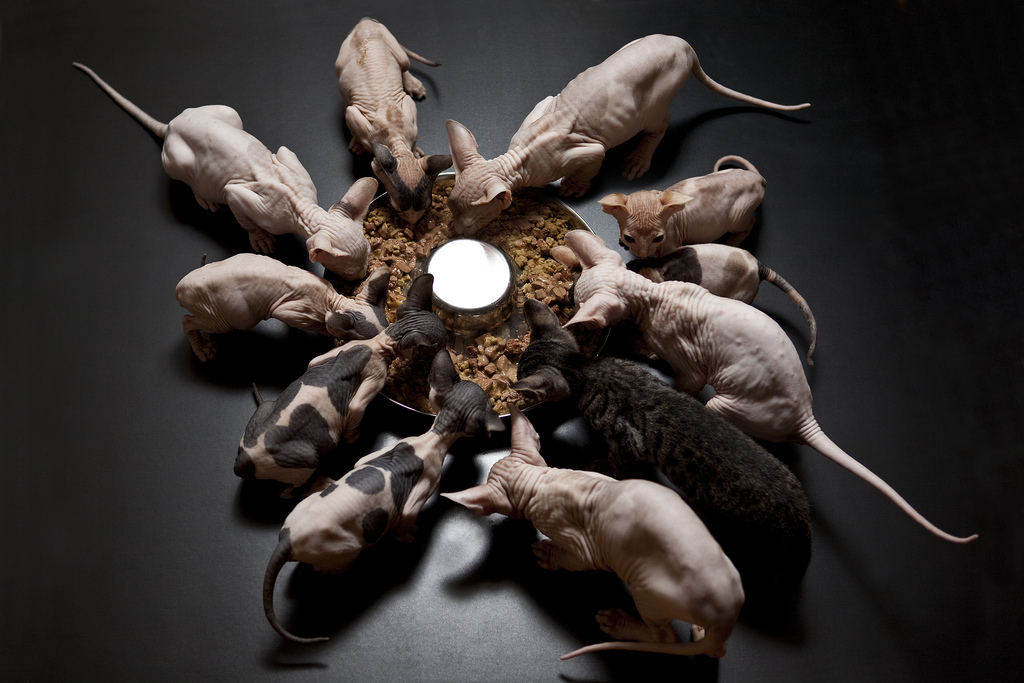
Prepared feeds should make up about 2/3 of the daily diet
Animals have an increased metabolism, which is why they need increased nutrition to maintain the required body temperature. Feedings should be no more than four times a day at the same time. Experienced breeders recommend a combination diet, which includes both commercial and natural foods. The menu should include meat (beef, chicken, turkey), fish, eggs, dairy products, vegetables, and grains.
When purchasing specialized feeds, it is recommended to give preference to premium manufacturers, whose products contain the maximum range of vitamins and minerals necessary for the animal.
It is also necessary to provide the animal with constant access to clean water, which should be replaced daily.
Grooming
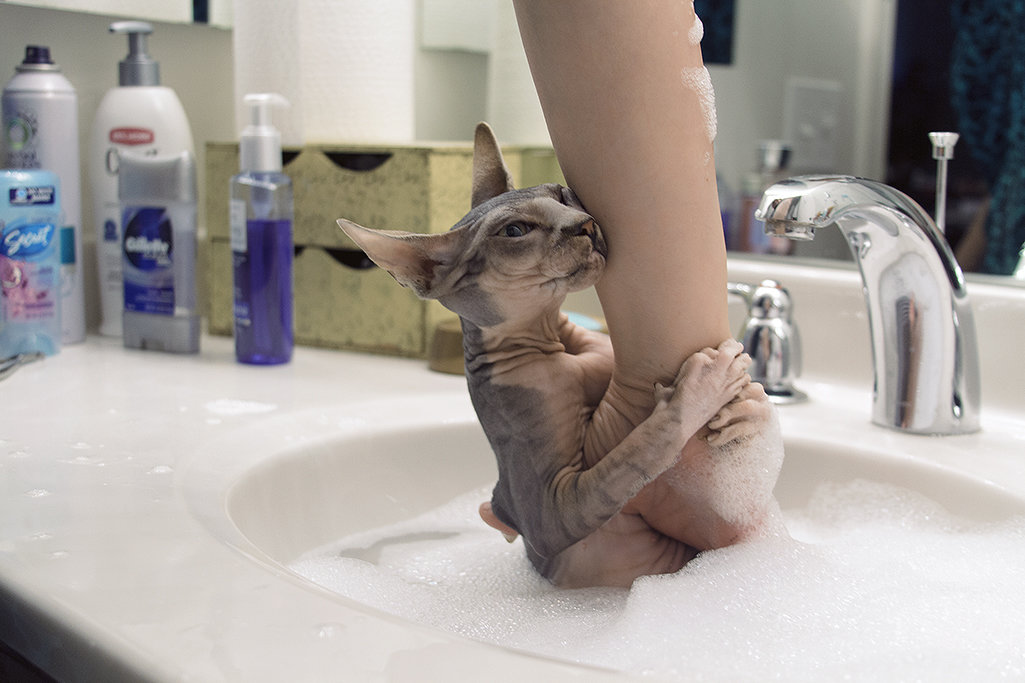
When washing a cat, you need to constantly reassure him and say kind words so that he does not get afraid.
There are three main care procedures:
- BathingBecause cats of this breed have overactive sebaceous glands, bathing is necessary every week (more frequently in the summer). Bathing should be done in warm water using a special shampoo for hairless cats. Rub the pet's skin with a soft washcloth using gentle movements, being careful not to get the product in the ears or on the face. After bathing, dry the cat with a towel as quickly as possible to avoid hypothermia.
- Cleaning eyes and earsDon Sphynxes are known for their excessive ear mucus production, which requires cleaning their ears with rolled-up damp cotton pads twice a week. Avoid inserting the pad too deeply—only the visible area should be treated. Eye care involves daily wiping with a cotton pad soaked in warm tea.
- Trimming clawsThe procedure should be carried out with special nippers, cutting off only the very tips of the claws.
You need to accustom your pet to procedures gradually, gently, without being rude.
Education and training
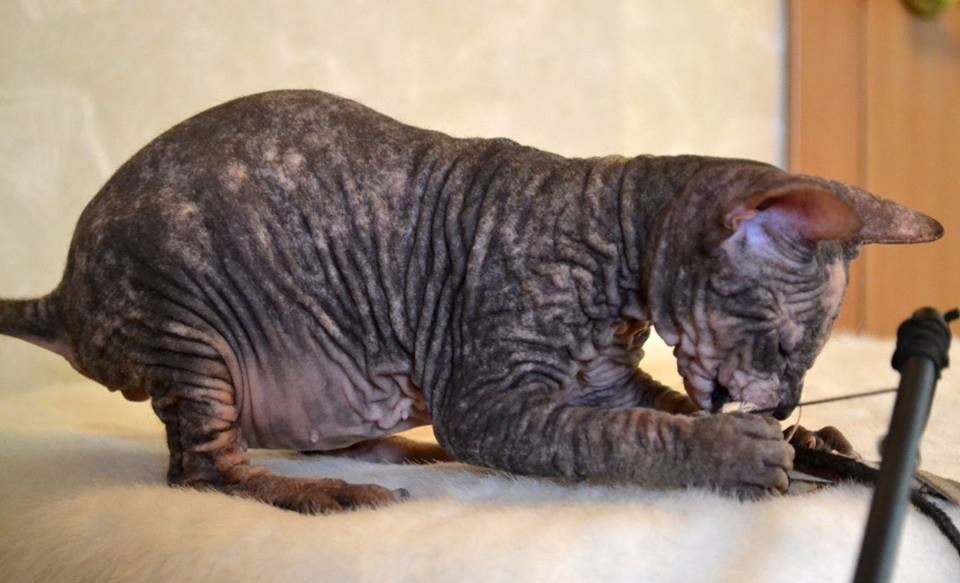
The first stage of training is to wean the cat from chewing forbidden objects.
Training can begin at the age of eight months. Before this, you need to observe the kitten to understand what tricks it can be taught: fetching (when the kitten constantly carries something in its mouth), jumping over a barrier (if it constantly climbs and jumps down, etc.). For training to be effective, it's important to follow a few rules:
- Absence of coercionTraining should take place in a calm environment, without shouting or pressure. If your pet categorically refuses to do something, don't force it.
- Patience. A cat needs time to understand what its owner expects of it. Don't rush it, but after it does what you want, be sure to reward it with its favorite treat and affection.
- SubsequenceIt's best to start with the simplest commands, adding new ones only after the old ones have been fully mastered. The easiest commands for cats to understand are "come," "sit," "give me your paw," and "fetch."
Equally important is litter box training, which can lead to situations where the cat stubbornly refuses to go to the place chosen by the owner. In this case, you should do the following:
- Be patient and pay close attention to your kitten's behavior, taking it to the litter box every time it shows signs of wanting to go to the toilet (starts scratching its paws or "squatting");
- If a cat has made a toilet in an inappropriate place, the “marked” area should be thoroughly washed, sprayed with lemon air freshener, and covered with slippery foil;
- Close the kitten's access to all hidden corners that are difficult to clean.
Under no circumstances should you yell at your pet, push its face into a puddle, or resort to physical violence. Only gentle treatment and patience will help resolve the toilet issue.
Games with your pet
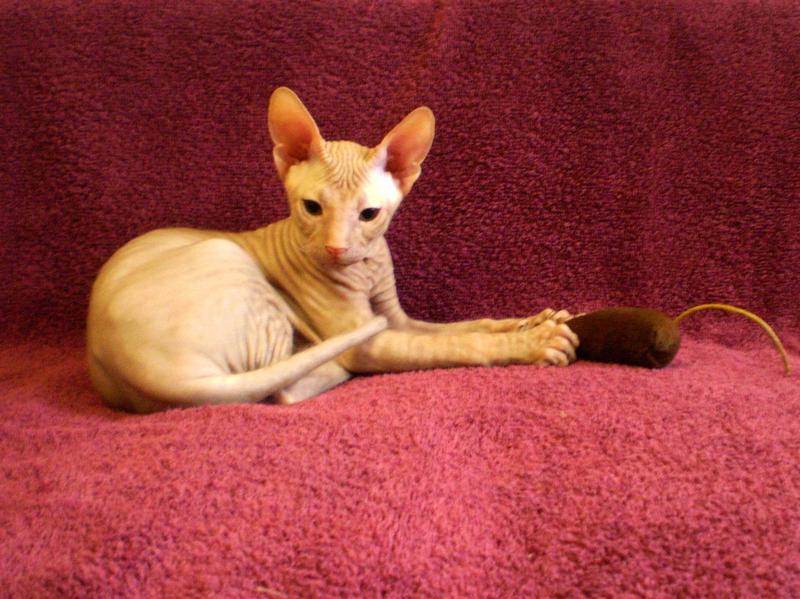
It is important to change toys periodically so that the cat does not get bored with them.
Playing with your pet is a great way to bond with them. Simple rules will help make the process engaging and stress-free for your pet:
- the game shouldn't be too long;
- The game must take place in a designated place, safe for the animal and without fragile valuable objects.
For playtime, you should also select toys: balls, bows dangling on a string, rattles, squeakers, and bobbins. You can buy them at specialty stores, or you can make them yourself. Just make sure they're safe for your pet (absolutely avoid bags, toys with sharp edges, woolen threads, ribbons, and small parts).
Diseases and treatment
With proper care, pets don't cause any health problems for their owners. However, illnesses do occasionally occur, and the main symptoms may include:
- loss of appetite;
- lethargy, behavioral disturbances, aggression, constant plaintive meowing;
- intense thirst;
- fear of water;
- constipation (diarrhea);
- irritation and itching of the skin;
- vomit;
- bloating;
- blood in stool;
- bad breath;
- purulent discharge from the eyes.
Any of the listed conditions requires consultation with a veterinarian for diagnosis and effective treatment.
The most important indicator of the health of all Sphynx cats is their body temperature. In healthy cats, it ranges from 38 to 38.5 degrees Celsius, while in kittens, it can rise to 39 degrees Celsius. Even a slight increase in temperature indicates unwellness. However, since a fever can be a symptom of a wide variety of illnesses, self-administering medications to your pet is strictly prohibited, as this could distort the overall picture.
The first thing to do after detecting a rise in temperature (you can measure it with an electronic thermometer placed under the armpit) is to contact a veterinarian. This also applies if the animal's temperature has dropped to an extreme level.
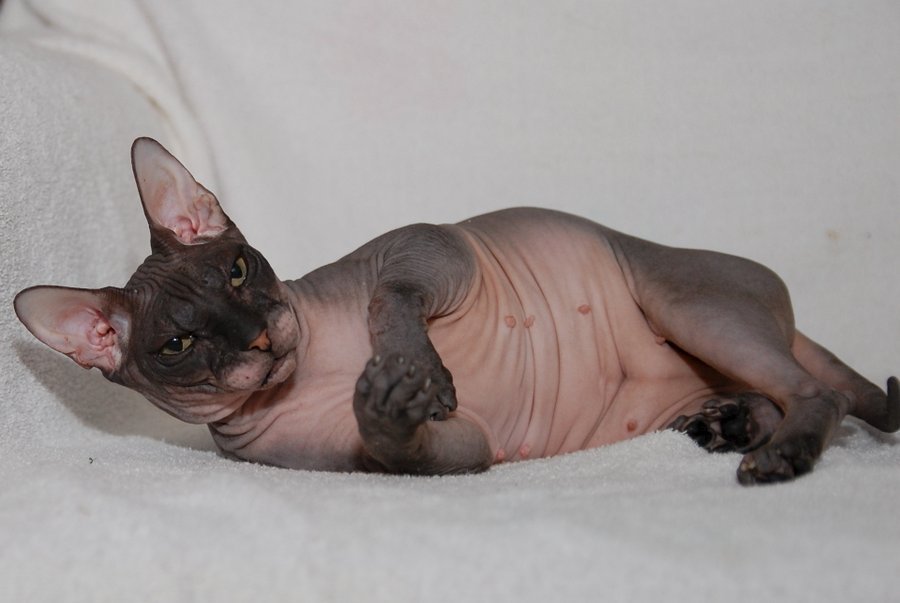
Any change in the animal's condition is a reason to contact a veterinarian.
One of the most common diseases found among Don Sphynxes is allergy, which is manifested by symptoms such as:
- itchy skin;
- red rash or dandruff;
- increased moisture in the armpits;
- ulcers on the body;
- animal biting paws and rubbing nose;
- lethargy, drowsiness.
Similar symptoms may also indicate other health problems (fungal diseases, scabies, vitamin deficiency, endocrine disorders), so an accurate diagnosis can only be determined by a veterinarian through an examination and the necessary tests.
Treatment of allergies primarily involves following a certain diet, taking antihistamines and vitamins prescribed by a specialist.
Another problem is acne - blackheads (pimples), which can have different locations:
- Acne on the face and neck most often appears as a result of improper care of the animal and the use of low-quality utensils;
- Acne on the tail often occurs in animals during puberty, and at this time does not require special treatment.
If necessary, the veterinarian will prescribe therapy, which may include changing the conditions (or means) of care, replacing plastic dishes with glass, treating blackheads with hydrogen peroxide, and then softening the skin with sea buckthorn oil.
Life expectancy of Don Sphynxes
On average, they live 12-15 years. Although rare, thirty-year-olds are not uncommon among this breed. The following factors play a significant role in lifespan:
- heredity;
- immunity;
- correctness of care.
Breeding
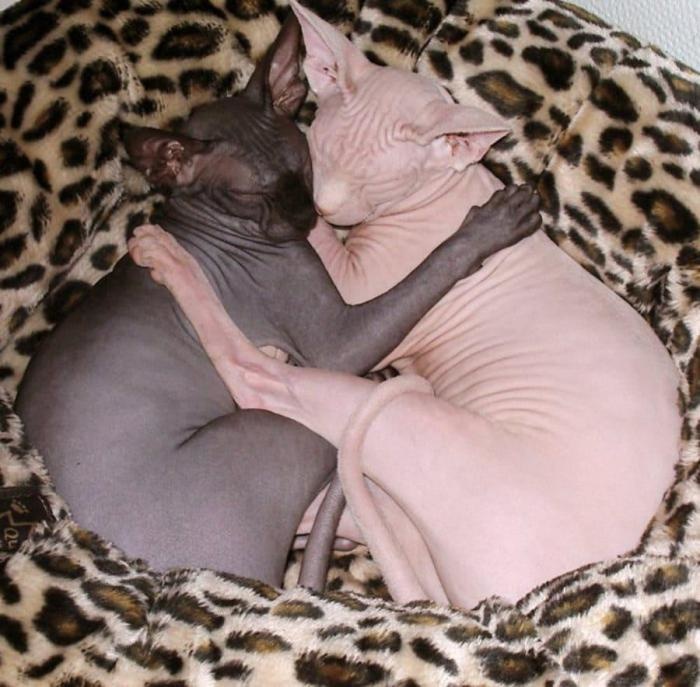
Male and female sphinx cats often sleep together.
Sexual maturity in female cats occurs at six months of age, and in male cats at eight months of age. In this case, the first mating (only after the female’s third heat) should take place when both reach the age of one and a half to two years.
Before breeding, animals must be vaccinated (females should be vaccinated two weeks before their heat cycle), checked for infections, and their claws trimmed. Bathing a female cat is strictly prohibited, as this can reduce her attractiveness to a male and his desire to mate.
It is important to know that the first time both partners mate, pregnancy may not occur.
Knitting
The male provides his territory for mating. To make the female more comfortable in her new environment, owners should bring her personal belongings: a litter box, water and food bowls, and a house. After looking around, getting used to it, and overcoming her fear, the female will allow her partner to approach her. Typically, mating occurs several times during a single mating, and to ensure pregnancy, the process should be repeated after one or two days.
A cat's pregnancy becomes apparent three weeks after mating (her nipples enlarge, swell, and change color, and she gains weight) and lasts approximately sixty-four days. Labor, which requires a warm, comfortable place for the cat to give birth, lasts about a day and proceeds peacefully, often without outside intervention.
Caring for kittens
In one litter 4-6 kittens are born: blind, toothless and deaf. At four weeks old, kittens can already feed themselves and leave the nest. Kittens typically live entirely on their mother's milk and do not require supplemental feeding. In extreme cases, supplemental feeding can include boiled beef, cottage cheese, eggs, pâté, and soaked dry food from six weeks of age, and fish and grains after three months.
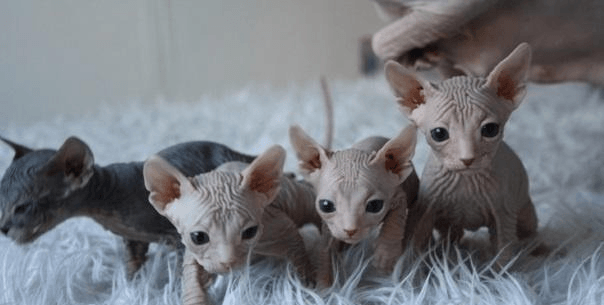
Kittens need proper care from the first days.
From one and a half to two months, when kittens can already be given to new owners, they need to be provided with proper care:
- weekly bathing with special or baby shampoo;
- regularly wiping the eyes with a piece of cotton wool soaked in boiled water;
- trimming claws at least once every two weeks.
Kittens should be given names from birth. Purebred Don Sphynxes typically have rather long names, so it's a good idea to choose a shortened version for the kittens.
What to call it
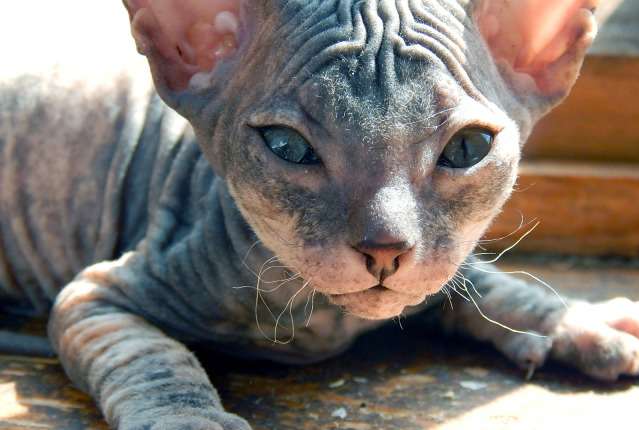
Choosing a name for a kitten is a serious and responsible process.
"Complex" names listed in pedigrees are most often used only at shows, while at home the pet can be called by a simple name that is liked by all family members.
Names for boys
There are many options for nicknames for boys:
- Asmos.
- Diamond.
- Aman
- Argon.
- Black.
- Weiss.
- Walter.
- Hamilton.
- Darcy.
- Joseph
- Ilan.
- Orlan.
- Hasan.
- And others.
Nicknames for girls
To name a girl, you can use your own imagination or the suggested options:
- Ayla.
- Agnes.
- Bayla.
- Blanche.
- Gurley.
- Grissi.
- Daina.
- Dessie.
- Zhulba.
- Julie.
- Zara.
- Sylt.
- Iffi.
- Lina.
- And others.
Owner reviews
In conclusion, I'd like to say that Don Sphynxes aren't just unusual cats; they're sweet creatures, similar in behavior to both children and dogs. They don't bother their owners when they're idle, don't meow, and if they need to go to the bathroom and it's locked, they'll come up and gently poke you with their paw. They'll also come back afterward and boast about how well they did their business.
I've never met animals more sociable than Don Sphynxes... Yes, not cats, but animals. Because Don Sphynxes aren't pure cats, they have a unique character—they're both cat and dog in one! They're very affectionate with their owners, sociable, and completely non-aggressive! It's believed that hairless cats are especially "therapeutic" due to their stable and very strong biofield, due to their lack of hair. I would recommend this cat-dog, companion cat, and doctor cat to everyone!
In my opinion, one of the best cat breeds! If you want love and affection, get a Don Sphynx! They're great with children... They're just like little kids themselves.
The Donskoy Sphynx is a good-natured, patient, and sociable cat. It makes a good companion for both adults and children. Being a rather unusual member of the feline family, it requires more care and attention than other cats. A significant drop in indoor temperature is unacceptable for Sphynxes; they need to be provided with warmth through additional heating or special clothing. Also, avoid taking the cat outdoors unless absolutely necessary, as it is not adapted to natural conditions.