Toyger cats (a combination of the words "toy" and "tiger") are often called "toy tigers" or "pocket tigers." This youngest, most expensive, and relatively rare breed is perfect for those who want a miniature predator with the sweet nature of a regular pet.
Content
History of the Toyger breed's origin
A distinctive feature of the bred animals was their calm, very peaceful nature.
This is the result of 30 years of breeding work by American breeder Judy Sugden. This designer breed was created using a cross between Bengals and regular shorthaired tabby cats. Among the mongrel animals, those with small, rounded ears and distinctively shaped spots on their heads were selected. This is how cats emerged whose appearance, with their elongated bodies, bright, shiny fur with distinctive, distinct stripes, and circular markings on their heads, closely resembled that of a tiger.
TICA, the International Cat Association, accepted the new breed for registration in 1993, but it was only 14 years later that Toygers were granted championship titles. Other feline organizations, such as FIFe and WCF, have not yet recognized the miniature tiger cat. Despite this, the cats have found admiring fans not only in their native country but also in Australia and Europe.
Description and breed standard
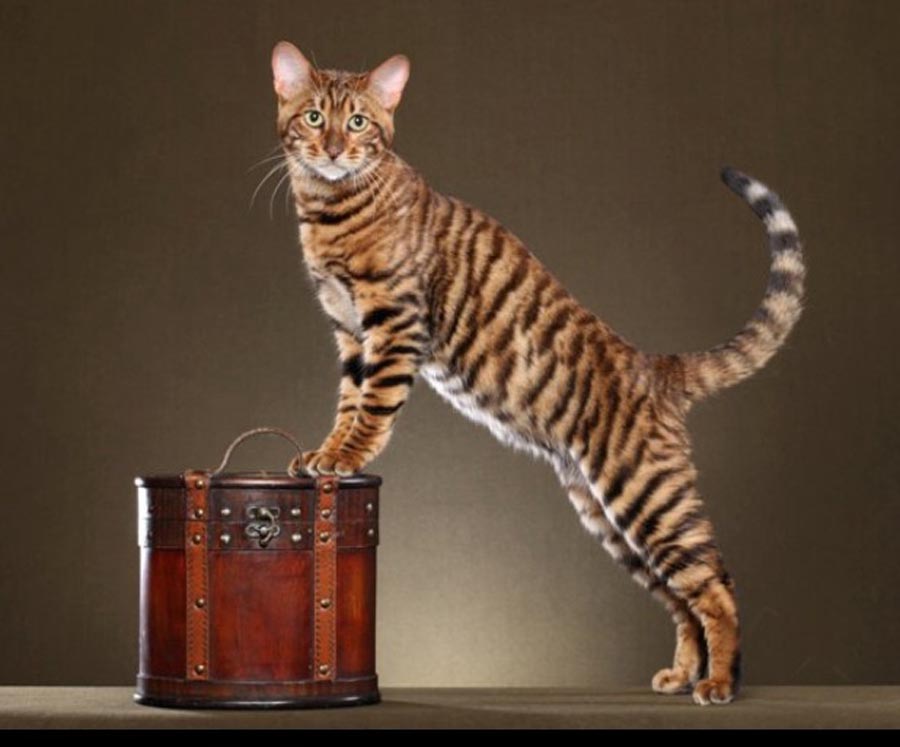
Toyger cats have a harmonious and proportional physique.
These are medium-sized cats. Male cats are much larger and more massive than female cats, and they look quite impressive. The weight of an adult male cat ranges from 7 to 10 kg, and that of a female cat from 4 to 6 kg.
- The head is proportional to the body, clearly rounded in the area of the chin, nose, forehead, and back of the head.
- The muzzle is shaped like an inverted heart and is elongated at the front.
- The chin and lower jaw are well defined.
- The nose has a characteristic widening from the bridge of the nose to the nostril area, and the width of its lobe is equal to the space between the eyes.
- The eyes are medium in size, slightly tilted in relation to the ears.
- The ears are small, with rounded tips, and well-furred.
- The neck is broad, fairly muscular and long.
- The body is smooth in outline, strong, with well-developed muscles.
- The chest is wide, powerful, well developed.
- Paws are set wide apart and of equal length.
- The tail is set low, long, strong and elastic.
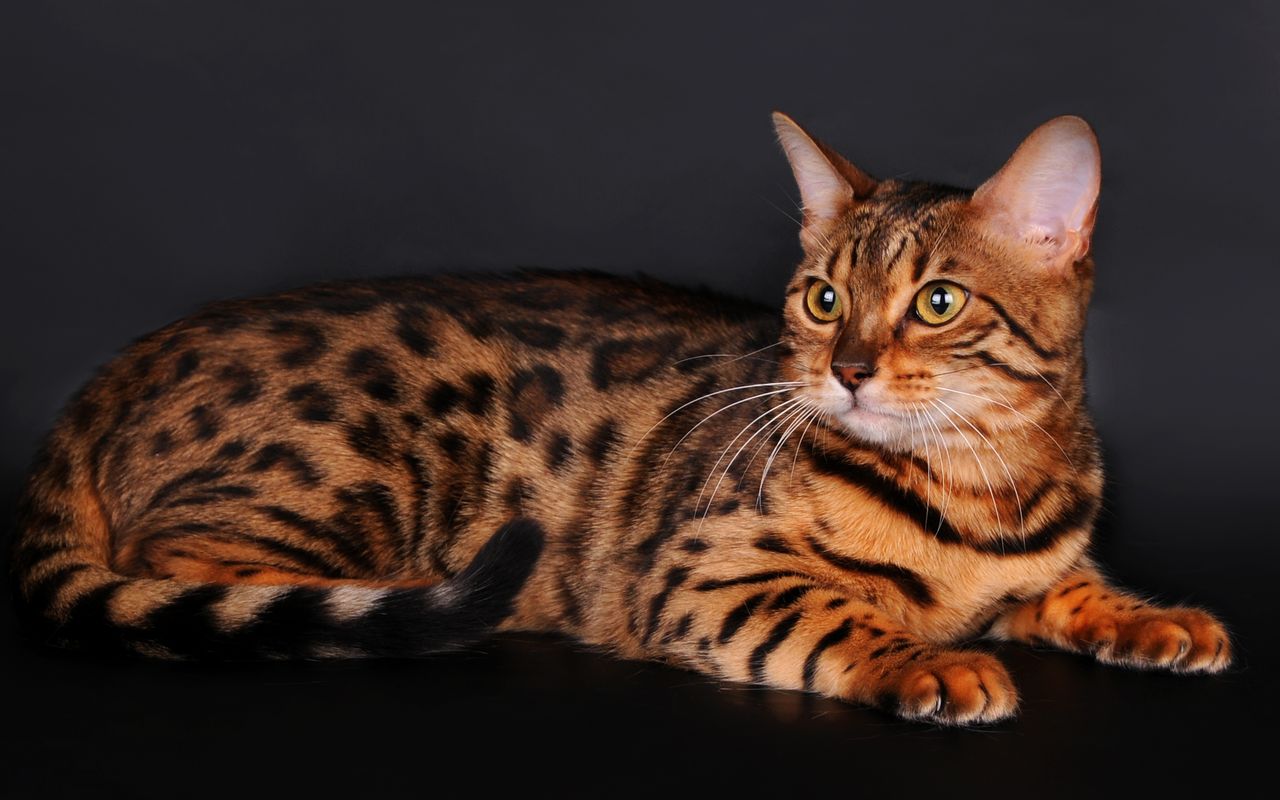
- Toyger fur is very dense, thick, shiny, and silky. The main characteristic of Toygers is their bright, contrasting markings on a golden-red background. Vertical black, dark brown, or tiger stripes on the paws, neck, and tail should form rings. The dark contours around the eyes, nose, and lips are very distinctive. The paw pads and tip of the tail are black. All this creates a unique, magnificent tiger-like pattern.
Work on improving the breed's qualities is still ongoing and is aimed at reducing the size of the body, the size of the eyes, and giving the ears an even more rounded shape.
Character
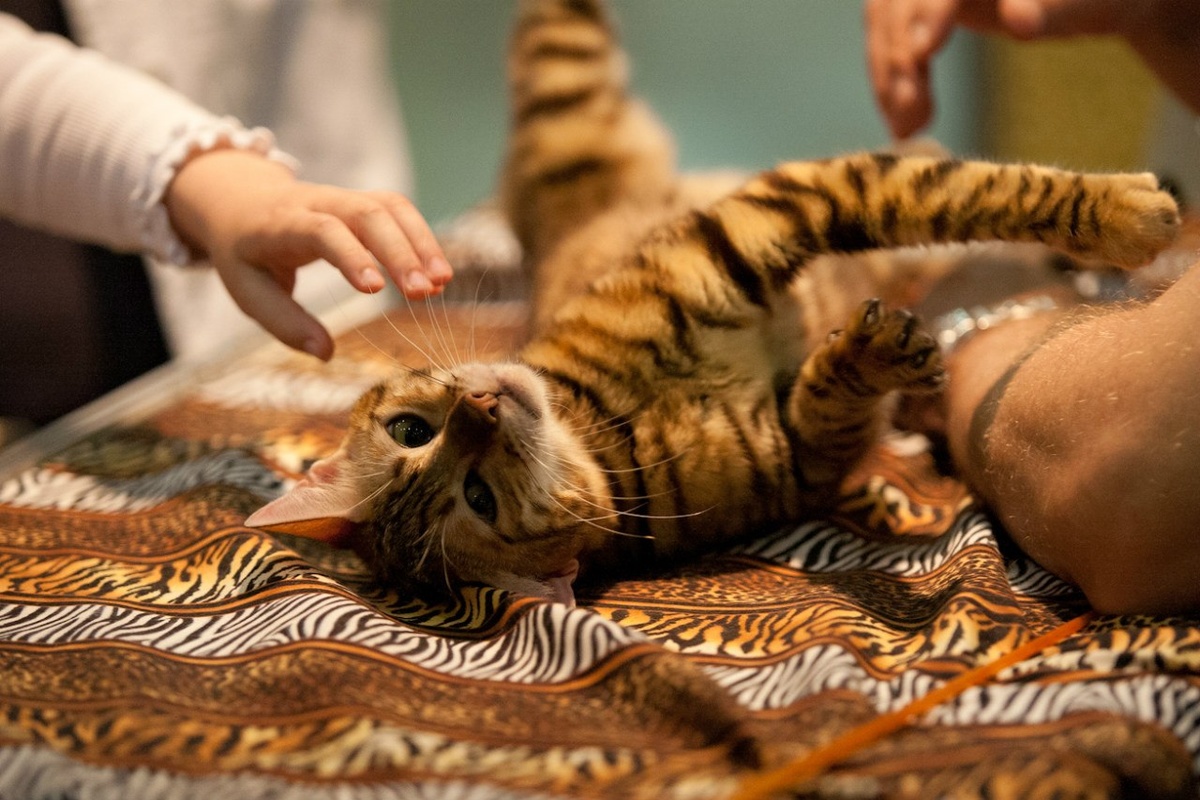
Toygers love their owners' affection.
The toygers' character is completely at odds with their predatory appearance. These are peaceful, extremely affectionate cats, always open to communication. Their attachment to their owners is strong and very sincere: the pet always greets the owner at the door, loves hugs and prefers to sleep only next to a person.
They are able to get along with other animals and do not seek quarrels and conflicts.
Pros and cons of the breed
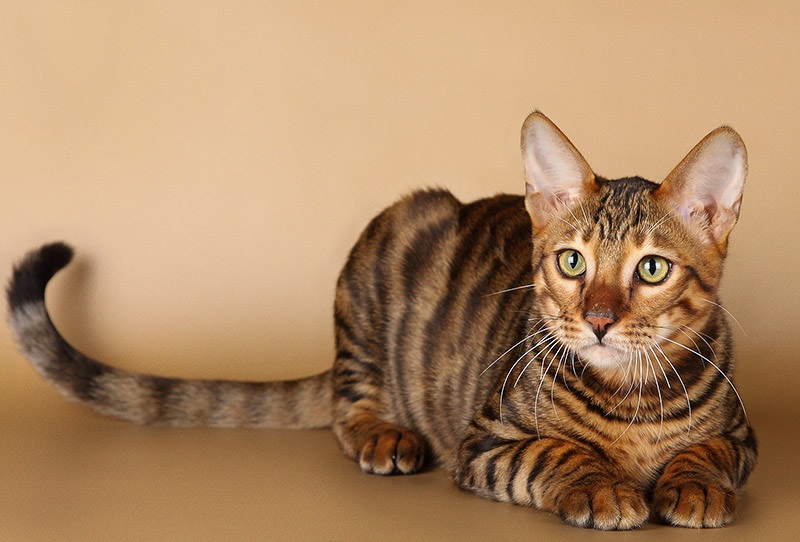
Toygers are very calm and kind creatures.
The only downside is the high cost.This breed is intended for wealthy individuals. In Russia, the price of a show-class kitten starts at 60,000 rubles and can reach 150,000–180,000 rubles. An elite male cat could theoretically cost even more—200,000–300,000 rubles. However, there are no offers for sale of such cats: professional breeders use such individuals in their own breeding programs.
Not everyone may appreciate the Toyger's dull voice. However, this is offset by the breed's taciturn nature and its rare use of verbal communication, even during mating season.
Otherwise, Toygers are perfect creatures. They are striking in appearance, very affectionate, sociable, easy-to-care-for, clean, and distinguished by good health and a long lifespan.
Care and maintenance of Toygers
Nutrition
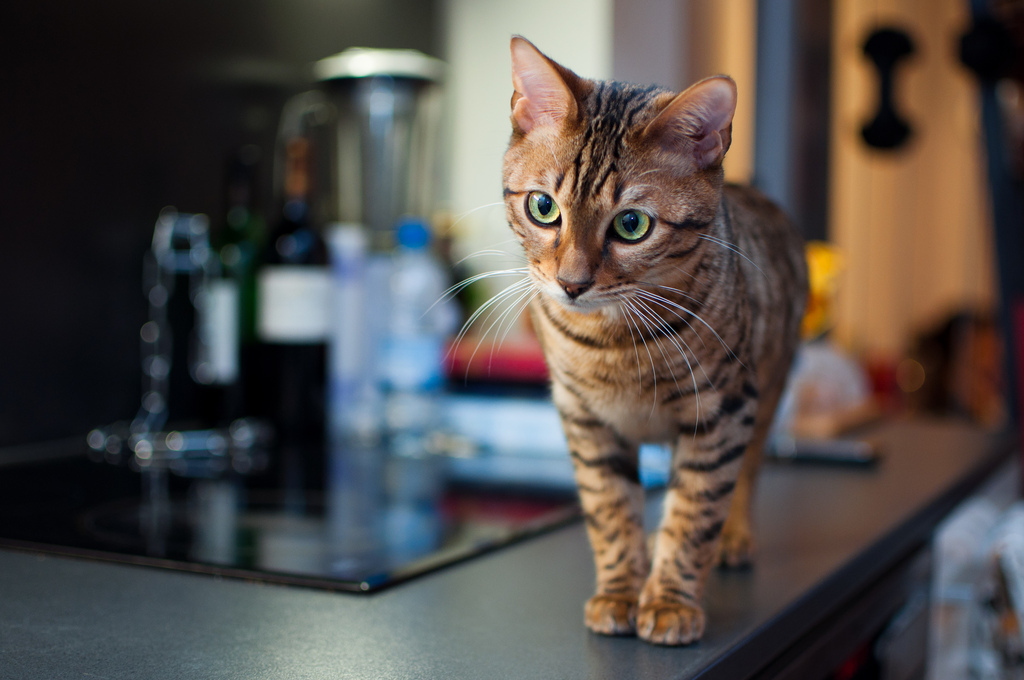
It is important to decide on the right food for your pet right away.
These are fairly large animals, so they require a high-quality, well-balanced diet that fully satisfies the pet's needs.Breeders recommend feeding their cats with ready-made super-premium and holistic diets designed for shorthaired cats.
Grooming
The thick and dense fur coat does not require careful grooming. However, it still needs to be brushed at least once a week to remove dead hair. During shedding season, this procedure is performed more frequently.
Toygers love being brushed or combed. They perceive it as affection and a sign of special affection from their owner.
Bathing is done infrequently—once every two months or when the cat is heavily soiled. Special moisturizing shampoos for short-haired cats are recommended for washing.
Eye and ear care is standard: discharge from the eyes is removed with a cotton swab soaked in a special lotion or warm boiled water; the ears are wiped with gauze pads soaked in pure petroleum jelly.
Education and training
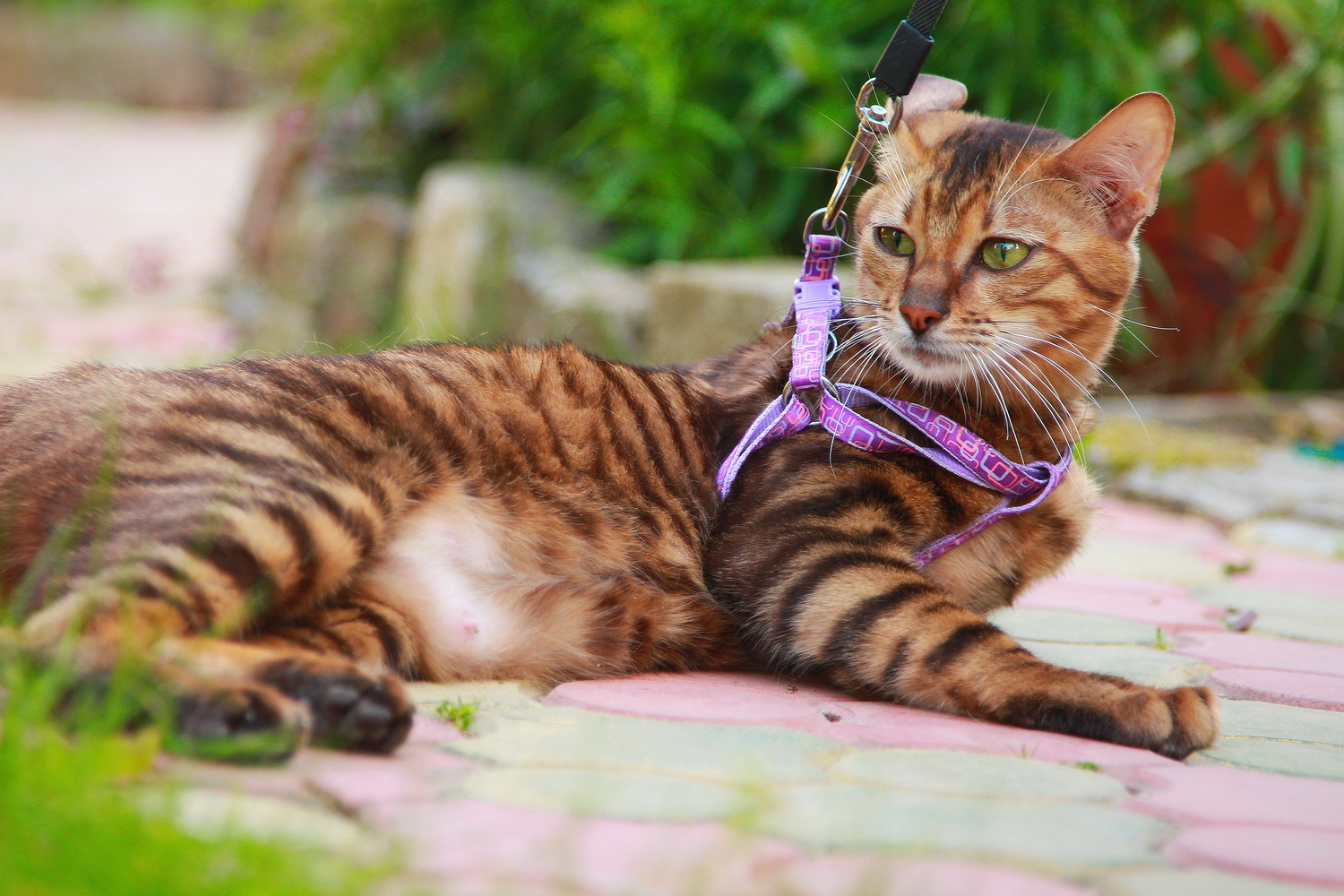
Toygers are quite easy to train to wear a harness.
Toygers are naturally very intelligent and understanding. They are easy to train to follow basic commands like "sit," "lie down," and "come." They are not only good at retrieving, but also enjoy bringing something in their mouths when asked by their owner. They are easily trained to wear a harness, which is important for safe walks and for securing the animal during travel.
Games with pets
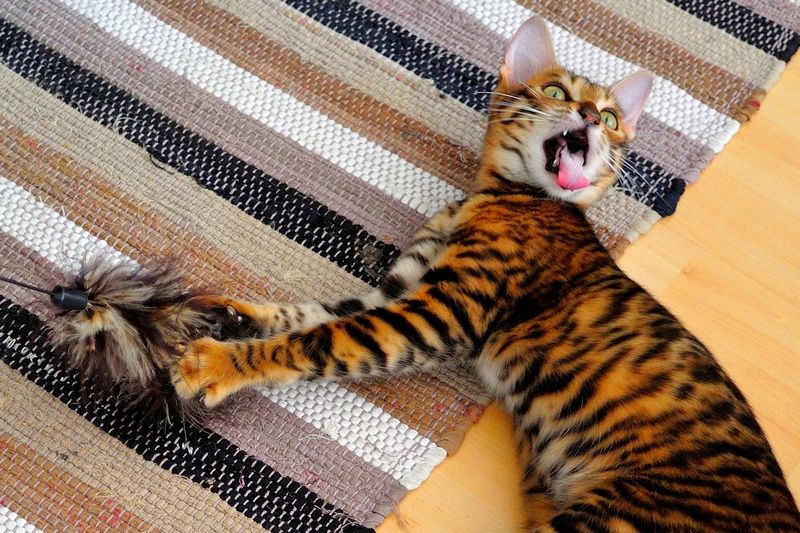
Toygers love new toys and can play with them for hours.
Despite their peaceful nature and even temperament, Toygers love fun and active games. They are especially drawn to objects that jingle and rustle. But the best entertainment for this breed is a running wheel, which allows them to fulfill their need for physical activity.
Diseases and treatment
First impressions of the breed's strength, energy, and activity are not deceiving: these cats truly have robust health. They are not prone to allergic reactions, dysbiosis, or indigestion, which are common in other designer breeds, such as Munchkins, Brambles, and Genets. Toygers tolerate vaccinations and deworming well.
Careful breeding work and strict control of matings minimize the risk of inheriting diseases common to Toygers' closest relatives.
It's important to know that Bengals, for example, are frequently diagnosed with hypertrophic cardiomyopathy (HCM), a heart disorder caused by unequal ventricular wall thickness. This condition can lead to problems with other systems and even sudden death. Treatment of HCM is complicated by the absence of symptoms in the early stages of the disease. Treatment for this condition is aimed at regulating heart rhythm, relieving congestion, and preventing pulmonary edema and blood clots. The prognosis for the disease ranges from cautious to unfavorable. Therefore, Bengal offspring, such as Toygers, who have a low but still present risk of genetic HCM, require regular cardiac ultrasounds and ECGs.
Average life expectancy
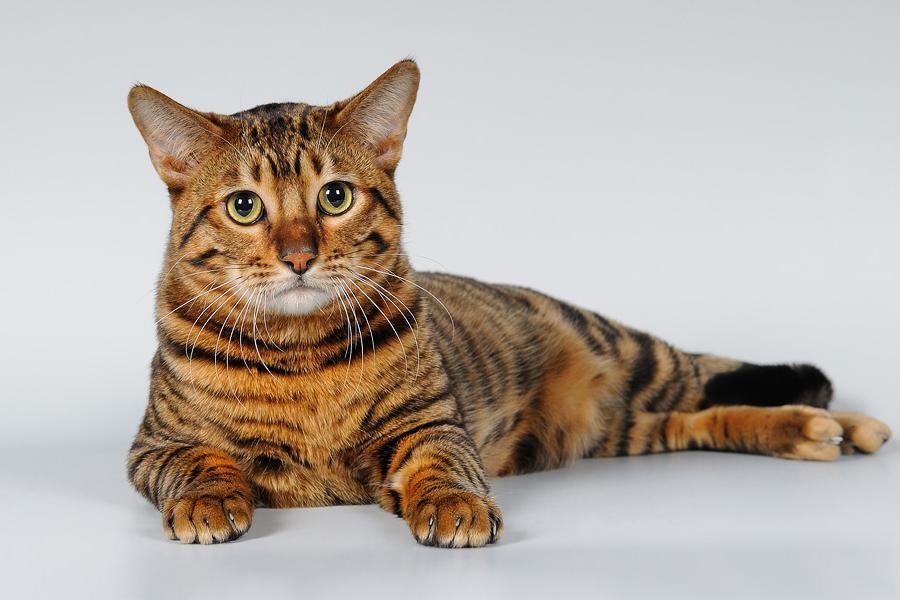
The lifespan of any animal depends on proper care.
On average, representatives of this breed live about 15 years. However, with proper nutrition, proper care and maintenance, and veterinary care, this lifespan can be extended to 17–18 years.
Breeding
Only representatives of this breed are used in professional breeding work. Furthermore, breeding itself is only possible in specialized catteries operating under Judy Sugden's system. Breeders deliver kittens to new owners already sterilized. In this case, the animals are classified as "pets."
Serious doubts arise about the integrity of breeders, the availability of permits, and the breeding suitability of animals when offers are received to purchase Toyger kittens of the "breed" class for breeding purposes.
Caring for kittens
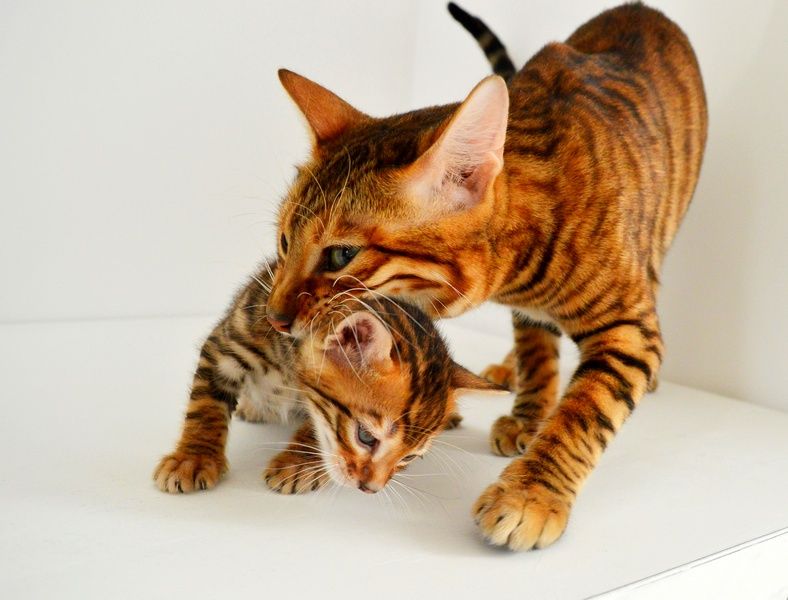
At the age of three to four months, the kitten is already weaned from its mother and will not miss her.
The puppies are transferred to their new owners at three to four months of age. By this time, they already have social skills and are able to use a litter box and scratching post. The new owner is responsible for providing the pet with everything necessary for proper development and maintaining good physical condition.
- Set up a comfortable, draft-free resting area - a bed, a basket, a dog house.
- Provide adequate space and necessary utensils for feeding. A standard set includes three steel or ceramic bowls—one for water, one for dry food, and one for wet food.
- Purchase a litter tray and filler of a design and brand that your kitten is already accustomed to.
- Stock up on toys that develop reaction and agility. A great solution is a combination play structure that also includes a hideout and scratching post.
- Purchase pet hygiene products - brushes for fur and teeth, shampoos and conditioners.
- Create a pet first aid kit with the necessary and sufficient first aid supplies.
- Remove any items from the house that could pose a danger to the kitten (glassware, wires, pesticides), and securely fasten any heavy, unstable interior elements (tall vases, shelves, flower stands).
- Ensure that windows and balcony doors are fitted with anti-cat nets.
- Purchase a cat carrier with a comfortable and reliable design.
- From the moment a kitten appears in the house and throughout life, adhere to the schedule of vaccinations, deworming, and preventive veterinary examinations.
What to call it
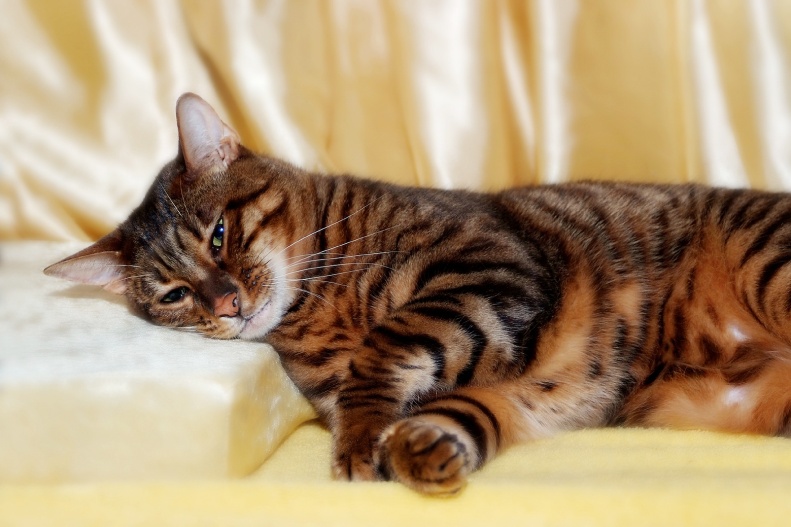
Often, owners choose a nickname for Toygers based on the presence of stripes on their bodies.
Names for Toygers should reflect their striking appearance, breed characteristics, and character traits, but at the same time not be complex and difficult for pets to get used to.
Names for boys
For example, the following nicknames would be suitable for cats:
- Sherkhan;
- Tigran;
- Ace;
- Buster;
- Leo;
- Brownie;
- Redrick;
- Rudy.
Nicknames for girls
More delicate and graceful cats can be called by gentle names:
- Ginger;
- Chiara;
- Lovely;
- Prissy;
- Pussy;
- Margot.
Owner reviews
A few years ago, my wife read about a new breed of cat being developed, a toy tiger. Last year, a Toyger kitten arrived in our home. My impressions were mixed. On the one hand, our cat really does look and feel like a toy tiger. He has an incredibly thick and very silky coat. He's very affectionate and intelligent.
Toyger cats are fairly calm and have a moderate temperament. They're more of a slob than agile jumpers. I know one, and he's typical of the breed. He happily sat in the arms of all the exhibitors at the show where I first saw him, and he followed his owner like a puppy, even without a leash (though this rarely works with cats—after all, cats tend to get nervous in such situations and are at least put on a harness).
This expensive breed justifies its price with its friendly and cheerful nature. These cats are low-maintenance and adapt relatively easily to new homes. They form strong bonds with their owners and are easy to train.