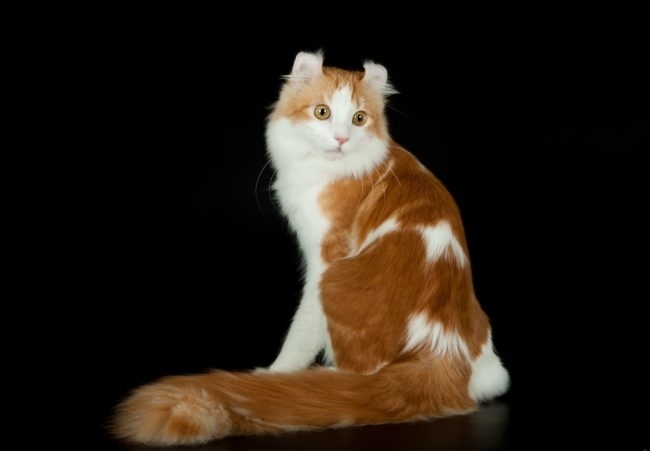
The American Curl is a unique breed that possesses a natural mutation (outward-curling ears). This trait is passed on to offspring when purebreds are crossed. These cats come in a variety of coat colors and lengths. They are intelligent, quick-witted, and loyal, and are easy on their owners. Curls adapt easily to family life. They require a well-balanced diet and minimal grooming.
Content
Historical facts
The breed originated in the United States (California). In 1981, an American couple took in a stray cat with inverted ears, and shortly afterward, she gave birth to kittens. Initially, their ears were normal, but after a few days, they turned outward. These kittens are considered the standard.
American Curls became popular, they were written about in magazines and newspapers, and they attracted the attention of scientists and cat lovers.
There were also opponents of animals who considered ears to be a deformity.
External description
Geneticist Roy Robinson spent many years studying the breed. He discovered that the inverted ears are a natural mutation; kittens naturally have them. Based on the results of many studies, the following standards were identified and approved:
- Body type: Proportionate, well-muscled. The body is rectangular and flexible.
- Weight: for female cats it is 3–5 kg, for male cats it is 5–7 kg.
- Paws: Medium length, rounded at the pads.
- Head: wedge-shaped with smooth angles.
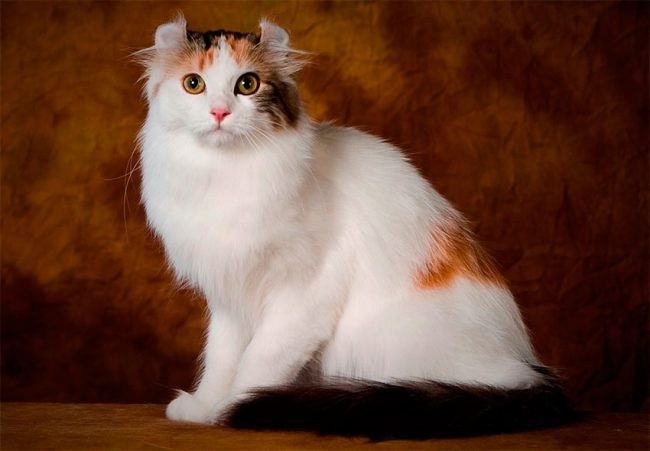
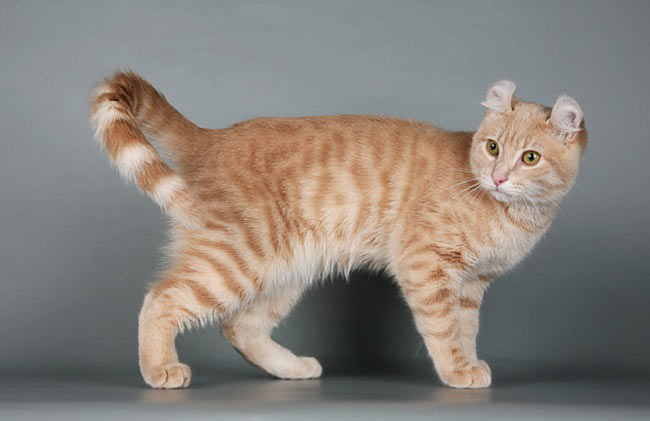
- Ears: Medium-sized, aesthetically pleasing, with dense cartilage at the base and rounded tips. The angle of rotation is at least 90 degrees but no more than 180. The curve is smooth, without kinks. Tufts of hair inside are desirable. The ideal shape is a crescent.
- Eyes: Medium-sized, set at an angle. The upper corner is rounded, the lower is oval. Eyes can be any color. The exception is colorpoint cats, whose eyes are strictly blue.
- Teeth: strong, scissor bite.
- Tail: equal to the length of the body, flexible.
- Coat: Shiny, smooth, soft, short to medium. Undercoat is almost absent.
- Colors: all sorts of colors, no specific standard. This is another unique feature of the breed.
The American Curl is recognized as a shorthaired and semi-longhaired breed.
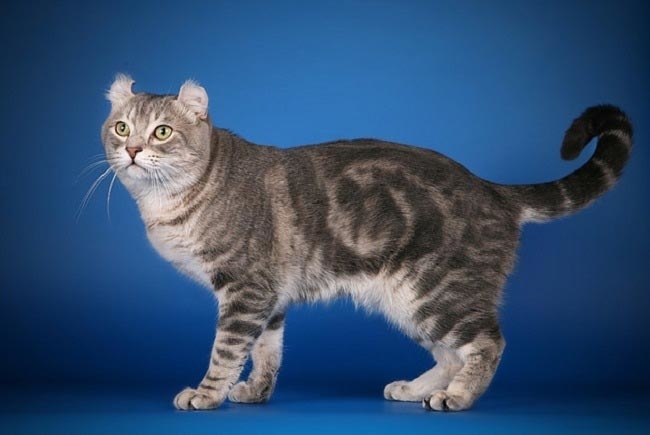
The average lifespan of the breed is 12–18 years.
Behavioral features
Cats have many virtues: they are ideal companions, intelligent, observant, quick-witted, loyal and affectionate. They are friendly with their owners and try to follow them everywhere. They love to play and have fun. They remain optimistic as they age.
Curls adore children and are willing to spend hours with them. They are even-tempered and calm, even in the presence of strangers. They are intelligent and docile, do not try to dominate their owners, and do not suffer from mood swings, panic attacks, or aggression.
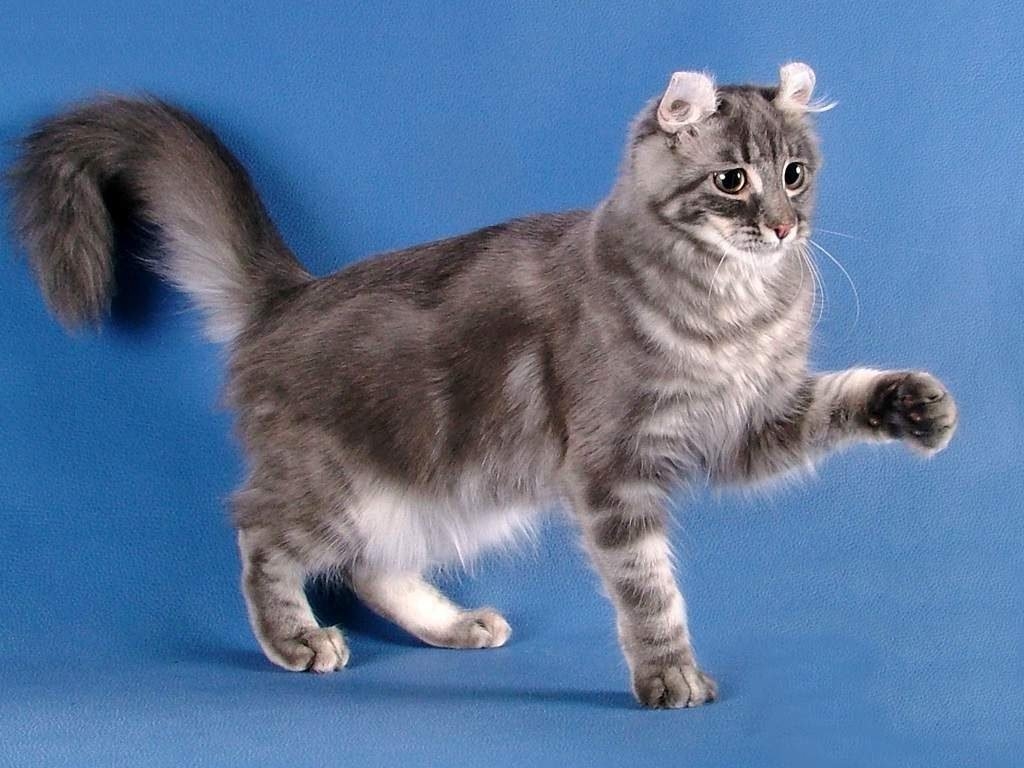
Experienced breeders consider curls to be ideal pets with no flaws.
In other people's territory, the cat is cautious and non-aggressive, rarely getting into fights. She rarely vocalizes, doesn't bother others with screams, and occasionally purrs quietly, sensing her owner's mood.
The pet can be easily trained to have good manners and behave well in the house. The cat is capable of following simple commands and various tricks. The training method is similar to that of dogs. The Curl should be rewarded with food for each successful action.
The cat gets along well with other pets and doesn't get bored when alone. He always finds something to do and will spend hours playing with his favorite toys.
Choosing a kitten
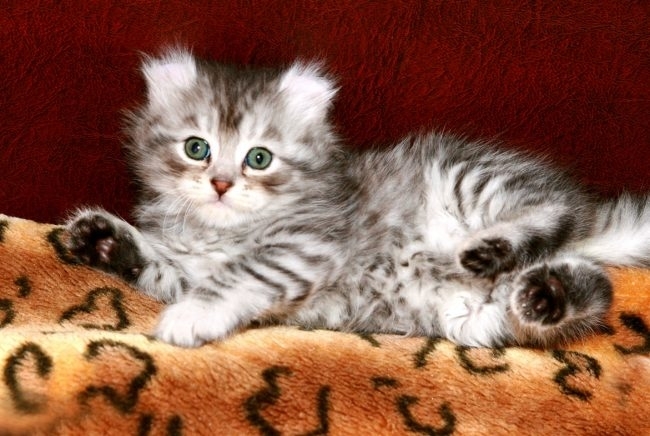
The seller is obliged to provide all documents: pedigree, veterinary passport, etc.
Kittens are put up for sale at the age of 4 months. By this time, the curl on the ears has finished forming. This determines the pet's class:
- A small angle is acceptable for a pet.
- For breeding purposes it should be larger.
- Exhibition and competition specimens have a steep curl, a crescent shape.
The degree of ear curl cannot be predicted in advance; even ideal parents can have different kittens in a litter.
The price for a kitten without papers is 3,000–8,000 rubles. A pet-class pedigree kitten costs 10,000–25, and a show kitten costs over 25.
A healthy animal is playful, active, and well-fed. When choosing a pet, observe its behavior in its natural environment.
Kittens from the cattery quickly adapt to new conditions, where they undergo socialization and acquire basic skills (feeding, litter box, scratching post).
The kitten needs a name. Because this pet is cheerful and energetic, funny nicknames would be appropriate:
- For girls: Teri, Dana, Elsa, Kitty, Sonya, Katie, Tosya.
- For the boys: Tom, Sam, Cupcake, Roni, Max, Pete.
Care and maintenance
The American Curl adapts easily to any environment. They will be comfortable in an apartment or a country house. In the city, a leash is recommended. Cats quickly get used to it and enjoy the fresh air.
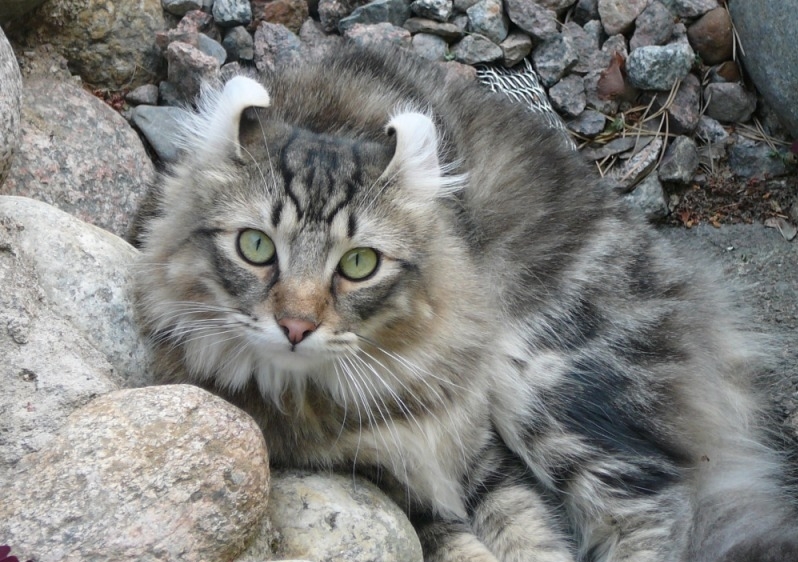
The pet can be taken out for a walk under supervision.
Maintaining appearance
The pet needs regular procedures to maintain an attractive appearance. They are standard for all cat breeds:
- Owners should pay special attention to the ears. Clean them weekly using cotton pads and swabs. Cleaning should be done very carefully. Avoid pulling, bending, straightening, or applying pressure to the cartilage.
- Teeth are brushed once a month.
- The coat is combed: for long-haired cats 2 times a week, for short-haired cats once.
- Claws need to be trimmed weekly as they grow quickly.
- The wool is treated with tick and flea repellents (Advocate, Fipronil).
To trim the claws, you need to purchase special clippers.
Proper nutrition
Proper nutrition is essential to maintaining the health and beauty of your pet.
American Curls have a healthy appetite, but they are prone to weight gain. Maintaining a proper feeding schedule is important. Kittens are fed four times a day. Adults are fed twice a day.
Most breeders feed their cats commercially prepared food. It contains all the necessary vitamins, minerals, and nutrients. Experts recommend a combination of dry kibble and wet canned food in gravy. Manufacturers offer food for both adults and puppies. When purchasing, it's important to read the packaging.
You can create a natural diet:
- Boiled meat (chicken, rabbit, veal, turkey), offal.
- Porridges (buckwheat, rice). Seasoned with vegetable oil. Finely chopped vegetables can be added.
- Fermented milk products (fermented baked milk, sour milk, cottage cheese, kefir). Full-fat milk is not recommended.
- Boiled fish.
- Clean drinking water is freely available.
The cat's diet should not contain spices, salt, seasonings, vinegar, or large amounts of fat.
Don't give your pet food from your owner's table. Your pet won't refuse it, but it won't do them any good.
Avoid fish and chicken bones as they can damage the esophagus and stomach.
Health and vaccination
The health and appearance of a cat depends on care. Scientists have not identified any predisposition of the breed to genetic diseases.
Kittens need to be vaccinated even if they won't be going outside. Vaccinations follow a standard schedule: vaccines against panleukopenia, rhinotracheitis, calicivirus, chlamydia, leukemia, ringworm, and rabies. These are repeated annually. A veterinarian at the clinic creates a patient record.
Only healthy animals are vaccinated. If the pet is sick, the vaccination period is postponed until recovery.
Deworming treatment is administered 7-10 days before vaccination. If the cat already has parasites, the medication will not be effective.
Breeding
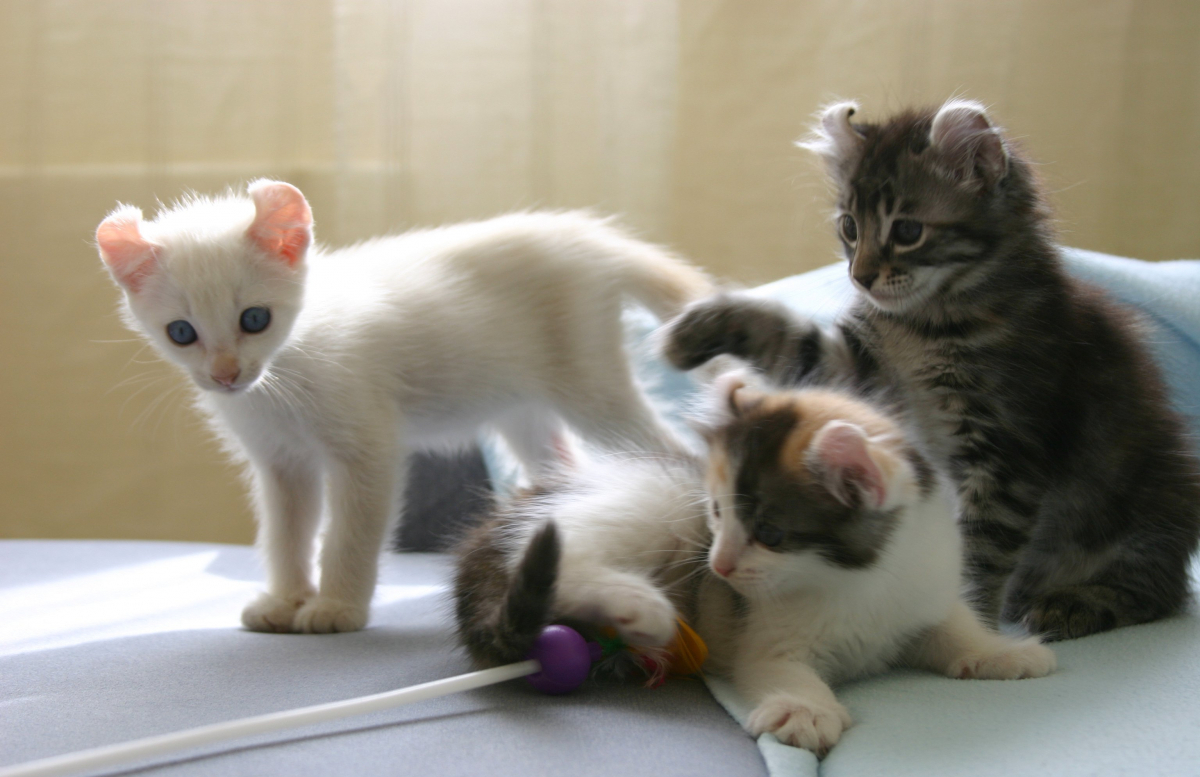
A purebred couple will have kittens with special ears.
Crossbreeding of individuals is carried out within the breed, this is the only way the gene for folded ears is passed on to offspring.
Sometimes cats are bred with mixed-breed cats to improve their health and achieve a variety of colors. It's important to select a partner that closely matches the American Curl standard. This will ensure that not all kittens have inverted ears.
Sexual maturity occurs at 6–8 months. Mating occurs at 1.5–2 years, after the queen's third heat, to produce healthy kittens.
The mating takes place on the male's territory. A preventative deworming treatment should be performed 10-14 days before mating. Female cats are mated no more than 1-2 times a year to allow their bodies to recover. Male cats are given no more than 20-25 matings. The frequency decreases with age.
Caring for offspring
If the mating is successful, pregnancy occurs. It lasts an average of 55–63 days and is usually uneventful. The cat needs a balanced diet and rest, as well as several visits to the veterinarian.
For the birth, it is necessary to prepare a warm, cozy place for the mother and offspring; it is necessary to monitor the process and provide assistance if necessary.
Curls are caring mothers; their kittens feed on their mother's milk. If necessary, they can be supplemented with formula (if the mother's milk supply is low). By 2-3 months, the kittens become independent. They need to be trained to use a litter box, eat adult food, eat two meals a day, and use a scratching post. Vaccinations are important. Consult a veterinarian for any further questions.
The American Curl is a cat with a unique appearance, affectionate, intelligent, and loyal. This pet makes a wonderful companion and friend for the entire family.