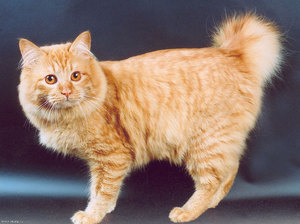
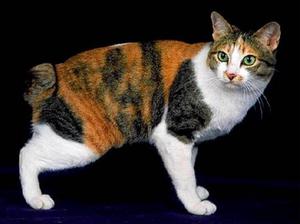
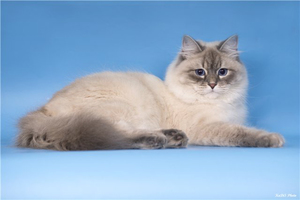
It's generally accepted that a "proper" cat has whiskers, paws, and a tail, but there are breeds that practically lack the latter. This doesn't make them any less desirable; quite the contrary, many "tailless" breeds are distinguished by their exceptional intelligence, and their kittens are quite expensive.
Japanese Bobtail
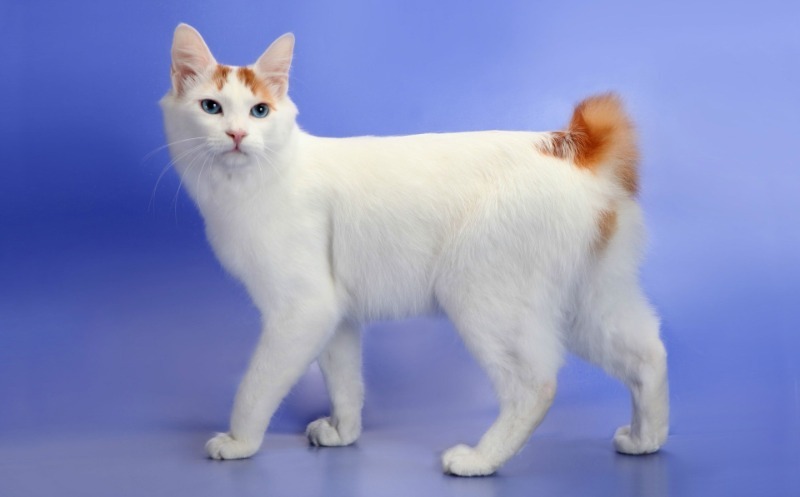
The Japanese Bobtail is an ancient breed, known since the 6th century AD. It is believed to have been developed naturally, without human intervention.
In Japan, bobtails first appeared among traders. They loved these cats for their excellent ability to catch mice living in silk bales of goods. Then the Japanese emperor saw the tailless cats and fell in love with them. He always had bobtails around, even accompanying them to important meetings.
In appearance, members of this breed resemble ordinary cats. They come in longhaired and shorthaired varieties and come in a wide range of colors. In Japan, calico bobtails are believed to bring good luck to the home. A distinctive feature of the breed is their short tail, which resembles a pompom. This does not hinder these cats' excellent navigation skills or ability to scale even the highest points indoors.
Japanese Bobtails are highly intelligent cats; they remember their names well and respond to them. They enjoy human company, always trying to follow their owner, and are easily trained. They get along well with small children and other animals.
American Bobtail
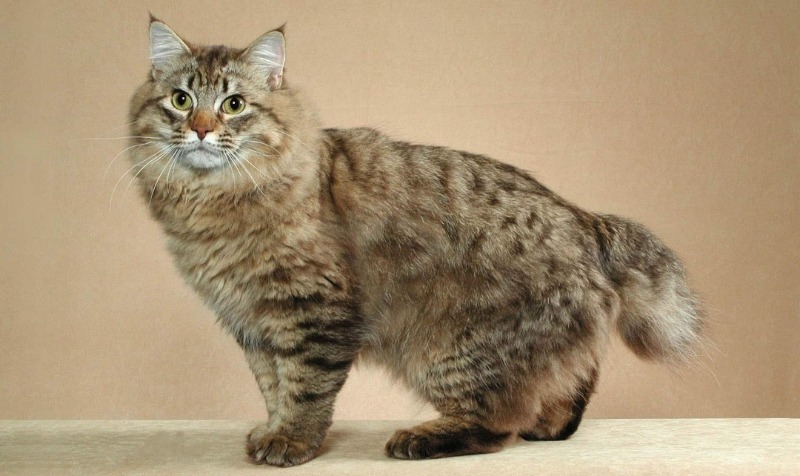
The American Bobtail is a distant relative of the Japanese Bobtail, but these cats differ significantly in appearance. Compared to ordinary cats, members of this breed are quite large, muscular, and most often long-haired, though short-haired varieties are also available. The tail is two, and sometimes three times shorter than a normal one, and can be straight or curved, with a small tuft at the end.
These cats appeared in the United States as a result of a natural mutation resulting from the selective breeding of stray cats with short tails. The American Bobtail is a relatively new breed, first discussed in the late 1960s.
Representatives of this breed are very intelligent and sociable animals. They are usually quiet, but if they decide to play, they will let their owner know. They can display their hunting instincts and hunt insects and birds.
They get along well with children and other animals, and tolerate travel and trips well, which is why they are so popular among truck drivers in the US and Canada, who sometimes don't mind taking a furry companion on a long trip.
Kurilian Bobtail
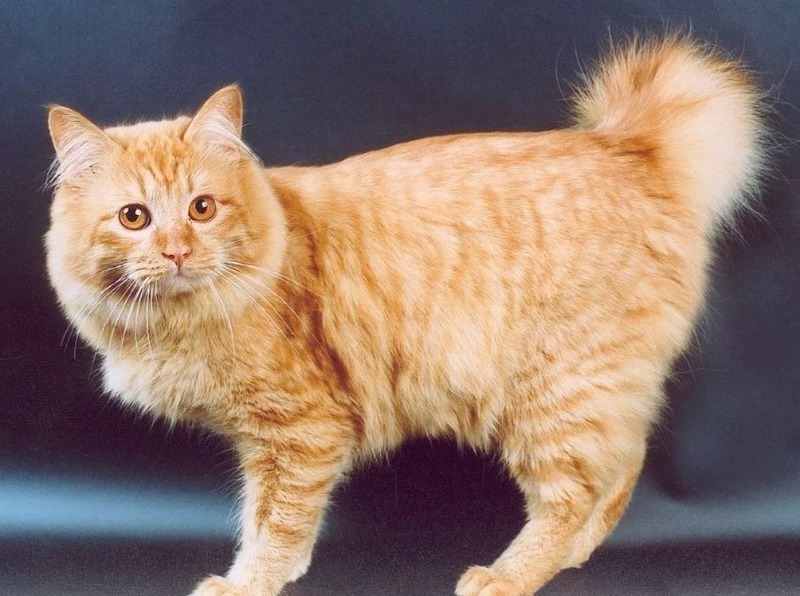
The first mentions of the Kurilian Bobtail date back to the 19th century. At that time, they inhabited the Kuril Islands, Sakhalin, and Kamchatka, from where they migrated to Central Russia. For a long time, these cats were indistinguishable from the Japanese Bobtail, so the Kurilian Bobtail only began to develop as a distinct breed in the 20th century. It is generally believed that this breed was developed naturally.
Kurilian Bobtails are typically medium to large in size, but their bodies are compact. Their appearance retains some characteristics of their ancient ancestors. Their coats come in any color. The tail resembles a soft pom-pom, has several curves, and can be stiff or flexible, ranging from 3 to 8 centimeters in length. Surprisingly, this small tail is very flexible. It was previously thought that it helped the cats maintain balance in trees.
Kurilian Bobtails are often compared to dogs due to their loyal nature. These cats are very calm and peaceful, get along well with children, and will not show displeasure even if their tail or whiskers are pulled. It's really difficult to anger a bobtail.
They don't tolerate loneliness well, miss their owners, and need constant attention. They love to play and jump on cabinets and shelves. It's best to keep rodents, fish, and birds away from Kurilian Bobtails, as they tend to exhibit their hunting instincts.
Manx
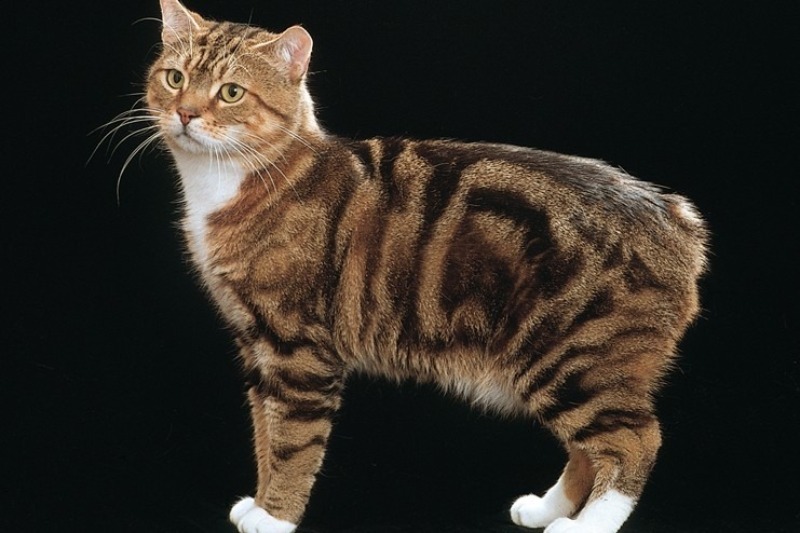
The breed originated on the Isle of Man, from which it takes its name. The exact origins of the Manx cat are unknown. A popular legend on the island claims that a cat was the last to board Noah's Ark, and he, not noticing her, slammed the door, pinching the cat's tail, which eventually fell off. Scientists believe that the island's isolation led to interbreeding between related cats. This led to a mutation in the gene responsible for the tail.
There are four varieties of Manx, depending on tail length. One has no tail at all, two others have a short tail, and one variety has a long tail. It is the latter variety that is most often used in selective breeding due to its breeding characteristics.
Manx cats have a dog-like personality. They learn commands easily, retrieve toys, love their owners, and are willing to follow them everywhere. They suffer greatly from separation and loneliness, making them unsuitable for busy people.
Cymric
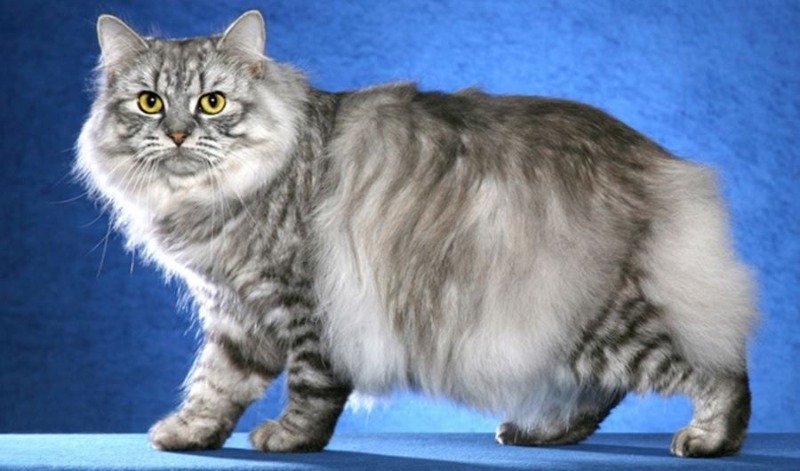
The Cymric cannot be confused with any other breed, as they have long, thick fur.
Cymrics resemble small bear cubs in appearance. They have a large, rounded head, a strong build, and well-developed paws. Their tails vary in length, from 1 to 8 centimeters.
These cats' sweet appearance perfectly matches their character. They are calm and even-tempered, never revealing their claws unless absolutely necessary. They get along well with small children and other animals. They love water, especially if they are accustomed to it from a young age. They are excellent jumpers, and even a short tail doesn't stop them from conquering great heights.
Cymrics are very attached to their owners, but do not require endless attention, as they are independent and self-sufficient.
Some people, seeing a cat without a tail, might feel sorry for it, as not everyone knows that breeds born without one exist. However, these cats are not deprived of anything; they live full lives and are devoted to their owners.