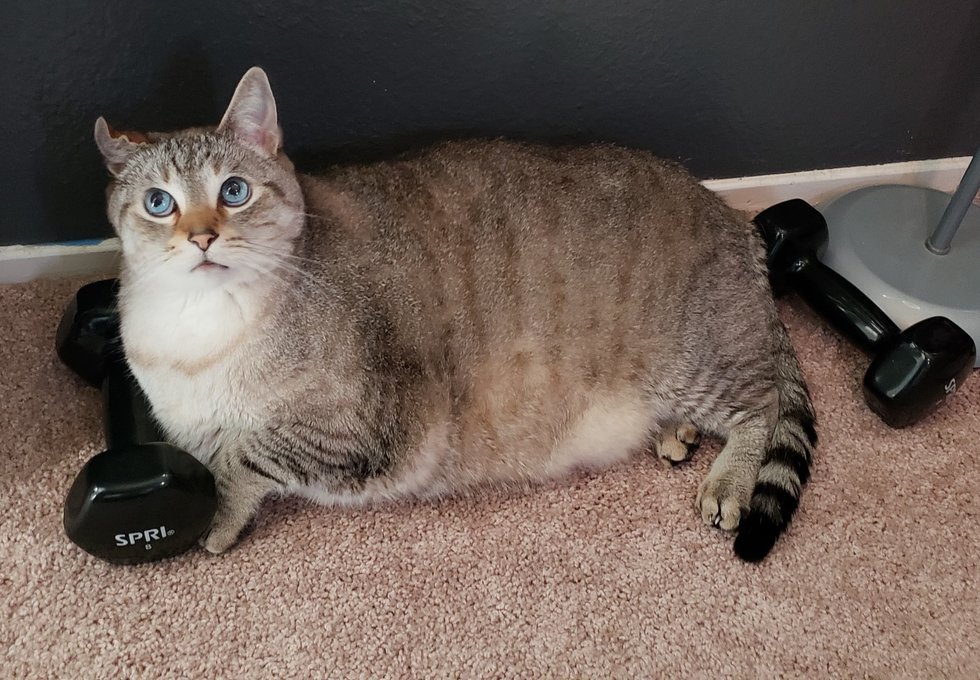
It's long been a common belief that a healthy cat should be well-fed. However, owners can't always tell whether their pet is overweight. They observe their pet daily and sometimes don't notice when it transforms from a muscular predator into a fat couch potato. But there are three signs that any owner can look for to determine the condition of their pet.
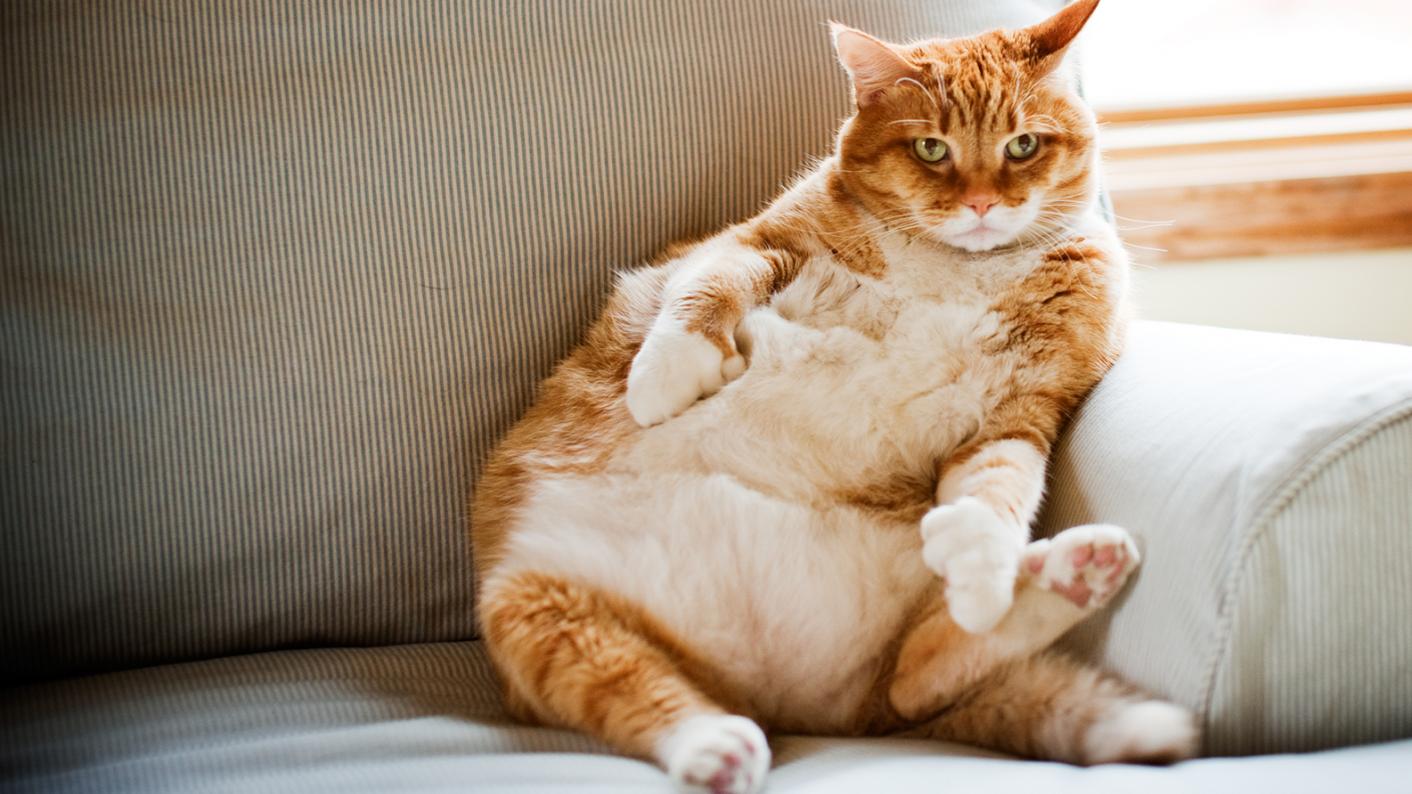
The cat's ribs cannot be felt.
The most reliable information about a cat's body condition can be obtained by palpating it.
The animal is picked up and its ribs, sternocostal joints, and pelvic bones are carefully palpated. In smooth-coated breeds, emaciation will be noticeable without palpation, but in furry breeds, protruding ribs will indicate the animal is thin.
The ideal condition for a cat is when it is muscular and appears well-built. The ribs and pelvic bones are not visible, but can be easily felt.
If you are overweight, you can still feel the ribs, but this is done with effort.
But in case of obesity, this procedure is almost impossible to carry out due to the thick layer of fat.
A slight excess weight shouldn't alarm owners. It can be caused by the following factors:
- Breed - Persian, Scottish and British cats have a tendency to gain a little weight;
- age - older individuals, due to less mobility, tend to be moderately overweight;
- sterilization (castration) - in a small percentage of animals, a decrease in the level of sex hormones leads to an increase in appetite;
- Heredity - felinologists have observed that kittens of obese parents also gain excess weight as they grow up.
Felinology is a science that studies the breeds, characteristics of selection, breeding and maintenance of domestic cats.
But even if their pets are slightly overweight, it's best to consult a veterinarian. Further weight gain and obesity can lead to serious health issues.
Your pet's belly is sagging
The second sign of excess weight in cats is a sagging belly. Of course, this doesn't apply to pregnant cats.
At ideal weight, a pet will have a tucked-in belly, a clearly defined waist, and occasionally small folds of fat. If overweight, the waist is not clearly defined, and the belly sags slightly, with a visible layer of fat. If obese, the belly doesn't simply sag, but appears bloated.
Changes in the body of an upright cat due to excess weight are very clearly visible when looking at it from above.
In an animal of normal weight, the body looks like a rectangle.
When you are overweight, it is more oval in shape, and when you are obese, due to the large sagging belly, its shape approaches a circle.
The cat has difficulty climbing surfaces.
One of the main causes of obesity in cats is a sedentary lifestyle. Weight gain negatively impacts the musculoskeletal system. It becomes more difficult for cats to jump and less playful. Consequently, the cycle continues: the cat becomes less active, and the weight increases.
An overweight pet not only has difficulty jumping onto a chair or table, but can't even climb over a low obstacle. A large belly can cause a waddling gait, often waddling from one foot to the other. When moving from floor to floor, the pet experiences shortness of breath, similar to someone with asthma.
In cats and cats that are overweight or obese, the respiratory movements of the chest are practically invisible.
After reading this article, every owner should understand that the appearance of even one of the three signs described is a threat to the animal's health. And the sooner action is taken, the longer and healthier their whiskered pet will live.