Cat lovers know the power their furry companions wield over them, regularly forcing them to comply with their demands and whims. These lovable blackmailers have even "devised" several ways to control us.
Cats meow with a special intonation
In the wild, adult felines don't meow. This sound is used only by kittens to attract their mother's attention. Domestic cats, however, have "realized" that meowing can be used to control their owners and achieve their goals. They have begun to give their calls different intonations and vary the range of their sounds. Moreover, their meowing often resembles the sounds made by pre-verbal infants. Humans instinctively respond to the call, ready to drop their errands and fulfill their furry companion's wishes.
Cats are capable of giving their meows a pitiful intonation, prompting their owner to immediately pet them, pick them up, and show them pity.
Sometimes their "meow" sounds reproachful and makes a person feel guilty for not paying attention to them.
Sometimes the meowing can be demanding and persistent: the cat is asserting its legal rights, which, in its opinion, are not being respected.
Not all cats can manipulate intonation so skillfully, only those who live with a person. If a pet lives in a family with several people, they most often express their demands with a loud and stubborn "meow."
Cats show grievances
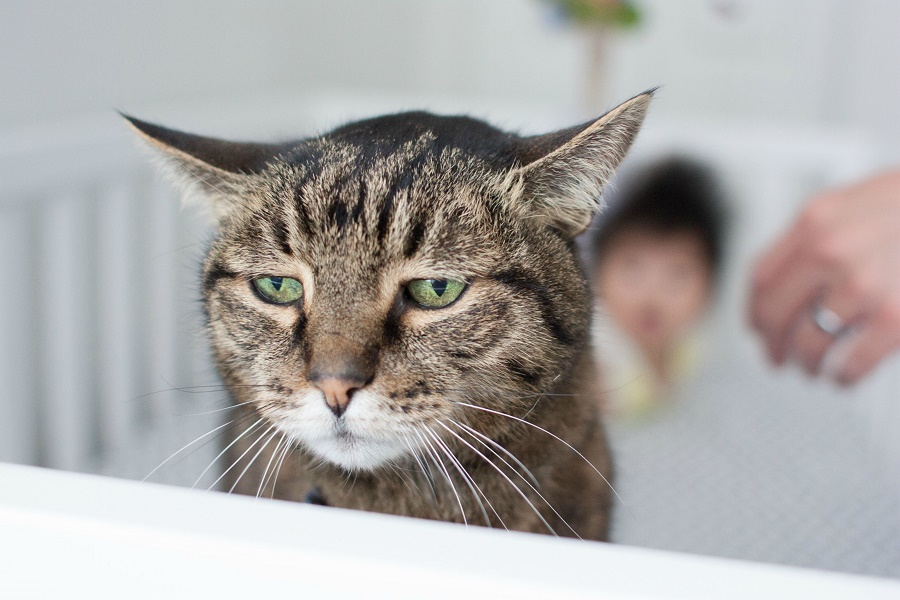
A pet can be offended by many things, from a lack of attention to punishment for misbehavior. However, it's important to remember that appealing to a cat's conscience will be fruitless. Scientists have found that cats don't experience guilt. However, they are adept at showing their resentment.
How does a pet show that it is offended:
- Ignores. This is the most common technique used by the little manipulator. If the cat is upset with one family member, she will show affection for everyone except the offender. The cat will begin to cuddle and sit on the laps of other family members, doing so in full view of the offender. And the offender seems to cease to exist for her.
- The cat's appearance demonstrates a bad mood. In the presence of its owner, it assumes a gloomy, lethargic appearance, lowers its tail and presses it to its legs, and walks with its head down;
- hides under the sofa or in another hard-to-reach place. This is her way of making it clear she's frightened by the aggressive behavior. She can remain in hiding for a long time until the person begins to feel pangs of conscience;
- demonstratively turns away from the offered treat. It will take some effort to beg for forgiveness. And only after some coaxing will the cat condescend to accept the treat from your hand.
Resentment can also manifest itself in deliberate harm. You might return from work to find peeling wallpaper and a houseplant eaten.
Using "body language"
Cats are known to be independent and freedom-loving creatures. But they also need attention. They use body language to elicit affection.
Many have noticed cats rubbing their heads and bodies against your legs, and wrapping their tails around your ankles. Then they rise up on their hind legs, turn around, and rub their other side. This marks the legs of their pet, signaling their affection and affection. Furthermore, when they cuddle, their whole body language says, "Come on, pet me, pet me!" It can be impossible to resist such a display of love and devotion. And they usually receive affection in return. They are picked up, stroked, and spoken to in kind.
Cats achieve the same goal by burying their muzzle in the owner’s shoulder or hand, offering their head for stroking.
The cat poops outside the litter box to attract your attention.
When an owner doesn't give their furry companion enough attention, the cat becomes bored, anxious, and dissatisfied. To get attention, it may resort to extreme measures. For example, it may regularly poop outside the litter box. If this isn't a reaction to being offended, then its behavior can be explained as follows. In response to the misbehavior, the owner expresses displeasure, yells, and sometimes punishes the pet. The cat may perceive this as attention, albeit negative. The next time, to get attention from the owner, the cat will do the same.
To correct the situation, you need to pet your pet more often and play with him.
Furry blackmailers have many other methods at their disposal to influence people. Sometimes, owners realize their pet is manipulating them. Sometimes, it happens so skillfully that the person has no idea they're under the cat's control. But in any case, they brighten our lives, bringing variety and joy, so much can be forgiven.
 Alexey
1 comment