Classical zoology classifies up to 5,500 modern mammal species. They all differ significantly in size, areola, structure, and external features. One of the most distinctive animals of this class is the warlike predator known as the Tasmanian devil.
It is the only representative of its genus, but scientists have noted its significant similarity to quolls and, most distantly, to the extinct marsupial wolf, the thylacine.
Content
Why was the Tasmanian devil named that?
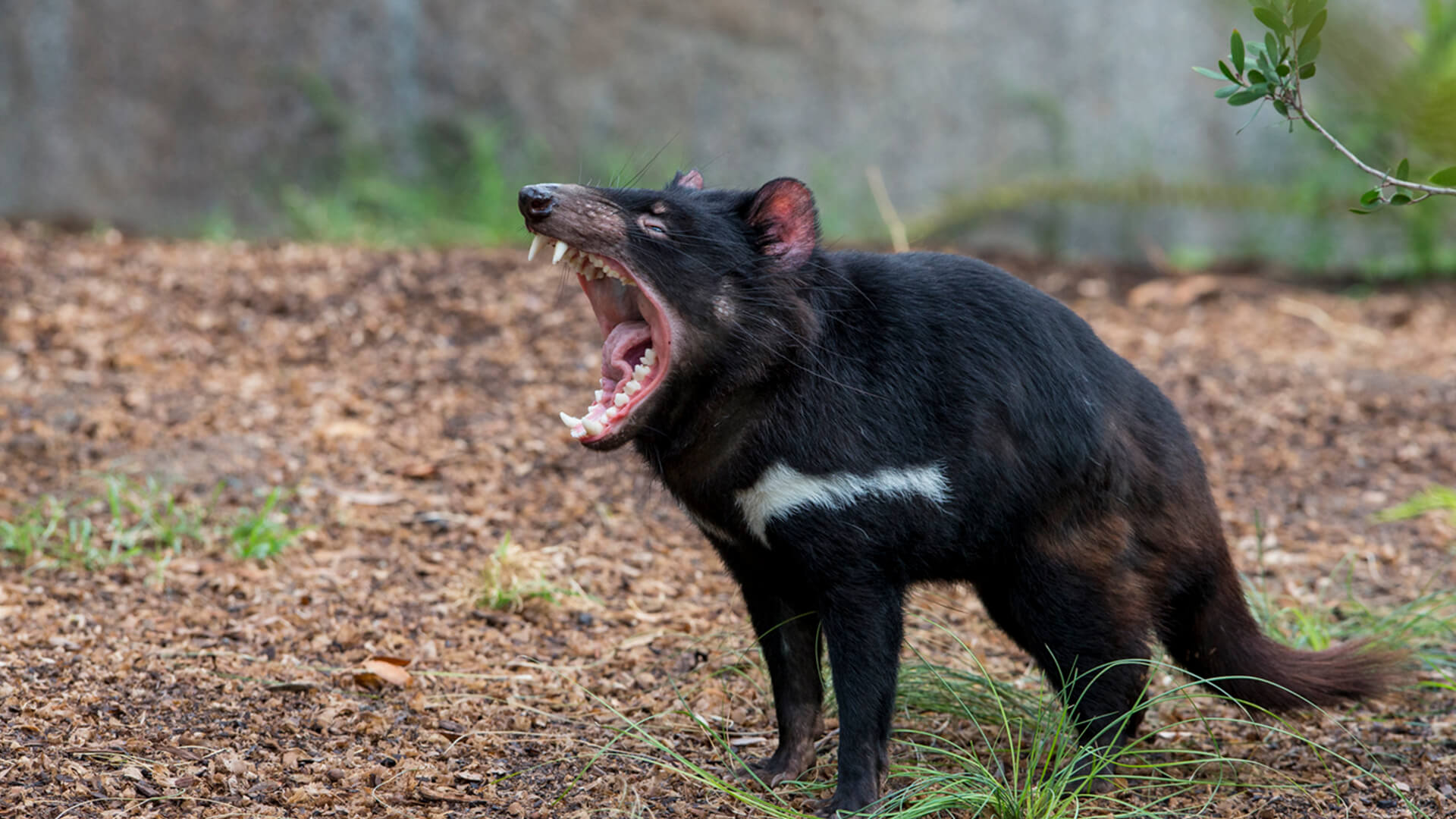
It was the terrible screams and sharp teeth that gave people the reason to call this animal "the devil."
In 1803, when a ramshackle boat carrying English officers, sailors and convicts landed on the banks of the wide Derwent River, located south of Tasmania, its crew encountered a ferocious marsupial predator.
In their diaries, the island's settlers immediately noted its menacing growl, mixed with piercing screams, and its toothy mouth.
The predator was described as incredibly wild and an extremely dangerous livestock pest. Its sharp teeth were so developed that it chewed large bones of domesticated animals, crushed tough cartilage, and devoured carrion.
It is worth noting that there are still disputes among people regarding the correct name of this animal.The controversy centers on two similar-sounding phrases: "Tasmanian devil" and "Tasmanian devil."
The animal was named the Tasmanian devil in a university paper by Soviet paleontologist L.K. Gabunia, titled "The Extinction of Ancient Reptiles and Mammals." This version appears in both fiction, including books by Yu.B. Nagibin and D.A. Krymov, and popular science works, including those by V.F. Petrov.
However, other authorities in the scientific community argue that the word "Tasmanian" is a misnomer and lexically incorrect adjective derived from the name of the island of Tasmania.
As of 2018, all leading Russian media outlets and scientific publications refer to this predator as "Tasmanian" in their materials, which gives reason to assume that this is the correct version.
What does it look like?
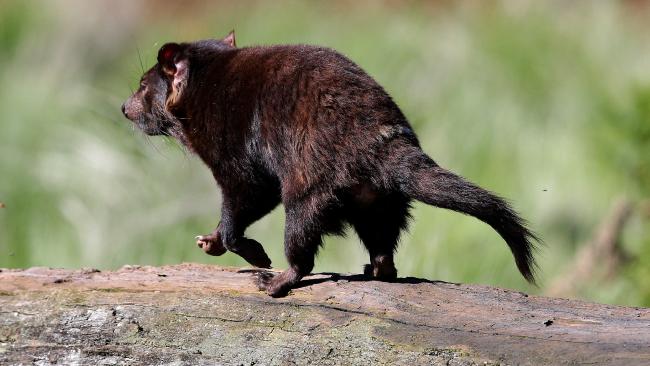
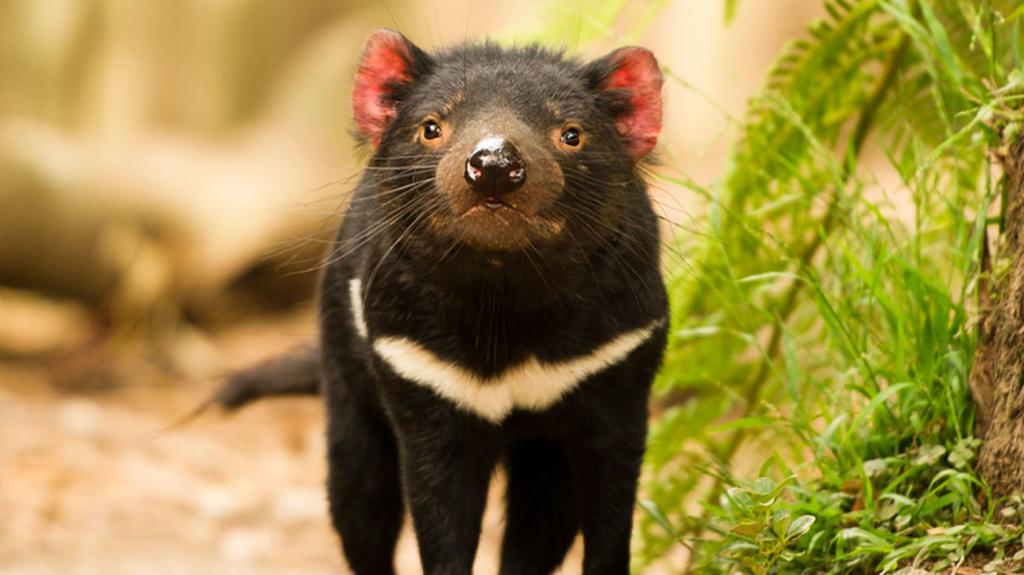
The island's "devil" resembles a stocky, squat dog in its outline.
The Tasmanian devil has been officially recognized as the largest living carnivorous marsupial on planet Earth. It belongs to the order and family of Australian carnivorous marsupials. Compared to its entire body, the predator's head is quite impressive.
Behind the anus, the devil has a short, thick tail. Its structure differs from that of other mammals, as it stores fat. In diseased carnivorous marsupials, the tail becomes thin and frail. Long hairs grow over its surface, often rubbing against the ground, leaving the mobile appendage on the animal's hindquarters virtually bare.
The Tasmanian devil's front legs are slightly longer than its hind limbs. This allows the marsupial to reach speeds of up to 13 km/h, but this is only sufficient for short distances.
The fur is typically black. Sparse white spots and specks are often found on the chest (although about 16% of wild devils lack this pigmentation).
Males reach greater length and mass than females:
- The average weight of a male is 8 kilograms with a body length of 65 centimeters.
- Women's - 6 kilograms with a length of 57 centimeters.
Large males weigh up to 12 kilograms, although it is worth noting that devils in western Tasmania are generally smaller.
Marsupial predators have five long toes on their front paws. Four of them point straight forward, and one protrudes from the side, allowing the devil to more comfortably hold food.
The first toe on the hind limbs is missing, but large claws are still present, which facilitate a strong grip and tearing of food.
The Tasmanian devil has the strongest bite relative to its body size. Its grip is unmatched by any other mammal, with a jaw force of 553 N. Its jaw can open to 75–80°, allowing the devil to generate significant force to tear flesh and crush bone.
The devil has long whiskers on its face, which serve as olfactory aids, helping the predator locate prey in the dark. Its sense of smell can detect odors up to 1 kilometer away, helping it locate its prey.
Because devils hunt at night, their vision seems to be sharpest at night. Under these conditions, they can easily detect moving objects, but have difficulty seeing stationary elements of the surrounding world.
Habitat
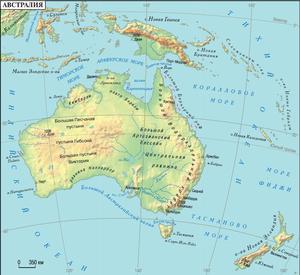
The Tasmanian devil is endemic to Australia.
Devils inhabit all areas of the Australian state of Tasmania, including the outskirts of urban areas.They spread across the entire Tasmanian continent and colonized nearby areas, such as Robbins Island.
There were some reports of this marsupial predator on Bruny Island, but no one has seen it in this region since the 19th century. It is believed that the Tasmanian devil was driven out of other areas and exterminated by dingoes introduced by Aboriginal people.
These mammals are now commonly found in the central, northern and western parts of the island in areas designated for sheep pastures, as well as in Tasmania's national parks.
Lifestyle
The Tasmanian devil is a nocturnal and crepuscular hunter. He spends the daytime in dense bushes or a deep hole.
Young devils can climb trees, but this becomes increasingly difficult as they grow. Adult predators can devour young members of their own family if they are very hungry. Therefore, climbing and moving through trees has become a survival tool for young individuals, allowing them to hide from their ferocious brethren.
Devilfish are also quite at home in water and can swim. Observations indicate that these predators can cross rivers up to 50 meters wide. They also aren't afraid of cold waterways.
What does it eat?
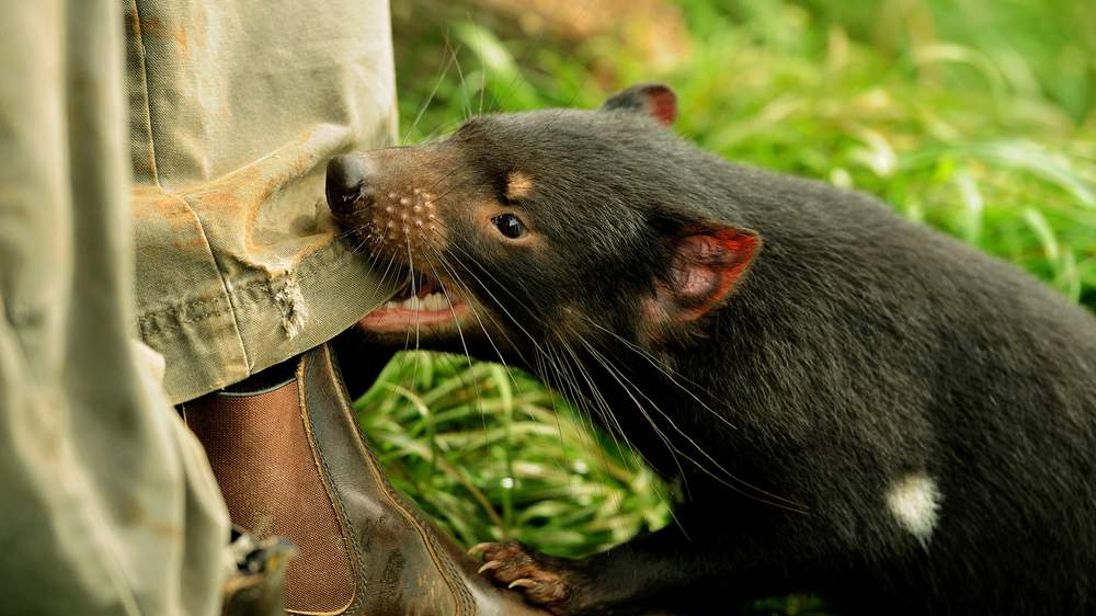
Tasmanian devils are almost omnivorous.
Tasmanian devils have the ability to take down prey the size of a small kangaroo. However, in practice they are more opportunistic and eat carrion more often than they hunt live animals.
Devils are capable of devouring food weighing up to 40% of their own body weight per day when they are particularly hungry.
Although the devil's favorite food is wombats, it will also indulge in other local mammals. The following may be harmed by the predator:
- possum rats;
- I'll sweat it out;
- livestock (including sheep);
- birds;
- fish;
- insects,
- frogs;
- reptiles.
Tasmanian devils have been documented hunting water rats near the sea. They also enjoy feeding on dead fish that wash up on the shore.
Near human habitation, they often steal shoes and chew them into small pieces. Surprisingly, the predators also consumed collars and tags from eaten animals, jeans, plastic, and so on.
The mammals inspect flocks of sheep, sniffing them from a distance of 10–15 meters, and begin to act if they realize that the prey has no chance of resisting them.
A study of devils during their meal has identified twenty sounds that serve as a means of communication.
Mammals attempt to demonstrate their dominance through ferocious roars or by adopting a fighting stance. Adult males are the most aggressive, standing on their hind legs and attacking each other with their forelimbs, similar to sumo wrestling.
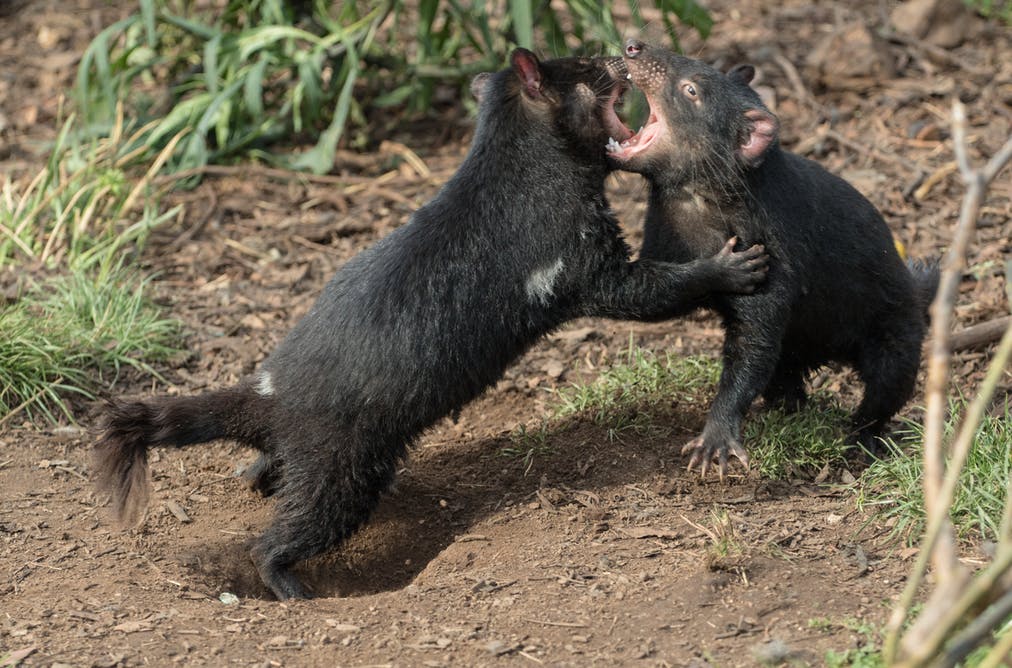
Sometimes the Tasmanian devil can be seen with torn flesh around the mouth and teeth, which were damaged during the fight.
Behavioral features
Animals do not consolidate into groups, but spend most of their time alone when they stop feeding from their mother's breast. These predators were traditionally portrayed as solitary animals, but their biological relationships had not been thoroughly studied. A study published in 2009 shed some light on this.
Tasmanian devils in Narawntapu National Park were fitted with radar that recorded their interactions with other individuals over several months from February to June 2006. This revealed that all the mammals were part of a single, massive contact network characterized by interactions with each other.
Tasmanian devil families build three or four dens to increase their security. Burrows previously occupied by wombats are used by females during pregnancy for increased comfort and protection.
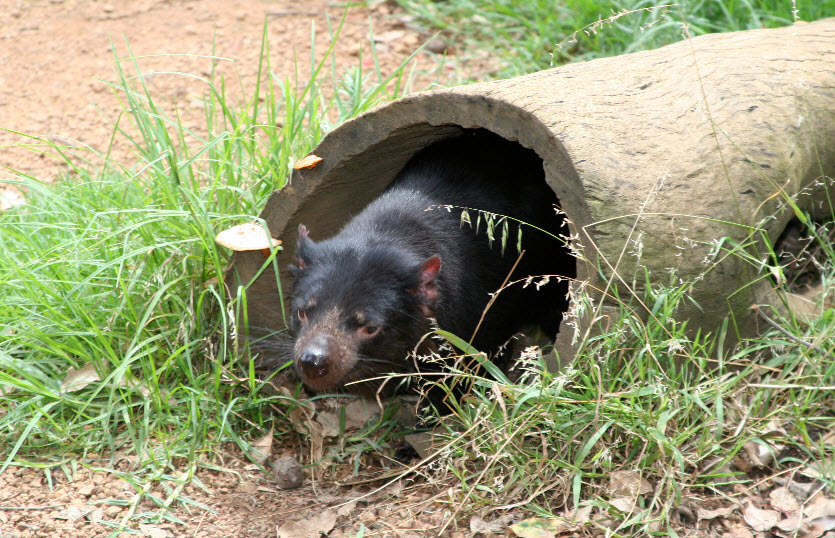
Tasmanian devils prefer to live in burrows.
Dense vegetation near streams, thick thorny grasses, and caves also provide excellent shelter. Adult predators reside in the same burrows for the rest of their lives, which are then passed on to younger individuals.
Tasmanian devils can produce heart-rending sounds in self-defense and to intimidate other animals. They can also roar hoarsely and growl shrilly when threatened.
It's generally believed that marsupial predators pose no threat to humans. However, there have been instances of these mammals attacking tourists. Therefore, if you find this animal nearby, it is better not to disturb it with provocative actions and be careful.
Diseases
First encountered in 1996, the disease affecting these predatory animals was named "devil's facial tumor." It is estimated that between 20% and 80% of the Tasmanian devil population was affected by its impact.
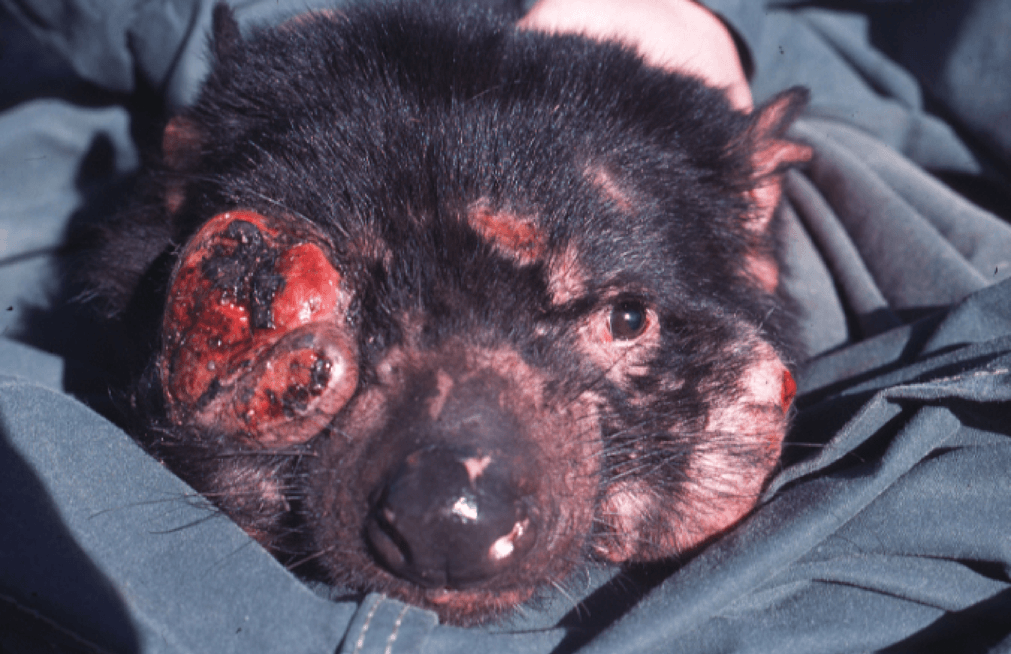
The tumor is characterized by high aggressiveness and almost guaranteed mortality of infected animals within 10-16 months.
This condition is an example of a transmissible disease, which can be transmitted from one animal to another. As of 2018, no cure for facial tumors has been developed, so these animals have to find natural ways to combat this dysfunction. As it turns out, these animals have them:
- Mammals have experienced increased rates of sexual maturation. The volume of pregnant females up to one year of age has increased significantly, allowing the species to maintain its reproductive capacity at the required level.
- A family of predatory marsupials began to reproduce year-round, whereas previously their mating season lasted only a couple of months.
Another serious form of the disease was a second form of cancer (DFT2), discovered in 2015 and initially found in eight individuals. This disease adapts to new conditions better than previously thought. Cancer cells have adapted to the new ecological niche (like parasitic cell clones).
Researchers warn that the diversity of transmissible tumors raises concerns about the likelihood of this disease occurring in humans.
Reproduction
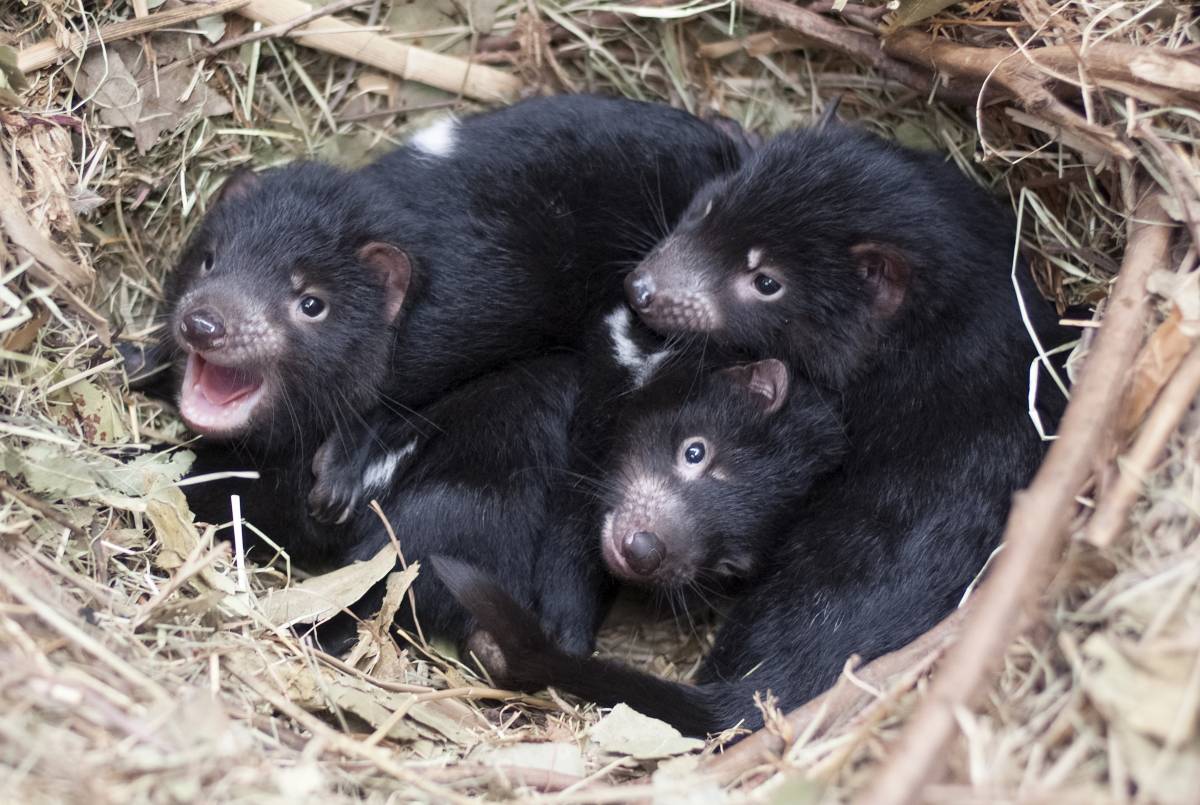
A female can give birth to up to 30 cubs.
Females are ready to perform their reproductive functions upon reaching sexual maturity. On average, their bodies are fully formed by the age of two. After this point, they are able to reproduce a couple of times a year, producing multiple eggs.
The devil's reproductive cycle begins in March or April. During this period, the number of potential prey increases. Therefore, these seasons coincide with the peak of food supplies in the wild. These supplies are used to feed newly born young Tasmanian devils.
Mating, which occurs in March, takes place in sheltered areas throughout the day and night. Males compete for females during the breeding season. Female mammals will mate with the most dominant predator.
Females can ovulate up to three times in a 21-day period, and copulation can take five days. One case has been recorded of a pair mating for eight days.
Tasmanian devils are not monogamous animals. Thus, females are willing to mate with multiple males if they are unprotected after mating. Males also breed with multiple females throughout the season.
Average life expectancy
The biological structure of Tasmanian devils controls their numbers. A mother has four teats, and about thirty pups are born. All of them are very small and helpless. Therefore, only those that manage to latch onto a source of milk survive.
The female continues to nurse her offspring for up to 5–6 months. Only after this period can the mammals begin to forage for food independently.
In the wild, these animals do not live longer than eight years, which makes the renewal of representatives of this population very fleeting.
The mammal is considered one of Australia's symbolic animals. Its image appears on the coat of arms of many Tasmanian national parks, sports teams, coins, and emblems.
Although the devil's appearance and sounds may seem dangerous, this family of predatory marsupials is a worthy representative of the animal kingdom.