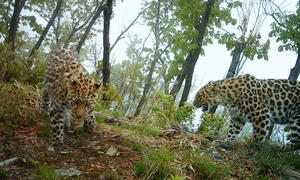
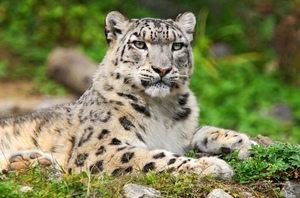
 One of the most powerful members of the cat family is the snow leopard. This animal is also known as the irbis or snow leopard. Due to their valuable fur, snow leopard hunting is always popular. As a result, the species' population declined sharply in the mid-20th century.
It was recorded that in the 1960s, only one thousand adult snow leopards remained on the planet. Recently, the snow leopard population has increased and reached a value of 5,000–7,500 individualsThis was achieved thanks to a ban on hunting this predator. In all countries where the snow leopard lives, the animal is protected and listed in the Red Book.
Habitat and population of the snow leopard
This magnificent animal can be found in Central Asia. The snow leopard's primary habitats are in the following countries:
- Afghanistan,
- Russia,
- China,
- India,
- Kazakhstan,
- Kyrgyzstan,
- Mongolia,
- Uzbekistan and others.
This mammalian predator can be encountered in high mountains, at altitudes ranging from 1,500 to 5,000 meters above sea level. In Russia, snow leopard habitats are found in Khakassia, Altai, Tyva, and the Krasnoyarsk Territory.
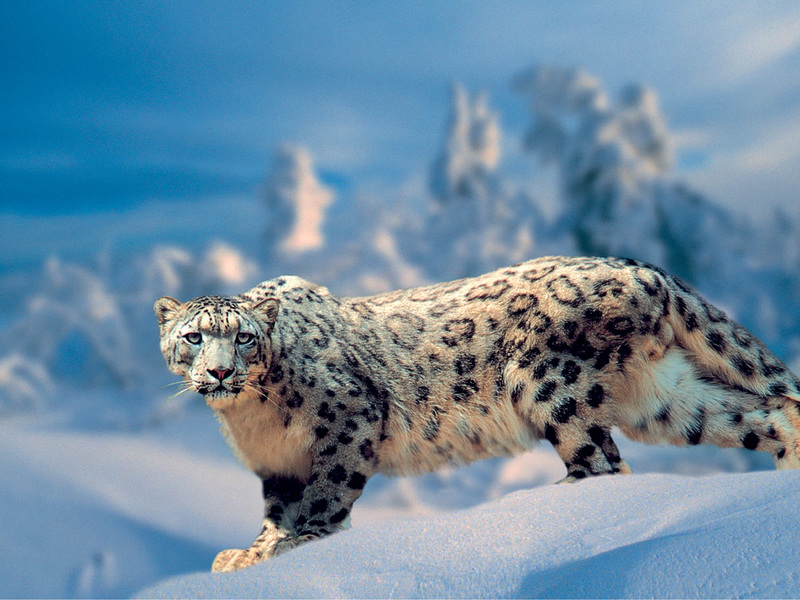
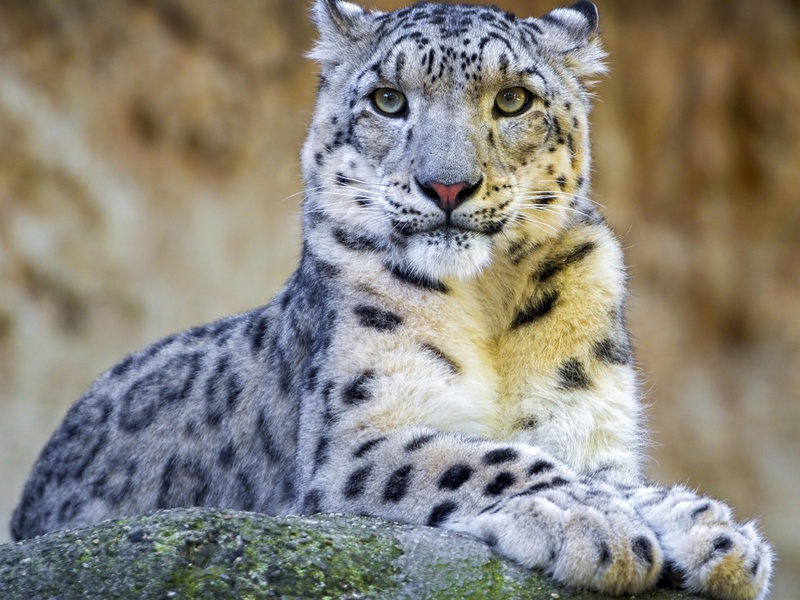
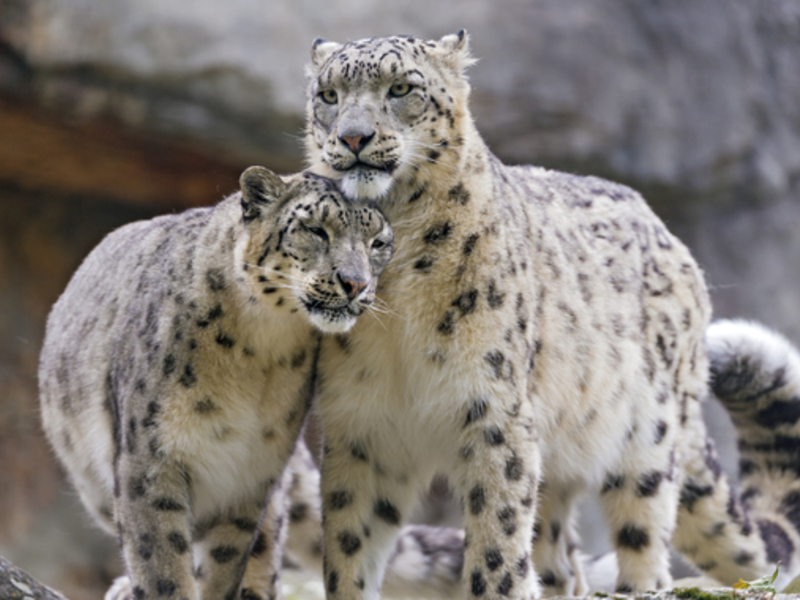
Description of the snow leopard's appearance
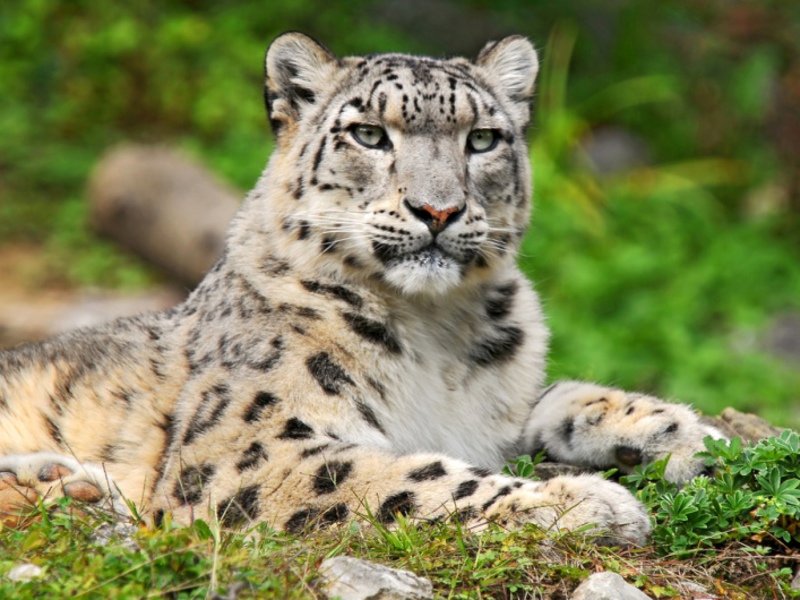
The snow leopard's appearance resembles that of a leopard, despite being quite distantly related. Furthermore, the snow leopard is significantly smaller than its relative, reaching up to 60 centimeters at the shoulder. Its body can reach up to one and a half meters in length, and its tail can be a full meter long! Of all the felines, the snow leopard is the largest. Snow leopards have the longest tail in relation to their bodyThe tail is used to maintain balance during enormous leaps—up to 15 meters. An adult snow leopard can weigh up to 100 kilograms. Males are generally larger than females.
The snow leopard's head is small, approximately 20 centimeters long. The tips of its ears are rounded and lack tufts. Its wide paws prevent it from sinking into the snow.
The fur is predominantly gray with black spots. In winter, the skin is darker, and lightens in summer. The spots are shaped like a five-petal flower, often with an additional spot in the center. The head, neck, and limbs have black smears rather than clearly defined spots. The spots are large, reaching 7 centimeters in diameter. The predator's fur is thick and long, with hairs reaching 5.5 centimeters in length. This is due to the fact that snow leopards live primarily in cold climates. It is noteworthy that snow leopards fur grows even between the toesThis protects the snow leopard from the cold in winter and from hot rocks in summer. It also prevents it from slipping on ice.
An adult cat has 30 teeth. They do not roar like other large felines, but rather meow in low tones.
Nutrition and hunting
Snow leopards are predatory animals of the cat family. They prefer to hunt at dusk or dawn. They typically hunt the following animals:
- on ungulates: rams, mountain goats, roe deer, deer;
- on small animals: gophers, pikas;
- for birds: snowcocks, pheasants.
However, attacking small animals and birds is not typical for snow leopards. They hunt them when there is a shortage of large horned prey nearby.
The hunt is conducted as follows: The predator stalks its chosen prey and swiftly pounces on it. High rocks are used for ambush, in which case the attack is from above. They can pursue prey at a distance of about 300 meters, but if they fail to catch up with the victim, they stop the chase.Snow leopards can hunt in families of 2–3 individuals. In this case, these mammalian predators can even successfully attack bears.
Snow leopards drag their prey back to their sleeping area, where they eat it. They typically don't guard or hide the remains. A single large prey item is enough for a snow leopard to last several days.
It is known that in summer, snow leopards gnaw grass and green parts of young bushes in addition to the meat obtained from hunting.
Reproduction
Snow leopards are primarily solitary, but can form family groups. A single male's territory covers 150–160 square kilometers, partially overlapping with the territories of females. They prefer to settle in rocky places, often occupying natural caves or nests of large birds.
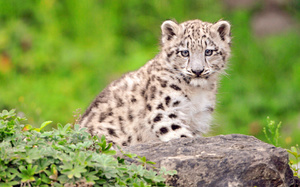
Mating occurs in spring or early summer. The mating season is very short—just a week. Gestation lasts 3–3.5 months. The female creates a warm, secluded den, lining the bottom with her fur. A litter consists of 2–3 kittens. The kittens are born blind, and their eyes open after about a week. The kittens weigh approximately 500 grams and reach 30 centimeters in length. Their coloring is brown with small spots. At first, they feed exclusively on their mother's milk. Only the mother cares for the kittens.
The cubs remain in a hidden cave for approximately two months. During this time, the mother feeds them meat in addition to milk. The little leopards begin to go hunting with their mother at about six months of age.At first, only the mother attacks the prey.
The cubs become independent at around two years of age, and sexual maturity occurs at four years. Snow leopards have a lifespan of up to 13 years, and in captivity, they can live up to 20.