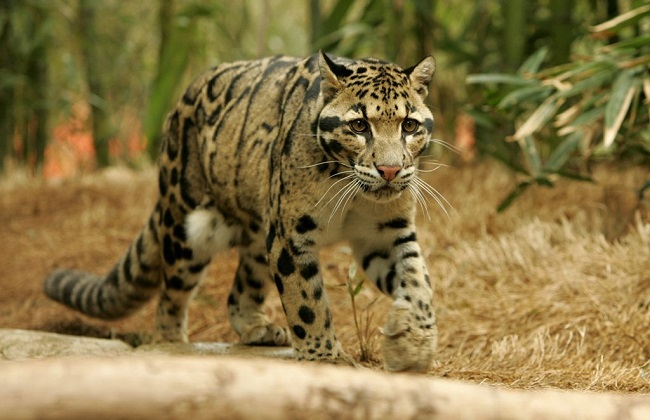
The clouded leopard is an ancient predator that is one of the ancestors of the large cat family. It has very little in common with common leopards, except perhaps the pattern on its fur. This animal is a transitional link between small and large cats.
The animal lives in Nepal, China, southern Indochina, Burma, and the islands of Borneo and Java. It prefers to inhabit evergreen mangrove rainforests, highlands (up to 2,500 meters), and savannas.
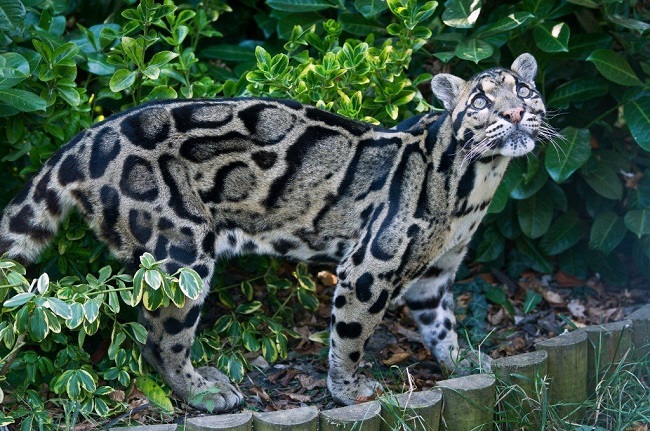
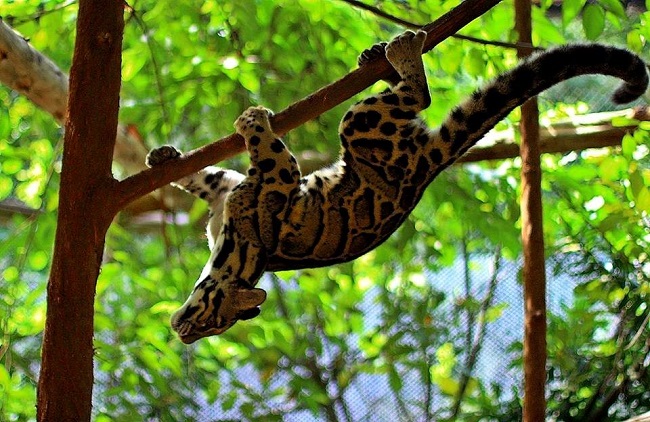
Aborigines call it the tree tiger, as it primarily hunts and lives in trees. Some people worship it as their spiritual ancestor.
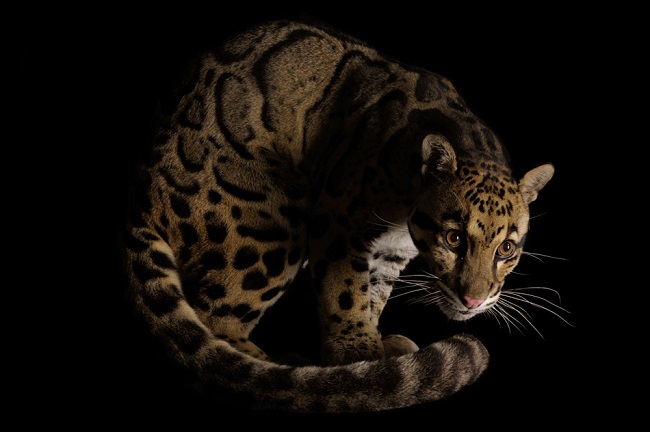
Today, there are 3 subspecies:
- Neofelis nebulosa - China and Indochina;
- Neofelis nebulosa macrosceloides - Nepal and Myanmar;
- Neofelis nebulosa brachyura - a species that lived in Taiwan, but is now extinct.
This leopard is the size of a large dog. Its body length is 1.6–1.9 m, and its weight ranges from 11 to 15 kg for females and from 16 to 20 kg for males.
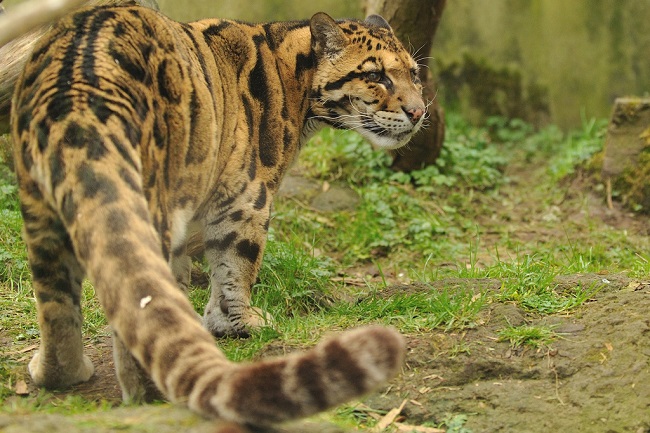
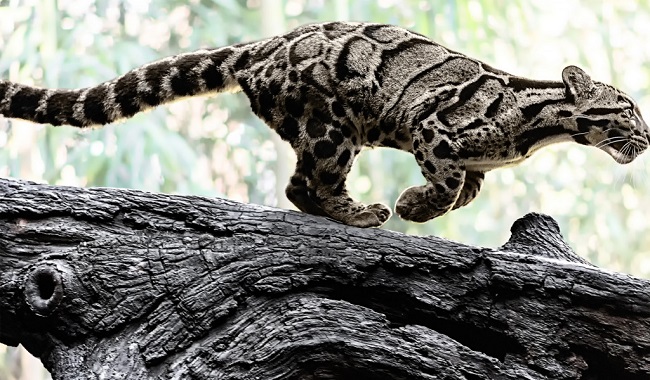
The tail is very long, almost half the length of the body, and reaches 90 cm, the height at the withers is about 50 cm.
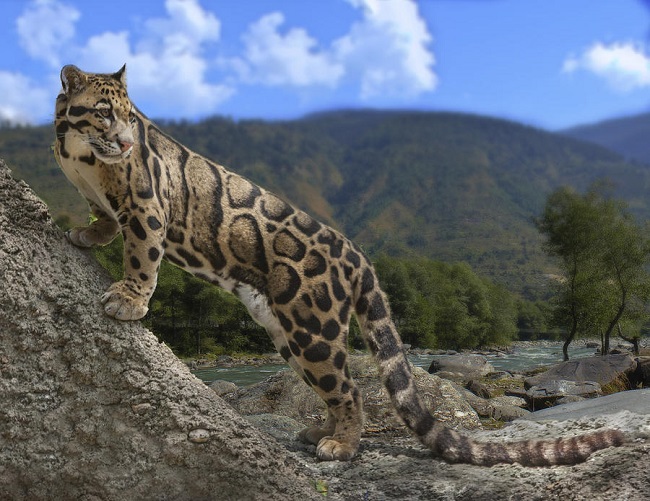
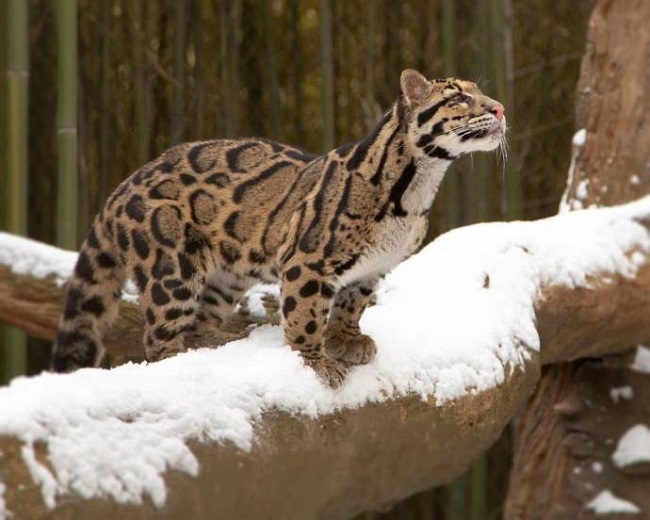
The body is taut, strong, and flexible. The paws are quite short, and the pads are covered with hard calluses. It can purr like a domestic cat.
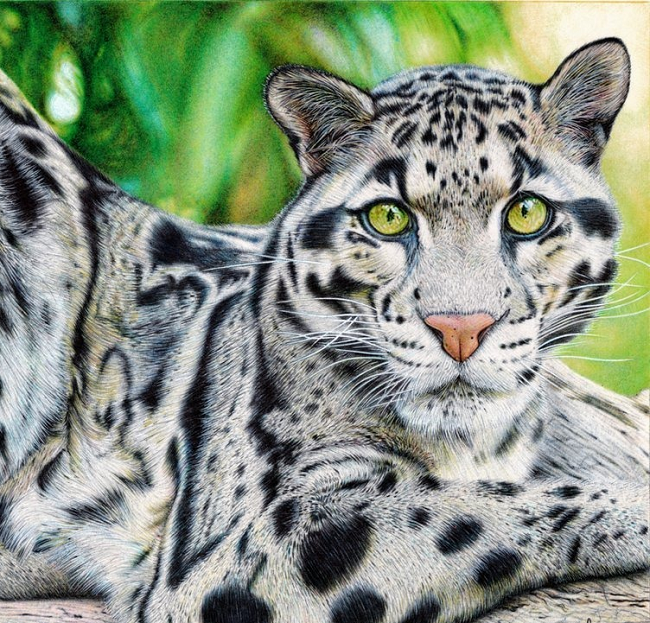
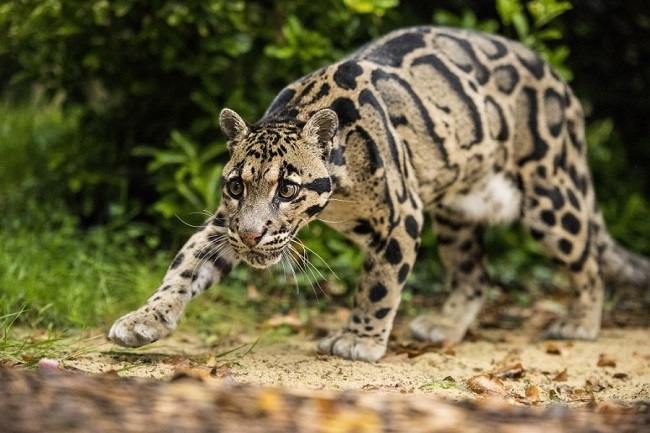
The head is elongated. The pupils are ovoid, and the iris is greenish-yellow.
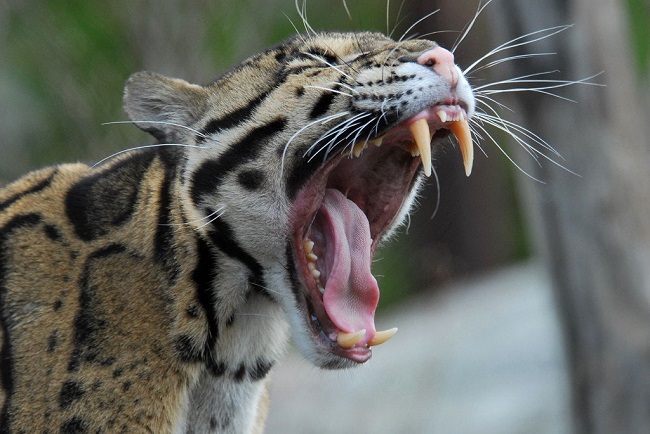
It has fairly large teeth—canines reaching 4 cm—which is why it is sometimes called a saber-toothed cat. Leopards can open their mouths much wider than other cats.
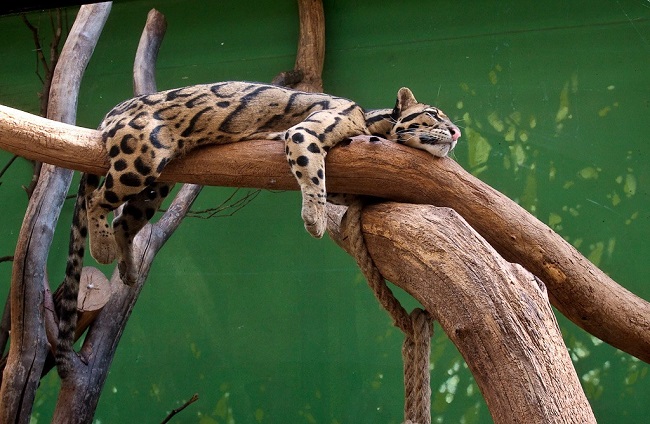
It has a very distinctive coloring: large black spots of varying sizes are scattered in marble patterns across a dark gray or yellowish-brown background.
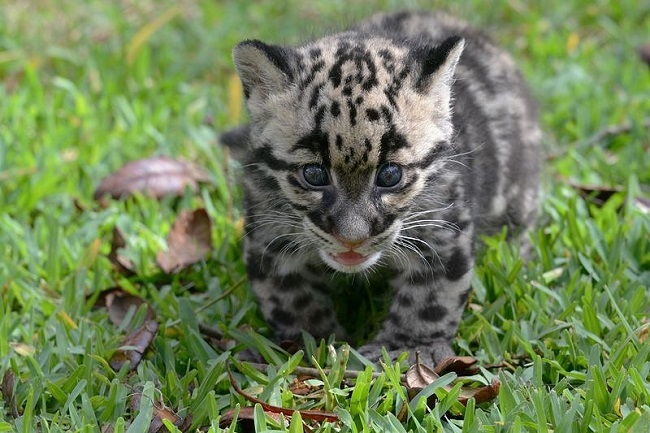
The head also has black spots and stripes running from the eyes to the cheeks and from the corners of the mouth to the neck. From the back of the head, the lines extend to the shoulders.
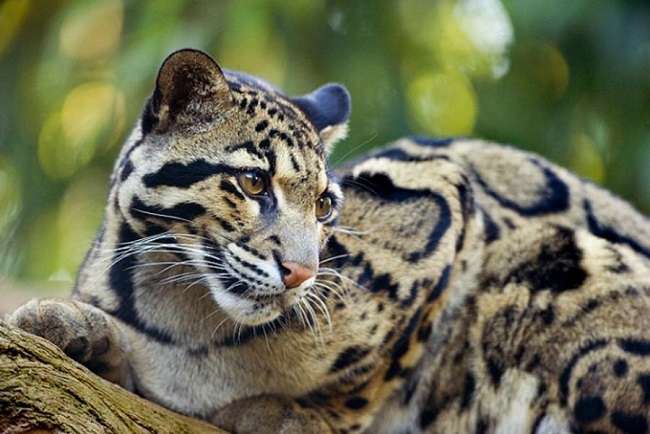
Long spots extend along the back, forming one wide stripe along the spine.
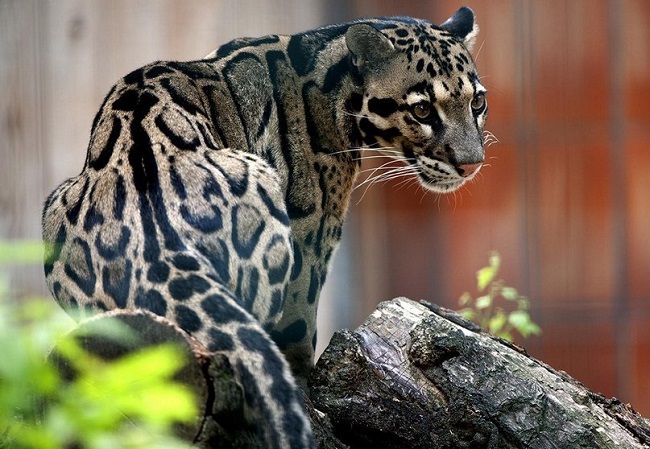
On the sides, the spots are darker and duller, bordered by bright stripes. This creates a smoky 3D pattern, which gives the species its name.
The menu mainly consists of birds, monkeys, and sometimes the leopard can catch palm civets, fish or reptiles.
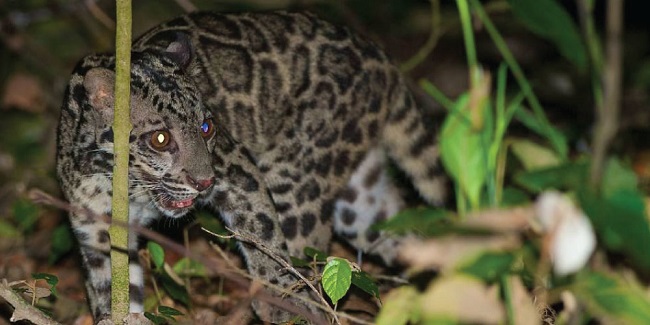
Quite often it also attacks large animals - goats, young buffalo, pigs and deer.
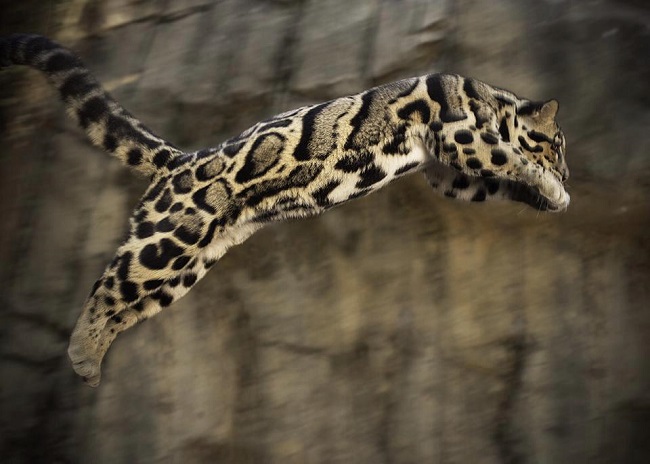
It is an excellent tree climber and can even hang upside down from a branch, clinging to it with its hind legs.
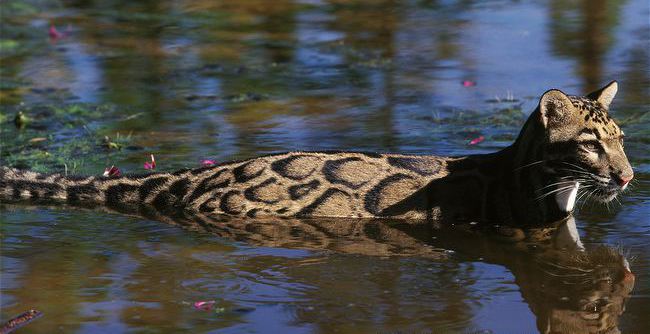
He can swim well.
The clouded leopard has binocular vision, allowing it to hunt at any time of day. This gives it a significant advantage over other cats. It lives and hunts mostly alone.
These cats live up to 11 years in the wild, and up to 17 in captivity.
The main threat to this species is humans and their activities. The beautiful fur of these animals is used to make fur coats, and their meat and teeth are used in Eastern medicine.
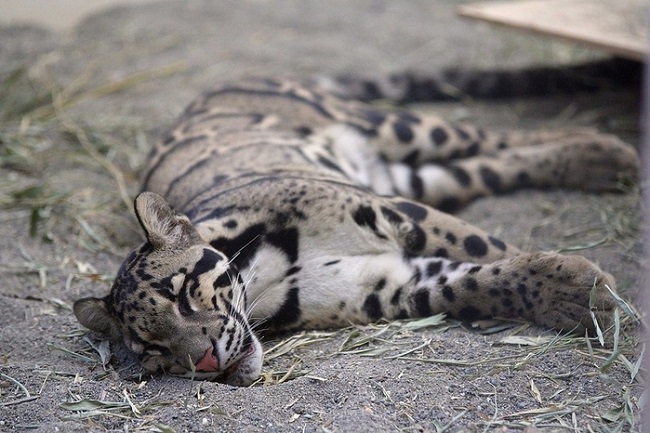
This species is currently listed as endangered, with a population of approximately 10,000 individuals. In captivity, these cats can reproduce if provided with favorable conditions, offering hope for the conservation and restoration of their population.