Cats can suffer from both toxic and viral forms of hepatitis. This disease is chronic and leads to liver cell death. Over time, liver function is impaired, leading to a number of characteristic symptoms and ultimately death. Early detection and treatment can help prolong your pet's life.
The mucous membranes of the skin are stained yellow
Impaired liver function leads to elevated bilirubin levels in the blood. This causes the mucous membranes and skin to acquire a characteristic yellowish tint. This is especially noticeable around the lips, gums, eyelids, and inner ears.
It's difficult to examine the whites of cats' eyes, but they also become yellowish. This characteristic yellowing often appears in the late stages of hepatitis, when significant cirrhotic changes are present in the liver.
Lack of appetite
A decrease in appetite may indicate the development of hepatitis in a cat. The animal may refuse previously favorite foods. A complete refusal to eat is also possible. A perversion of appetite may also indicate the development of hepatitis.
A sick animal begins to show an interest in foods it previously rejected. In rare cases, a predilection for inedible objects may indicate hepatitis in cats. The pet may chew on whitewash, furniture, litter, etc. The cat may even begin licking containers containing cleaning products. This appetite perversion often leads to severe poisoning if owners neglect to supervise their pet and protect it from hazardous substances.
Urine darkens
Cats with hepatitis produce excess bile. Furthermore, the blood's detoxification processes are disrupted. This causes the urine to take on a characteristic dark color. Flakes may appear. In rare cases, traces of blood and pus may appear, which also color the urine.
The animal is exhausted
Liver dysfunction and loss of appetite can lead to rapid weight loss and emaciation. Even if a cat is eating well and has maintained its appetite, it will rapidly lose weight. In the final stages of hepatitis, cachexia develops.
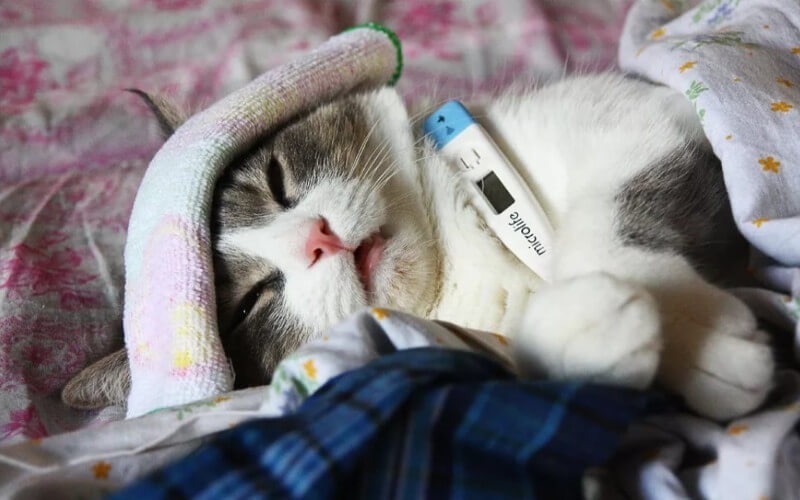
The cat has an elevated body temperature
An elevated body temperature in cats is typically observed only with infectious hepatitis. In cases of mild to moderate disease or toxic hepatitis, no temperature changes may be observed.