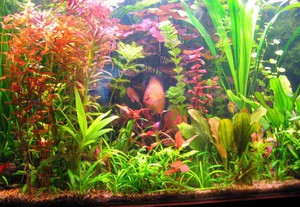
 Elodea, or water elm, is quite common these days due to its undemanding nature. Elodea can even thrive in aquariums lacking substrate, which is sometimes quite convenient. Furthermore, elodea beds provide excellent shelter for livebearing fish such as swordtails, guppies, and mollies.
Canadian Elodea
Spreading
Elodea canadensis – a perennial freshwater plant of the Hydrocharitaceae familyElodea is native to the cool waters of North America. Thanks to humans, it has spread across the globe. Its green shoots can be found in bodies of water in Eurasia, Africa, and Australia. It can grow virtually anywhere with water and sunlight, and it grows very quickly, literally taking over an entire body of water and choking out other plants, earning it the nickname "water plague." It is also known as anacharis.
General description
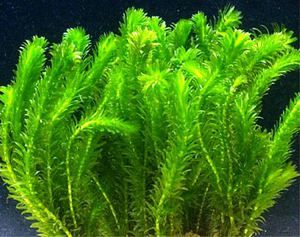
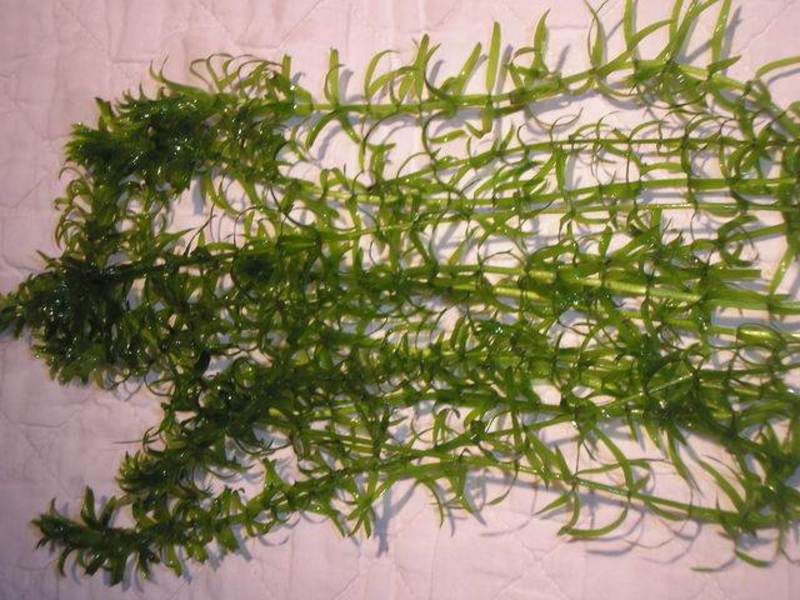
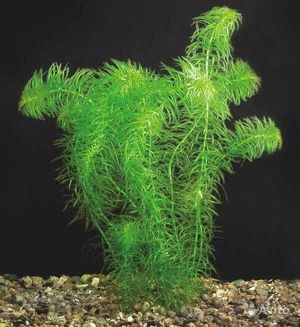
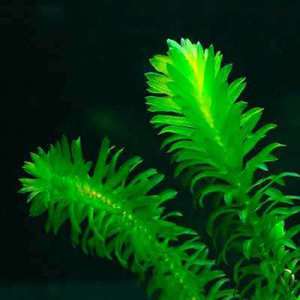
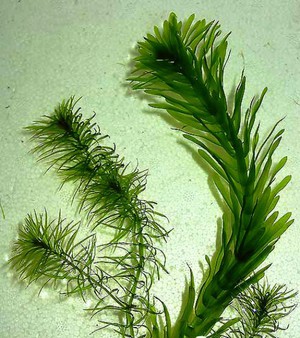
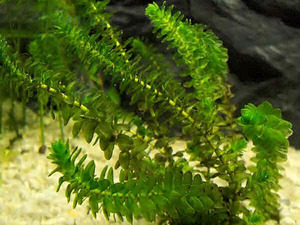 Elodea has long and branched liana-like stems covered with small oval leaves, which are collected in whorls. Young stems are bright green, but as they age, they turn dark green. The stems of this plant are brittle, but have an amazing ability to regenerate. You can break the stem into pieces, each five centimeters long, and each fragment will grow into a full-fledged plant in three to four weeks.
Canadian Elodea can spread along the bottom of a reservoir, or it can float on the surface. In cold weather, it sinks to the bottom and sheds its leaves, leaving buds on the stem, from which new shoots emerge when the weather warms. However, in a warm aquarium, the plant grows year-round.
Optimal conditions for keeping in an aquarium
The "water plague" can survive in almost any aquarium, but it is better if it lives than survives, so it is necessary to create optimal conditions for it in the aquarium.
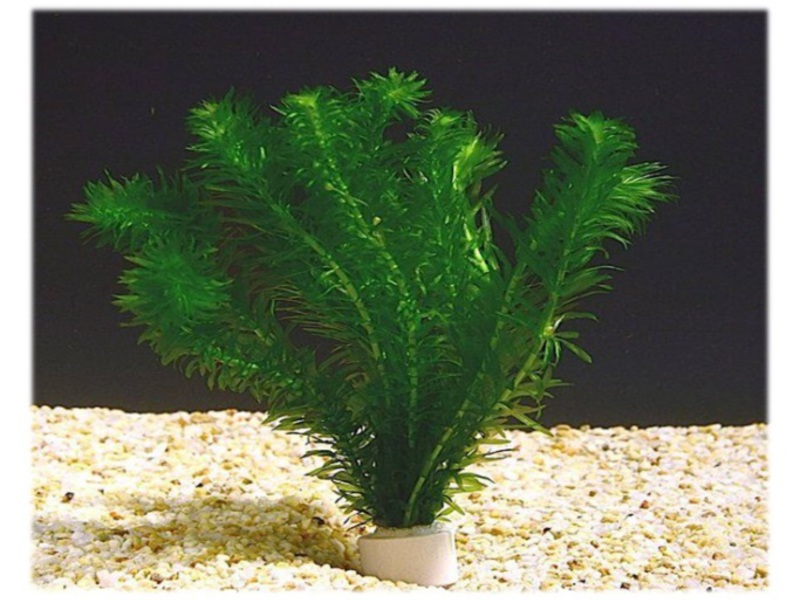
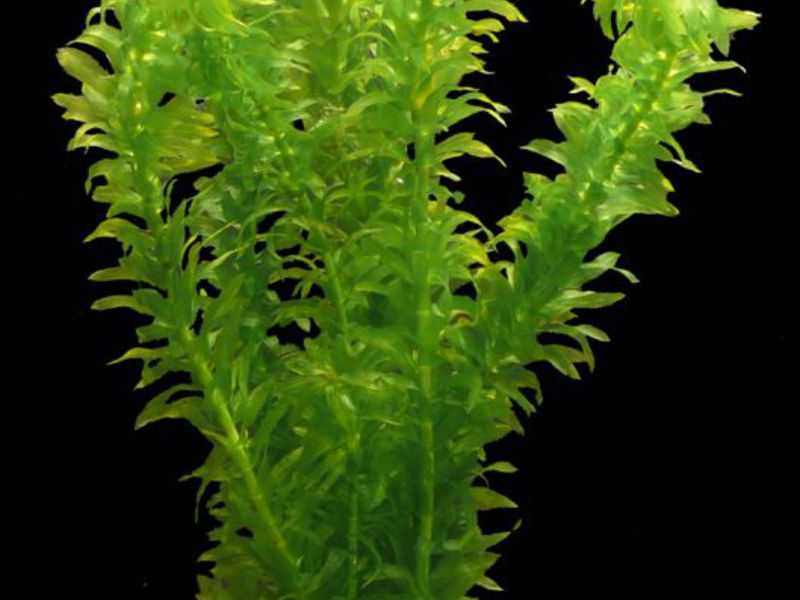
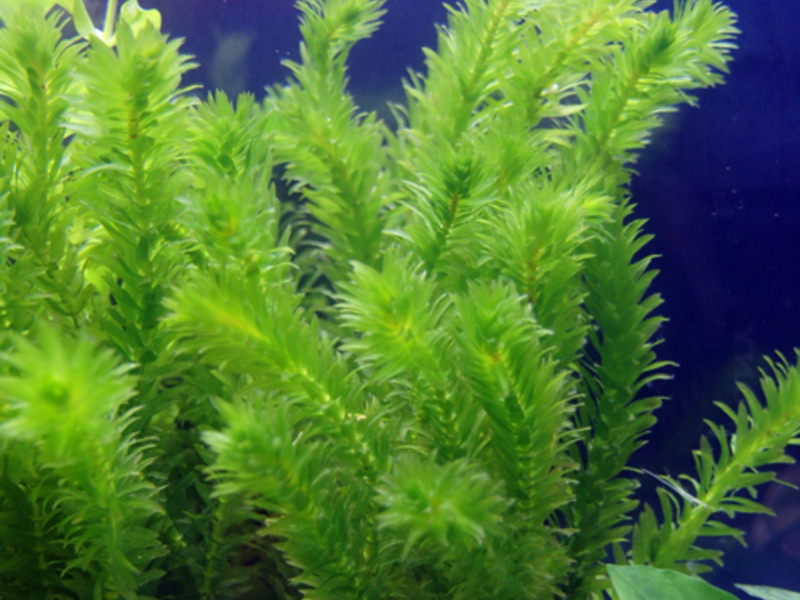
The aquarium microclimate should replicate the conditions of the reservoirs temperate latitudes. The best conditions for anacharis are:
 Temperatures range from 15 to 23 degrees Celsius. In warmer water, the plant does not thrive, and growth slows. In water colder than 14 degrees Celsius, Elodea begins to prepare for winter, which is indicated by growth cessation and leaf shedding.
- Soft water. Water hardness and acidity aren't particularly important; however, if Elodea is moved from a soft-water aquarium to a hard-water one, it may die. However, it tolerates the transition from hard to soft water without problems. When relocating, it's important to recreate all the conditions that were present in the previous location.
- No turbidity. The Elodea aquarium plant is very sensitive to turbidity; suspended particles settle on its leaves, blocking sunlight (or lamp light), which leads to the cessation of photosynthesis and death.
- Bright and even lighting. In an aquarium where this plant is growing, care must be taken to ensure that the light evenly illuminates the entire surface of the aquarium. If one corner receives more light than another, the plant in the bright corner will remain green and vibrant, while shoots in the dark corner will soon turn brown, shed their leaves, and die.
 Temperatures range from 15 to 23 degrees Celsius. In warmer water, the plant does not thrive, and growth slows. In water colder than 14 degrees Celsius, Elodea begins to prepare for winter, which is indicated by growth cessation and leaf shedding.
All These plants get their nutrients from water., filtering it out.
The current in the aquarium should be slow; if it is strong, all the shoots will simply be “blown” into one corner, where they will turn into an unsightly lump.
Growth and rooting
 Some aquarists stick the plant shoots into the soilThis can be done, but it's not necessary. The plant will root on its own. Simply drop a sprig of Elodea into an aquarium where all the necessary conditions are met. The sprig will soon begin to grow, and quite rapidly, transforming from a ten-centimeter cutting into a long, up to thirty-centimeter bush in just two weeks. Incidentally, Anacharis can grow up to two and a half meters in length.
Coming soon to the stem shoots of dirty white or light brown color appearThey grow downward, growing at a rate of two millimeters per day. If the stem is turned over, the upward-facing shoots will fall off, and new ones will grow, again pointing downward. These are the roots of the "water bug." Once they reach the bottom, they grow into the soil, anchoring themselves like anchors. This is how Elodea self-roots.
The benefits of the plant and its toxicity
Elodea canadensis is a very useful plant for an aquarium, its benefits are as follows:
- Fish Shelter. The dense, intertwined stems of Elodea provide excellent cover for various fish species, such as swordtails, guppies, macropods, and gouramis. Furthermore, through photosynthesis, Elodea produces a huge amount of oxygen, which all aquatic inhabitants breathe.
- Filtration. This aquarium plant is capable of filtering out fine suspended matter, almost invisible to the naked eye, from the water, thereby improving water quality.
- Fighting microorganisms. The plant secretes special substances that act as natural antibiotics and are destructive to pathogenic microflora, which is present in every aquarium, even the most well-maintained one.
- Algae suppression. With its rapid growth and ability to absorb all nutrients from the water, Elodea can suppress the growth of algae such as black beard algae and thread algae.
 Fish Shelter. The dense, intertwined stems of Elodea provide excellent cover for various fish species, such as swordtails, guppies, macropods, and gouramis. Furthermore, through photosynthesis, Elodea produces a huge amount of oxygen, which all aquatic inhabitants breathe.
Elodea toxicity
With all its positive qualities The Canadian Elodea has another property that an aquarist should take into account. Before adding to your aquarium. Toxicity. The plant's sap is toxic. This poison is completely harmless to humans, but it can kill fish fry. Therefore, before handling the plant, such as trimming overgrown stems, remove it from the aquarium. A few minutes of exposure to air won't harm the "aquatic plague," but any fry, as well as any small fish that like to hide in its thickets, will survive. Elodea's poison is not dangerous for larger fish over five centimeters long.
That's all you need to know about the Canadian Elodea aquarium plant.