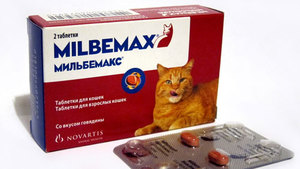
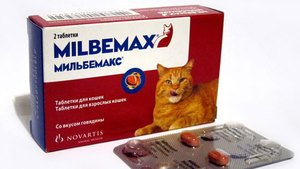
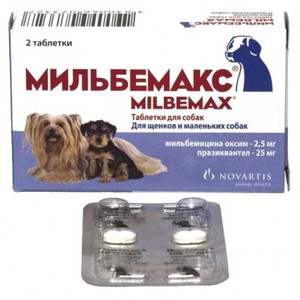
 Every pet is susceptible to worm infestation. Even if a cat or dog doesn't go outside, they can still pick up parasites from dust on shoes, a caught fly, or raw fish or meat. Therefore, all animals require regular deworming. Many medications are used for this purpose, including Milbemax, a widely used product with many positive reviews.
Content
Pharmacological action
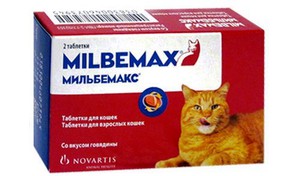
A medicinal product produced in the form of tablets the drug is a combined anthelmintic drug and helps fight the following types of parasites:
- nematodes and their larvae;
- cestodocids;
- roundworms and tapeworms.
Preparation intended for prevention and treatment Antihelminthic treatment for kittens and puppies, as well as adult dogs and cats. It contains:
- praziquantel;
- milbemycin oxime;
- microcrystalline cellulose;
- povidone;
 sodium croscarmellose;
- lactose monohydrate.
 sodium croscarmellose;
As a result of the action of praziquantel the parasites' epithelium is destroyed and a sharp muscle contraction occurs. Melbimycin oxime, a bacterial enzyme, causes paralysis and death in worms.
Milbemax is considered a moderately hazardous drug in cats and dogs. Strict adherence to the prescribed dosage is recommended.
Instructions for use
Milbemax used for pets Suitable for all breeds and ages. There's no need to fast your pet before using it. Simply add the tablets to their morning meal or force-feed them. Dosage depends on the animal's weight.
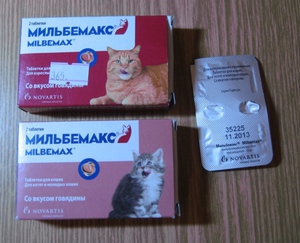
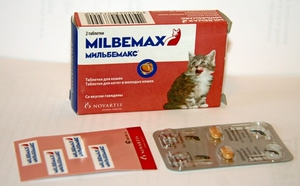
Milbemax dosage for kittens and cats:
- kittens weighing from 0.5 to 1 kg are given half a pink tablet;
- kittens and cats weighing 1–2 kg – one pink tablet;
- for cats weighing 2–4 kg – half a red tablet;
- if the animal weighs from 4 to 8 kg – one red tablet;
- For large cats weighing 8–12 kg – one and a half red tablets.
Pets must take the drug strictly according to the instructions. Before vaccination of cats and kittens Deworming is performed two weeks before vaccinations. As a preventative measure, Milbemax is recommended for pets every three months.
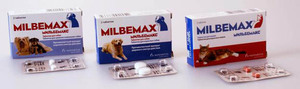
Dosage for puppies and adult dogs:
- puppies weighing up to 1 kilogram require ½ a children's tablet;
- puppies and small adult dogs weighing 1–5 kg – one tablet;
- puppies and large breed dogs weighing from 5 to 10 kg should be given two children's tablets;
- Adult dogs weighing 5–25 kg should take one adult tablet;
- larger dogs weighing 25–50 kg – two tablets;
- very large pets weighing from 50 to 75 kg – three adult tablets.
 puppies weighing up to 1 kilogram require ½ a children's tablet;
For treatment Milbemax is used once a week. For a month. For preventative purposes, the drug is taken once before the start of the summer season, and then monthly until the end of the season.
Contraindications and side effects
Medicine Milbemax is contraindicated for the following conditions and diseases:
- For liver and kidney problems.
- For cats and dogs with hypersensitivity to the components of the drug.
- Animals with infectious diseases.
- Exhausted individuals.
- For puppies and kittens up to two weeks of age weighing less than one and a half kilograms.
- Milbemax can be given to lactating and pregnant females only as prescribed by a veterinarian.
 For liver and kidney problems.
Bobtail, collie, and sheltie puppies have increased sensitivity to macrocyclic lactones, so it is not recommended to give them Milbemax.
Complications and side effects when using this drug strictly according to the instructions In most cases, this does not occur. With a minor overdose, animals may experience:
- nervous gait or trembling;
- depressed state;
- salivation;
- muscle paresis.
These the symptoms disappear without a trace within 24 hours.
Reviews from cat owners
My review will focus on the anthelmintic drug Milbemax. Quite recently, purely by chance, we got a cat who was dirty, skinny, and full of fleas. After researching a ton of information, I settled on Milbemax, a low-toxic, modern, and effective product. After calculating the dosage, I purchased one tablet for adult cats. Half a tablet is enough for my 2.7 kg pet. The manufacturers claim the medication is beef-flavored. However, my cat refused to eat the tablets on her own, so I had to force-feed her.
Having read various reviews about how worms literally start crawling out of every nook and cranny after taking these medications, I was very worried about my cat, Manyunya. But she simply crawled under the couch and fell asleep. She only recovered in the evening, then ate and drank for the first time. She had no bowel movements that day. Her first bowel movement was only a day later. I didn't find any worms. I'll give her the second half of the tablet in a week to give the parasites no chance. Although, maybe my cat doesn't have any, though it's hard to believe. I liked the medication because it doesn't require a laxative or a fast beforehand.
We use only Milbemax for our kittens. We give it once every six months with their food. The kitten eats the tablets without any problems. The blood tests after administration are always clear. We also have them before Milbemax – worms are almost always present. This medication really works! The tablets are very conveniently sized. They're so small, our pets eat them with their food and don't even notice. After taking this medication, there's no stomach pain, no foaming, and the cat doesn't cry, as with other deworming medications. I'd also like to point out that just because you don't see worms in your pet's stool doesn't mean they're not there.
I paid a whopping 750 rubles for two Milbemax tablets! Anisy took one, and I barely managed to feed the second one along with some canned food to my other cat, who's very skittish. Zhulka ate the medicine without even noticing, even though he always left the other tablets on his plate. The tablets are small, making them very easy to administer to animals. My cats showed no signs of intoxication after taking them. The only downside is that the medication is very expensive.
 I'd heard for a long time that Milbemax is a good anthelmintic medication. But its price always put me off. I finally decided to buy it because our older cat wasn't feeling well after taking Caniquantel and Cestal Ket. Younger cats were fine after taking these medications, but Anisy lost his appetite and started vomiting.
Milbemax Reviews from Dog Owners
After my dog Elka showed the first signs of parasites (she started walking on her bottom), I decided to give her an anthelmintic. And it was time for her vaccinations. Milbemax is certainly a bit pricey, but for my beloved pet, it's worth it. They say one tablet is enough for preventative purposes, but I gave her two, ten days apart. I crushed them into powder and added them to some tasty sausage. Ellie ate it without even noticing. After the second dose, she developed diarrhea. But the upset stomach quickly passed. Within two weeks, the signs of the disease had disappeared, meaning the medication had worked. All cats and dogs that go outside and eat raw meat must be dewormed twice a year!
We decided to get a small purebred dog and bought a Miniature Schnauzer from an experienced breeder. The puppy was just one month and one week old. The breeder said that when the puppy was a month old, she gave him half a tablet of Milbemax, an anthelmintic. She advised us to repeat the treatment in two weeks, this time giving the puppy one tablet. We did so at the appointed time. Our pet ate the tablet without any problems. He experienced no side effects, such as foaming at the mouth or any other unpleasant symptoms.
 But for the next three days, he was passing long, thick, huge, dead roundworms. A total of eight parasites! Just in case, we had to treat the whole family, as we hadn't suspected the puppy had worms and were constantly "licking" him. I gave him the pill again ten days later. This time, there were no parasites, and the medication worked perfectly. I asked the breeder why this happened. She answered evasively that it happens. I don't even know what to think. Either the breeder lied about giving the dog the medication, or this is actually possible.