 One of the most important procedures that is essential for pets is deworming. From the first day a kitten comes home, it's essential to keep a veterinary first aid kit stocked with deworming medications.
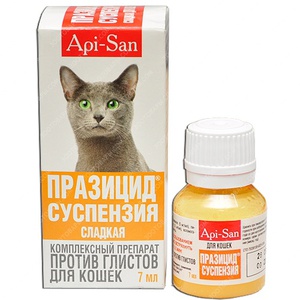
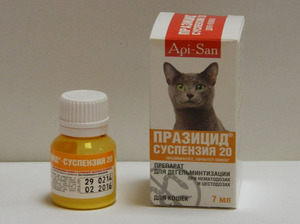
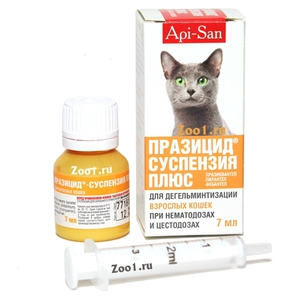
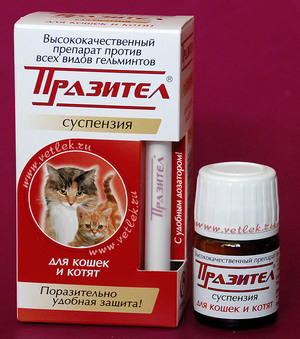
Today we'll tell you about a complex product called "Prazicide Suspension Plus" for cats. Owners of these furry friends know about this product firsthand and have left their reviews, which you can read in our article.
How does Prazicide Suspension Plus work?
The active ingredients of the anthelmintic drug are praziquantel and pyrantelThey disrupt intracellular calcium metabolism in helminths, leading to their paralysis and death. The medication is used for the prevention and treatment of the following types of parasites:
- cestodiasis (diphyllobothriasis, mesocestoidosis, dipylidiasis, taeniasis, chinococcosis);
- nematodes (trichocephalosis, hookworm, uncinariasis, toxocariasis, toxascariasis);
- mixed cestode-nematode invasions.
The medication's active ingredients are capable of affecting helminths at any stage of their development. Acting only in the intestines, the suspension is poorly absorbed, resulting in the death of all parasites.
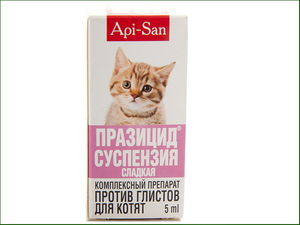
The drug is being released in several modifications, each of which is intended for young or adult pets, for large or small breed cats.
1 ml of Praziquantel contains 5, 10, or 15 mg of praziquantel and 15, 30, or 45 mg of pyrantel, respectively. The suspension is packaged in 5 ml polymer vials. Each box of the product must include a dosing syringe.
Instructions for use
The suspension is prescribed to kittens only after they reach three weeks of age. It is administered as a single dose, either by squeezing a syringe onto the back of the cat's tongue or mixed with their morning meal. The suspension has a sweet taste, so pets readily accept it. Shake the bottle before use.
Required single dose:
- for small kittens, 1 ml of suspension is prescribed per 1 kg of the baby’s weight;
- Adult cats require a dose of 1 ml per 3 kg of body weight.
If your pet has a significant infestation, deworming should be repeated after 10 days. Pregnant and lactating cats should be given the drug under veterinary supervision.
Deworming is carried out before each vaccination and once every three months for preventive purposes.
Side effects and limitations
 By degree of effect on the body Prazicide suspension is low toxic, therefore, it is well tolerated by pets, has no sensitizing effect, and does not affect the fetus or embryo. However, it is best not to administer it during the first half of pregnancy. The drug is also contraindicated for females during the first three weeks after giving birth, cats with allergic reactions, and weakened and emaciated animals.
When using Praziquantel suspension strictly according to the instructions, complications and side effects in animals most often do not occur. In some cases the following may be observed:
- Short-term salivation.
- Vomit.
- Loose stools.
All these reactions of the body to the action of the medication disappear on their own after a short period of time and do not require treatment.
It is not recommended to give Praziquantel suspension to cats together with cholinesterase inhibitors and drugs containing piperazine.
Reviews of Prazicide Suspension Plus for Cats
My pets are always outside, so I make sure to deworm them every three months. I chose the suspension because my The cat doesn't want to swallow pills at allThe only medication he swallows with almost no problem is the suspension. The box comes with a 3 ml syringe, which is not very convenient for us. My cat weighs over 4 kg, and I really don't want to give him the medicine a second time. So I fill the syringe with the suspension until it stops.
The thick liquid has a milky tint and a rather unpleasant odor. My cat doesn't like it at all. However, there's a sweet version of the medication for small kittens. My pet tolerates Prazicin well. Only in the first few minutes after administration is there any noticeable discomfort. salivation that quickly passesWe've never had any helminths. Overall, I'm satisfied with this product, and I'd like to recommend using it for preventative purposes in my review.
 When our cat developed parasites, specifically hookworms, we purchased Praziquantel suspension. I'd read reviews about this medication, saying it wasn't particularly toxic, but it wasn't particularly potent either. Following the instructions, we added the medication to his morning portion of food. Since our kitty had gotten hungry overnight, he ate it all up. Everything was fine for the first week. However, all the symptoms soon returned.
According to the instructions, the procedure for expelling parasites was repeated after 10 daysI just needed the second half of the package for this, so I didn't have to buy a new one. Repeated use helped, and everything has been fine for a month now. The advantage is that no side effects were observed. Of course, the disadvantage is the need to reapply the product. However, more effective medications are also more toxic. So, I recommend using Praziquantel for kittens to avoid poisoning them with chemicals.
Our five-month-old kitten, who had been out for a walk at the dacha, was diagnosed with worms. At the vet, they recommended tablets and a suspension. I chose the latter, as it's much more difficult to force a tablet into a cat. The package contained measuring syringe and instructions, according to which 1 ml of medicine was required per 1 kg of animal.
We couldn't get the medicine into the kitten's mouth with a syringe. So we mixed it with ground meat, which he managed to eat. Literally five minutes later, white foam started coming out of our pet's mouth! He started screaming and thrashing around! After a while, the foam subsided, but he refused to eat and was restless. Our kitten is now worm-free, but I won't be using this medicine again. However, veterinarians say this is a normal reaction and nothing to worry about.
 Even though our cat is an indoor cat and doesn't go outside, we vaccinate her every year. Before each vaccination, the animal deworming is necessary, which we've always done with Stronghold drops. I have no complaints about this medication. This year, we also gave her a worm preventative, but forgot to vaccinate her. We went on vacation and completely forgot to visit the vet.
After I remembered this, the clinic told me I'd have to repeat the procedure and recommended the ill-fated Praziquantel. The instructions say to administer the suspension orally at a rate of 1 ml per 1 kg. We barely managed to get the medicine into our cat's mouth. She struggled and refused to swallow it. But the worst part came next. Our beloved cat literally salivated for hours. I constantly carried her to her water bowl, but she refused to drinkIt all stopped after a few hours.
Then I started reading reviews about the drug, and mostly found bad ones. I don't know why I didn't read them sooner, but people are writing about even fatalities after using Praziquantel! It turns out the suspension simply burns the lining of the mouth and stomach! The instructions don't mention such side effects. I can't say how effective the drug is because I haven't seen any parasites. But I don't recommend it to anyone! Have mercy on your animals.


 T
T
1 comment