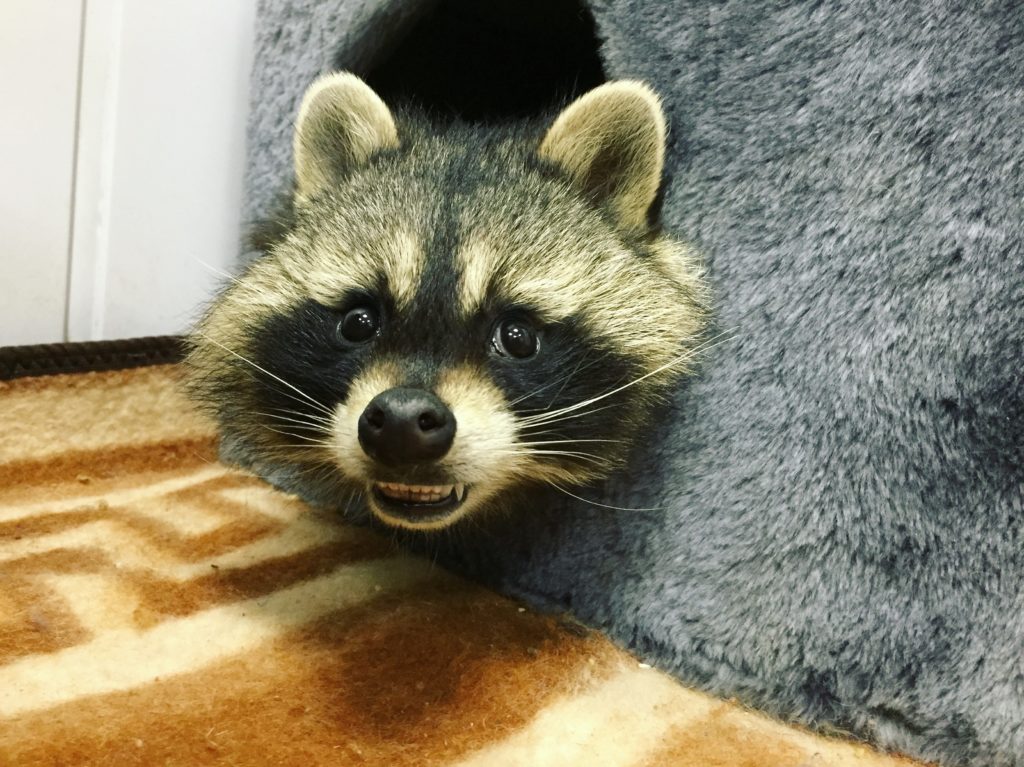
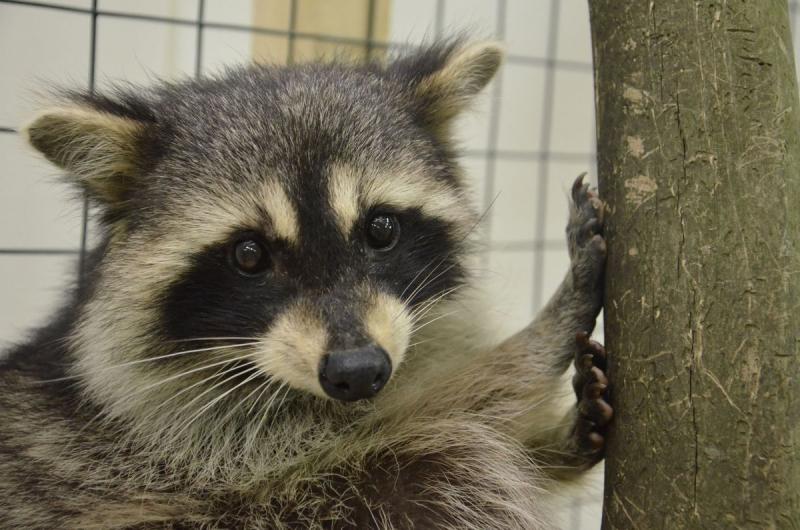
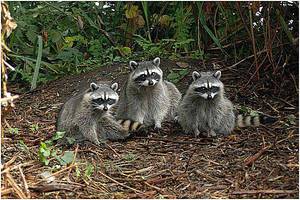
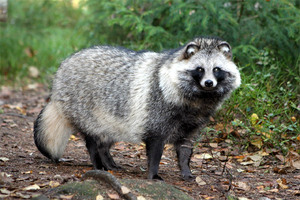
 The raccoon dog, despite its name, is not a true dog, much less a raccoon. The only similarities between the raccoon dog and the raccoon are a mask-like pattern on the face, dark gray sideburns, and thick, long fur.
Appearance
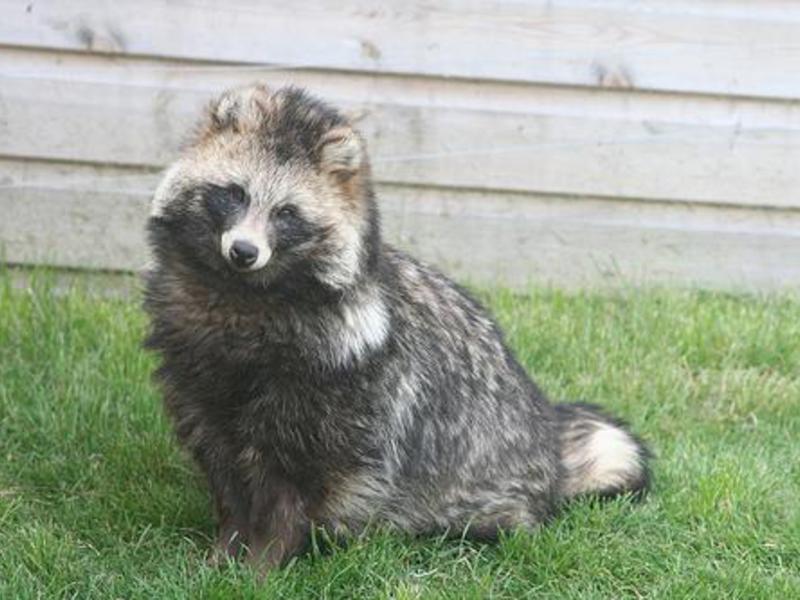
This furry little animal is medium-sized and has no tail. about 80 cm long, and the tail itself is 25 cmThis funny little dog resembles a fur ball on short legs. It boasts thick, long fur. Its fur reaches up to 12 cm in length—it feels a bit rough to the touch, but the undercoat is soft and fluffy. The raccoon dog appears shaggy because its long hair covers its entire body, even its tail. Its paws are covered in shorter fur, but just as thick.
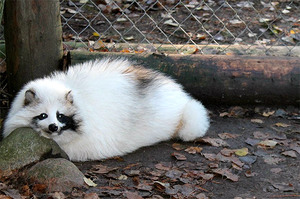
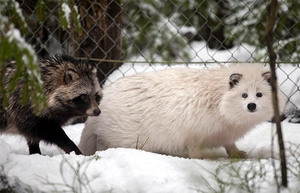 This animal has a narrow muzzle and a medium-sized head. Its ears are small but erect, and they are always black (except for albinos, which are solid white). This dog's coat is similar to that of the raccoon, as it is primarily striped. In winter, the dog's coloring becomes lighter, but its face always remains black.
These representatives of canines are omnivorous and therefore Their teeth are different from other canine teeth.They can chew food—both animal and plant. They can dig up tubers and roots of any plant thanks to their rounded claws, and these same claws help the raccoon dog use them for fishing (just like the raccoon).
Habits and habits
Raccoon dogs are excellent swimmers and can even climb trees, though only to a short height. They rarely use their climbing abilities, choosing to live in lower areas—under tree roots, in abandoned burrows, or in ravines. If they can't find anything suitable, they dig their own burrow, usually near a body of water, with one main exit and one secondary exit.
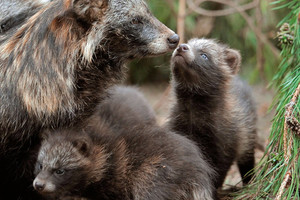 This miniature representative of the canine family has practically no close relatives (the raccoon is also not related to them), and among the distant ones - just a domestic dog.
In search of prey, the raccoon dog goes hunting in the evening, at dusk. The lack of sunlight doesn't faze it at all, and at this time it can calmly explore the farthest corners of land, empty beaches, and riverbanks. While foraging, it can cover long distances (up to 10 km)Along the way, she can pick up anything she comes across—insects, frogs, birds, rodents, reptiles. She even eats dead animals and fish, and doesn't shy away from food scraps.
The raccoon dog was born in East Asia:
- China;
- Vietnam;
- Korea;
- Japan;
- eastern part of Siberia.
This is the homeland of this canine. Locally, it's called "tanuki," which figuratively means a "werewolf" and symbolizes good luck and prosperity.
Reproduction
 The mating season for raccoon dogs begins in early February and ends in mid-April. Females enter estrus during hibernation, before the snow melts. They, like raccoons, are monogamous animals and pair off in the fall. Each male has more than one female, and small fights sometimes occur between males.
Mating between male and female occurs quickly—8–9 minutes. Gestation lasts 61–70 days, after which puppies are born, usually 6–7 puppies. Raccoon dogs have occasionally given birth to litters of 16 pups. Young mothers have significantly fewer puppies than experienced ones (2–3 puppies).
After the puppies are born, the males remain with the females and help them raise their offspring. In the first few days after birth, the female very rarely leaves her nest, and therefore The father is fully engaged in feeding the mother and his petAfter the puppies grow up, both parents go out to get food.
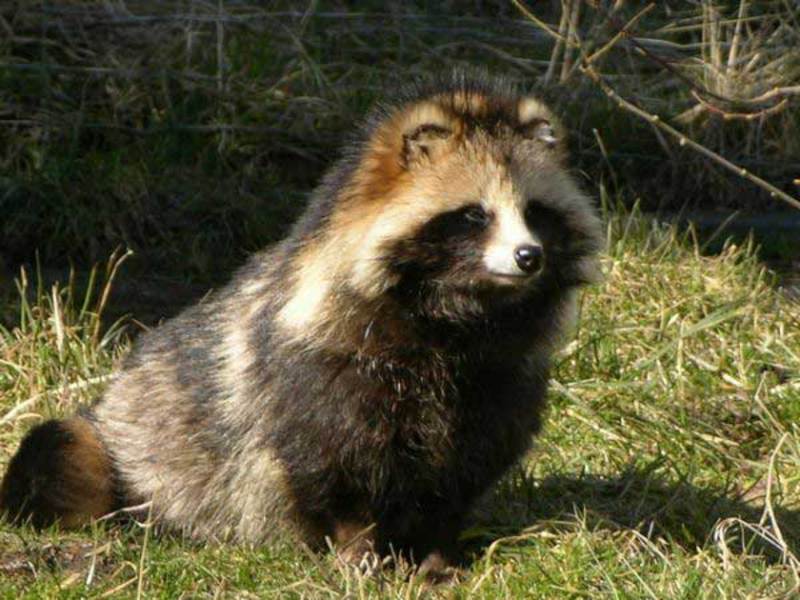
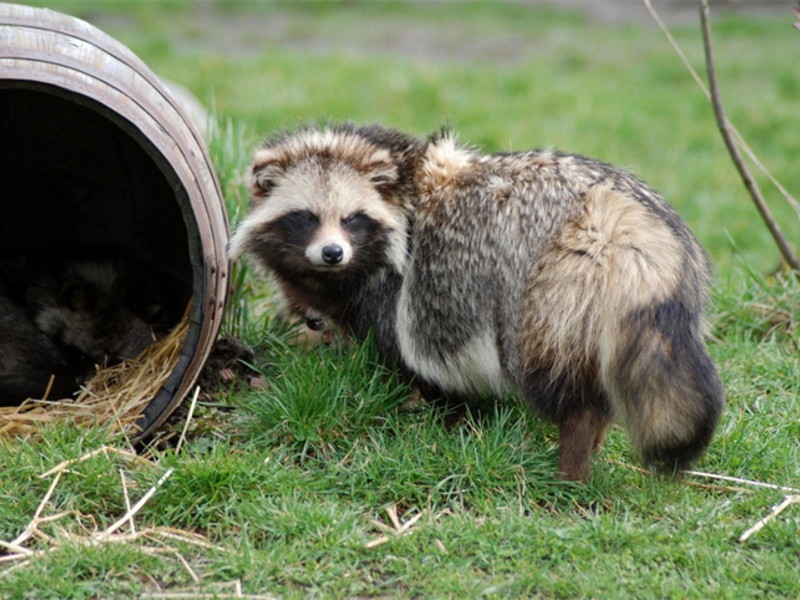
The difference between a raccoon dog and a raccoon
The raccoon dog and the raccoon differ in many ways: they have distinct appearances and live in different environments. The raccoon dog lives on riverbanks (or other bodies of water), in damp meadows with swamps, and in coastal forests with dense thickets of shrubs. The raccoon, on the other hand, prefers burrows, hollows of old trees, and rock crevices—at altitudes of 25–30 meters.
 The raccoon dog is clumsy because it is chooses lower places, is not afraid to be near human habitation, but with the raccoon it’s the other way around: he likes to live in higher places and runs away from human habitation.
Both raccoons and raccoon dogs can swim, but only the dog can swim long distances in search of fish, while the raccoon stays on the shore. This is because the canine is a more resilient swimmer.
The result is the same, no matter how you compare them - these are completely different animals The dog received this name only because it looks very much like a raccoon, but this is not absolute and complete.