How many large dog breeds can you name off the top of your head? Probably no more than three. But in reality, there are many more. Want to learn about the largest dogs recognized around the world? Then read our article.
Great Dane
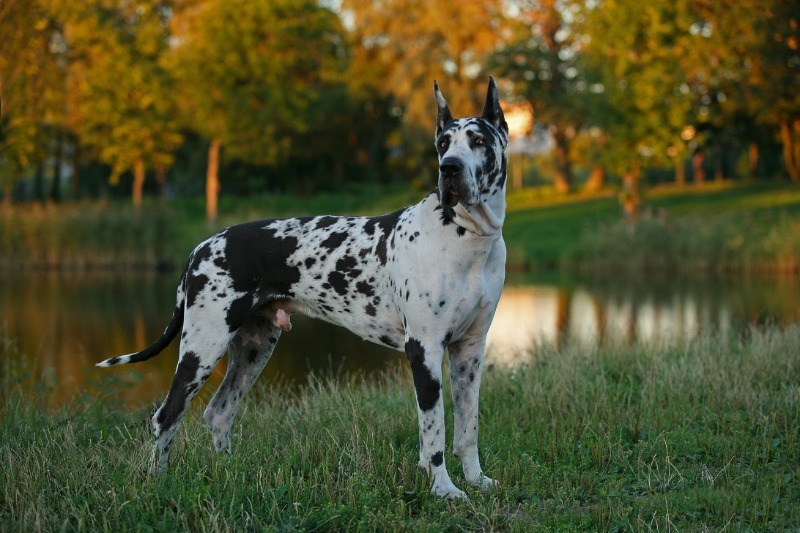
This dog is considered a giant rather than a large breed. Indeed, a Great Dane can easily reach a human face if it stands on its hind legs. An adult male will stand at least 80 cm at the withers and weigh up to 90 kg.
Great Danes were originally bred in Germany, beginning in the mid-19th century. At the time, the term "Great Dane" referred to any large, powerful dog. There were many different types of "Great Danes": the Ulm, English, Danish, German, hunting, large, and even boar dogs. Over time, all these subspecies came to be collectively known as the Great Dane. The breed's official origins date back to 1888.
English Mastiff
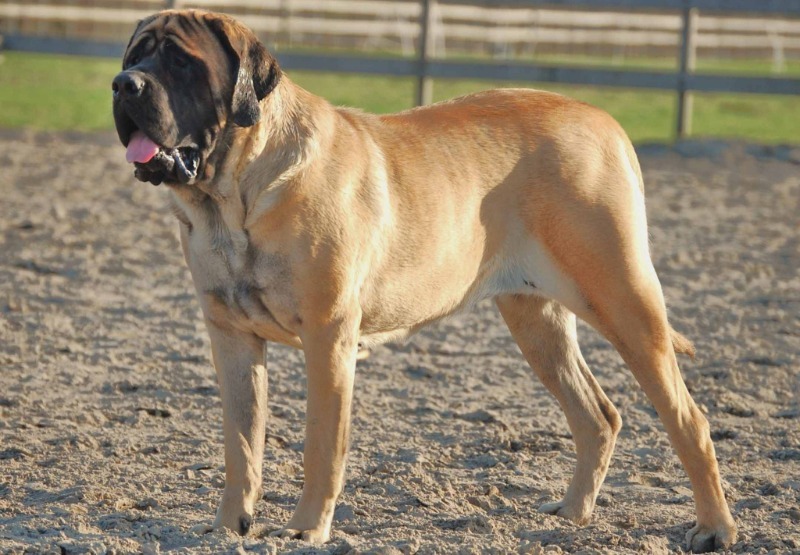
This is a very old English dog breed. The English Mastiff is considered the largest of the mastiff breeds and the largest of the European Great Danes. An adult English Mastiff stands from 75 cm at the withers to over 90 cm. Its weight ranges from 70 kilograms (150 pounds) to over 90 kg (36 pounds).
The breed's roots go back to another large dog—the Tibetan Mastiff. The first mentions of these dogs can be found in chronicles dedicated to Julius Caesar's campaigns against the British settlements. English Mastiffs began to be bred in 1883. The breed was officially registered in 1964.
The name "mastiff" has many translations, but most mean "power" or "strength." And that's accurate. The English Mastiff is enormous and very dangerous, especially when protecting its owner or its territory.
Irish Wolfhound
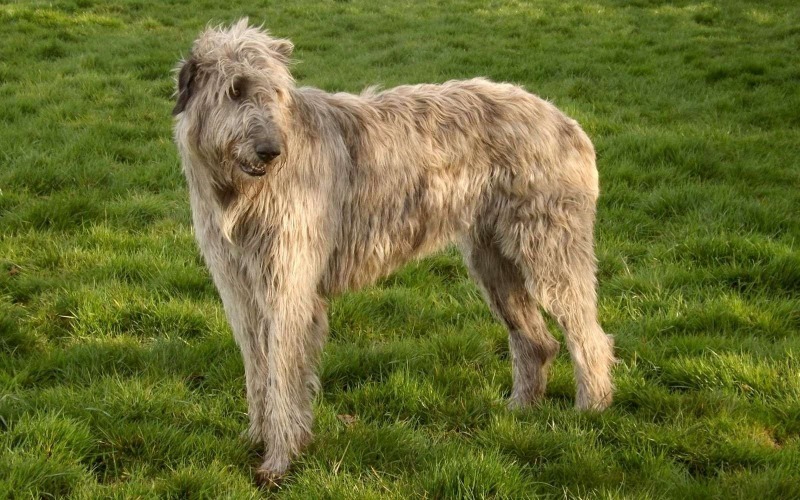
Another large dog breed, considered the largest in Europe and one of the largest in the world. Despite their name, Irish Wolfhounds are quite friendly and peaceful. For centuries, they have been trained to hunt deer and wolves. Yet, they have retained their good nature and docility toward humans.
An adult Irish Wolfhound can reach between 81 and 88 cm at the withers, making it quite large. However, its hound nature has a beneficial effect on its weight. Even the largest dogs don't weigh more than 60 kg.
The first mentions of the breed can be found in the writings of Roman consuls in 391 BC. Initially, Irish Celts bred both smooth-haired and long-haired dogs. Over time, the short-haired breed became established. This may be due to the climatic conditions of the area where these dogs lived.
Leonberger
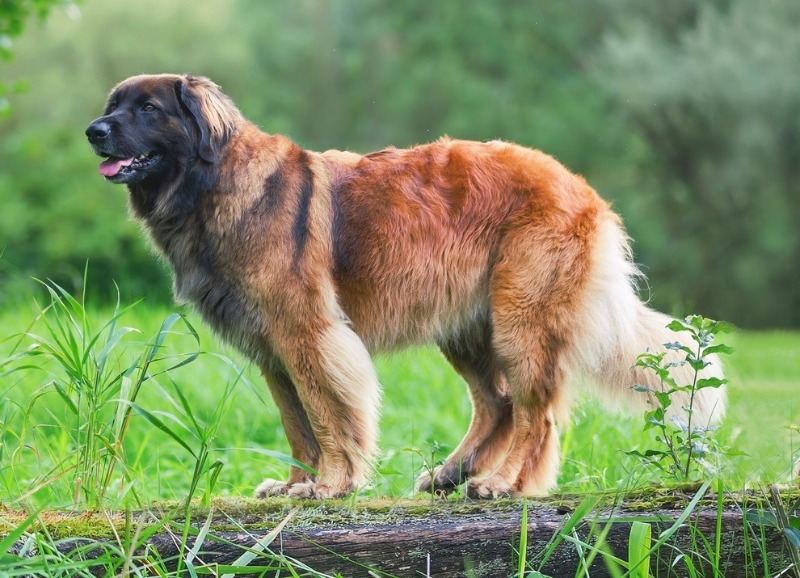
Another large breed developed in Germany, the Leonberger is reminiscent of a lion, and this is no coincidence. The breed was named after the German town of Leonberger, whose coat of arms features a lion silhouette. In the 19th century, the local mayor decided to create a living symbol for the town and crossed several dog breeds, resulting in the Leonberger. These dogs were officially recognized only in 1955, after the end of World War II.
The height of an adult male at the withers can reach 80 cm. The dog is covered with thick, straight hair, which is longer on the animal's neck and chest.
German shepherd
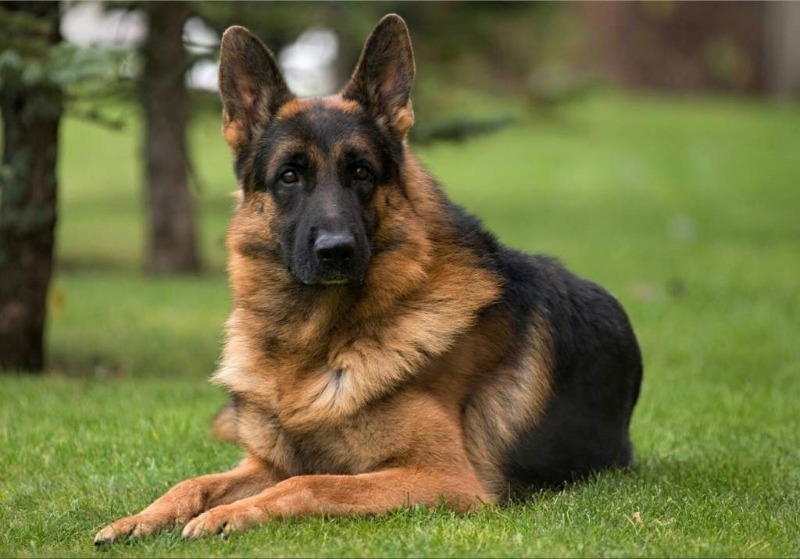
The German Shepherd is one of the most famous breeds worldwide. These dogs are loved and prized for their intelligence and obedience. They also get along very well with people. Originally, they were used to herd cattle and search for people. Despite their name, German Shepherds originated in Scandinavia and Northern Russia. Later, they began to be bred and trained in Germany.
A large specimen of this breed can reach 65 cm at the withers and weigh up to 45 kilograms. The first male German Shepherd, named Greif, was shown to the public in 1882 at a dog show in Hanover. The breed was officially recognized in 1955.
St. Bernard
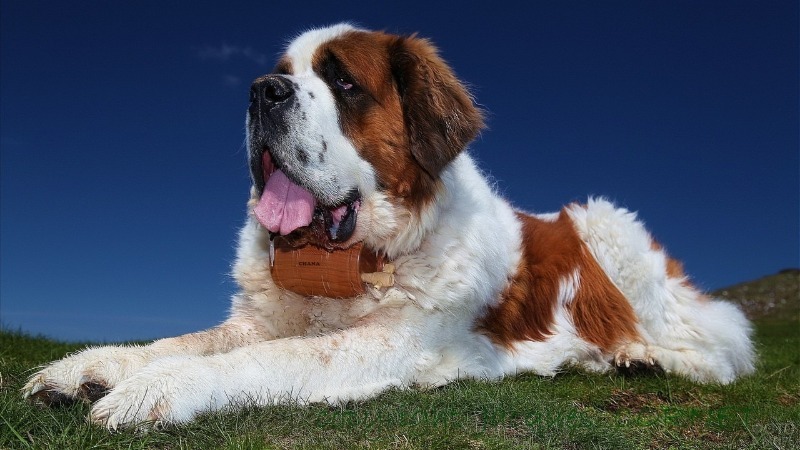
There are two breeds of dog: long-haired and short-haired. The first puppies were imported from Asia. The St. Bernard's ancestor is most likely the Tibetan Mastiff, which was crossed with local European dogs.
The name "St. Bernard" comes from the monastery of St. Bernard in the Swiss Alps. Local monks used large dogs to rescue people trapped in avalanches. The dogs were unafraid of snow and frost. Their bodies were covered in thick fur, and their powerful paws easily dug through the snow.
Adult St. Bernards can reach a height of up to 90 cm and weigh upwards of 70 kg. These dogs were often used to create other breeds, which explains their widespread popularity not only in Europe but throughout the world.


 worker999 all time
1 comment