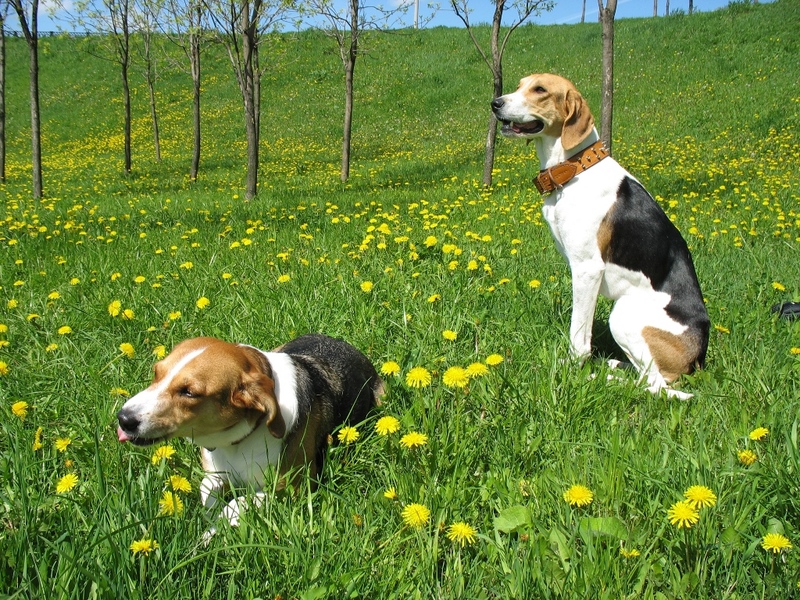
The Russian Piebald Hound ranks high among hunting breeds. It is popular for its endurance, keen sense of smell, friendly nature, and other qualities essential for hunting. It is the ideal dog for an avid hunter seeking a loyal companion. While it doesn't require much attention or grooming, it can be difficult to keep in a city apartment.
Content
Historical background
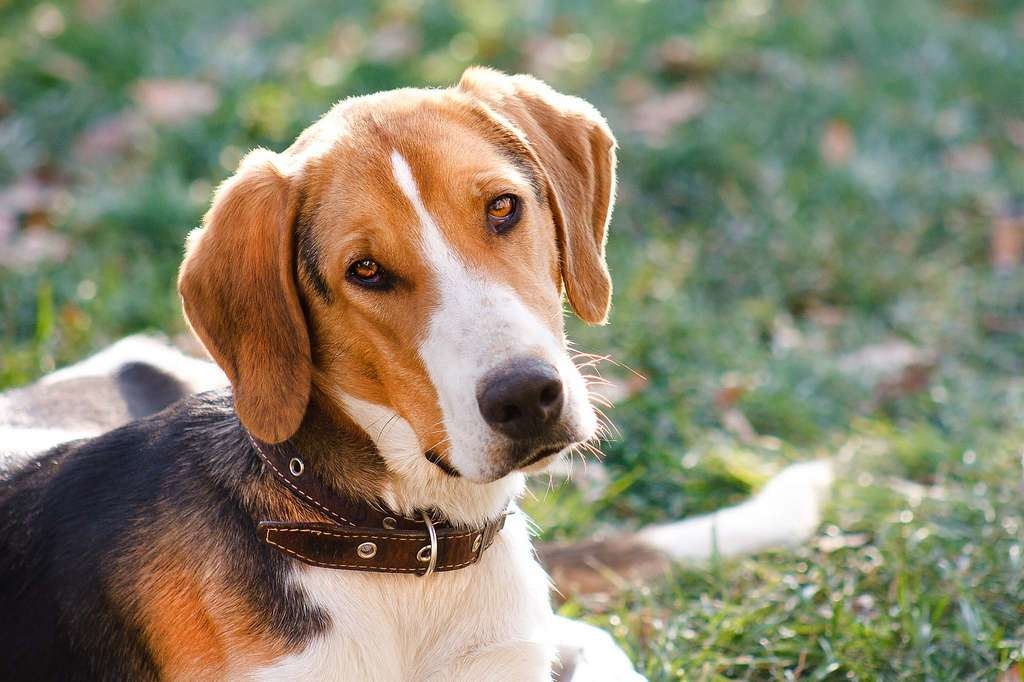
The dog's popularity began to gain after an exhibition in 1874.
The breed has existed, according to some sources, since the 13th century. Some believe the dogs were brought during the Tatar-Mongol invasion. Others believe the Russian Hound is the result of crossing European pointers and native Russian dogs.
However, documentary evidence dates back to the 19th century. During this period, selective breeding efforts to improve the breed began.
An image of the breed can be found on a fresco in St. Sophia Cathedral in Kyiv.
In Russia, the breed is included in a single standard, but the International Cynological Organization has not recognized it.
Breed standard
The key indicators for accurately assessing a dog's size are its height and its elongation index (the ratio between its length and height). According to accepted standards:
- height of males - 58-68 cm, index - 104;
- The height of females is 55-65 cm with an elongation index of 103-105.
On average, the weight is 25-30 kg.
A purebred dog meets the standards described in the table.
| Parameter | Description | Parameter | Description |
| Head | Wedge-shaped with clear straight lines, emphasized by “dry” skin | Nose | Large, black |
| Muzzle | Wedge-shaped | Eyes | Large, oval, set wide apart, with a brown iris |
| Occipital protuberance | Average level of development | Ears | Medium, triangular, with a round tip, lowered towards the cheeks |
| Forehead | Long, flat, not wide | Body | Rectangular in shape, with developed muscles and bones |
| lower jaw | Rounded | Neck | Oval, almost equal in length to the distance from the tip of the nose to the back of the head. Set at a 40-45 degree angle. |
| Eye socket area | Mildly expressed | Withers | Well developed, especially in males |
| Cheekbones and cheeks | Flat | Dorsal line | Short, with a pronounced lumbar region and sloping croup |
| Lips | Thin and toned, the lower part is fleshy | Limbs | Strong, well muscled, wide-set joints |
| Teeth | Well developed, white, large, upper and lower incisors parallel to each other | Front paws | Their length is half of the total height at the withers. |
| Bite | Correct scissor-shaped, without gaps | Hind legs | Strong, powerful, with well-developed bones |
| Tail | Powerful, saber-shaped, tapering to the tip | Forearms | Strong oval |
| Groin line | Moderately toned |
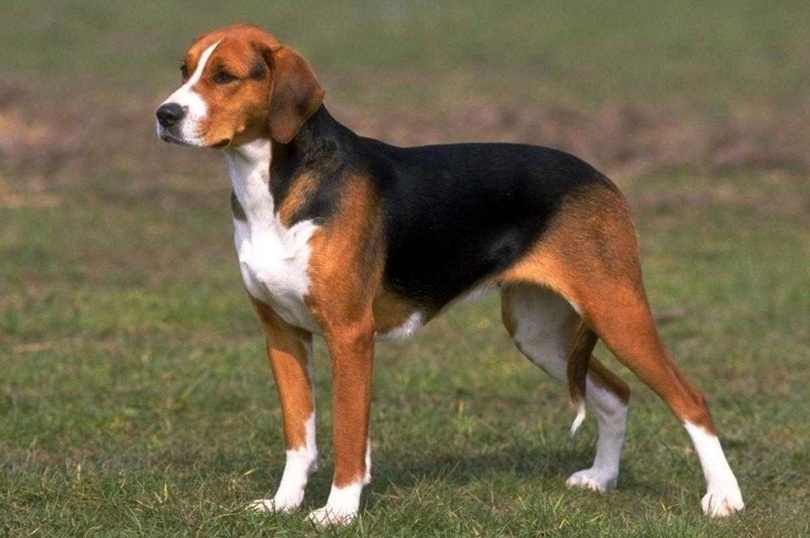
Large white spots and bright red markings are a fault.
The short-haired Russian Piebald has skin without wrinkles. Longer hair is acceptable at the withers and on the thighs. The undercoat is well developed and water-repellent. Purebred dogs can come in the following colors:
- grey-piebald;
- crimson-piebald;
- black and piebald.
Gray or red spots of irregular shapes may appear on the base coat. Some dogs have white paws. Dark speckling is also acceptable.
Character
Unlike other hunting breeds, the Russian hound has a reserved character. The dog has a good memory and a desire to please its owner. Motivation and basic training knowledge will help train it. The Russian Piebald gets along well with other pets and is capable of chasing potential prey for long periods.
The dog is devoted not only to its owner but to the entire family, regardless of age. It plays active games with small children and protects them from strangers.
Features of hunting and training
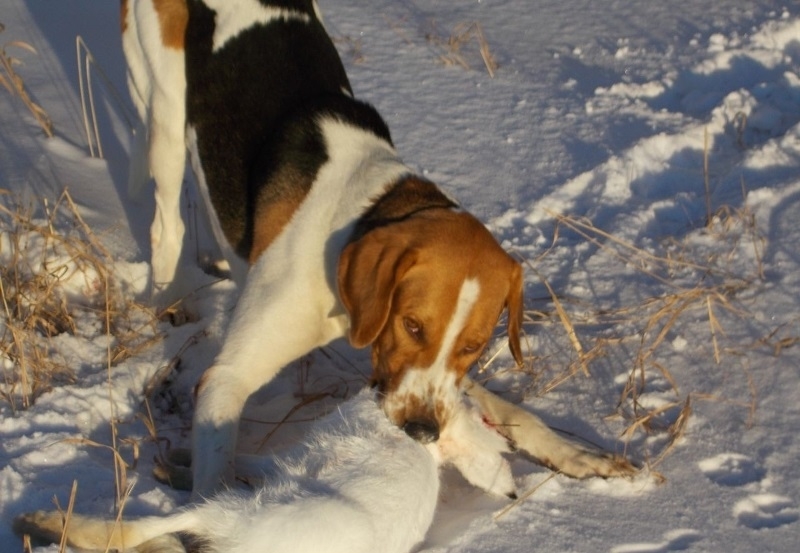
Traditionally, the Russian Piebald Hound hunts foxes and hares.
For a dog to recognize its owner, he needs a strong will and character. In this case, she will begin to respect him and obey. As soon as the pet senses inconsistency in his actions, he will stop obeying him.
In general, Russian Piebald Hounds usually learn commands quickly. The main thing is to motivate them. This doesn't necessarily have to be a treat, but rather a run with their owner or a game.
Most skills are instinctive. But successful hunting requires proper training. If a dog isn't trained, it will tear the animal to pieces after catching it. Even a young puppy shouldn't be forgiven for this, as training begins as early as three months.
During this period, the dog is trained to the "Come" command and the sound of the horn. To accustom the horn to the sound, blow it only before feeding. If you do this randomly throughout the day, the dog will ignore it and be difficult to control in the forest. A trained hound will always come to the sound of the horn.
At an older age, they teach the "Get Out" command. Upon hearing this, the dog must drop its food, which teaches it to give its prey to its owner. A long leash is required for training. Place the dog on it and give it a treat. If the puppy growls and refuses to give up the food, pull it away and retrieve it yourself.
In most cases, puppies remember a command after just three or four tries. If they don't, they're punished. If they obey, they're given a treat.
It's recommended to feed your dog before hunting. Otherwise, it may eat the prey.
Dogs are usually taken into the forest at 4 months of age. Training for hunting begins at 8-9 months. The first training sessions last 3-4 hours, with a half-hour break every two hours. Initially, a hare is used, and later, the animal to be hunted is chosen.
Hunting with a Russian Piebald Hound should take place in dry, windless weather. Wind interferes with the dog's ability to detect the direction of the chase, while rain and dampness prevent it from tracking.
Maintenance and care (grooming)
It is recommended to keep the dog not in an apartment, but in a country house. It's hard to provide the necessary exercise in the city. Building a dog run or kennel is an option.
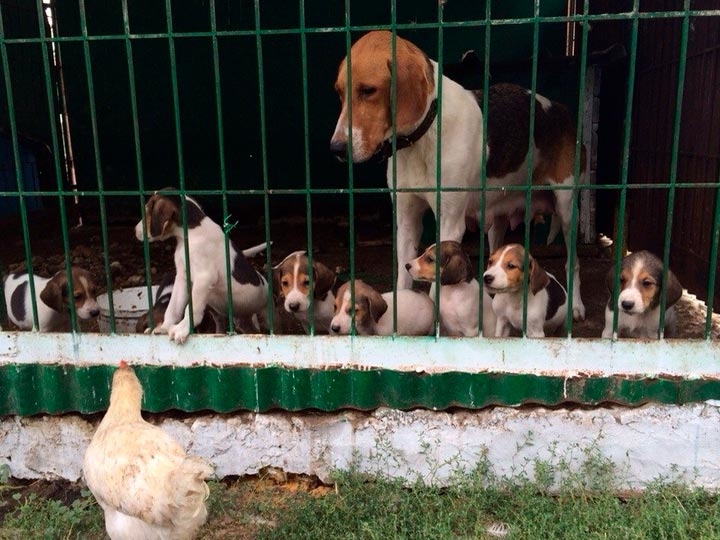
You can't put the dog on a chain because it is very active.
The Russian Piebald Hound does not require any special care:
- It doesn't need to be trimmed or bathed often. Its coat is protected by sebum, which prevents it from getting dirty.
- Once a week, the dog should be thoroughly brushed with a hard brush using massaging movements to increase blood flow.
- It is recommended to examine the mouth and teeth every week, remove discharge from the eyes with a cotton pad every day (due to a tendency to conjunctivitis), and also clean the ears.
- After hunting, inspect the body and paws.
- In warm weather, treat for fleas and ticks.
- A dog living outside does not need its claws trimmed.
Walking a hound in urban areas is only allowed on a leash., because the hunter instinct may kick in.
Nutrition
Russian hounds are easy to feed. Depending on the owner's preference, they can be fed dry or natural food.
Dry has several advantages:
- easy to calculate daily intake;
- no need to waste time on menu planning and food preparation.
But it's important to pay attention to the ingredients and their quality. It's recommended to choose premium-quality food designed for active dogs (Trainer, Monge, Djoser).

The food contains all the necessary vitamins
Natural feeding should be carefully planned to ensure all vitamins and nutrients are balanced. Menu recommendations:
- Meat products are mandatory. These include lean lamb, veal, rabbit, turkey, and chicken. Organ meats (liver, kidneys, lungs, and stomach) are permitted. Pork is prohibited.
- Boneless sea fish (can be raw) and boiled river fish.
- Egg (1 piece per week).
- Porridges cooked in broth or milk.
- Vegetables and fruits (boiled or stewed cabbage, zucchini, turnips).
- Milk and fermented milk products (cottage cheese with whey, hard cheese, low-fat kefir twice a week).
Prohibited products:
- heat-treated bones;
- bread;
- confectionery;
- spicy, salty;
- spices;
- fried foods.
An adult dog should be fed twice a day. A water bowl should always be stocked with clean, fresh water, especially in hot weather.
A dog living on the street needs to get more food.
Diseases and life expectancy
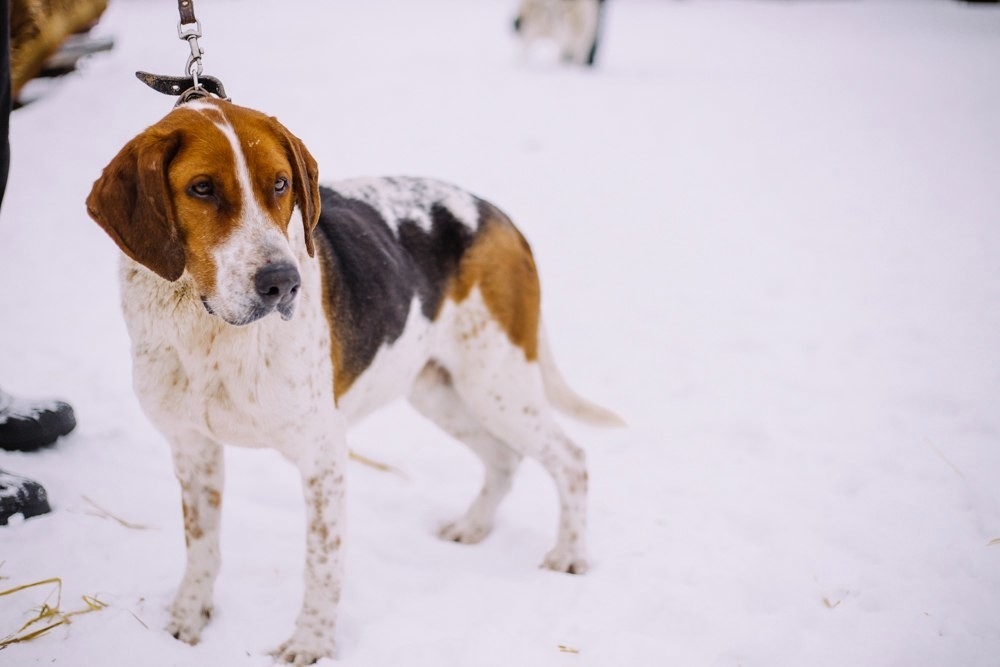
The average lifespan of a dog is 12 years.
The Russian Piebald Hound has robust health and immunity. With proper nutrition and care, it is generally free of any illnesses. However, this breed is characterized by the following disorders, described in the table.
| Diseases | Treatment methods |
| Dysplasia (degenerative changes in joints) | This is a congenital disorder that occurs in some puppies. Treatment can be medical or surgical, depending on the severity of the condition. |
| Degenerative myelopathy (spinal cord damage due to deformed vertebrae) | There is no effective treatment. |
| Conjunctivitis | It is treated with antibiotics. Without treatment, it becomes chronic. |
| Myositis (an inflammatory process in the muscles, which is accompanied by swelling and lameness) | Antibiotics, antirheumatic drugs. In some cases, surgical treatment is necessary. |
| Allergic reaction due to poor nutrition | Eliminate allergenic foods |
| Infectious diseases they contract while hunting | To avoid them, it is recommended to vaccinate the animal. |
The first vaccinations are given at two months of age. This is usually done by the breeder. This should be clarified when purchasing.
Basic vaccination:
- At 2, 2.5, 6, 12 months and every year, vaccination against viral diseases (distemper, enteritis, parainfluenza).
- At 7 months and every year from rabies.
Two weeks before vaccination, deworming should be carried out using medications.
Advantages and disadvantages
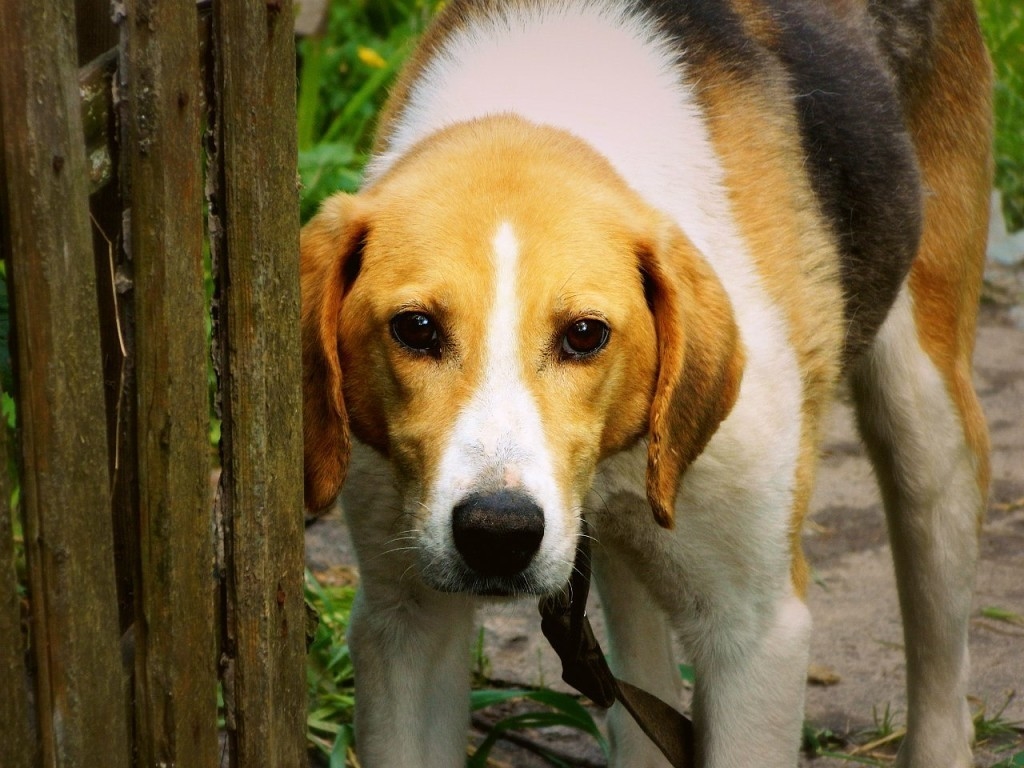
The dog is calm and non-aggressive towards people.
The breed has a large number of advantages:
- good hunting qualities;
- speed, agility and strength;
- quick learner;
- loud voice (which is a disadvantage when kept in an apartment);
- ability to work independently or in a pack;
- soft undercoat, it allows the dog to stay in the kennel in winter;
- devotion to the owner and his family;
- compatibility with other dogs.
Flaws:
- freedom-loving, touchy, know their worth;
- cunning, can manipulate;
- not suitable for apartment living;
- often get lost while hunting, carried away by the pursuit of game.
Knitting
It is recommended to start mating at the age of two, when the dog is capable of bearing healthy offspring, although sexual maturity occurs at 8-10 months.
The owners agree on a specific date based on the bitch's cycle. On the 13th to 15th day of her heat cycle, she exhibits the following symptoms: the vulva becomes loose and soft, a light-colored discharge appears, and she becomes more playful or aggressive. On the appointed day, the female is brought to the male. During the first mating, the animals need assistance: the female should be supported under the abdomen, and the male should be guided into the vulva. A specially trained person can be invited. The second mating takes place two days later.
The stud fee is often set by the stud's owner (usually one puppy or a certain percentage of the sale price). If the female doesn't become pregnant, no fee is paid.
Caring for puppies
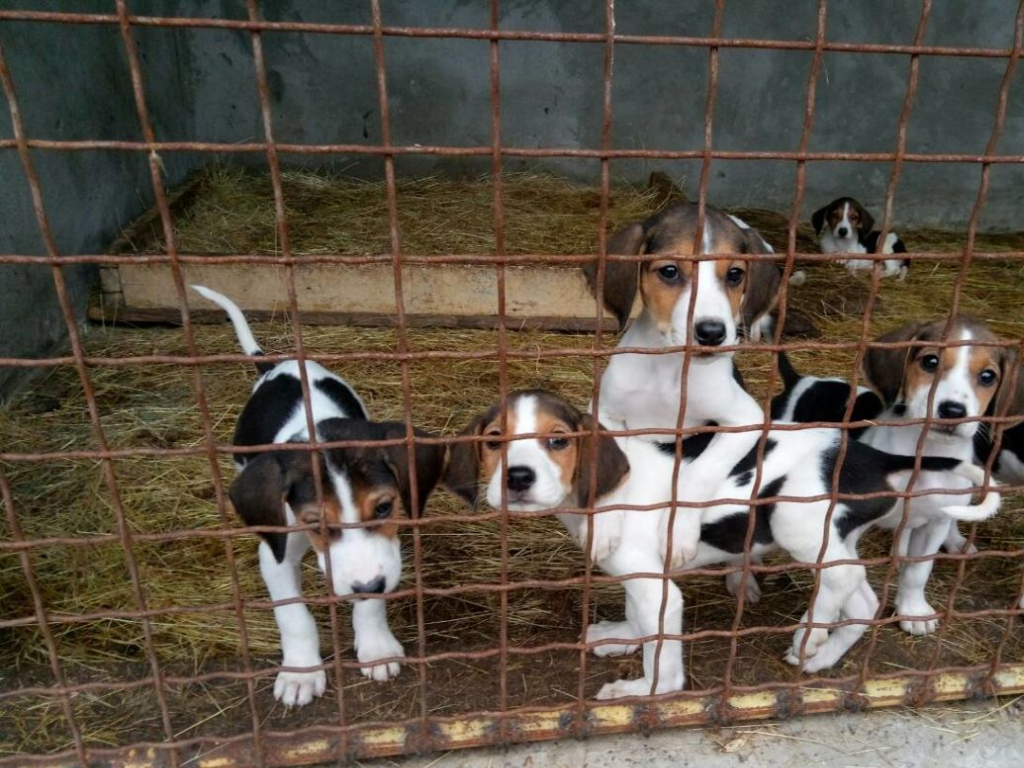
Already at 1 month, babies should be able to eat finely chopped meat, cottage cheese and dry food.
If a sow gives birth to multiple puppies, they can be divided in half and fed alternately. Smaller animals are best fed on the lower nipples; they are the best.
Puppies can be fed supplements as early as 3 weeks old (if milk supply is low, this can be done as early as 2 weeks). Royal Canin dry food is recommended for this purpose. This is a porridge designed for puppies that should be mixed with boiled water. It is easily digestible and does not upset the stomach.
Introduce solid food gradually, introducing other foods every 2-3 days. If the puppy digests them well, then introduce something new.
Feeding regime:
- up to 1.5 months - 6 times a day;
- from 1.5 to 3 months - 4 times a day;
- from 3 to 6 months - 3 times a day;
- after 6 months - 2 times a day.
Almost immediately after birth, it is recommended to give puppies vitamin supplements. These contain calcium gluconate, brewer's yeast, phytin, bone meal, and more.
It is prohibited to wash a puppy under 3 months old.
Nicknames
Foreign nicknames are not suitable for the Russian hound. The table lists domestic names.
| Nicknames for girls | Nicknames for boys |
| Alta, Arfeya, Bystra, Vyuga, Zhulka, Zateya, Skazka, Lada, Laska, Taiga, Yula, Shusha | Accord, Bayan, Fast, Warrior, Thunder, Dozor, Zador, Max, Kenar, Rokot, Shaitan, Filya |
It's advisable to choose a short name. It's easier for the dog to remember.
The Russian Piebald Hound is ideal for hunting and will also make a good and loyal companion for the whole family, requiring little grooming.