 When a pet arrives at home, it's immediately showered with attention. Whether it's a cat or a dog, owners strive to provide it with everything it needs for its full development. Every living creature requires love and care, but this won't be enough without a nutritious diet.
Until recently, feeding animals special food was not common practice; it was believed that food from the owner's table was sufficient for the growth and life of a pet. However, numerous veterinary studies have proven that such a diet often leads to health problems in cats and dogs, especially purebred and picky ones.
Ideally, your pet should be given an individual diet of high-quality meat products, vegetables and cereals, which are selected in accordance with the body's requirements, so that satisfy his needs for proteins, vitamins and other essential substancesHowever, this approach is time-consuming, and in today's world, not everyone can afford to prepare and cook their pet's food. In such situations, dry and canned food manufacturers offer their products to the rescue.
If you've decided to feed your four-legged friend a ready-made product, you'll inevitably face the question of which one to choose. The modern market offers a wide range of brands, from the most economical to the elite and Each manufacturer claims that its food is the most natural and healthy, developed and approved by veterinarians, and their products are the choice of any pet. They offer hundreds of flavors to satisfy even the pickiest cats and dogs, but the truth behind the bright packaging and promising advertising can be difficult to discern.
Feed composition or where the meat is hidden
First, let's figure out what good pet food should contain. The first thing that comes to mind is meat, which is natural, because cats and dogs are carnivorous animalsMeat must be the main product that makes up the package's contents.
Also a small content of high-quality grain crops is permissible, which will allow the digestive system to function more balanced, and natural preservatives such as vitamin E and citric acid to preserve animal fats until the food reaches the pet from the production line.
What should not be included in high-quality food for your pet:
 Offal. This simple term typically covers such unpleasant and useless items as hooves, beaks, feathers, entrails and contents, and bones.
- Low-quality grain and its derivatives, as well as soy and starch. Manufacturers of cheap pet food often use corn and its derivatives as fillers. Not only do these products provide no nutritional benefit, but they also often cause severe allergic reactions.
- Chemical Flavorings. To attract animals and increase their appetite, chemicals are added to pet food, irritating their taste buds and causing them to eat nutritionally inferior food.
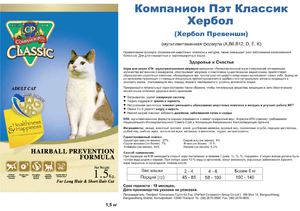 Offal. This simple term typically covers such unpleasant and useless items as hooves, beaks, feathers, entrails and contents, and bones.
Based on their composition, feeds are divided into three main categories:
- Economy class. These are products for dogs and cats with a low meat content (4-6%) and a high content of by-products, grains, fillers, and chemicals. They are sold in regular supermarkets, are inexpensive, and are heavily advertised. Regular consumption of such food can lead to nutritional deficiencies, allergies, and other health problems for pets. Low-quality ingredients are used in production.
- Premium class. Dry food in this category contains more meat (10-20%) and nutrients, better meets your dog or cat's nutritional needs, and is more easily digestible, but it does contain a lot of grains. Medium-quality ingredients are used in production.
- Super premium class. This food has a perfectly balanced composition and high nutritional value, making it almost completely digestible and meeting all the body's needs. More than half of its ingredients are meat. The highest quality ingredients are used in production.
 Premium class. Dry food in this category contains more meat (10-20%) and nutrients, better meets your dog or cat's nutritional needs, and is more easily digestible, but it does contain a lot of grains. Medium-quality ingredients are used in production.
Companion's dog and cat food analyzer
Low-quality pet food is often sold in our country, with international quality ratings no higher than average. When purchasing food for your dog or cat, carefully read the ingredients on the packaging; the manufacturer's stated quality labels often misrepresent the actual contents. For example, Comparing cat and dog food doesn't produce the most positive results.To make choosing and understanding the ingredients on packaging easier, we've created a special analyzer. It allows you to view the ingredients of the food you're interested in and compare it with products from other manufacturers without leaving home, helping you choose the best option and save time when shopping.
Using the analyzer you will be able to compare feeds according to the criteria of guaranteed analysis, where the percentage of nutrients is indicated dry or canned food with moisture, ash content and a calculation of kilocalories per 100 grams of product.
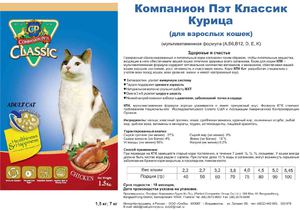 If We were able to add a more detailed composition to the database, the food is compared by categories such as proteins, carbohydrates, and fats, dairy, fruit, and vegetable content, minerals and vitamins, probiotics and enzymes, types of preservatives, and, of course, the presence of chemicals and flavor additives. The analyzer can also be used to evaluate the nutritional value of dry food ingredients, which are indicated by appropriate colors and symbols:
- green - the highest quality and most valuable products;
- red - low quality or unwanted products;
- a red asterisk “*” - products that can cause an allergic reaction in the body of some animals;
- dash "-" - no data.
Comparison of dry dog and cat food
To analyze the brands you're interested in, filter dog food from cat food by clicking on the corresponding image in the header. Next, select the pair you're interested in in the corresponding fields. Once the ingredients appear, you can learn more about each ingredient by hovering over the desired one and reading a brief description.
All entered information is carefully moderated, the final composition is compared with the data provided on the manufacturer’s website or with the packaging, so that the analysis carried out was as objective as possibleIf you notice any errors or omissions, please report them to the administrator.