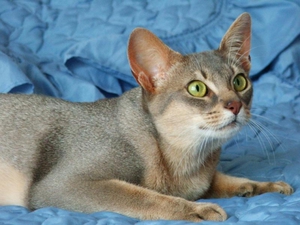
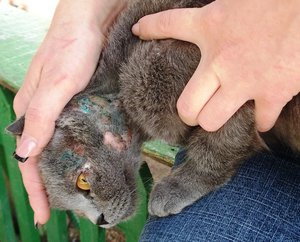
The phrase "living like cat and dog" has long since become a catchphrase. In fact, the reasons why dogs dislike cats are rooted in their fundamental differences. It's hard to even call it "dislike"—they're simply different.
The main differences between dogs and cats
Animals that often live side by side differ in a number of characteristics:
- Behavior. Absolutely all dogs love to socialize and strive to initiate contact, and they do so quite actively: they bark, make noise, run, and frolic around a potential friend and companion. Cats, on the other hand, tend to prefer solitude and prefer to observe their surroundings from afar.
- Temperament. Dogs are naturally active, decisive, and impulsive. Cats are reserved, unflappable, and even a little indifferent.
- Body signals. Dogs and cats display their emotions differently, and most often these manifestations have opposite meanings in animals.
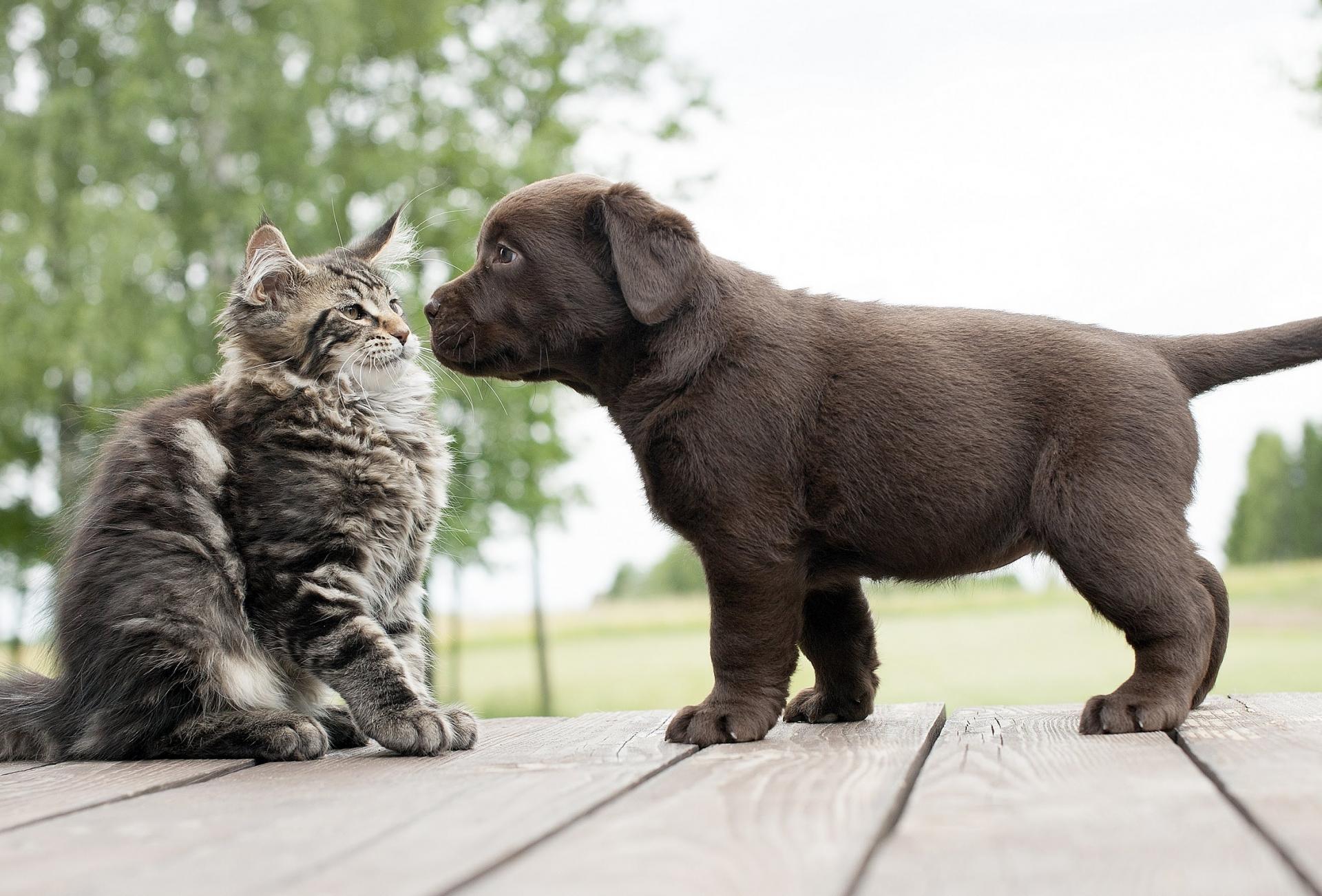
British scientists conducted research that found that cats secrete special enzymes that negatively affect dogs (causing aggression and agitation).
The meaning of some of the signals from cats and dogs:
- While dogs wag their tails with all their might to express affection and interest, cats use such movements to demonstrate the approach of danger and a feeling of irritability.
- When a dog raises its paw, it is an invitation to play, which the cat perceives as a threatening action.
- Purring for a cat is an expression of the highest degree of pleasure, while a dog's growl is a sign of threat and a signal of an imminent attack.
Reasons for behavior
The hunter's nature, passed down to dogs from their ancestors, has led to the fact that dogs perceive everyone who is not part of their family as an object for hunting. And the first thing that comes to their mind is to chase and chase potential prey. Most often, dogs chase cats simply out of curiosity and a desire to sniff and touch them. But felines tend to avoid any contact and, upon seeing a charging dog, take off running, only provoking it with their behavior.
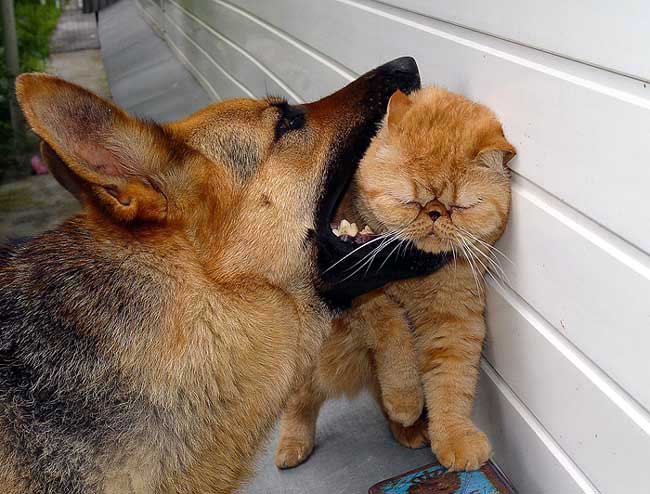
Dogs are representatives of the canine family and predators, this animal will initially regard all other creatures as game, regardless of whether it is a cat or a raccoon.
Sometimes cats freeze and arch their backs when they see dogs, signaling their readiness to attack anyone who disturbs their privacy. Dogs, however, fail to understand this signal and, when attempting to sniff or lick the cat, receive sharp claws to its curious muzzle.
How to make a cat and dog friends
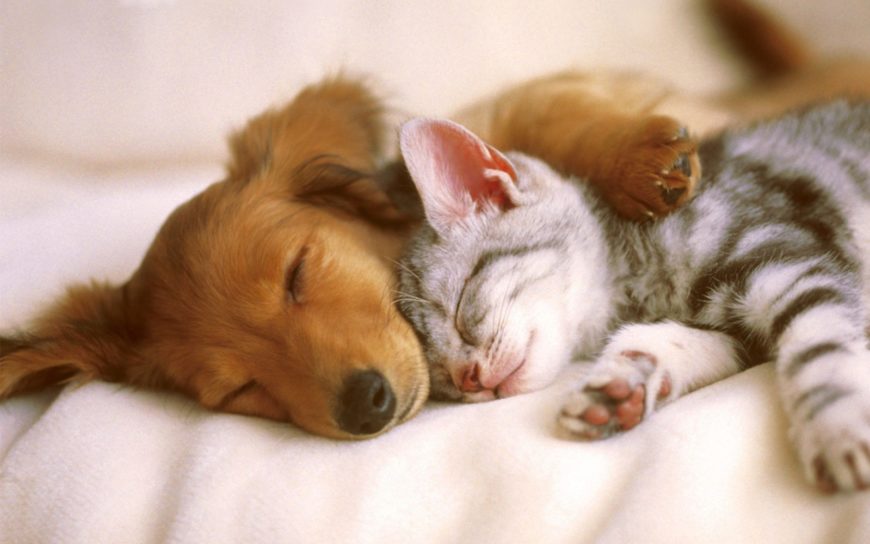
Usually, dividing the territory and acclimating two animals to one apartment takes about one week.
Following certain rules can contribute to the peaceful life of your pets:
- Get a small kitten and a puppy at the same time. As they grow up together, the babies will get used to each other and find common ground.
- When introducing a tiny puppy to a home with an adult cat, don't immediately introduce it to her territory. First, introduce them in a neutral location, gradually increasing the duration of contact.
- If a small kitten is brought into a house where an adult dog lives, the dog should be muzzled for the first few days and not allowed to chase the kitten, which could frighten it. It's also best to feed them in separate rooms at first, only bringing them into the same area under supervision.
Patience and kindness from the owner will gradually help the pets establish contact and a warm relationship under the same roof. The main thing is to devote equal time and attention to each to avoid any feelings of jealousy.